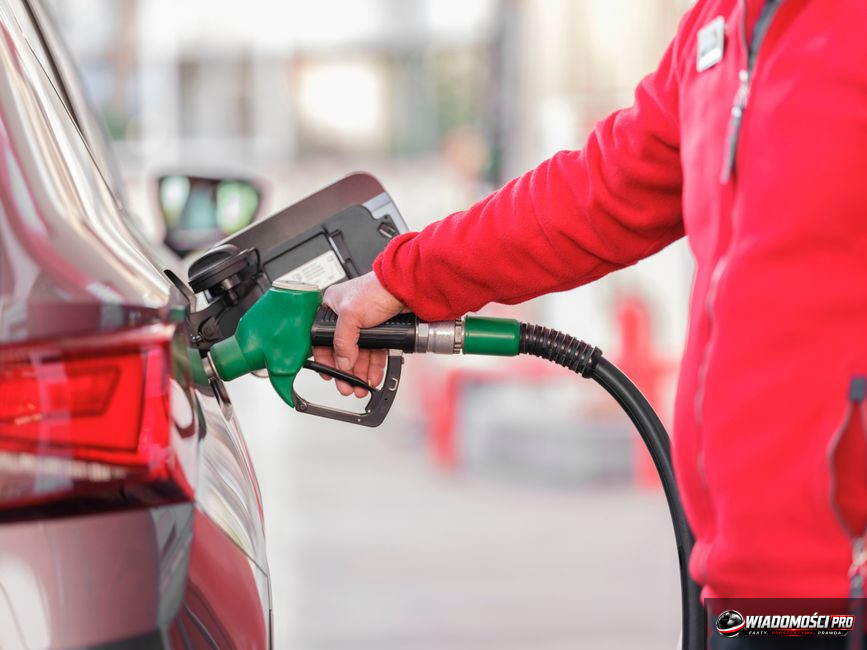
From September 1st, due to the expiration of the CPN program and the return to the 23% VAT rate, gasoline prices may rise by as much as nearly 1 PLN per liter. This change ends a period of artificially keeping fuel prices below market levels. Drivers must prepare for an immediate hit to household budgets, which they will feel at every subsequent refueling.
Growth mechanism: Why is cheap refueling ending?
The fuel market in Poland has ceased to be a protected zone. The expiration of the CPN program is an administrative decision that breaks with the previous strategy of subsidizing fuel prices with public funds. Business Insider Polska and PolsatNews.pl point out that this decision is driven by the necessity to return to standard tax rules. The main driver of change is the restoration of the full 23% VAT rate. For the past few months, drivers have benefited from a mechanism that acted as a safety buffer against global oil price fluctuations. Now, this buffer is disappearing. Refineries and distributors must adjust their price lists to market realities, where the price of raw materials, logistics costs, and the full fiscal burden create the final cost for the consumer.
The government's decision is not just a technical issue. It is a signal to the entire economy that the phase of interventionism in the energy sector is ending. XTB.com points out that the lack of a shield means an inevitable alignment of domestic prices with fuel exchange listings. Fuel, which has recently been priced politically, is once again becoming a fully market-based commodity. For the average driver, this means that the price on the pylon is no longer the result of government negotiations, but a reflection of the global geopolitical situation and the exchange rate in which Polish refineries operate.
Return to 23% VAT: What does this mean for your wallet?
The scale of the price increase is directly linked to the return to the higher value-added tax rate. Assuming that the fuel price increases by 1 PLN per liter, a driver filling a standard 50-liter tank will pay 50 PLN more at the register than before the change. This is an amount that, for many families, constitutes a significant part of the weekly grocery budget. Assuming a driver fills up twice a month, the annual additional cost resulting only from this change exceeds 1,200 PLN. This is a real burden that cannot be ignored when planning household expenses.
The impact of this change extends beyond gas stations. The transport industry, relying on diesel costs, must react to the increase in operating expenses. Courier companies, freight carriers, and public transport are in situations where they will either lower their margins or pass fuel costs on to end customers. In practice, this means that more expensive gasoline and diesel will translate into higher prices for services and goods in stores. This is a domino effect, which is a natural consequence of rising logistics costs. Analysts at Money.pl note that fuel is one of the most important cost components in the supply chain. Every zloty added to a liter of fuel must be compensated for the business to remain profitable.
The economics of this process are relentless. The 23% VAT is calculated on the net value of the fuel. Earlier mechanisms allowed for the modification of this burden, which gave a false sense of stability. Now that the tax is returning to its highest level, every fluctuation in raw material prices on global markets will be felt by the Polish driver with full force. There is no longer any shield that could cushion these changes.
The last day of August: Logistics of changes at stations
Monday, August 31, 2026, went down in drivers' memories as a day of rush. All gas stations in the country received guidelines regarding changing price lists at midnight from August 31 to September 1. The logistics of this operation were a challenge for station network operators. In one night, thousands of pylons and IT systems in dispensers had to be updated to the new rates. Information from Rzeczpospolita confirmed that Monday was the last chance to buy fuel at lower prices.
Many stations recorded increased traffic that day. Drivers, aware of the upcoming hike, stood in long lines to make the most of the final hours of the CPN program. For station staff, this was a performance test. Fuel price changes on this scale require the coordination of deliveries, fiscal settlements, and a quick response from cashless payment systems. GlobEnergia indicated that for many gas stations, August 31 was a day of intensive restocking to avoid downtime in fuel deliveries in the first hours of September, when prices would already be at a new level.
For gas stations, this change also means the need to manage margins in the face of falling demand. Higher fuel prices historically translate into fewer transactions, as drivers try to optimize their routes and limit unnecessary trips. Station operators must therefore balance the need to cover operating costs with maintaining competitiveness in the region. The fuel market, which for months was steered by the CPN program, suddenly became a testing ground for free competition under conditions of higher taxation.
End of the CPN package: Experts warn of the consequences
Fuel market analysts have been warning for weeks about the abruptness of this transition. Business Insider Polska emphasized in its reports that the market was not prepared for such a sudden withdrawal of support. The lack of a transition period meant that the price shock is felt almost immediately. PolsatNews.pl warned that the hikes will affect all vehicle users, regardless of engine type or how the car is used.
Experts from XTB.com point to another aspect: volatility. In market conditions, without a shield, fuel prices in Poland have begun to be more susceptible to fluctuations in the zloty's exchange rate against the dollar. Since crude oil is settled in the American currency, any weakening of the Polish currency combined with higher VAT creates an explosive mixture for prices at the pump. This is a phenomenon that was almost completely neutralized by the CPN program. Now, drivers must learn to track not only oil prices on exchanges in London or New York but also currency pair listings.
It is worth noting the forecasts of Zero.pl, which indicated a drastic increase in fuel prices from Tuesday. According to analysts, the scale of the increase of almost a zloty per liter is the result of the overlap of three factors: the end of targeted subsidies, the return to full VAT, and the need for entities selling fuel to equalize margins. Each of these elements acts in the same direction, which intensifies the final effect for the consumer. The transport industry points out that with such a sharp jump, carriers' margins are threatened, which forces the renegotiation of logistics contracts across the country.
Forecasts for drivers: Are we in for a price shock?
Drivers who planned to refuel on the first day of September were presented with a fait accompli. Media forecasts, including those published by Rzeczpospolita, left no illusions about the direction of changes. Gasoline more expensive by a zloty is a scenario that seemed unrealistic a few months ago in a stable market. Today, it is reality. Money.pl pointed to a solid hike, which for many drivers became an impulse to verify their mode of transport.
Is the price shock absorbable by household budgets? Statistically, for a person commuting 20 kilometers one way to work, the monthly increase in fuel costs can range from 150 to 250 PLN. At the current level of inflation, an additional expense of this scale is significant. Skeptics point out that the fuel market may react even more radically if demand does not fall fast enough to force a downward price correction.
In media summaries on the eve of the changes, experts emphasized that there is no question of a gradual adjustment of rates. We are dealing with a sudden hit. The lack of a protective shield means that the Polish driver is now fully exposed to market forces. Anyone who delayed their visit to the station until the last moment had to face new prices as early as Tuesday morning. This is an economics lesson that shows how fragile the protections offered by the CPN program were.
How to prepare for the upcoming hikes?
Preparing for life in the reality of higher fuel prices requires, above all, a change in habits. Drivers who have not paid attention to their driving style until now must now take into account ecodriving techniques. Reducing speed on highways by 10-20 km/h can bring fuel savings of 1-1.5 liters per 100 kilometers. With a fuel price higher by a zloty, this is a real saving in the wallet.
The next step is route optimization. Planning trips in a way that limits the number of "cold starts" of the engine, which burden the fuel budget the most, becomes a priority. For people using company cars, this change means the need for more rigorous mileage accounting and route optimization by logistics departments. Companies that have not used GPS monitoring systems for fuel consumption optimization until now will now be forced to implement them to maintain profitability.
It is also worth checking the technical condition of vehicles. Correct tire pressure, an efficient injection system, and clean air filters are elements that have a direct impact on fuel consumption. In conditions of cheap fuel, these neglects were hardly felt financially. In the current situation, with significantly higher costs for every liter, every malfunction translates into real financial losses. Drivers must take care of every detail that can minimize the negative impact of the hikes on their monthly expenses.
Market reaction: What do analysts say about the situation in Poland?
The last day of August brought nervousness that was fully justified. The fuel market in Poland entered a phase of high volatility. Information from Zero.pl and XTB.com clearly indicates that the end of cheap refueling is not just a tax change, but above all a change in the philosophy of fuel management in the country. Moving away from the CPN program is a decision that forever changes the structure of transport costs in Poland.
Analysts, whose opinions were cited by the media, pointed out that we are dealing with the end of the subsidy era. TVN24 emphasized that the expiration of price limits is a signal for the full liberalization of the market. For drivers' wallets, this means a violent collision with market realities. There is no longer room for further freezing of rates, which forces rapid adaptation of consumers. Changing labels at gas stations on the night from August to September was a symbol of this transition.
It is worth emphasizing that this change will hit everyone who owns a car, but it will be felt most by people living outside large agglomerations, where public transport is limited. For them, a car is the only window to the world, and an increase in fuel costs by a zloty per liter limits their mobility. Experts from Business Insider Polska warn of a domino effect, in which rising transport prices will translate into more expensive basic goods. GlobEnergia points to the return of 23% VAT as the main driving force of this situation. At gas stations, the era of political prices has ended. Now, a pure market, burdened with full tax, takes control over how much we will pay for every liter of gasoline or diesel.
What this means for you
The end of support programs in practice shifts the entire burden of rising fuel costs onto consumers. Budget revenues from VAT gain, while drivers and transport companies lose. The balance of power in the fuel market is changing, where now the market price and VAT dictate the rules of the game. For a driver, this means the need to rethink every route and every refueling. The time of cheap fuel has gone down in history, and the new reality requires greater attention to expenses.
It is worth monitoring fuel price listings, because the lack of a CPN shield means that every change on the exchanges in London or Rotterdam will be almost immediately visible at Polish stations. If the price of oil in the world rises, we will feel it faster than ever before. If the zloty exchange rate weakens, the hikes at stations will be even more severe. The driver ceases to be a protected recipient and becomes a conscious participant in the global energy market.
Questions and answers
Will fuel get more expensive right after midnight?
Yes, the changes come into effect on September 1st, which means that new, higher prices apply from Tuesday. Gas stations had to update their pricing systems on the night from August 31 to September 1.
Why was the CPN program extinguished?
The decision results from the end of the government support package and the return to standard tax rates, including 23% VAT, which was part of the state's broader fiscal policy.
How much exactly will gasoline prices rise?
Expert estimates and media reports indicate an increase in gasoline prices by as much as nearly 1 PLN per liter. The final amount of the hike depends on the local margins of individual stations and current raw material listings.
Can we count on the return of cheaper fuel?
There are currently no official government announcements that would indicate the possibility of restoring fuel price support programs. The market currently operates based on full tax rates.
Does the hike apply only to gasoline?
No, the expiration of the CPN program and the return to the full 23% VAT rate applies to the entire liquid fuel market, including diesel, which is crucial for the transport sector and the goods economy.
Sources
- End of lower VAT and price limits. How much will fuel get more expensive? - TVN24
- End of the CPN program. Expert warns of price hikes - PolsatNews.pl
- End of "government" fuel prices. A solid hike from tomorrow - Money.pl
- This is the end of the CPN package and cheaper fuel. Experts warn of a sharp change - Business Insider Polska
- Last day of cheaper fuel. From September 1st, CPN disappears and 23% VAT returns - GlobEnergia
- Fuel price hikes from September 1st – end of the CPN shield - XTB.com
- End of cheap refueling. From Tuesday, fuel prices will rise drastically - Zero.pl
- From tomorrow, gasoline is more expensive by almost a zloty. Monday is the last day with cheaper fuel - Rzeczpospolita
Article prepared by the Wiadomości PRO editorial team with the support of artificial intelligence. Facts come from the sources provided above.


Komentarze (0)
Ładowanie komentarzy...