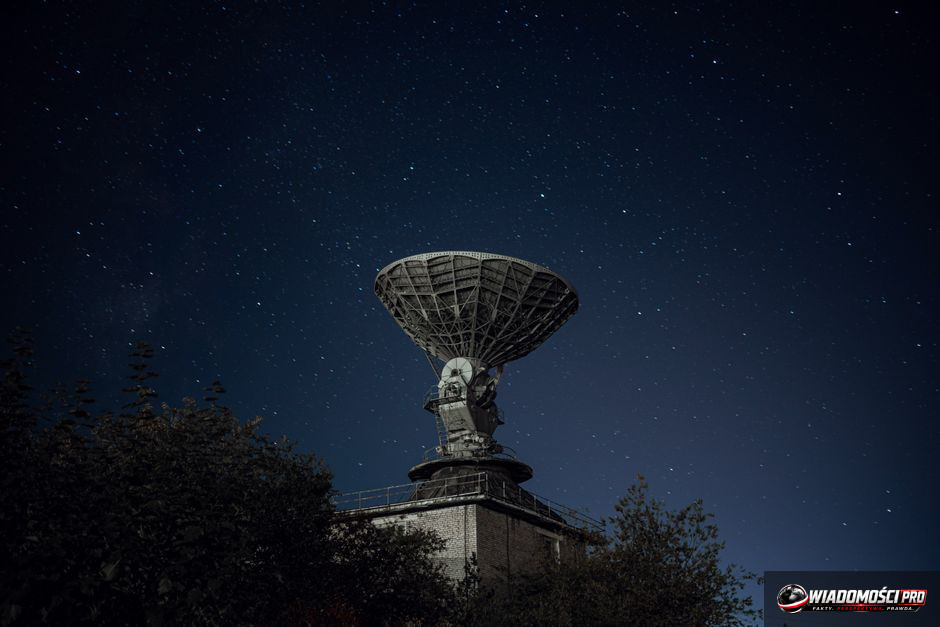
The Nancy Grace Roman Space Telescope utilizes a field of view 100 times larger than previous devices, allowing it to scan the sky instantaneously and identify traces of 100,000 new planets. This instrument is the culmination of decades of planning at the American space agency. It has just begun its work in orbit, becoming a new benchmark for modern astrophysics.
Mission launch: NASA's new pearl in space
August 31, 2026, will go down in the history of astrophysics as the day NASA successfully placed its newest research instrument into orbit. The Nancy Grace Roman Space Telescope, often called the "jewel in the crown" of the American agency, successfully left the launch pad and checked in on its planned trajectory. Mission engineers confirmed that power systems and communication modules are operating as expected, and the primary mirror has been correctly deployed in the vacuum of space. The launch proceeded without disruption, concluding a multi-year period of design and testing in vacuum chambers.
The device is located at the L2 Lagrange point, approximately 1.5 million kilometers from Earth. This is a strategic location, allowing for stable observations with minimal interference from heat emitted by our planet and the Moon. The flight control team at the Goddard Space Flight Center has already begun calibration procedures for the scientific instruments. Every second of this telescope's operation is precisely planned, as access to such advanced equipment is time-limited. Engineers had to demonstrate extraordinary precision in assembling the optics, which must withstand the extreme thermal conditions of deep space. Now that the device is in place, scientists are moving to the verification phase for the control software, which is responsible for maintaining image stability during hours-long exposures.
Technology: How NASA's wide-angle eye works
The Nancy Grace Roman Space Telescope is not just another device intended to slowly study patches of the sky one by one. Its strength lies in a radically different approach to data collection, based on the Wide Field Instrument (WFI). It is equipped with arrays with a total resolution of 300 megapixels, representing a technical leap over previous generations of sensors. Thanks to such a vast range, the telescope can record expansive swathes of space in the time it previously took to take just a few point-source images.
In practice, this means the ability to map the structures of the universe at a rate previously unattainable for orbital observatories. Instead of years of work on one small fragment of the sky, Roman delivers panoramic images in days. For astronomers, this parameter is decisive in the hunt for exoplanets. The device was designed to automatically identify light signatures indicating the presence of planets within this massive stream of data. Instead of looking for a needle in a haystack, we now have a tool that records the entire haystack at once.
However, this requires a completely different information processing architecture. Data streaming from orbit must be processed by machine learning algorithms before being made available to the scientific community. Without appropriate software, this new technology would become a noise generator. NASA has invested billions of dollars not only in optics but also in ground infrastructure tasked with extracting signals from billions of recorded light points. This is a performance test for the entire field of astronomical data analytics.
Dark matter and energy: Riddles of the universe
The Nancy Grace Roman Space Telescope was not built solely to catalog exoplanets. NASA's construction has ambitions reaching the foundations of physics. At the center of scientific interest is dark matter, the nature of which remains one of the most frustrating puzzles of modern science. The device is set to precisely examine its distribution by analyzing gravitational lensing caused by massive clusters of matter. This could shed new light on what actually binds galaxies into giant structures.
No less important is the goal of analyzing dark energy. It is responsible for the accelerating expansion of the universe, and its influence on the structure of the cosmos still exceeds the standard model of particle physics. Understanding the mechanisms driving this expansion requires data that existing observatories, like the Hubble Telescope, could not provide at the appropriate scale. Here, the construction's greatest asset is revealed. The instrument can scan the sky with such precision that changes in the rate of the universe's expansion become measurable across different cosmic epochs.
If our current theoretical models regarding dark energy prove incorrect, Roman will provide information that will force a revision of the foundations of physics. Instead of confirming existing theories, we may receive a set of data that theoretical physics will have to grapple with for decades to come. NASA is staking huge resources, hoping for a breakthrough, but it is the nature of the universe that will ultimately verify whether these calculations made sense. Each subsequent month of the telescope's operation will bring us closer to answering the question of whether the universe will expand indefinitely or if a different fate awaits it in the distant future.
Planet hunter: Gravitational microlensing mechanism
The Nancy Grace Roman Space Telescope began its mission with a clearly defined task: finding 100,000 new exoplanets. This is an overwhelming number, considering the previous achievements of astronomy. The key to this success is the use of the gravitational microlensing phenomenon. This is a process in which the gravity of a foreground object, such as a star with a planet, acts as a lens, magnifying light coming from a much more distant background star.
When a planet passes in front of a star, its own gravity causes a short-lived, characteristic brightening of the background source. This phenomenon lasts only from a few hours to a few days, making it extremely difficult to capture using traditional point-observation methods. Roman changes this dynamic. Thanks to its wide field of view, it can monitor millions of stars in the center of the Milky Way simultaneously, catching these subtle flashes of light with a frequency previously unimaginable.
Here is how this search mechanism looks in practice:
- A wide field of view allows for the recording of microlensing events on an unprecedented scale, eliminating the need to select individual targets.
- Analysis of light curves allows astronomers to determine the mass of a planet and its distance from its host star, providing insight into the architecture of distant planetary systems.
- Automated scanning processes eliminate the need for manual telescope steering toward specific objects, which drastically reduces the time required to confirm the existence of a new world.
NASA's ambitions are huge, but astronomers warn that analyzing such a gigantic dataset is a logistical challenge. Obtaining raw information is one thing, but processing it into confirmed discoveries takes time. Each detected brightening must be verified by mathematical models to rule out measurement errors or astrophysical phenomena unrelated to planets. We will see if the promised pace of work holds up against reality after the first months of operations, when terabytes of data begin to flow into NASA's servers.
Mapping the universe: Distant galaxies within reach
The Nancy Grace Roman Space Telescope is not a tool with narrow specialization, but a wide-angle eye that changes the rules of conducting astronomical observations. Its main asset is a field of view that is 100 times larger than that of the Hubble Telescope. Thanks to such a gigantic scale, the telescope is able to create maps of spacetime with unprecedented detail. Within reach of the instruments is the potential to discover billions of new galaxies, which will allow astronomers to trace the history of structure formation in the universe.
NASA engineers do not hide their ambitious plans. The design allows for systematic mapping of the sky in different light bands, which enables the analysis of galaxy evolution over billions of years. This is a scale that overwhelms the imagination, but for scientists, it is a concrete working tool. Processing such huge datasets will be the biggest challenge for ground teams, who must now translate these images into maps of the spacetime we know.
Skeptics note, however, that the mere ability to scan such huge swathes of space does not guarantee success in describing all objects. Roman is set to provide raw material that requires years of analysis. The enthusiasm associated with discovering billions of galaxies must therefore be tempered by the awareness that "seeing" is only the beginning of the road to understanding the nature of these distant structures. The question remains whether existing image processing algorithms will cope with such an avalanche of data, or whether we will drown in information noise before we fully utilize the potential of the new mission.
Nancy Grace Roman: The legacy of an astronomy pioneer
The telescope that has just begun its mission is named after Nancy Grace Roman for good reason. She is a fundamental figure for modern astronomy, known as the "mother of Hubble." Roman was the first woman to hold an executive position at NASA, and it was her determination that led to the creation of the Hubble Space Telescope, which completely changed our perception of the universe. Naming the new device after her is a tribute to a visionary who believed that astronomy should go beyond narrow theoretical frameworks and focus on bold cosmic observations.
Today's technology is a direct continuation of the work started by Hubble. However, while the older telescope was a precise tool for looking deep into point-like areas of the sky, the new instrument focuses on scale and efficiency. The Nancy Grace Roman Space Telescope uses a field of view up to 100 times larger than its predecessors. This is a transition from a magnifying glass to a wide-angle lens on a cosmic scale, which allows for the recording of phenomena previously inaccessible to the human eye.
Thanks to this design, NASA engineers have gained the ability to instantaneously scan huge swathes of the sky. This is not a matter of better optics, but a change in the philosophy of conducting research. Instead of staring at one object for weeks, the device collects data en masse, which allows for the identification of traces of 100,000 new planets in a time that would have previously been impossible to achieve.
In the scientific community, however, there is some skepticism regarding the speed of processing such huge datasets. Building the tool itself is a success, but analyzing the stream of information that Roman will send to Earth will be a challenge for astrophysicists comparable to building the telescope itself. Roman's legacy is therefore alive – it is not just a name on the casing, but above all a continuation of her fight to ensure that NASA always aims for projects that by definition seem impossible to achieve.
Technical and logistical challenges
The Roman mission is not just about astronomy. It is also a major test for space systems engineering. The telescope must maintain extraordinary stability for a long time so as not to distort the images it records. Any vibration of the structure or temperature fluctuation affects the quality of the data, which in the case of such a sensitive instrument can lead to artifacts in the images. Engineers had to design active vibration damping systems that operate in real-time.
The logistics of data transmission from the L2 point to Earth is another bottleneck. Roman generates a stream of information that exceeds the capabilities of traditional radio links used by earlier telescopes. NASA had to modernize the Deep Space Network to handle such bandwidth. Without this expansion, the telescope would have to operate in a drastically limited mode, which would negate its main advantage, which is the speed of scanning the sky.
Additionally, we must take into account the cost of maintaining such a mission. Funding for projects of this type at NASA is often the subject of disputes in Congress, where every dollar must be justified by concrete scientific results. If Roman does not deliver results in the assumed time, future missions may be called into question. This is a pressure that the mission team must live with every day, knowing that the eyes of the entire scientific world are on their work.
What this means for you
The key change for science is that thanks to a 100-times wider field of view, astronomers are moving from point observations to systematic mapping of the universe. For the average reader, this means that in the coming years, we will learn more about the number of planets in our galaxy than in the entire history of humanity to date. Understanding how common systems similar to ours are is a key step toward answering the question about Earth's place in the cosmos.
This does not mean, however, that we will receive photos of alien civilizations tomorrow. The mission focuses on statistical and physical data. Roman will allow us to understand what types of planets dominate the Milky Way and how dark matter shapes our surroundings. This is the foundation upon which future missions will be built, tasked with analyzing the atmospheres of specific exoplanets for signs of life.
Questions and answers
When exactly did the Nancy Grace Roman telescope launch?
The device launched on August 31, 2026, from a launch pad used by NASA.
Why is the Roman telescope more effective than Hubble at searching for planets?
The main advantage is a 100-times larger field of view, which allows for much faster mapping of the sky and recording of gravitational microlensing events on a mass scale.
Will the telescope search for alien civilizations?
The main goal is to discover 100,000 new planets and study the nature of dark matter and energy, which provides a foundation for future research into the biological potential of other worlds.
What are the biggest threats to the success of this mission?
The biggest challenge is analyzing the gigantic amount of data that the telescope will send to Earth. There is a risk that processing algorithms will not be able to handle the avalanche of information, which will delay the process of publishing scientific discoveries.
Is the Nancy Grace Roman telescope a successor to the James Webb telescope?
Not directly. Roman focuses on wide-angle observations and mapping the sky, while James Webb is specialized in deep infrared observation of specific, distant objects. Both instruments will cooperate, complementing each other in space research.
Why is the telescope located at the L2 point?
The L2 Lagrange point provides stable thermal conditions and constant access to the sky, which is essential for telescopes conducting long-term observations in deep infrared and visible light, while avoiding interference emitted by Earth.
What role do machine learning algorithms play in the mission?
They are essential for automatically picking up microlensing signals from billions of recorded stars, which would be impossible to do manually by a human team in a short time.
Sources
- New major NASA telescope has launched. It sees 100 times more sky - Spider's Web
- Launch of Nancy Grace Roman Space Telescope - Kosmonauta.net
- Space giant has launched. Roman is set to map the entire universe - Zero.pl
- New NASA telescope has headed into space. Roman is set to discover billions of galaxies and thousands of new planets - Deon24
- Nancy Grace Roman Telescope to be launched into space on Sunday - DlaPilota
- NASA has launched its latest jewel in the crown – Nancy Grace Roman Space Telescope - KopalniaWiedzy
- Nancy Grace Roman Space Telescope launched. NASA will study dark matter, dark energy, and alien worlds - iMagazine
- New "planet hunter" already in space. NASA counts on discovering 100,000 planets - Wiadomości Onet
Article prepared by the Wiadomości PRO editorial team with the support of artificial intelligence. Facts are derived from the sources listed above.

Komentarze (0)
Ładowanie komentarzy...