From September 3, 2026, young drivers will be subject to a probationary period with a strict 0.0 per mille blood alcohol limit, and gross violations may result in the loss of driving privileges for up to 5 years. The amendment to the Act on Vehicle Drivers is the most radical change in Polish traffic law in a decade, aimed at drastically reducing the number of accidents caused by people with little driving experience. The system is ceasing to be educational and is becoming a strictly enforcement-oriented disciplinary tool, in which the margin of error for novices practically ceases to exist.
The 0.0 per mille rigor: the end of permissiveness
The introduction of an absolute 0.0 per mille blood alcohol limit for young drivers is a signal that the legislator is abandoning any negotiations. Until now, Polish regulations allowed for certain values that permitted interpretation as to whether the driver was under the influence or after consumption. From September 2026, this loophole is being closed. Any amount of alcohol detected during a traffic stop will result in immediate consequences. For a person who has just received their driver's license, this means not only a fine but a real risk of ending their adventure with motoring for many years.
The Ministry of Infrastructure argues that zero tolerance is necessary in the face of growing recklessness on the roads. Statistics show that drivers with little experience more often overestimate their skills, combining this with the risk of using stimulants. Now, the law is intended to serve a preventive function. A driver getting behind the wheel must be aware that there is no room for error. Even a minimal dose of alcohol during the probationary period will be treated as a gross violation of safety rules.
The introduction of these provisions strikes at the existing drinking culture that often permeated the circles of young drivers. Officials have stopped counting on social awareness, opting for hard legal instruments. Every breathalyzer test will become a moment of trial for a young driver. If the result is higher than zero, financial and administrative consequences will hit them with great force. This is not a suggestion to change habits. It is a legal compulsion that cannot be ignored without losing one's license.
Five years of exclusion: the price of gross violations
The toughening of penalties is a response to the avalanche increase in the number of offenses, which in 2025 led to the revocation of licenses for 64,000 drivers. The legislator decided that existing penalties do not effectively deter people who notoriously disregard the rules. Losing a driver's license for a period of up to 5 years is intended to be a penalty that physically excludes dangerous drivers from road traffic for long enough to draw conclusions.
Five years is a period in which a young person's life changes completely. The inability to drive a car during this time is a real hindrance to work, education, or daily functioning. The Ministry assumes that the prospect of such a long penalty will force young drivers to reflect on their driving style. If someone cannot respect the rules during the probationary period, the state takes away their right to be a road user.
The procedure for regaining privileges after such a long break will not be a formality. The driver will have to go through the entire training and examination process again, which involves costs and the need to re-prove their competence. This solution shifts the burden of responsibility to the individual. If a young driver breaks the rules, they lose their driver's license not only as a penalty but as proof of a lack of maturity to be a road user.
The end of the maneuvering yard: verification in traffic
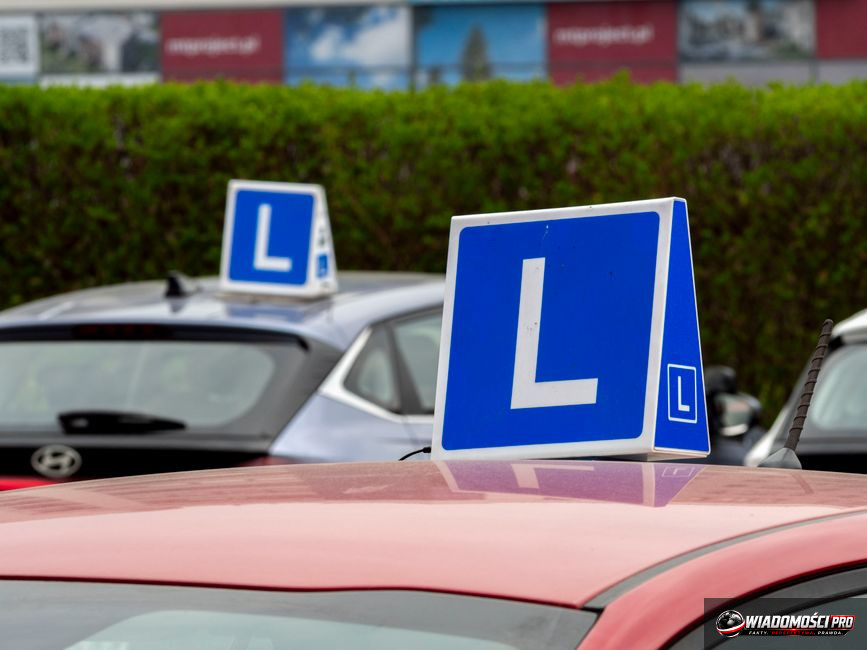
The examination reform is another pillar of the changes that will take effect on September 3, 2026. The Ministry of Infrastructure is definitively saying goodbye to the maneuvering yard, considering it an archaic model of skill verification. For years, students learned to park "by the cones" and perform maneuvers in sterile conditions, which had little to do with real city traffic. Now, examiners will focus exclusively on assessing the driver's behavior in situations they encounter daily on the road.
Moving the practical exam entirely to road traffic is intended to eliminate from the roads people who can memorize maneuver patterns but cannot cope in the maze of signs and signals. The examiner will become an observer who assesses not so much the ability to drive through a curve, but the ability to anticipate threats and make quick decisions. This is a change that raises the bar for driving schools. Instructors will have to place greater emphasis on teaching defensive behaviors instead of focusing on the technical aspects of parking.
Simplifications in the theoretical exam are, in turn, intended to place greater emphasis on practical knowledge about safety. Instead of memory-testing questions, candidates will face problems that actually affect the fluidity and safety of driving. This is an evolution of the system towards verifying the ability to actually cope behind the wheel. Young drivers after the exam are to be prepared for challenges, not just for passing a test at a traffic center.
Why did 64,000 drivers have to lose their licenses?
Statistics from 2025, in which 64,000 drivers said goodbye to their driver's licenses, became the main argument for introducing changes in 2026. This number is proof of the systemic failure of previous supervision methods. Officials concluded that there were too many loopholes in Polish law that allowed for a quick return to the wheel after serious offenses. The new regulations are intended to seal these loopholes.
The increase in the number of accidents and tragic data from Polish roads forced decision-makers to take actions that go beyond the existing framework. The amendment to the Act on Vehicle Drivers is an attempt to stop the negative trend. The introduction of a probationary period for beginners is intended to catch individuals most prone to risk even before they permanently enter the accident statistics.
The Polish state is opting for a more aggressive supervisory policy. Anyone who gets behind the wheel in 2026 must count on the fact that their behavior is monitored more rigorously than ever before. IT systems and the digitization of licenses allow services to immediately verify a driver's history. If someone makes a mistake during the probationary period, the system will almost automatically draw consequences. This is not a matter of chance, but a thought-out strategy aimed at forcing obedience to legal norms.
Harmonization with the European Union: digital surveillance
Adapting Polish regulations to European Union standards is an argument that runs through discussions about the changes from 2026. Brussels has been pushing for years for the unification of road safety systems so that drivers in every country of the community are subject to similar rigors. For Polish drivers, this means, above all, higher data transparency. The digitization of licenses will make information about offenses available to services in real-time, regardless of the place of inspection.
The integration of IT systems is intended to simplify life for drivers traveling around Europe, but at the same time, it eliminates the possibility of hiding offenses committed abroad. Anyone who breaks the law in Poland will be visible in the system to the police in other EU countries. This is a tool intended to limit anonymity on the roads. A driver who thought they could drive less responsibly outside the country will quickly find that European traffic law is becoming consistent and ruthless.
Drivers in the EU, including Polish category B holders, gain from the simplification of administrative procedures, but lose freedom in interpreting regulations. Harmonization is not just about facilitation; it is primarily about standardizing punishment. Poland, by introducing a probationary period and a 0.0 per mille limit, is becoming part of a system that is moving towards zero tolerance for dangerous behavior across Europe. This is an irreversible process, and Polish drivers must learn to function in this new, digital reality.
The costs of being a driver: the wallet under pressure
The year 2026 is a time for driver's license holders when financial responsibility for mistakes becomes extremely painful. Fines reaching several thousand zlotys for serious offenses are the norm intended to deter recklessness. The Ministry of Infrastructure clearly decided that hitting finances is the fastest way to force a change in habits. A driver who does not watch their speed or ignores signs must be prepared for their household budget to be seriously strained.
The situation of young drivers is particularly difficult in this context. The probationary period, lasting from the moment of obtaining the license, is a time when every fine is multiplied by the risk of losing the driver's license. It is no longer just about money, but about the right to drive a vehicle for the coming years. If a young person is punished with a high fine, they must count on the fact that every subsequent traffic stop will be a threat of losing their license for 5 years.
The introduced regulations change the structure of drivers' expenses. In addition to fuel and insurance costs, high penalties for offenses that were previously treated with more leniency have been added to the list of constant financial risks. The state is betting on a self-financing safety system, in which drivers who break the rules cover the costs of road supervision. This approach raises controversy, but from the legislator's point of view, it is effective because it directly affects the imagination of those behind the wheel.
Editorial perspective: who really gains from this?
From the point of view of an observer of the automotive market, the changes introduced in 2026 are a clear signal of the end of the "joyriding" era. The biggest beneficiaries of these changes are to be pedestrians and cyclists, for whom stricter treatment of road pirates means a real increase in safety at crossings and paths. On the other hand, young drivers are becoming a high-risk group, for whom every mistake can mean a multi-year ban from the roads.
The catch, which is rarely mentioned in official announcements, is the huge administrative burden on the system. Moving to skill verification in city traffic and rigorous supervision of the probationary period require efficient work from the police and offices. If the IT system fails or if the services are not able to efficiently process data on millions of drivers, the changes may lead to paralysis instead of improved safety.
Skeptics note that toughening penalties does not always go hand in hand with better education. Introducing 5-year bans is fighting the effects, not the causes of irresponsible driving. If a young person does not understand why it is worth driving safely, a financial or administrative penalty alone may not be enough. However, the change in regulations is a fact. From September 3, 2026, Polish roads will become a place where a driver's license is not a right acquired forever, but a privilege that must be taken care of every day.
Questions and answers
Since when does the probationary period for young drivers apply?
The probationary period enters into force on September 3, 2026, by virtue of the adopted amendment to the Act on Vehicle Drivers.
Do you still have to take an exam on the maneuvering yard?
No, the new regulations from 2026 eliminate the maneuvering yard, moving the skill test to real road traffic.
What is the penalty for speeding after September 3, 2026?
Drivers must count on fines reaching several thousand zlotys and the risk of losing their driver's license for a period of up to 5 years.
What is the alcohol limit for drivers in the probationary period?
A strict limit of 0.0 per mille of alcohol in the body applies.
What is the maximum penalty for losing a driver's license for gross violations?
For the most serious traffic offenses during the probationary period, a driver can lose their privileges for up to 5 years.
How many drivers lost their driver's licenses before the changes in 2026?
Data from 2025 indicate that 64,000 drivers lost their privileges permanently, which became the impulse for tightening the regulations.
What changes in the examination process await students?
In addition to the liquidation of the maneuvering yard, simplifications in theoretical questions have been introduced while raising the substantive level of the exam.
Are Polish regulations being adapted to EU standards?
Yes, the changes are part of a strategy to harmonize Polish safety standards with EU ones, which includes, among other things, the digitization of license supervision.
Can one appeal against the penalty of losing a driver's license for 5 years?
The loss of privileges occurs based on the provisions of the Act; every administrative decision is subject to the standard appeal path, however, the rigorous regulations limit the room for maneuver for drivers.
Who will be most affected by the changes in 2026?
They will be felt most by young drivers in the probationary period, for whom the margin of error in road traffic practically ceases to exist.
Education versus repression: what's next?
The introduction of such strict regulations in 2026 raises the question of the future of the Polish driver training model. Instead of focusing solely on punishment, wouldn't it be worth investing in systemic training in driving technique in extreme conditions? Currently, the law is moving towards repression, which is the shortest path to achieving quick statistical results. But will it bring a lasting improvement in road culture, or will it only raise a generation of drivers living in constant fear of inspection?
Experts emphasize that legislation is ahead of education. A young driver who finishes a course in 2026 is bombarded with information about strict penalties, but are they sufficiently prepared for the critical situations that happen on the road? Eliminating the maneuvering yard is a move towards practice, but without modern training infrastructure that would allow learning how to behave in a skid or during emergency braking in safe conditions, the change in the exam itself may prove insufficient.
Poland is facing a challenge that requires long-term thinking. The severity of the law is needed to eliminate the most gross cases of pathology behind the wheel, but safety is also skills. If the state limits itself only to the role of a controller who issues high fines, problematic behaviors may only move to a sphere where control is difficult. Drivers who are just entering adulthood behind the wheel need not only a scare tactic but, above all, solid knowledge of how to survive on the road in the face of others' mistakes.
Time will tell if the year 2026 turns out to be a breakthrough in accident statistics. For now, everything indicates that the Ministry of Infrastructure has opted for the "hard hand" method. For every driver's license holder, this is a clear signal: the state will not forgive mistakes that could cost someone their health or life. Every kilometer driven after September 3, 2026, will be a test of responsibility, which young drivers must approach with full seriousness if they want to keep their privileges for longer than just until the first inspection.
Sources
- From September 3, new rules for drivers. 0.0 per mille and 5 years without a driver's license - Rzeczpospolita
- End of the maneuvering yard and easier questions on the driver's license exam – you have to wait for the new exam - Forsal.pl
- Selected aspects of changes in regulations regarding road traffic safety - KPP in Limanowa
- Stricter penalties for bad drivers - prawo.pl
- Changes for all category B driver's license holders, drivers in the EU will be satisfied - Polski Obserwator DE
- Loss of driver's license, fines up to several thousand zlotys - new regulations apply - prawo.pl
- 64,000 drivers will lose their driver's license forever. The President has decided, here are the changes - Dziennik.pl
- In the new year, you will lose your "license" more easily and pay more. Here are the changes awaiting drivers in 2026 - Bankier.pl
Article prepared by the Wiadomości PRO editorial team with the support of artificial intelligence. Facts come from the sources provided above.
Komentarze (0)
Ładowanie komentarzy...