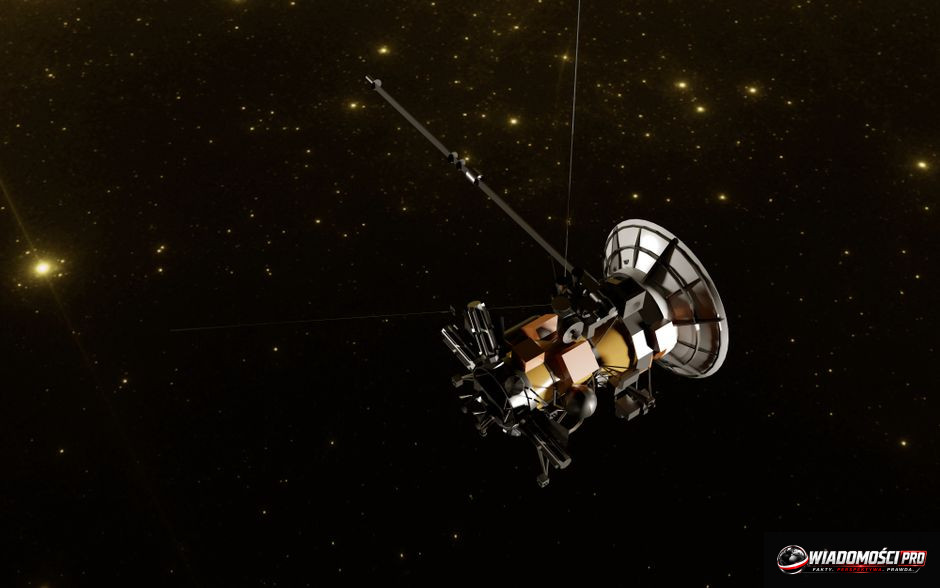
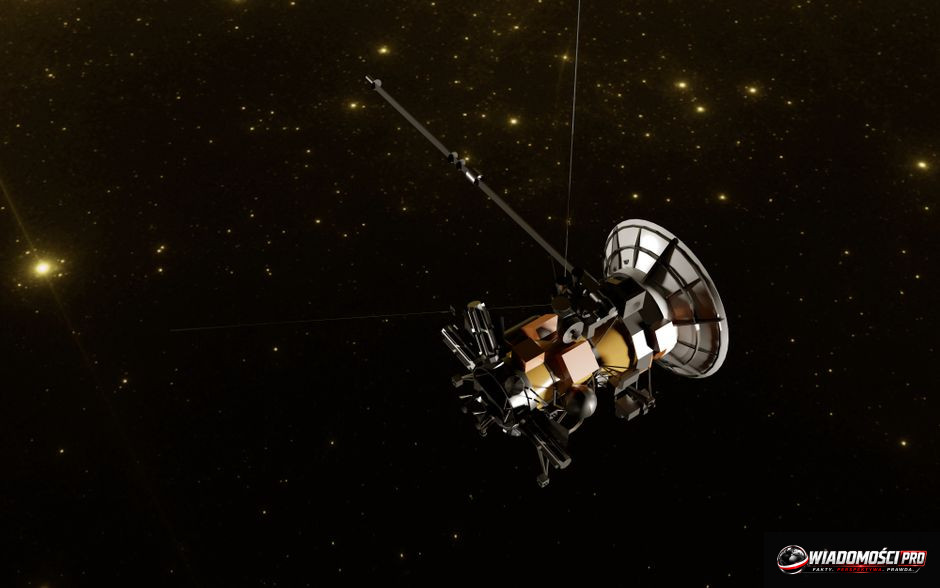
The Europa Clipper probe launched on October 14, 2024, and is heading toward Europa to investigate whether conditions favorable for the emergence of life exist beneath its thick layer of ice. The mission is not intended to directly find organisms, but rather to assess the habitability potential of the ocean hidden beneath the moon's surface. This is not a search for biological traces in the traditional sense, but a multi-billion dollar endeavor aimed at answering the question of whether there are environments in our planetary system capable of sustaining metabolic processes.
Mission goal: the chemical recipe for life
Europa, the fourth-largest moon of Jupiter, has intrigued astrobiologists for decades. Observations made by the Voyager and Galileo probes provided evidence for the existence of a global saltwater ocean beneath the icy crust. NASA decided on a dedicated mission to verify the three pillars of the globe's habitability: the presence of water, the availability of energy, and the chemical composition necessary to build biological structures.
Scientists do not expect Europa Clipper to make contact with an advanced civilization. The goal is to study the chemistry of the ocean by analyzing the composition of matter ejected into space and by studying the icy crust itself. We are focusing on the search for organic compounds, salts, and other chemical substances that may migrate from the moon's interior to the exterior. If it turns out that the ocean has the right balance of elements, Europa will become the prime candidate for the most life-friendly place beyond Earth.
The research methodology is based on a series of flybys. The probe will not enter orbit around the moon itself, as this would be too risky due to Jupiter's extreme radiation field. Instead, Clipper will perform several dozen close flybys of Europa, collecting data in short time windows. This approach forces engineers to plan trajectories precisely. Each flyby is an opportunity to collect data that will allow us to understand the dynamics of the icy crust, including convection processes and potential cracks through which water from the ocean can escape to the surface.
Instruments and technology: an engineering giant
The project's budget is $5 billion, making it one of the most expensive planetary missions in NASA's history. Europa Clipper is a probe with a mass of about 6 tons, and when its solar panels are deployed, its span exceeds 30 meters. Such huge photovoltaic surfaces are necessary because, in the vicinity of Jupiter, sunlight intensity is more than 25 times weaker than near Earth.
On board are 9 scientific instruments designed to work in an extreme environment:
1. EIS (Europa Imaging System) – a set of high-resolution cameras that will create maps of the surface with an accuracy of 50 centimeters per pixel.
2. REASON (Radar for Europa Assessment and Sounding: Ocean to Near-surface) – an ice-penetrating radar tasked with measuring the thickness of the crust and locating potential pockets of water beneath its surface.
3. MISE (Mapping Imaging Spectrometer for Europa) – a spectrometer measuring the chemical composition of the surface, including the distribution of minerals and organic compounds.
4. E-THEMIS (Europa Thermal Emission Imaging System) – a thermal imaging camera looking for "hot spots" on the surface, which may indicate geological activity or cracks in the icy crust.
5. MASPEX (Mass Spectrometer for Planetary Exploration) – an instrument analyzing gases in the moon's thin atmosphere.
6. SUDA (Surface Dust Analyzer) – a dust detector that will capture particles ejected from the surface during the probe's flybys.
7. Europa-UVS (Ultraviolet Spectrograph) – a UV spectrograph studying the composition of the atmosphere and looking for evidence of water vapor plumes.
8. ECM (Europa Clipper Magnetometer) – a magnetometer used to study the magnetic field induced in the ocean, which will allow for the determination of its salinity and depth.
9. Gravity/Radio Science – uses telecommunications systems to study the gravity and internal structure of the moon.
All these instruments must work in harmony, transmitting massive amounts of data to Earth. This data will allow for the construction of a three-dimensional image of Europa's interior, which is crucial for understanding whether the ocean is capable of sustaining life for billions of years.
Radiation challenges: armor against Jupiter
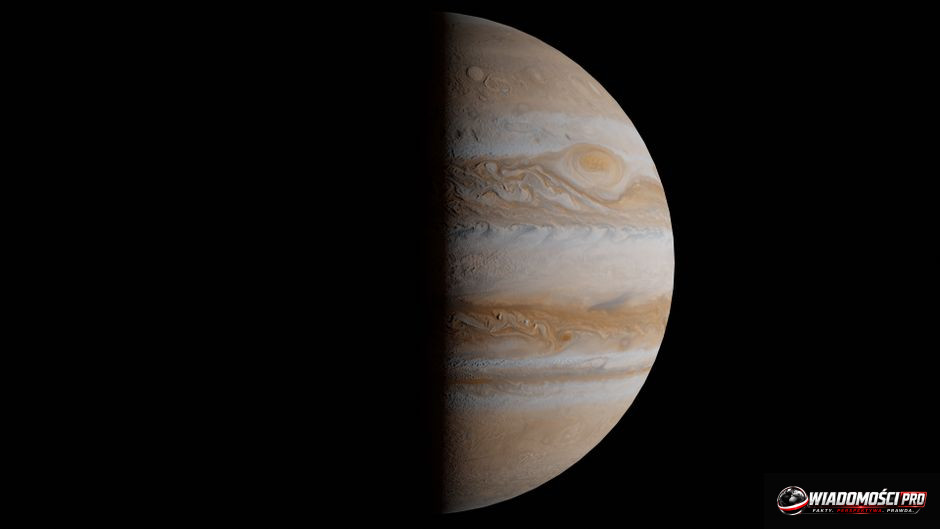
Jupiter possesses the most powerful magnetosphere in the Solar System, which acts as a massive particle accelerator. Near Europa, radiation is so strong that it could destroy standard electronics within a few weeks. NASA engineers faced the challenge of designing a system that would survive the bombardment of high-energy electrons and ions.
The central element of protection is the so-called "vault" – a titanium-aluminum container with wall thicknesses reaching nearly a centimeter. It is inside this armored structure that the most sensitive electronics components, onboard computers, and data processing units are housed. Such a design drastically increases the probe's mass, but it is the only way to ensure that Clipper survives until the end of its mission in 2030 and beyond.
An additional safeguard is the flight trajectory. Instead of orbiting Europa constantly, Clipper will perform so-called "loops" around Jupiter. After each flyby of the moon, the probe will move away from the planet to "rest" from the deadly radiation and transmit the collected data to Earth. This forces a specific rhythm for the mission, where periods of intense scientific activity are interspersed with long stages of data transmission and system regeneration.
The race for discovery: NASA versus ESA
Modern space exploration is a field of competition between national agencies and international consortia. The Europa Clipper mission is often compared to the JUICE (JUpiter ICy moons Explorer) mission, carried out by the European Space Agency (ESA). Although both probes are heading to the same region, their goals are different.
JUICE, which launched earlier, focuses on studying the entire Jovian system, with a particular emphasis on Ganymede. The European probe aims to understand how icy moons formed and how they evolved over time. NASA has opted for a much narrower but deeper specialization: Europa is the primary and only target for Clipper. The American approach is oriented toward astrobiology, while the European mission is more geophysical and planetological in nature.
This competition has both political and scientific dimensions. Washington wants to maintain primacy in exobiological research by investing huge resources in tools that are intended to provide an unambiguous answer to the question of habitability. ESA, in turn, proves that extremely ambitious, multi-year research missions can be carried out with smaller budgets. For the scientific world, this is an ideal situation: both probes will provide complementary data. If Clipper confirms the existence of conditions favorable for life, JUICE will provide context for the entire Jupiter system, which will allow us to understand whether Europa is an anomaly or if there are more such "oases" in the Jovian system.
Travel schedule and navigation techniques
The road to Jupiter is not a straight line. Due to the probe's enormous mass and fuel limitations, the flight trajectory requires the use of gravity assists from celestial bodies. The Europa Clipper probe will perform flybys near Mars and Earth to gain the necessary orbital speed. This is a complex "game of billiards" in space, requiring precision calculations down to the second.
Key dates for the mission are as follows:
- 2024: Launch of the probe after overcoming threats related to weather conditions in Florida.
- 2025: Flyby near Mars, which will allow for course correction and speed increase.
- 2026: Return near Earth to perform a gravity assist maneuver.
- 2030: Entry into the Jovian system and the start of the actual mission phase.
Every maneuver is critical. A calculation error at an early stage of the journey could cause the probe to miss Jupiter by too great a distance, which would mean the failure of the project. Therefore, NASA flight control centers spend months simulating every flyby. The probe uses advanced autonomous navigation systems that correct its position relative to stars and planets in real-time.
Future research: what happens after arrival?
When Clipper reaches its destination in 2030, the most exciting stage of research will begin. Over the course of several years, the probe will perform more than 40 flybys of Europa. Each of them will last only a few hours, during which the instruments will work at full capacity. After completing a flyby, the probe will begin the laborious process of sending terabytes of raw data to Earth via the Deep Space Network.
Scientists realize that even a complete success of the mission may not provide definitive proof of the existence of life. If the instruments show a lack of necessary chemical ingredients or temperatures that are too low deep in the ocean, this will be an important negative conclusion. Such a result would close the debate on Europa's biological potential for decades to come. Conversely, the discovery of organic substances in water vapor plumes could become an impulse to send a lander that could collect samples directly from the surface.
It is worth maintaining distance from sensational headlines. Space research is a process that lasts for decades. From the moment Clipper sends the first photos to a full understanding of the mechanisms prevailing in Europa's ocean, years of painstaking analysis will pass. This is work for generations of astrophysicists, chemists, and geologists. The probe is merely humanity's "eyes" turned toward one of the most mysterious places in space, and its success depends not only on technology but also on patience in interpreting data that could turn our current understanding of life upside down.
What this means for the reader
The Europa Clipper mission represents a turning point in the history of space exploration because, for the first time, we are checking a specific, distant world for its "hospitality" to life so thoroughly. We are gaining knowledge about the limits of biological endurance, but we must remember that absence of evidence is not evidence of absence. If we find nothing under Europa's ice, humanity will gain equally valuable information about how rare a phenomenon life might be on the scale of the Universe. The technical risk is enormous, and the operating costs are gigantic, but it is precisely through such missions that we push the boundaries of knowledge.
Questions and answers
Will the Europa Clipper probe land on the moon's surface?
No, the probe was designed to orbit Jupiter and perform flybys near Europa, collecting data without landing on the surface. Landing in this environment is currently impossible due to the difficult terrain and the lack of technology that would allow for the safe placement of a research module in such a hostile environment.
When will the probe reach its destination?
The planned time for the Europa Clipper probe to reach the Jovian system is 2030. Upon arrival, the research phase will begin, which will last for several subsequent years, including a series of flybys over the moon's surface.
Why did NASA decide on this mission right now?
The mission is the culmination of many years of preparation aimed at using modern technology to study the habitability potential of subsurface oceans. NASA decided that we already have sufficiently advanced instruments to X-ray the icy crust and study the chemical composition of the ocean without the need for a costly and risky landing.
What is the main threat to the mission?
The biggest threat is the radiation near Jupiter, which could damage the probe's electronics despite the use of special shielding. Other challenges include precise navigation during gravity assist maneuvers and the need for efficient communication with Earth from a distance of hundreds of millions of kilometers.
Could the result of the mission be disappointing?
Yes, scientists are considering a scenario in which Europa turns out to be chemically barren. Even if that happens, the data collected by the onboard instruments will be extremely valuable for planetary geology, allowing us to better understand the evolution of moons in the outer parts of the Solar System.
Why aren't we looking for life directly?
Current technology does not allow for the construction of a probe that could drill through kilometers of ice and collect samples from the ocean. Europa Clipper is the first, necessary step toward assessing whether it is even worth taking the risk of such an engineeringly complex expedition in the future. We are focusing on remote data that will provide answers to fundamental questions about habitability without risking the loss of a lander.
Sources
- Start of the Europa Clipper mission to Europa - AstroNET – Polish Astronomical Portal
- Europa Clipper probe to search for life on Europa - Urania - Polish Astronomical Portal
- Europa Clipper launches. A key task ahead - Geekweek Interia
- Start of the Europa Clipper mission [BROADCAST]. Americans to outpace Europeans in the search for life on Europa - Wyborcza.pl
- Beginning of the Europa Clipper mission - Kosmonauta.net
- Europa Clipper probe to search for life on Jupiter's moon, Europa - wszystkoconajwazniejsze.pl
- Europa Clipper has launched. It will investigate whether there are conditions for life on Jupiter's moon - Polskie Radio 24
- Hurricane Milton delays the launch of NASA's largest space probe, Europa Clipper, until October 14 - Notebookcheck.pl
Article prepared by the Wiadomości PRO editorial team with the support of artificial intelligence. Facts come from the sources listed above.

Komentarze (0)
Ładowanie komentarzy...