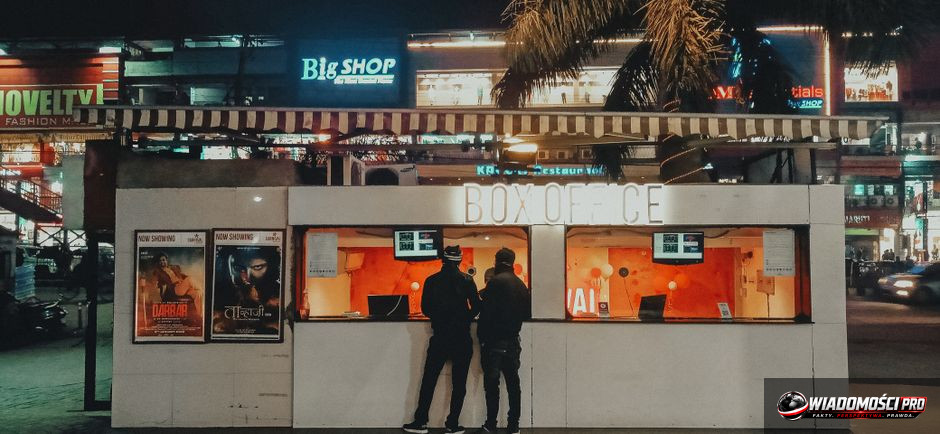
The Picturehouse Cinemas chain has pulled the comedy "The Comedians' Gambit" from distribution across its 27 cinemas, citing staff safety concerns and the film's incompatibility with the company's inclusivity policy, which triggered a wave of boycotts from outraged viewers. This decision, made by the company's board, represents one of the most radical moves in the British cinema industry in recent years. However, representatives of the chain, including press spokesperson Clare Higgins, did not provide any concrete evidence regarding how real the physical threat to employees was, nor did they specify which particular scenes in the film violated internal inclusivity standards.
Chronology of events: From premiere to title withdrawal
The timeline of events that led to "The Comedians' Gambit" being pulled from the schedule shows the characteristics of a crisis response driven by fear of social media. A massive protest campaign began online, gaining momentum within just 48 hours of the first repertoire announcements. Activist groups, operating mainly on platforms like X and Instagram, raised allegations that the work is offensive to certain minorities.
Picturehouse Cinemas, which manages 27 locations in the UK, adopted a defensive strategy. Instead of waiting for formal reports or customer complaints, the board decided to completely withdraw the production before its nationwide premiere. This decision was announced with immediate effect. Cinema staff, whose safety was supposedly being protected, received only brief instructions regarding ticket refunds. No one from the board decided to speak directly with the filmmakers, which the distributor, Independent Visionary Films, perceived as a unilateral breach of the distribution agreement.
The tension, which moved from the web to physical cinema spaces, was already palpable during the pre-premiere press screenings. Viewers who had previously purchased tickets were informed of the cancellation of screenings via short messages in the mobile app and email. The lack of transparency in explaining the motives behind the decision caused theories about the actual reasons for pulling the film to multiply on social media. Some viewers suggest that the chain succumbed to pressure from groups that had not, in fact, even seen the full version of the work.
Official position of Picturehouse: Safety over profit
The board of Picturehouse Cinemas emphasizes that the company's overriding value is to create an environment in which every viewer and employee feels safe. Clare Higgins, speaking on behalf of the chain, indicated that "the decision to withdraw the title was dictated by concern for peace in our facilities." However, there is a lack of any data on the number of incidents that would justify such a drastic step. There were no reports of police intervention in any of the 27 cinemas, nor were any official reports of public order violations received by the company in connection with the upcoming premiere.
The inclusivity argument, used as the foundation for the decision, became a flashpoint for critics. For years, Picturehouse has built an image as a place for the ambitious viewer who values artistic freedom. Current actions are interpreted by many as preventive censorship. The company has not disclosed the procedure by which the "content" of the film was verified. No external ethics committee was appointed, and the decision to remove the comedy was made by a narrow circle of management.
From the perspective of brand strategy, Picturehouse is trying to position itself as a socially responsible brand. However, in the eyes of some regular customers, the chain has lost credibility. The boycott that followed the announcement of the decision strikes at the foundations of this policy. Viewers who consider the chain's move unjustified are massively canceling their membership cards. This phenomenon shows that corporate concern for inclusivity can have the opposite effect if it is perceived as an arbitrary imposition of a worldview.
Why did the comedy become a target of a boycott?
"The Comedians' Gambit" is a satire that from the very beginning sparked controversy with its uncompromising approach to taboo topics. The film's director, whose name remains at the center of the dispute, has not yet commented on the accusations, which only fuels the atmosphere. The main accusations from activists focus on the way the characters are portrayed, which, according to the protesters, perpetuates harmful stereotypes. However, there are no specific quotes or scenes that are cited as the direct cause of the outrage.
An analysis of online discourse indicates that the boycott was organized. The use of hashtags and coordinated email campaigns to the Picturehouse headquarters allowed for immense pressure to be exerted in a short time. The chain, instead of engaging in debate, chose the shortest path – withdrawing the film. This attitude is criticized by media experts as a dangerous precedent. If every controversial production is removed under the influence of online pressure, cinema repertoires will become extremely uniform.
It must be noted that everyone loses in this situation. Viewers who wanted to form their own opinion about the film were deprived of that opportunity. The creators, whose work was reduced to "content inconsistent with policy," were not given a chance to defend their artistic vision. In turn, the cinema chain itself, wanting to avoid a PR crisis, fell into the trap of its own inconsistency. It replaced debate with silence, which in today's times is interpreted as an admission of error or weakness.
Economic consequences of the decision for the cinema chain
The scale of Picturehouse Cinemas' financial losses is currently difficult to estimate, but analysts point to several measurable areas. First and foremost, there is the loss of ticket revenue, which in the case of such a high-profile title could have accounted for a significant percentage of turnover in a given quarter. Added to this are the costs of processing refunds and changing repertoire logistics, which required additional work from the staff managing the schedules in 27 cinemas.
A more serious problem for the chain's financial health is the outflow of regular customers. Picturehouse's loyalty programs are based on subscriptions, and users who feel disappointed by the censorship decision are massively canceling their contracts. Every lost subscriber is not only a loss of a monthly subscription fee but, above all, a loss of potential revenue from concessions, which is a key source of margin in a cinema.
No official data on losses has been published, but unofficially there is talk of a significant drop in turnover compared to the same period last year. Investors are looking at the situation with concern, fearing that decisions made under the influence of social emotions will be repeatable. If the chain does not present a concrete recovery plan or explain its actions transparently, the risk of a permanent decline in brand value becomes real. The market does not like uncertainty, and Picturehouse, with its laconic statements, is keeping it at a high level.
Industry voice: Is this a new era of cinema censorship?
Experts involved in film distribution in the UK are divided. Some believe that a cinema chain has every right to decide what it shows, arguing that it is a private business. Others, however, warn of a "chilling effect" that could affect the entire industry. If cinema operators begin to act as ethical judges, filmmakers will create increasingly conservative productions to avoid being excluded from the market.
The discussion includes the name of an artistic director of an independent cinema, who stated that a cinema should be a place where views clash, not a "comfort zone for selected groups." In his opinion, withdrawing "The Comedians' Gambit" from 27 cinemas is a signal that corporations are afraid of their audiences. Instead of moderating the discussion, they choose the easier way out – removing the problem from sight. This is a short-sighted approach that does not solve the causes of the conflict, but merely shifts it to another space.
It has not yet been confirmed whether other large cinema chains intend to introduce similar verification mechanisms. Distributors are watching the development of events with concern, realizing that their products could become hostages to corporate policy. The question about the future of distribution thus becomes a question about the future of cinema as a medium. Is it meant to provoke and force thought, or merely provide safe entertainment that does not raise any controversy?
What's next for the film? Distribution prospects
The producer of "The Comedians' Gambit" is in a difficult position. After the title was pulled from such a large chain, the chances of high attendance in other cinemas are decreasing. The cinema market is ruthless for films that have been branded as controversial before they even hit the screens. Currently, three main scenarios for further distribution are being considered, although none seems to be a guarantee of financial success.
The first solution is an accelerated premiere on streaming platforms. Digital distribution allows for bypassing physical confrontation with protesters and gives viewers the freedom of choice – they can decide for themselves whether they want to watch the film or not. This is a move that has become a standard in recent years for productions that have not fared well in cinemas. It allows for the quick recovery of part of the invested capital and calms the emotions surrounding the film's brand.
The second scenario is limiting distribution to independent cinemas that are not subject to the pressure of large corporations. Such venues often value programming independence and could become a safe haven for "The Comedians' Gambit." However, the reach of these cinemas is incomparably smaller than in the case of the Picturehouse chain, which means significantly lower ticket revenues.
The third path is a complete suspension of distribution in the region and focusing on foreign markets. The producer has not yet issued a statement on this matter, which indicates ongoing legal and financial analyses. Every subsequent decision will be fraught with risk. If the film is withdrawn, the losses will be definitive. If it is released to smaller chains, it could become a symbol of resistance to censorship, which paradoxically could increase interest in the production.
What this means for you
The whole situation is proof that the line between creative freedom and social expectations has blurred. As a viewer, you become a participant in a game in which your right to choose is limited by corporate security departments. Picturehouse Cinemas, by making the decision to pull the film from 27 cinemas, did not solve the problem of the controversy surrounding the film, but merely moved it to the level of a debate about free speech in the public space.
Ultimately, the loss concerns us all. A cinema that refuses to present difficult content ceases to fulfill its function as a mirror of reality. Instead of a debate about what is truly harmful in the film, we receive a message about "safety" that contains no substantive arguments. It is you, as a viewer, who must now ask yourself the question: do you agree to corporations deciding what is worth your time and attention?
Questions and answers
Will the film be shown in other cinemas?
Currently, there is no official information about the title being pulled by other cinema chains, however, distributors remain cautious in planning premieres after the incident with Picturehouse.
What are the main accusations against the comedy?
The accusations concern content deemed exclusionary and offensive to certain social groups, however, no concrete evidence in the form of script analysis or specific frames has been presented.
Does Picturehouse plan to apologize?
The chain has limited itself to an official statement about staff safety and inclusivity, not anticipating further steps such as an apology or a debate with viewers.
Were cinema employees really in danger?
There were no incidents involving the police or reports of aggressive behavior in cinemas, which makes the chain's argument about physical danger unconfirmed.
What will happen to tickets purchased for screenings?
All tickets were automatically canceled, and the chain launched a refund process for all customers who made a purchase before the decision to pull the film from the repertoire.
Has the film's producer addressed the boycott?
The producer, Independent Visionary Films, has not yet issued a statement regarding the boycott, which indicates ongoing negotiations or an analysis of losses resulting from the breach of contracts by the cinema chain.
Are other films from the Picturehouse repertoire at risk of being pulled?
The chain has not informed about changes to its repertoire policy, however, industry observers predict that in the future, the content verification process before a premiere may be tightened to avoid similar PR crises.
Where can one look for information about the film's future?
Any updates will be published by the distributor, Independent Visionary Films, on their official communication channels, although for now, the date of a potential premiere remains unknown.
In summary, the situation surrounding "The Comedians' Gambit" remains open. The lack of transparency on the part of Picturehouse Cinemas and the lack of an official position from the filmmakers mean that this case will resonate in the film community for a long time as a warning against the consequences of ill-considered crisis communication in the age of social media. Viewers, deprived of the opportunity to evaluate the work, must rely on unofficial information, which only deepens polarization and makes it difficult to form an objective opinion about the conflict that has occurred. The chain's decision to pull the title from 27 cinemas will forever remain an example of how quickly corporations can abandon neutrality in favor of image safety, often against the interests of their own customers. Whether we will see a return to openness in the future, or rather a consolidation of the trend of silencing controversy – this has not been confirmed, and time will tell if Picturehouse learns a lesson that will allow it to avoid similar losses in the future. Regardless of the outcome, the cinema industry in the UK faces the necessity of redefining its role in public debate.
Article prepared by the Wiadomości PRO editorial team with the support of artificial intelligence. Facts come from the sources provided above.
Komentarze (0)
Ładowanie komentarzy...