
Starting in 2025, a probationary period for young drivers has been introduced, and a lack of third-party liability (OC) insurance carries a penalty of up to 9,600 PLN; 64,000 people will lose their driver's licenses permanently under the new regulations. These changes stem from the amendment to the Act on Vehicle Drivers and regulations on compulsory insurance, which aim to drastically reduce the number of road accidents caused by inexperienced road users. This legislation ends the era of leniency for those who do not treat traffic regulations with due seriousness.
The probationary period mechanism: life under the system's magnifying glass
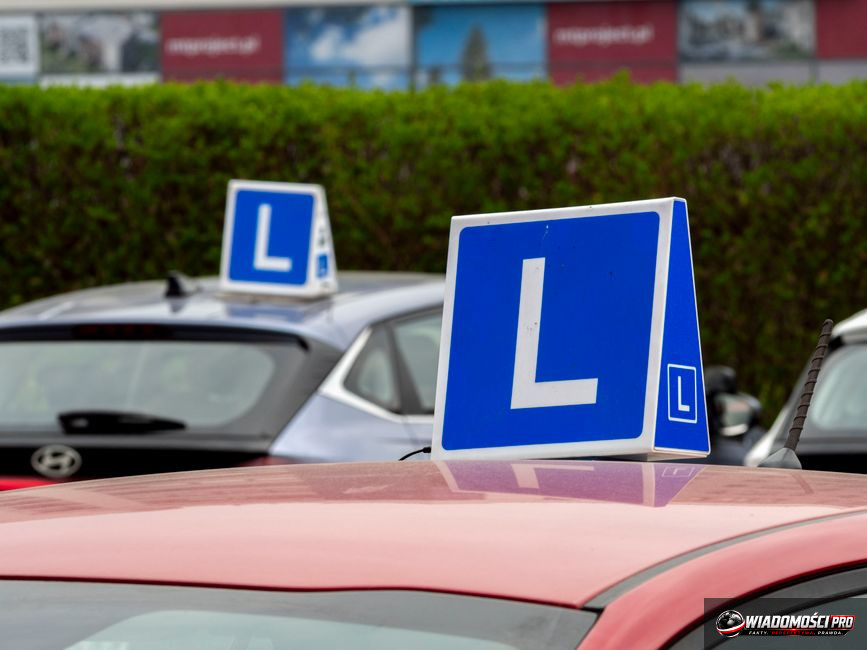
The probationary period, which covers all new drivers, is not just a formality at the transport office. It is a strict surveillance system where every mistake is scored with absolute precision. According to the act, a driver obtaining their license for the first time enters a two-year period of special verification. During this time, stricter speed limits apply. A young driver cannot exceed 90 km/h on roads outside built-up areas, 100 km/h on dual-carriageway expressways, and 120 km/h on motorways. This restriction aims to eliminate recklessness resulting from a lack of vehicle control skills in difficult conditions.
Additionally, the law has introduced a total ban on towing other vehicles by persons in the probationary period. The legislator deemed that this maneuver requires experience that a novice simply does not possess. Violating these rules, combined with exceeding the allowed number of penalty points, results in an immediate referral to a re-education course or the revocation of driving privileges. The IT system of the Central Register of Drivers (CEPiK) monitors every offense, meaning an official no longer has to make a discretionary decision – the algorithm generates a notification of license loss the moment the limit is exceeded.
For a young driver, this approach means that every decision behind the wheel must be well-considered. Lack of experience is no longer treated as a mitigating circumstance. On the contrary, the "probationary driver" status forces defensive behavior, because any serious traffic violation ends in an administrative process, which in many cases leads to the necessity of retaking the full course and state exam. This is a huge time and financial cost, which for many becomes an insurmountable barrier.
The 0.0 per mille rigor: the end of illusions from September 3, 2026
The introduction of a full prohibition in road traffic is the next stage of the transformation of Polish law. From September 3, 2026, any amount of alcohol in exhaled air leads to immediate consequences. The legislator has not provided for any margin of error, as clearly stated in the amendment to the Road Traffic Law. A driver who decides to drive under the influence must face a five-year driving ban. This is a penalty that, in practice, excludes those who make a living from driving from their professional life.
This situation is particularly severe for those professionally involved in transport. A five-year break from driving means professional degradation. The court does not have much room for maneuver here, as the regulations have been constructed in a rigid manner, limiting the possibility of adjudicating milder penalties. It is worth noting that these changes are not just a media scare tactic. The police have received guidelines regarding an increased number of sobriety checks at critical traffic points, which means the risk of getting caught increases exponentially.
The argumentation for these solutions is based on accident statistics. Data from 2025–2026 show that intoxicated drivers are still one of the main causes of fatal incidents. The state has therefore decided to shift the burden of responsibility directly onto the citizen, eliminating discussions about a "safe dose." From September 2026, any attempt to negotiate with an officer or explain oneself by citing alcohol consumption from the previous day will be pointless, as new-generation measuring devices are calibrated with the highest precision, eliminating errors resulting from external factors.
Systemic elimination: why are 64,000 drivers losing their privileges?
The figure of 64,000 people who will lose their driver's licenses permanently is not a random estimate, but the result of an analysis of the system's capacity after the introduction of new regulations by the President at the end of 2025. This process results from the overlap of several factors: a drastic tightening of penalty points, the introduction of a probationary period, and rigorous insurance control. Many of these people are drivers who have accumulated offenses for years, counting on statute of limitations or a lenient approach by law enforcement. Now the system has started "cleaning" the database.
The act signed by the President led to the standardization of driver verification. Before 2025, many people with active bans or unresolved legal issues operated in the so-called gray zone. Today, thanks to the integration of IT systems between the police, courts, and the Insurance Guarantee Fund, every irregularity is immediately detected. For 64,000 drivers, this means their privileges expire administratively, with no possibility of appealing the decision, which is merely a confirmation of the factual state recorded in the databases.
This phenomenon strikes at the foundations of the mobility of thousands of families. Many people in this group are drivers who, as a result of accumulating points for speeding and other traffic offenses, have exceeded the statutory limit. Instead of the previous point-reduction training, the new law focuses on eliminating irresponsible individuals. This is a radical turn in state policy, which has ceased to serve an educational function in favor of an enforcement one. The effects of this process will be felt in the labor market, where the inability to drive will become a significant obstacle for many employees in the logistics or field services sectors.
Financial trap: 9,600 PLN penalty for lack of OC insurance
Third-party liability (OC) insurance has ceased to be a matter of choice and has become the most expensive mistake one can make as a vehicle owner. The amount of 9,600 PLN, set by the Insurance Guarantee Fund (UFG), is the maximum penalty for a lack of insurance continuity exceeding 14 days. UFG algorithms operate in continuous mode, scanning the CEPiK database and comparing it with data from insurers. If a vehicle is in the database and there is no premium payment, the system automatically generates a payment request.
This mechanism is ruthless. Many people fall into the trap by selling a car without terminating the contract or forgetting about the automatic renewal of the policy. In 2026, in the face of rising living costs, a 9,600 PLN penalty represents a real existential threat to many households. It is a sum that often exceeds the market value of older vehicles. Therefore, having a valid OC policy is currently the most important duty of a car owner, more important even than having a valid technical inspection, for the lack of which smaller financial consequences apply.
From an editorial perspective, it is clear that the state has recognized insurance as one of the pillars of public safety. Lack of OC means that in the event of an accident, treatment and repair costs are covered by the state fund, which burdens all those who pay their premiums honestly. Therefore, such a high penalty is intended to serve as a deterrent. There is no room for excuses about a "difficult financial situation" or "oversight." The law in this regard is binary, and every driver who decides to delay paying the policy must face the risk of losing financial liquidity within just a few weeks of the system detecting the lack of insurance coverage.
Speed in light of 2026 regulations
Speeding in Poland in 2026 has become a challenge that not every driver can handle. The new regulations that have come into force no longer concern only the amount of fines, but primarily the permanence of driving privileges. According to the current tariff, exceeding the speed limit by more than 50 km/h in a built-up area results in the immediate suspension of the driver's license for three months. Recidivism in this regard means the loss of privileges for a period of six months, and a third offense within two years leads to an indefinite revocation of the driver's license.
This situation is particularly difficult for professional drivers. Every kilometer on the odometer is recorded by a network of sectional speed measurement systems, the number of which increased by several dozen percent nationwide in 2026. This infrastructure not only measures speed but also analyzes traffic flow, which allows for the detection of unauthorized use of bus lanes or violations of the overtaking ban by heavy goods vehicles. A driver who counted on "knowing the road" and knowing where patrols are standing must verify their approach. Digital surveillance operates 24 hours a day, regardless of weather conditions or traffic intensity.
The introduction of these regulations is also a response to the demands of organizations fighting for pedestrian safety. Statistics show that reducing speed in city centers drastically improves survival rates in the event of a collision. On the other hand, skeptics note that a dense measurement network leads to driver irritation and the creation of traffic jams in places where smooth traffic would be safer. Regardless of opinions, the fact is that the 2026 tariff does not provide for a grace period. Anyone who decides to break the limits does so with the full awareness that they are risking not only their wallet but, above all, their presence behind the wheel.
Driver's license replacement: administrative duty or real problem?
In 2025, thousands of drivers faced the necessity of replacing their driver's license documents. This is because old document templates lost their validity, and IT systems forced the update of data in the central database. Many people neglected this duty, thinking that since they held the privileges, the physical document was just a formality. Nothing could be further from the truth. A traffic stop where a driver presents an invalid document ends in the immobilization of the vehicle and a ban on further driving.
The replacement of driver's licenses in 2025 was the first stage of a broader operation to "clean up the driver database." Transport offices across the country faced a huge siege, which for many meant waiting weeks for a new document. This chaos was the result of a lack of adequate administrative preparation to handle such a large number of applications in a short time. In 2026, the situation stabilized, but the lessons from this period are clear: the Polish road administration system required deep digitalization to be able to enforce the new, strict law.
A key aspect for every driver now is regularly checking the status of their privileges in the mObywatel application. This is the only way to avoid a situation where you find out about the loss of document validity only during a police check. In 2026, the law does not provide for a grace period for those who forgot about administrative deadlines. Every day of driving with an invalid driver's license is treated as driving without the required privileges, which carries consequences much more serious than just a fine – from high financial penalties to a court case inclusive.
Helmets, bus lanes, and other regulations: details that cost
New traffic regulations are not just about speed and alcohol. They are also a series of seemingly minor changes that have a huge impact on the daily functioning of drivers. The issue of helmets for users of certain vehicles or the rigorous approach to bus lanes are signals that the legislator wants to eliminate traffic chaos from cities. Passenger car drivers are increasingly being pushed out of main arteries in favor of public transport, which is reflected in the more frequent issuance of fines for unauthorized use of dedicated traffic lanes.
It is worth noting that these minor changes are part of a strategy aimed at reducing the number of cars in city centers. The President, by signing the amendment, gave the green light to actions that are burdensome for many drivers, but for urban planners, they represent the only way to improve city throughput. The problem is that infrastructure does not always keep up with the restrictions. Often there is a lack of alternative roads, which makes the driver feel cornered by a system that, on one hand, imposes strict penalties for mistakes, and on the other, hinders legal movement.
For the average category B driver's license holder, 2026 is a time to learn humility. The system does not ask about intentions, only about compliance with regulations. If you enter a bus lane because your GPS led you astray – you will pay a fine. If you forget to pay for OC insurance by one day – you will pay 9,600 PLN. If as a young driver you speed – you will lose your privileges. This is a reality where "human error" has become a luxury commodity that almost no one can afford.
Editorial perspective: will this improve safety?
Analyzing all the introduced changes, it is hard to resist the reflection that the system has become extremely oppressive. It will certainly lead to the elimination of the most dangerous individuals from the roads, which is a success for the Ministry of Infrastructure. However, at the cost of this safety is a drastic limitation of civil liberty. A system that punishes first and only then verifies the circumstances arouses understandable social resistance. For the 64,000 people who will lose their driver's licenses, this is not just a statistic – it is a personal failure and a loss of independence.
The catch lies in whether the state can ensure the efficient functioning of this system. If privilege verification takes months and offices cannot keep up with processing applications, a traffic paralysis will occur. All road users gain through greater predictability on the road, but drivers lose, as they must function in conditions of permanent stress. The question of whether safety can be built solely on the fear of punishment remains open. Experiences from other European countries show that education is just as important as repression, and in the Polish legal order, the latter tool definitely dominates.
It is worth following court rulings in the coming months. It is the courts that will have to decide in cases where regulations are ambiguous and drivers will try to prove that the system malfunctioned. For the average driver, the most important lesson from 2026 is that ignorance of procedures or counting on "luck" usually ends in the loss of a document, which for many is a basic work tool.
Questions and answers
Does the probationary period apply to all drivers?
No, the probationary period introduced in 2025 applies only to young, beginner drivers obtaining their privileges for the first time.
How much exactly is the penalty for lack of OC insurance?
The penalty for lack of valid OC insurance is 9,600 PLN in the case of a gap exceeding 14 days.
What penalties apply for driving under the influence of alcohol from September 2026?
A rigorous 0.0 per mille rule applies, and offenders face up to a 5-year driving ban.
Do 64,000 people lose their driver's license automatically?
Yes, this is the result of a systemic verification of data after the introduction of new regulations, which eliminate drivers with the highest number of offenses and an unregulated legal situation from traffic.
Do I have to replace my driver's license if it is valid?
Replacement mainly concerns people whose documents have lost administrative validity. However, it is recommended to verify the document status in the mObywatel system to avoid problems during a traffic check.
Sources
- From September 3, new rules for drivers. 0.0 per mille and 5 years without a driver's license - Rzeczpospolita
- These people must replace their driver's license in 2025 - Dziennik Bałtycki
- This year's holidays, it's easier to lose your driver's license, and you will pay up to 9,600 PLN for lack of OC - prawo.pl
- Changes for all category B driver's license holders, drivers in the EU will be satisfied - Polski Obserwator DE
- Speeding in Poland 2026 – new regulations and penalties - drivemode.pl
- Revolution on the roads in 2026. You will lose your driver's license faster than you think - Gazeta Prawna
- 64,000 drivers will lose their driver's license forever. The President has decided, here are the changes - Dziennik.pl
- New traffic regulations. The President signed, and you will lose your driver's license for speeding. Helmets and bus lanes. Here is what is changing - Vehis
Article prepared by the Wiadomości PRO editorial team with the support of artificial intelligence. Facts come from the sources provided above.

Komentarze (0)
Ładowanie komentarzy...