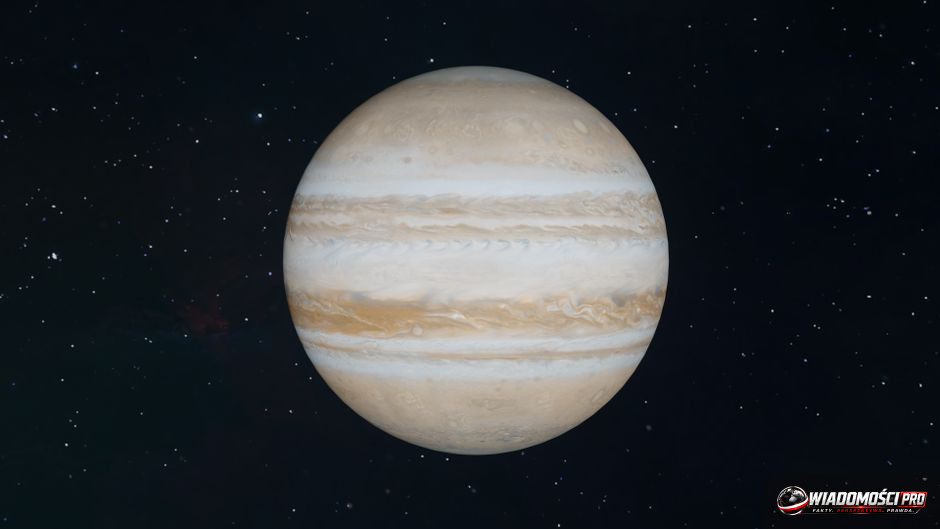
The Europa Clipper mission costs 5 billion dollars, and its goal is to investigate whether conditions necessary to support life exist beneath Europa's icy shell. This is one of the most complex planetary operations ever included in NASA's plans. The probe, which left Earth in October 2024, aims to answer the question of whether we are alone in our Solar System by analyzing the chemical composition and structure of one of Jupiter's most intriguing moons.
Mission budget: Why is the funding so high?
The sum of five billion dollars is not just the price of the probe itself. It is a cost covering decades of design, construction, rigorous testing, and operations that must take place in the extremely hostile radiation conditions prevailing in Jupiter's environment. The space agency is funding the entirety from its own budget, which, at such a high amount, sparks discussions about scientific priorities. Supporters of the project point out that the scale of technical difficulties does not allow for simple cost-cutting. The probe must survive bombardment by charged particles while orbiting the largest planet in the Solar System multiple times to provide data that we are unable to obtain from Earth.
Every dollar spent on this project is a bet on whether physics and chemistry inside the icy globe would allow for the survival of living organisms. If Europa Clipper fails, we will lose not only money, but above all, a decade of work by hundreds of scientists and engineers. Critics point out that for such an amount, a dozen or so smaller, more specialized projects could have been realized. In turn, engineers argue that only such large and extensive equipment is able to survive in the extreme environment of Jupiter. It is an investment in the highest possible class of material and system resilience.
Launch technology: The role of the Falcon Heavy rocket
The probe, with a mass exceeding 6 tons, required a means of transport that would be able to safely carry it into space. The choice fell on the Falcon Heavy rocket, a construction developed by SpaceX, which in this case played the role of the foundation of the venture. Without the payload capacity offered by this carrier, scientists would have had to abandon part of the advanced research equipment, which would have significantly lowered the scientific value of the mission. In the space industry, there is no room for compromise when searching for traces of life under an icy shell is at stake.
SpaceX had to ensure power and precision so that the probe could begin its journey toward Jupiter in a strictly defined launch window. A successful launch in October 2024 confirmed the validity of this logistical decision. Government agencies are increasingly ceding the riskiest stages of missions to the private sector, optimizing operational costs. In the case of Europa Clipper, the rocket worked flawlessly, placing the payload on a trajectory allowing it to reach its destination. The fate of the mission now lies in the hands of the probe's onboard systems, which, after separating from the rocket stages, operate independently in deep space.
Scientific goals: What exactly are we studying on Europa?
Scientists are not looking for direct evidence of the existence of intelligent civilizations. They are looking for fundamental premises: evidence that physics and chemistry inside the icy globe would allow for the survival of life. The probe is tasked with conducting a series of precise measurements that will answer questions about the nature of the liquid ocean hidden under a thick layer of ice. This is not a typical "land and dig" mission. Europa Clipper is a set of instruments that will fly over the moon's surface multiple times, performing scans from a great distance.
The main research tasks focus on two areas. The first is studying conditions for supporting life – onboard instruments will check the chemical composition of the surface and the presence of organic matter, which is a necessary biological building block. The second is the analysis of interactions between the icy shell and the ocean hidden beneath it. Scientists want to understand whether water from the depths penetrates through cracks to the outside and whether geological processes supply the environment with the energy necessary for potential organisms. Even confirming the presence of liquid water does not make Europa a second home, but it would be proof of the existence of a friendly environment on a scale we have not known before outside of Earth.
Travel schedule to the Jovian system
The probe began its long journey in October 2024. The venture does not consist of flying in a straight line. NASA planned the journey to use the gravity of other celestial bodies to gain the appropriate speed, which is a standard, albeit highly precise, procedure in interplanetary missions. The probe must demonstrate extraordinary resistance to radiation and difficult environmental conditions while overcoming successive stages of its route. Each stage requires perfect synchronization of onboard systems.
The journey includes long-term gravitational maneuvers within the Solar System. The probe must survive years in deep space before it reaches its destination to begin the research that the entire scientific community is waiting for. It is worth remembering that every delay in this mission is not only a matter of time, but also an increasing technical risk for the devices. After the launch in 2024, the machine is left entirely to its automated systems. Upon reaching the site, Europa Clipper will have to perform a series of orbital maneuvers to safely begin its flybys over the moon.
Measurement instruments on board the probe
In the space industry, there is no room for design errors when such a huge expenditure of funds is involved. The probe is not going there for a trip. It must survive Jupiter's deadly radiation to even begin its research work. Engineers opted for specific technical solutions. On board is a set of equipment whose task is to look under the moon's icy armor without the need to land on its surface.
The probe is equipped with advanced sensors for analyzing the chemical composition of the ice, which will allow determining whether there are any organic compounds in the salty ocean hidden under the shell. The devices will also allow for geological mapping of the surface, which in practice means creating precise three-dimensional models of cracks and ice ridges, indicating geological activity of the interior. Are these instruments enough? Europa is an extremely hostile environment. The electronics will be subjected to constant degradation by radiation, and the signal sent back to Earth will travel for over an hour one way. This is not work in real-time, but a race against time, in which the failure of one component can silence the mission for years before the planned completion of research.
Why is Europa so important for science?
Europa is one of the most promising objects in the Solar System from the point of view of astrobiology. Geophysical models indicate that it possesses an ocean of salty water hidden under an impenetrable layer of ice. This is not merely a dead, frozen lump of rock, but a dynamic environment. During its planned flybys, the probe will check whether this water has contact with minerals necessary for life. It is this interaction between the ocean floor and the liquid that constitutes a potential biological incubator. Without the right chemistry, even huge amounts of water will remain only a useless resource.
Expectations are huge, although reality can be brutal. NASA engineers designed instruments capable of precise chemical composition analysis, but no one can guarantee that a sensor will detect specific traces of life. If the mission confirms the presence of necessary elements in the ocean, it will fundamentally change our way of perceiving the habitability of the cosmos. However, if the data returning to Earth brings disappointment, the project will be recorded in textbooks as the most expensive lesson in humility. The cosmos does not give away answers for free, and Europa may turn out to be another barren globe, which, however, will still constitute valuable geological knowledge about the evolution of Jupiter's moons.
What does this mean for you?
The Europa Clipper mission is a milestone in the development of astrobiology. The entire scientific community will gain invaluable data on the potential habitability of celestial bodies outside of Earth. The catch lies in the huge costs and the waiting time for results, which will arrive only after years of the probe's journey. For the average observer, this mission may seem distant, but it is precisely thanks to it that we will learn how unique – or common – liquid water is in our part of the galaxy. This investment pushes the boundaries of what we are capable of studying without leaving the Solar System.
The success of this operation depends on the durability of the components launched in October 2024. In the coming years, the probe will gradually approach Jupiter, overcoming successive stages of its route. The data it sends will allow us to create a map of potentially habitable places on Europa. This is knowledge that does not translate directly into everyday life, but builds the foundations for our understanding of the mechanisms governing the universe. If life actually exists under the ice, this mission will forever change our definition of the human place in the cosmos.
Questions and answers
Will the probe land on Europa's surface?
No, Europa Clipper is an orbiter-type probe that will fly near the moon multiple times, performing remote measurements. Landing on Europa would involve the risk of contaminating its environment and would require completely different technology that we do not currently possess.
How long will the journey to the destination take?
The journey to the Jovian system will take several years. The probe must use gravitational maneuvers near other planets to gain the appropriate speed and precisely reach the vicinity of the moon, which is a standard procedure in interplanetary missions.
Is this the most expensive NASA mission in history?
The $5 billion budget places it among the most costly planetary projects of NASA. It is an investment that requires a huge capital outlay, but serves research that cannot be conducted using cheaper and less advanced instruments.
Why was the Falcon Heavy rocket chosen?
The choice of the Falcon Heavy rocket was dictated by the need to launch a heavy probe, equipped with many advanced research instruments and shielding systems. Other carriers did not offer, at the time of planning the mission, the appropriate payload capacity that would allow sending such a large amount of equipment toward Jupiter.
What will happen if the probe does not find any traces of life?
Even if the probe does not detect signs of life, it will provide a huge amount of data on the geology, chemical composition of the ocean, and the thickness of Europa's icy shell. Each of these results will allow for a better understanding of the physical processes prevailing in the Solar System, which in itself is a great scientific achievement.
Can Jupiter's radiation damage the probe?
Yes, Jupiter has extremely strong radiation belts that are deadly to electronics. The probe was designed with the intention of withstanding this environment, possessing special radiation shields that are meant to protect the most sensitive components during flybys near the moon.
When can we expect the first photos and data?
The first data will start flowing in after the probe reaches Jupiter's orbit and begins the scientific research phase. Due to the huge distances, sending data to Earth will take a long time, and their analysis will take subsequent months, which is why the full results of the mission are a long-term matter.
What are the chances of finding life?
The chance of finding life is difficult to estimate. The mission is to check the conditions, i.e., the presence of water, energy, and chemistry necessary for life. Finding these three elements would be a breakthrough, although it is not synonymous with the direct detection of living organisms.
Is the mission safe for Europa's environment?
NASA strictly adheres to planetary protection rules to prevent the contamination of Europa with Earth microorganisms. The probe is sterilized before launch, and its trajectory is planned to minimize the risk of accidental impact on the moon's surface after the mission ends.
Why is this study so expensive?
The cost results from the need to develop technologies resistant to extreme radiation, the construction of precise research instruments, and the long-term maintenance of the operational team that will manage the probe throughout its many years of travel and scientific work in the Jovian system.
Sources
- Start of the Europa Clipper mission to Europa - AstroNET – Polish Astronomical Portal
- Europa Clipper probe will search for life on Europa - Urania - Polish Astronomical Portal
- Europa Clipper launches. A key task ahead of them - Geekweek Interia
- Start of the Europa Clipper mission [BROADCAST]. Americans will overtake Europeans in the search for life on Europa - Wyborcza.pl
- Beginning of the Europa Clipper mission - Kosmonauta.net
- Europa Clipper probe will search for life on Jupiter's moon, Europa - wszystkoconajwazniejsze.pl
- Europa Clipper has launched. It will investigate whether there are conditions for life on Jupiter's moon - Polskie Radio 24
- Flight to Jupiter for 5 billion dollars. Europa Clipper launch on board Falcon Heavy - Benchmark.pl
Article prepared by the Wiadomości PRO editorial team with the support of artificial intelligence. Facts come from the sources provided above.

Komentarze (0)
Ładowanie komentarzy...