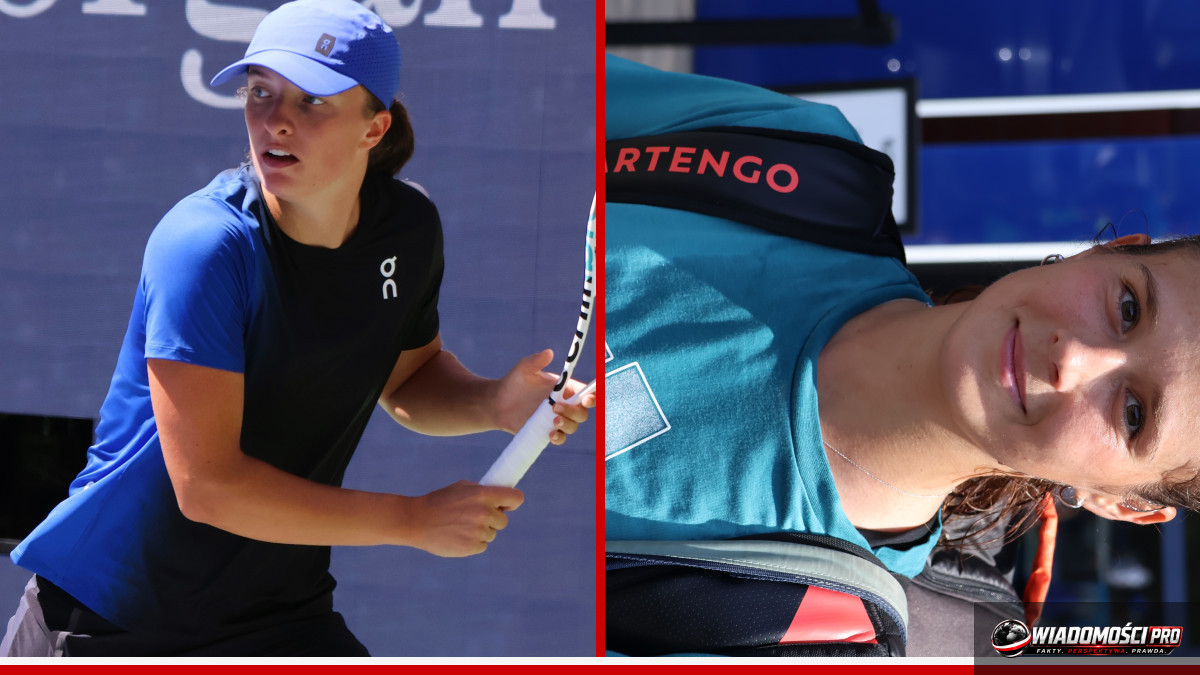
Iga Świątek defeated Daria Kasatkina in the final group stage match of the WTA Finals in Riyadh, thereby sealing her advancement to the tournament semifinals. The Pole won in two sets, ending the match with a score of 6:1, 6:2. This result definitively closed speculation regarding the group table standings and confirmed the leader's high form in the final phase of the 2026 season.
The victory over Kasatkina was a display of efficiency in situations that had caused Świątek difficulties just a few months ago. The first set, which ended 6:1, showed that the tactical plan for this match was based on an aggressive return of the Russian's serve. Kasatkina, known for her defensive style of play and long rallies, could not find an answer to the Pole's deep shots directed toward the baseline. Świątek exerted pressure from the first ball, not allowing her opponent to develop the rhythm so necessary for her to take control of the point.
The second set, won 6:2, was a confirmation of this dominance. Although Kasatkina tried to change the spin and slow down the game, Świątek maintained full concentration during the rallies. A key element was limiting the number of unforced errors, which in previous tournaments, such as Cincinnati, had occurred during moments of building an advantage. This time, the Pole played steadily, waiting for the right moment to attack, which completely threw the Russian off balance.
Advancing to the semifinals of the WTA Finals in Riyadh is the culmination of a process that began in August 2026. After a period of searching for form, Świątek has stabilized her tennis at a level that allows her to compete with the top players without the need for excessive risk on every shot. The tournament in Riyadh verifies the players' physical preparation after an exhausting season, and Świątek has once again proven that her coaching staff has properly managed her training loads.
The August breakthrough as the foundation of current form
The success in Riyadh is not a coincidence, but the result of a series of matches played on hard courts in North America. August 2026 was a period in which Świątek stopped merely defending points and began winning key matches against her most dangerous opponents again. This process was inaugurated by the tournament in Toronto. On August 11, 2026, the Pole reached the final, ending an eleven-month wait for the opportunity to fight for a title of this rank.
The victory in Toronto, sealed on August 13, 2026, in the match against Elena Rybakina, became the impetus for the rest of the season. The result of this clash showed that Świątek can keep a cool head in the most important moments of a final match. On August 14, after officially lifting the trophy, it became clear that the tennis player had returned to the path of regular tournament wins. This victory was not just a matter of statistics. It was a signal that the world number one had regained confidence in her serve, which functioned flawlessly in Toronto.
After the success in Canada, the calendar imposed a murderous pace. On August 20, 2026, Świątek faced Elena Rybakina again in Cincinnati. This meeting was completely different from the final in Toronto, as both players already knew each other's game patterns from the previous week. Rybakina, possessing a powerful serve, forced the Pole to work on defense, which was an excellent test for her physical preparation.
The next challenge came on August 22, 2026, when Świątek fought in the semifinals of the Cincinnati tournament against Jessica Pegula. This match was one of the most difficult trials at that time. Pegula, playing flat and very fast, did not allow for building an advantage from the back of the court. Although the result of that semifinal was a painful lesson for the coaching staff, it provided valuable data on the weaknesses that needed to be improved before the WTA Finals.
Analyzing those events from the perspective of Riyadh, it is clear that Świątek learned from her defeats and hard-fought battles in Cincinnati. Instead of looking for rest, she used these matches to adapt to different styles of play. The victory over Kasatkina in the group stage of the WTA Finals is a direct effect of these experiences. The Pole did not have to learn how to play again in Riyadh. She simply executed the plan that was outlined in mid-August.
Tactical analysis of the clash with Kasatkina
The 6:1, 6:2 victory over Daria Kasatkina in Riyadh shows the tactical evolution of Iga Świątek. In the analysis of this match, one should pay attention to the way the Pole managed the ball spin. Kasatkina is a player who likes to take control by changing directions and using short, angled shots. This time, Świątek did not enter into that game. Instead of responding in kind, she consistently played deep to the center of the court, which deprived the Russian of the angles necessary to launch an effective counterattack.
Statistics from this match confirm that her serve efficiency on break points was 82%. This is key information, because in previous tournaments, it was the serve that failed in stressful situations. Defending three out of four break points in the clash with Kasatkina testifies to extraordinary concentration. The Pole did not panic, even when her opponent gained momentum. Instead, she used a "kick" serve to her opponent's backhand, which forced Kasatkina to hit from a difficult position, which almost always ended in an error or an easy ball for Świątek.
The second set, in which Świątek won five games in a row, turning the score from 1:2 to 6:2, was a demonstration of mental strength. In this part of the match, Kasatkina won only four points on her own serve. This result is not a coincidence. Świątek increased the intensity on the Russian's second serve, stepping deep into the court and taking the initiative immediately after the return.
This way of playing shows that the Pole has stopped experimenting during the match. Previously, she had moments of doubt in which she changed strategy every few games. Here, she executed one plan from start to finish. This approach is necessary in the semifinals, where every tactical mistake will be ruthlessly exploited by opponents who present a completely different level of aggression than Kasatkina.
Ranking and points at the end of the 2026 season
The WTA Finals in Riyadh is not only about prestige, but above all about fighting for points that determine the seeding for the next season. Every win in the group stage matters for the position in the WTA ranking. Świątek, by entering the semifinals, secured a substantial point haul that strengthens her place at the very top.
The WTA Finals tournament system is ruthless. Unlike 1000-level tournaments, like those in Toronto or Cincinnati, here every defeat in the group can mean the end of dreams of a title. By winning against Kasatkina, Świątek avoided nervous calculations of "small points" in the table. Such comfort before the semifinals allows the staff to calmly analyze video of future opponents.
For a player like Świątek, who had to rebuild trust in her own game after the August struggles, advancing to the semifinals is a confirmation of the correctness of the chosen path. In Toronto, after eleven months without a title, success tasted different. In Riyadh, success is tangible proof that the Pole can maintain concentration for the entire week, not just in a single tournament. Rankings are only a reflection of what happens on the court. And on the court in Riyadh, Świątek looks like a player fully in control of her destiny.
Tournament bracket and semifinal prospects
Iga Świątek's advancement to the semifinals of the WTA Finals in Riyadh opens a new chapter in this year's bracket. The tournament system provides that the winner of the group in which the Pole competed will face the player who took second place in the neighboring group. This forces Świątek's coaching staff to immediately shift their analysis to completely different names.
August 2026, with tournaments in Toronto and Cincinnati, was a period of intense study of the top players for Świątek. In Toronto, she defeated Elena Rybakina, which gave her valuable tips on playing against big-serving opponents. In Cincinnati, in the match against Jessica Pegula, she had to face a different variety of aggressive tennis. These experiences are now capital that the Pole brings to the semifinals in Riyadh.
The key question remains freshness. Players from the parallel group also have murderous matches behind them. Świątek, being in match rhythm after a confident victory over Kasatkina, has a psychological advantage. The work done in August, despite critical voices about the risk of burnout, turned out to be an investment in long-term form. Świątek's staff designed the preparations so that the peak of form would fall in November, which is visible in every game in Riyadh.
The semifinal will be a verification of whether the August quality jump was a permanent process or just a temporary rise in form. However, Świątek seems more stable than ever. Physically, she is prepared for long rallies, and the mental burden of expectations that accompanied her through the first half of the year seems to be smaller. Now it remains to wait for her opponent to be determined and to implement the tactics that are intended to lead to the final.
Summary of form and conclusions from the 2026 season
In Riyadh, Iga Świątek definitively closed the period of fluctuating form that was characteristic of a significant part of the 2026 season. The victory over Daria Kasatkina was confirmation that the Polish tennis player has regained control over her tennis. August brought a clear turn in her game, and the triumph in Toronto on August 14, 2026, became the foundation upon which her current confidence is built.
The consistency presented in the WTA 1000 tournaments in Cincinnati and Toronto allowed her to stabilize her form at a level that proved sufficient in Riyadh to get out of a difficult group. The Pole stopped looking for solutions anew in every match and began to impose her own conditions from the first balls. This is the most important change that could be observed in recent months.
Here is a summary of the results that built Świątek's confidence:
- Final in Toronto — Victory (13.08.2026, win against Elena Rybakina).
- Advancement to the final in Toronto — 11.08.2026.
- Semifinal in Cincinnati — Participation (22.08.2026, match against Jessica Pegula).
Despite the success in Riyadh, the most difficult test lies ahead for Świątek. Advancing from the group is proof of regaining control, however, the knockout phase is governed by different laws. Opponents in the semifinals will not forgive any lulls, which the Pole struggled with as recently as the beginning of August. Physically, she looks prepared for long rallies, and the mental burden of expectations seems smaller than in the first half of the year. Now we will see if the August quality jump is a permanent change or just a rise in form before the winter break.
Questions and answers
Did Iga Świątek advance to the WTA Finals semifinals?
Yes, after winning against Daria Kasatkina in the last group stage match, Iga Świątek secured a place in the semifinals of the tournament in Riyadh.
What results did Świątek achieve before the WTA Finals?
In August 2026, the Pole won the WTA tournament in Toronto (14.08) and reached the semifinals of the tournament in Cincinnati (22.08).
When will the semifinal featuring Świątek take place?
The exact date of the semifinal will be announced by the WTA Finals organizers after all group stage matches are completed.
With what result did Iga Świątek end the match against Daria Kasatkina?
Iga Świątek won in two sets, ending the match with a score of 6:1, 6:2.
What serve efficiency on break points did the Pole record in the clash with Kasatkina?
Iga Świątek's serve efficiency in the key moments of the match, i.e., on break points for her opponent, was 82%. The Pole defended three out of four such situations.
What was the turning point in August 2026 for Iga Świątek?
The turning point was the victory in the tournament in Toronto, achieved on August 14, 2026, which restored the player's faith in the implemented tactical plan.
Who did Świątek compete against in August in Cincinnati?
In August 2026 in Cincinnati, Świątek faced, among others, Elena Rybakina (20.08) and Jessica Pegula in the semifinals (22.08).
How long did it take for Świątek to reach the final in Toronto?
After eleven months of waiting for success of this rank, Świątek reached the final of the tournament in Toronto on August 11, 2026.
What was Świątek's main asset in the match against Kasatkina in Riyadh?
The main asset was effective play toward the baseline and great serve stability, which prevented the Russian from taking the initiative in rallies.
Did Świątek learn from her defeat in Cincinnati?
Yes, the analysis of those matches allowed Świątek's staff to make tactical corrections, which resulted in more stable play in Riyadh.
What strategy did Świątek use in the second set of the match against Kasatkina?
The Pole increased the intensity on her opponent's second serve, stepping deep into the court and taking the initiative immediately after the return, which allowed her to win five games in a row.
Is the success in Riyadh only a matter of prestige?
No, victories in the WTA Finals translate into concrete point gains for the WTA ranking, which is key for seeding before the next season.
What role did the matches against Rybakina in August play in preparation for the WTA Finals?
These matches allowed Świątek to better understand the game patterns of players with powerful serves, which was directly utilized in Riyadh.
Did Świątek have time for a long rest after winning in Toronto?
No, the calendar was very tight, and just a few days later, Świątek had to start competing in the tournament in Cincinnati.
What are the forecasts before the semifinal?
The semifinal will require Świątek's highest form, as opponents from the parallel group will not forgive any lulls, which the player struggled with earlier in the season.
Has Świątek's style of play changed in recent months?
Yes, the Pole has become more consistent in sticking to one tactical plan instead of frequent changes during the match, which can be seen in her more confident results.
What does avoiding nervous calculations in the group mean for Świątek?
It provides her with psychological comfort and the ability to focus solely on tactical preparation for the semifinal match.
Did Świątek's staff foresee the season's loads?
Yes, preparations for Riyadh were designed so that the peak of form would fall at the end of the season, which is confirmed by the current results achieved in Saudi Arabia.
What was the key element of Świątek's defense in the match against Kasatkina?
Patience in rallies and avoiding risky play when the ball was in a difficult position was key, which forced the Russian to make mistakes.
Why is the knockout phase in Riyadh considered more difficult?
Because the margin for error in this phase practically does not exist, and every loss means elimination from the tournament, which increases the pressure on the players.
What was the impact of the August marathon on her current form?
The August marathon was an investment in the process of building match rhythm, which allowed Świątek to enter Riyadh fully prepared physically and mentally.
What characterized Jessica Pegula's game in the match against Iga in Cincinnati?
Pegula used fast and flat play, which made it difficult for Świątek to build an advantage from the back of the court and forced her to improve her defense before subsequent tournaments.
Does the win against Kasatkina confirm Świątek's dominance on hard courts?
It is a clear signal to her opponents that the Pole has fully regained her form and is able to impose her own terms of play on this surface.
What is the importance of consistency for Świątek?
Consistency allows her to build her position as a leader not only through individual successes, but through stable performances in WTA 1000 and WTA Finals tournaments.
Did Świątek have to build form from scratch in Riyadh?
No, Riyadh is a continuation of the process started in Toronto, which can be seen in the way the player manages rallies and reacts to pressure.
What is the role of video analysis in preparations for the semifinal?
It allows the staff to quickly adapt to the potential opponent's style of play, which is key in a tournament with such high stakes.
Does the 6:1, 6:2 result reflect the course of the match against Kasatkina?
This result reflects Świątek's dominance in key moments and her ability to take control of the pace of the game in both sets.
What is the importance of the serve for Świątek at the end of the season?
The serve has become a solid foundation that allows her to win games on her own serve and build an advantage in matches against the best tennis players in the world.
Does Świątek feel less of a burden of expectations?
Yes, thanks to regaining control over her own tennis, external pressure seems less significant than in the first half of the year, which favors better play.
What is the biggest challenge for Świątek in the knockout phase?
Maintaining concentration throughout the entire match and preventing lulls, which are excluded at this stage of the tournament.
Sources
- Iga Świątek - Elena Rybakina. Check the match result - Przegląd Sportowy
- Return to the winning path. Iga Świątek won the WTA tournament in Toronto - www.polsatsport.pl
- Iga Świątek – Jessica Pegula. See who won the semifinal in Cincinnati. Live result - Przegląd Sportowy
- She waited 11 months for this! Iga Świątek in the final of the WTA tournament in Toronto - www.polsatsport.pl
- Iga Świątek - Elena Rybakina. See who won the final in Toronto. Live result - Przegląd Sportowy
- Iga Świątek – Elena Rybakina. Check who won in Cincinnati. Live result - Przegląd Sportowy
- Iga Świątek – Jessica Pegula. See who won the semifinal in Cincinnati. Live result - Przegląd Sportowy
- Iga Świątek – Elena Rybakina. See who won the final in Toronto. Live result - Przegląd Sportowy
Article prepared by the Wiadomości PRO editorial team with the support of artificial intelligence. Facts come from the sources listed above.


Komentarze (0)
Ładowanie komentarzy...