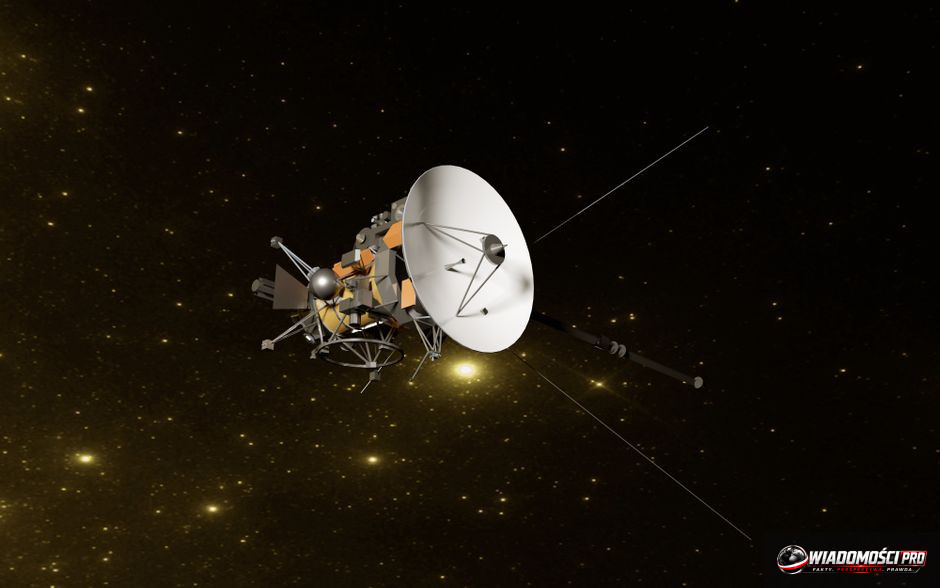
The Europa Clipper mission cost 5 billion dollars. Its main goal is to check whether conditions necessary to support life exist beneath the thick layer of ice on Jupiter's moon. The probe is not looking for organisms themselves, but for precise chemical signatures that would confirm that an ocean capable of supporting biological processes is hidden beneath the icy crust.
Project budget and logistics
The funding for the operation covers the construction of the spacecraft, years of testing in vacuum chambers, and simulations of the impact of Jupiter's deadly radiation. NASA had to create shields that physically protect the electronics from charged particles accelerated by the gas giant's magnetic field. Every component underwent rigorous stress tests. The investment also includes the salaries of thousands of specialists, the operating costs of mission control centers, and the maintenance of the Deep Space Network infrastructure. Taxpayer money was distributed among research centers, such as the Jet Propulsion Laboratory, and private contractors responsible for aerospace components.
The choice of SpaceX's Falcon Heavy rocket was a decision dictated by the need to lift a massive payload into an interplanetary trajectory. The probe weighs about 6 tons, more than half of which is fuel necessary for maneuvers in the Jovian system. The launch in October 2024 utilized a weather window allowing for the optimal alignment of the planets. The rocket provided the probe with escape velocity, allowing it to reach the Jovian system in the allotted time. Without such a powerful carrier, the mission's realization in its current form would have been impossible due to the mass of fuel required to decelerate near the target.
Project management is based on rigid time frames. The probe is currently en route, and its instruments remain in sleep mode to preserve the longevity of the electronics for the moment of arrival. Every delay in the launch date or error in trajectory calculations generates costs that are difficult to justify on a global scale. The procedure was designed with a near-zero margin of error. Engineers did not foresee the possibility of repairing the device after it left Earth's atmosphere. Every sub-assembly has redundant systems. If the main computer fails, a backup unit will take over.
Research instruments: the probe's eyes and ears
Scientific success depends on the measuring apparatus. Europa Clipper is equipped with ten highly specialized tools. The REASON (Radar for Europa Assessment and Sounding: Ocean to Near-surface) instrument is the heart of the research system. It is an ice-penetrating radar that detects the presence of liquid water beneath the surface. Its design allows for mapping the structure of the icy crust to a depth of several kilometers. Thanks to it, scientists will determine whether the ice is uniform or if it contains pockets of brine or other fluids.
Another key element is MISE (Mapping Imaging Spectrometer for Europa). This is an imaging spectrometer that analyzes light reflected from the moon's surface. It identifies the chemical composition of the ice, including the presence of salts, organic compounds, and other substances potentially necessary for life. MISE maps the surface with high resolution, indicating places where material from the interior escapes to the outside. It is in these regions that the chance of detecting biological traces is greatest.
EIS (Europa Imaging System) is a set of high-resolution cameras that create topographic maps of the surface. EIS analyzes cracks, ridges, and so-called "chaos terrain," which provides geologists with data on the moon's tectonic activity. Understanding surface dynamics is essential for interpreting processes occurring deep in the ocean. Each of these devices must survive bombardment by high-energy particles. The housings are made of high-density titanium and aluminum, which provides a barrier against radiation.
MASPEX (Mass Spectrometer for Planetary Exploration) analyzes gases and particles in the vicinity of Europa. This allows for the determination of the chemical composition of the atmosphere and potential plumes of matter ejected from the moon's interior. PIMS (Plasma Instrument for Magnetic Sounding) measures the magnetic field, which allows for the determination of the depth and salinity of the ocean. ECM (Europa Clipper Magnetometer) studies the interactions between Europa and Jupiter's magnetic field. UVS (Ultraviolet Spectrograph) analyzes the chemical composition of the atmosphere in the ultraviolet range. SUDA (Surface Dust Analyzer) studies microscopic dust particles that strike the probe during flybys. All these devices work in coordination, creating a full physicochemical picture of the studied object.
Flight dynamics and gravity assists
The journey to Jupiter does not take place in a straight line. The probe uses gravity assists, performing flybys of Mars and Earth. These maneuvers increase the probe's speed without the need to burn huge amounts of chemical fuel. Each flyby must take place at a strictly defined moment. The probe's trajectory must converge with Jupiter's position in a few years. An error of a few seconds at the moment of a course correction could result in missing the target by thousands of kilometers.
The probe is monitored by the Deep Space Network. Engineers from the Jet Propulsion Laboratory correct the course using maneuvering thrusters. Each engine ignition is meticulously planned. Excessive fuel consumption at an early stage of the journey would shorten the duration of the scientific mission at the destination. The priority is to save as much fuel as possible for maneuvers in the Jovian system, where the probe will change its orbit multiple times to perform close approaches to Europa.
Onboard systems work in power-saving mode. The software has been optimized for long-duration flight. Every processor cycle is thought out. In interplanetary space, the probe is exposed to temperature fluctuations, from the extreme cold of the shadow to intense solar heating. Thermal insulation provides another level of protection, ensuring the stability of the electronics. NASA cannot afford a failure en route, which is why redundant control systems constantly check the technical condition of every sub-assembly.
Europa: why this moon?
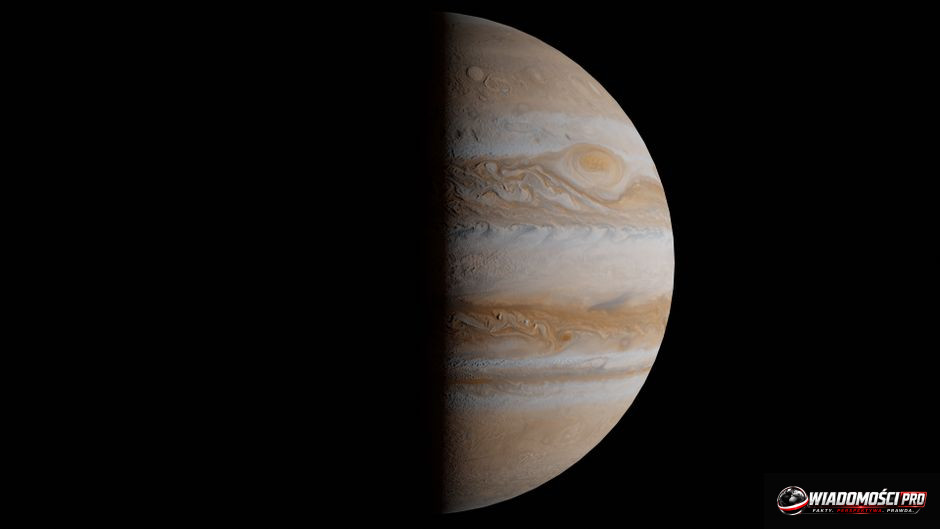
The choice of Europa as the mission's target stems from the probability of the existence of a habitable environment. Telescopic observations and data from the Galileo mission suggested the presence of an ocean of liquid water beneath an icy crust 15 to 25 kilometers thick. This water remains in a liquid state thanks to tidal forces exerted by Jupiter's gravity, which heat the moon's interior. Europa's surface is geologically young. The lack of a large number of impact craters testifies to continuous ice renewal processes. Cracks on the surface suggest that water or higher-temperature ice regularly escapes from the interior.
Europa Clipper will attempt to capture samples of these ejections or examine their composition spectroscopically during flybys. The existence of a subsurface ocean also implies potential sources of chemical energy. On the floor of Earth's oceans, near hydrothermal vents, life develops without access to sunlight, using chemosynthesis. Scientists speculate that similar processes may occur on the floor of Europa's ocean. If the probe confirms the presence of appropriate elements, such as carbon, hydrogen, nitrogen, oxygen, phosphorus, and sulfur, it will be strong evidence that the conditions for the emergence of life are met.
This moon is also unique due to its magnetic field, which is induced by Jupiter's field. This suggests the existence of a conductive layer inside the moon, which is most likely saltwater. Studies indicate that the ocean may contain twice as much water as all of Earth's oceans combined. This makes Europa the most interesting object in our Solar System in terms of the search for extraterrestrial biology.
Competition and international cooperation
American dominance in this project is clear, but it does not exclude the participation of other entities. The Europa Clipper mission is compared to the European JUICE (Jupiter Icy Moons Explorer) mission. However, there is a fundamental technical difference that defines NASA's advantage in this specific mission. JUICE was designed as a universal probe, studying Jupiter and three of its large moons: Ganymede, Callisto, and Europa. Due to weight limitations and a complex trajectory, JUICE has fewer radiation shields.
Clipper is a "Europa-dedicated" device. Its key advantage is the so-called "vault" – a massive titanium box in which all control electronics are enclosed. Thanks to this solution, the NASA probe can safely perform 49 close flybys of Europa in Jupiter's very strong radiation field, while JUICE would have to limit its approaches to a minimum to avoid damaging its integrated circuits. NASA bet everything on one card, creating a machine capable of surviving in an environment that would be deadly for most other probes in such a short time.
Washington is investing in this project to maintain its position as a leader in deep space exploration. However, the scale of expenditure requires results that are understandable to the public. Finding evidence that we are not alone in the planetary system legitimizes budget spending. Critics point to opportunity costs, suggesting that the money could have fueled projects related to climate protection on Earth or the exploration of Mars. NASA refutes these accusations, pointing to the development of technologies that arise during the construction of such advanced probes. New materials, data processing methods, and power systems developed for Europa Clipper are finding applications in civilian and military technologies.
Radiation challenges
Jupiter is a powerful source of radiation. Its magnetosphere accelerates particles to speeds close to the speed of light, creating radiation belts that are deadly to standard electronics. The probe cannot remain in a permanent orbit around Europa because it would be destroyed within a few months. Instead, the probe performs a so-called "Jupiter orbit," from which it makes close flybys of Europa. Each flyby lasts a short time, which allows for minimizing the time of exposure to radiation.
After each approach, the probe moves away from the moon to send data to Earth and regenerate its systems. This strategy allows for extending the mission's life to several years. Engineers have provided for the possibility of working in "safe" mode if radiation levels exceed the standards provided in simulations. Such flexibility in mission management is the result of experience from previous missions, such as Juno or Galileo.
The probe's structure resembles a safe. The electronics have been enclosed in a thick titanium block that acts as a shield. All cables and connectors are shielded. Even the solar panels, with their huge surface area, were designed so that their degradation under the influence of radiation would be predictable. NASA assumes that during the mission, the efficiency of the photovoltaic cells will drop, which is why the power system was designed with high redundancy. Radiation is the main factor determining the duration of the mission. Without adequate protection, the probe's processors would suffer irreversible damage as a result of repeated high-energy particle strikes.
Data analysis and the future of astrobiology
When the probe reaches its destination and begins sending data, the process of analyzing it will be a challenge in itself. Sending information from the Jovian system to Earth takes several dozen minutes. Link bandwidth is limited, which is why most raw data will be processed by the onboard computer, and only the most relevant results will reach Earth. Scientists will have to demonstrate precision in interpreting signals from the instruments.
If, during the research, it turns out that the subsurface ocean is rich in organic compounds, the scientific world will face the question: what next? Europa Clipper does not have a lander, so it will not collect a physical sample of water. That is a task for future missions, which may be formulated based on data collected by this probe. There is a concept of a lander that could land on the surface and use a drill to break through the ice, but for now, this remains in the realm of conceptual plans.
The success of the Europa Clipper mission will open a new chapter in astrobiology. Until now, the search for life has focused on Mars, which is a rocky and dry object. Europa represents a completely different class of worlds – so-called "ocean worlds," which may be much more common objects in the universe than Earth-like planets. If life can exist in the icy moons of gas giants, it means that the number of potentially inhabited places in our Galaxy is growing exponentially. This is a perspective that justifies every dollar spent from the NASA budget.
All data collected by the probe will be archived in the Planetary Data System. Scientists from all over the world will have access to them after the exclusivity period for the mission teams ends. International cooperation in this regard is standard. Data from instruments such as REASON or MASPEX will be compared with climate and geological models, creating the most detailed map of the moon in history. Thanks to this, we will learn not only the chemical composition but also the dynamics of Europa's interior.
Mission development prospects
The expenditure of funds on the Europa Clipper project reflects a belief in science as a tool for discovering fundamental truths about the universe. Although the amount is huge, on the scale of the US federal budget, it constitutes a fraction of spending on defense or social welfare. For science, this is an amount that pushes the boundaries of what is possible. This mission will not only study Europa but will also check how far we are able to go in searching for answers to the question about our place in the universe.
The probe continues its journey, becoming one of the most advanced devices that has ever left Earth's orbit. Every day of the flight is proof of the precision of engineers and the determination of scientists. Regardless of the final results, the collected data will change textbooks on astronomy and planetary geology. This is an investment in knowledge, the value of which is difficult to convert into dollars, especially in the context of looking for answers to the question: are we alone.
It is worth remembering that Europa Clipper is only the first stage in a broader plan for studying ocean worlds. NASA plans to use the gained experience in building subsequent probes that will study other moons of Jupiter and Saturn, such as Enceladus. Enceladus is particularly interesting due to geysers ejecting water from a subsurface ocean directly into space. Studies of Europa will allow for the development of better sensors, which in the future may be sent toward Enceladus.
The probe is currently on an interplanetary trajectory, going through successive phases of system checks. Engineers perform regular tests of all scientific instruments. All communication systems are checked for resistance to radio interference. The probe uses solar panels with a span of 30 meters, which makes it the largest planetary probe ever built. Such a large surface area is necessary because in the vicinity of Jupiter, the intensity of sunlight is 25 times lower than on Earth.
Each scientific instrument has a dedicated research team that deals with preparing software for data processing. Scientists are working on algorithms that will allow for the detection of biological signatures in background noise. This is an extremely difficult task, requiring huge computing power. Onboard systems have been equipped with radiation-hardened processors, which, however, have limited performance compared to their Earth counterparts. This means that every byte of data must be sent with the highest possible efficiency.
Cooperation with the Deep Space Network takes place continuously. Antennas in California, Spain, and Australia ensure constant communication with the probe, regardless of Earth's rotation. The probe sends data at a speed that depends on the distance from Earth. As it approaches Jupiter, the data transfer speed will drop, which will force engineers to use advanced data compression techniques. All this happens while maintaining rigorous energy safety requirements.
This mission is proof that space engineering has reached a level where we can study objects hundreds of millions of kilometers away with precision previously available only in laboratories on Earth. Europa Clipper is not just a probe; it is an entire research laboratory that will collide with extreme environmental conditions. The results of this mission will influence the way we define life and its boundaries. If life on Europa exists, it will be based on completely different chemistry than Earth's. This discovery would change our perspective on our place in the cosmos.
Regardless of whether the probe discovers life or only confirms the existence of an ocean capable of supporting it, this mission will be considered a success. The collected geological data will allow for a better understanding of the evolution of rocky planets and icy moons. Understanding the dynamics of Europa's interior will help explain why Jupiter has so many diverse moons. Each of them is a separate world with its own geological history. Europa, however, is the one that most resembles Earth in terms of the presence of liquid water.
The coming years will be a time of intensive work for scientific teams. They will be preparing to receive data that will change our understanding of the Solar System. Each flyby will be a celebration of science, a moment in which the probe will cross the boundary of knowledge. Europa Clipper is a symbol of our ambitions, the pursuit of knowing the unknown. Even if the mission does not find evidence of the existence of life, it will provide us with information that will allow us to better understand where to look for such life in the future.
This is not an ordinary research mission. It is a project that involves thousands of minds and billions of dollars to answer one of humanity's most important questions. We are in the process of a journey that will allow us to look at the Universe from a new perspective. Every element of this mission – from the titanium housing to the advanced instruments – was designed with one goal in mind: discovering the secrets hidden beneath the icy crust of Europa. We are impatiently waiting for the moment when the probe enters Jupiter's orbit in April 2030, beginning its main phase of research.
Sources
- Start of the Europa Clipper mission to Europa - AstroNET – Polish Astronomical Portal
- Europa Clipper probe will search for life on Europa - Urania - Polish Astronomical Portal
- Europa Clipper launches. A key task ahead of them - Geekweek Interia
- Start of the Europa Clipper mission [TRANSMISSION]. Americans will overtake Europeans in the search for life on Europa - Wyborcza.pl
- Beginning of the Europa Clipper mission - Kosmonauta.net
- Europa Clipper has launched. It will investigate whether there are conditions for life on Jupiter's moon - Polskie Radio 24
- Europa Clipper probe will search for life on Jupiter's moon, Europa - wszystkoconajwazniejsze.pl
- Flight to Jupiter for 5 billion dollars. Launch of Europa Clipper aboard Falcon Heavy - Benchmark.pl
Article prepared by the Wiadomości PRO editorial team with the support of artificial intelligence. Facts are derived from the sources listed above.


Komentarze (0)
Ładowanie komentarzy...