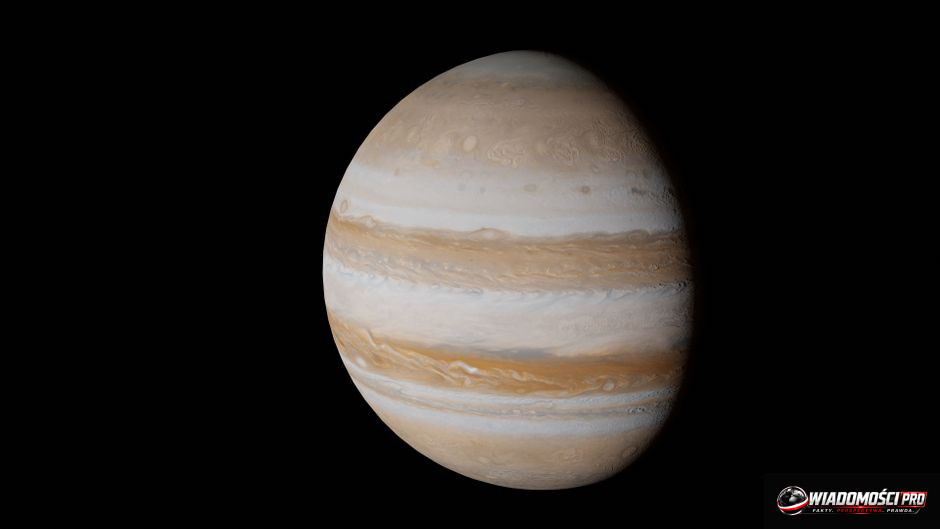
The budget for the Europa Clipper mission is 5 billion dollars, and its main goal is to determine whether conditions favorable for the emergence of life exist on Jupiter's icy moon. The American space agency NASA invested this amount to answer a fundamental question regarding the presence of liquid water and essential chemical ingredients beneath Europa's thick ice shell. The probe, which launched in October 2024, represents one of the most advanced technological undertakings in the history of Solar System exploration.
Operation in the shadow of Jovian radiation
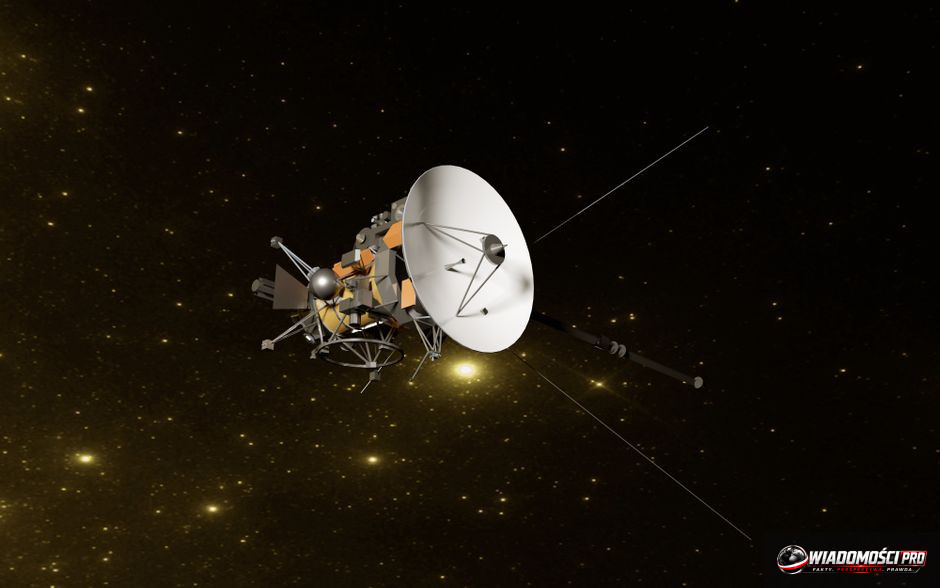
The flight toward Jupiter is not just a matter of covering a distance of hundreds of millions of kilometers. It is primarily an engineering challenge involving survival in an extremely hostile radiation environment. The planet possesses powerful magnetospheres that accelerate charged particles, bombarding the surface of its moons. Europa Clipper was designed to withstand this destructive impact. The probe features specially reinforced electronics shielding, enclosed in a thick titanium-aluminum vault, which is intended to protect sensitive components from degradation.
The choice of the Falcon Heavy rocket was a necessity resulting from the mass of the device itself and the flight trajectory. The SpaceX launch system had to provide the probe with the appropriate velocity so it could perform gravity assist maneuvers at Mars and Earth, which is necessary to gain the momentum required to reach the Jovian system. Without such a powerful rocket, a mission of this scale would have had to be delayed by years. The logistics of this launch constituted the first major test for the entire design team.
Engineers focused on ensuring that every gram of payload was used effectively. Due to fuel constraints and the enormous distance, the probe cannot rely on traditional solar panels in the way missions near Earth do. Therefore, it was equipped with massive, deployable solar wings with an area of several dozen square meters, designed to capture weak sunlight in the distant Jovian system. This solution is a testament to the innovation that allows for powering complex equipment in such unfavorable conditions.
Research instruments: the probe's eyes and ears
The mission's effectiveness depends on a set of nine main scientific instruments, which were selected to provide the most accurate data possible about the moon's internal structure. A key element is the REASON radar (Radar for Europa Assessment and Sounding: Ocean to Near-surface). It will allow scientists to look beneath Europa's thick, icy shell, mapping the ice structure to a depth of many kilometers. It is with this instrument that researchers will attempt to locate places where the ocean might be closest to the surface.
Alongside the radar, the MISE (Mapping Imaging Spectrometer for Europa) will play a key role. This is a spectrometer that will create maps of the surface's chemical composition. Thanks to it, we will learn what organic compounds, salts, and other materials are present on the ice. Understanding exactly what makes up Europa's surface is essential for assessing whether the subsurface ocean possesses the right chemistry to support biological processes. Data from MISE will be crucial for astrobiologists trying to understand an environment we cannot see directly.
The EIS (Europa Imaging System) is responsible for surface imaging. This is a set of high-resolution cameras that will take pictures of almost the entire moon with extraordinary precision. Scientists want to understand geological processes, such as cracks, ridges, or potential water vapor plumes that may be escaping from the interior. Observing changes on the surface will allow for an assessment of how geologically active Europa is and whether the moon's internal energy is sufficient to drive processes that could support life.
Additionally, the mission features the E-THEMIS (Europa Thermal Emission Imaging System) instrument, which studies temperature distribution. Detecting thermal anomalies on the surface would be sensational evidence of volcanic processes or other heat sources inside the moon. Meanwhile, MASPEX (Mass Spectrometer for Planetary Exploration) will analyze the composition of Europa's atmosphere and gases that may be ejected from its interior. These gas particles, collected by the probe during flybys, could be direct samples of what is hidden in the subsurface ocean.
Why Europa?
For decades, Europa has held the top spot on the list of objects in the Solar System with the greatest biological potential. Unlike Mars, which is a cold and dried-out desert, Europa possesses an ocean of liquid water that may be in contact with a rocky seafloor. This interaction between rock and water is crucial. On Earth, similar environments located in the deep ocean teem with life regardless of sunlight, utilizing chemical energy derived from hydrothermal vents.
The question of whether the same processes could be occurring on Europa is the driving force for the entire research program. This moon is constantly kneaded by powerful tidal forces originating from Jupiter and neighboring moons, such as Io and Ganymede. This friction generates heat, which prevents Europa's internal layers from freezing completely. The probe's task is to investigate whether this heat is sufficient to keep water in a liquid state on a timescale long enough for life to emerge.
Skeptics note that even if conditions favorable for life exist, the mere presence of water does not guarantee that life has actually flourished there. There is a huge gap between a habitable environment and biological organisms. NASA faces the risk that after years of research, it may turn out that the ocean's chemical composition is hostile or poor in the necessary building blocks. However, from a scientific perspective, the very absence of life in such a favorable place would also be a huge discovery, forcing us to redefine our assumptions about how life arises in the universe.
Strategic importance of the mission
Investing such enormous financial resources in a single research project raises questions about the space agency's priorities. In Washington, there are constant debates about whether funding such missions should be a priority in the face of terrestrial needs. Critics point out that every dollar spent in space is a missing amount in budgets for climate research or the exploration of closer targets, such as the Moon, which is intended to become a staging base for crewed flights to Mars.
On the other hand, dominance in deep space exploration has prestige and technological significance. By developing the Europa Clipper probe, the United States is testing solutions that will be used in the coming decades. Technologies related to radiation protection or the autonomy of spacecraft over such vast distances are invaluable. Agencies from Europe and Asia are closely following American progress because the data obtained by Clipper will influence the planning of all future missions in the outer planetary system.
One also cannot ignore the educational and inspirational aspect. Projects that push the boundaries of human knowledge educate entire generations of engineers and scientists. Even if the mission does not find direct evidence of microbes in Europa's ocean, the very way this undertaking was organized will remain a model for future generations of explorers. The NASA administration understands perfectly well that what is at stake in this game is not just scientific discovery, but also maintaining a leadership position in the race for knowledge about space.
Challenges on the way to the goal
The current stage of the mission is a period of uncertainty and patient waiting. The probe is in the middle of a multi-year flight, during which engineers conduct periodic system tests. Any failure at this moment would mean catastrophe, which is why routine checking of instruments, such as the magnetometer or dust detectors, is carried out with the utmost care. There is no possibility of repairing the probe in the event of a failure, which makes every component a critical point of the system.
Orbital physics necessitates the use of gravity assists. The probe must perform complex maneuvers, approaching Earth and Mars to use their gravity to change its speed and flight direction. Each of these maneuvers is fraught with risk, but it allows for saving huge amounts of fuel, which is needed for braking upon reaching the Jovian system. Completing the journey and entering Jupiter's orbit will be the moment when the mission transitions from the passive cruise phase to the phase of intensive scientific operations.
Scientists working on the Europa Clipper program are aware that the pressure for results grows with each year of the mission. In the digital age, where society expects quick answers, the patience required in planetary research is difficult to maintain. However, analyzing data from instruments like MASPEX or EIS requires time, reliability, and multi-stage verification. The first hard data that will flow in from the vicinity of Jupiter will be analyzed for years, creating a foundation for subsequent, perhaps more direct research, such as a lander on the moon's surface.
The future after reaching the goal
Once the probe finally begins its flybys near Europa, each one will be planned with second-by-second precision. The close approaches will allow for data collection in a way that minimizes radiation exposure while simultaneously maximizing the use of measurement equipment. If the results confirm the presence of a liquid ocean with the appropriate chemical composition, NASA's priority will become preparing a mission with a lander.
Such a mission would be another, even more expensive step. Europa Clipper is therefore a kind of scout that must prepare the ground for future, more invasive research. The success of this probe will define the direction of astrobiology for the next half-century. If, however, the data shows that the subsurface ocean is a dead, chemically barren reservoir, science will face the challenge of finding other places in space where life could have developed.
At this moment, the probe is the only "window" through which we can look into the depths of Jupiter's mysterious moon. Its presence in space is a symbol of humanity's ambition to understand its place in the universe. Every dollar spent on this undertaking is an investment in knowledge that has no price in market terms. It remains to wait for the first signals that will confirm or refute our theories regarding life in systems beyond Earth.
Questions and answers
How much exactly did the Europa Clipper mission cost?
The mission budget, including the construction of the probe, research equipment, and operational and launch costs, is 5 billion dollars.
What was used to launch the probe into space?
The probe was launched into space by a Falcon Heavy rocket, provided by the company SpaceX.
When did the mission launch?
The launch of the Europa Clipper mission took place in October 2024.
What are the most important research instruments on board?
The probe is equipped with, among others, the REASON radar for studying the interior of the icy shell, the MISE spectrometer for analyzing chemical composition, the EIS camera system for mapping the surface, the E-THEMIS instrument for thermal measurements, and the MASPEX mass spectrometer for gas analysis.
Why was Europa chosen as the mission target?
Europa is considered one of the most promising places in the Solar System for searching for life, due to evidence of the existence of a subsurface ocean of liquid water and appropriate geological processes that can provide energy for biological processes.
Will the probe land on the moon's surface?
No, Europa Clipper is an orbiter that will conduct a series of close flybys over Europa's surface, collecting data with its instruments, but it is not adapted for landing.
Sources
- Start misji Europa Clipper na Europę - AstroNET – Polski Portal Astronomiczny
- Sonda Europa Clipper poszuka życia na Europie - Urania - Polski Portal Astronomiczny
- Start misji Europa Clipper [TRANSMISJA]. Amerykanie prześcigną Europejczyków w poszukiwaniu życia na Europie - Wyborcza.pl
- Początek misji Europa Clipper - Kosmonauta.net
- Europa Clipper wystartowała. Zbada, czy na księżycu Jowisza są warunki do życia - Polskie Radio 24
- Sonda Europa Clipper poszuka życia na księżycu Jowisza, Europie - wszystkoconajwazniejsze.pl
- Lot na Jowisza za 5 miliardów dolarów. Start Europa Clipper na pokładzie Falcon Heavy - Benchmark.pl
- NASA wysyła sondę na Europę. Misja Europa Clipper wystartowała - WP Tech
Article prepared by the Wiadomości PRO editorial team with the support of artificial intelligence. Facts are derived from the sources provided above.

Komentarze (0)
Ładowanie komentarzy...