Yes, TVP has officially confirmed Poland's participation in Eurovision 2027, which will take place in the Bulgarian city of Burgas. For the first time, Canada will appear among the participants. This decision, announced on August 27, 2026, ends a period of uncertainty regarding the Polish broadcaster's presence in the structures of the European spectacle.
Logistics of Burgas: A challenge for infrastructure
The choice of Burgas as the host of the 72nd Eurovision Song Contest represents a radical departure from the tradition of organizing the event in capitals or major transport hubs. This Bulgarian city, located on the Black Sea, has limited facilities for an event of this scale. The Burgas Airport (BOJ), although handling growing charter traffic, does not have the capacity to efficiently accommodate dozens of national delegations, thousands of journalists, and the EBU technical crew in a short time.
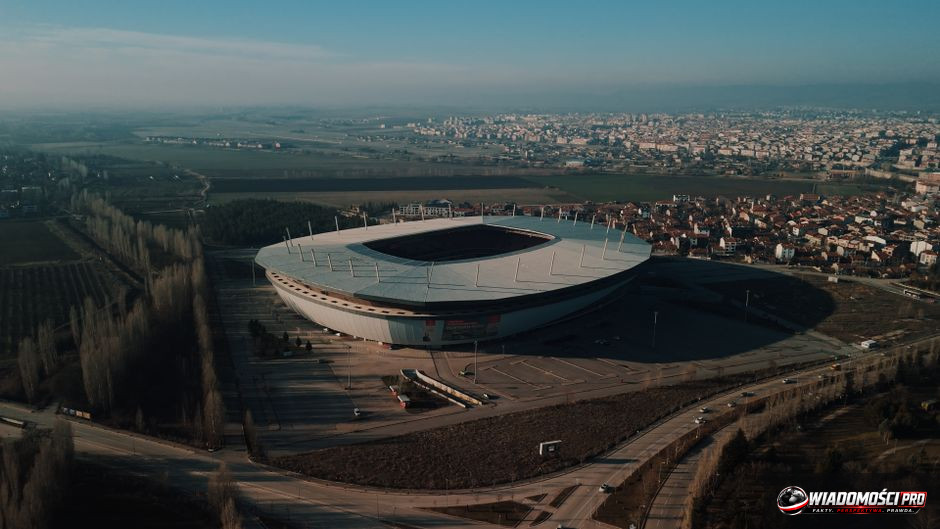
A key logistical point will be the Arena Burgas. This facility, commissioned in recent years, must undergo a comprehensive modernization of lighting, sound, and data transmission systems to meet the rigorous standards of high-definition television. Estimates indicate that preparing the arena will consume a significant portion of the budget allocated for organization, which raises questions about the profitability of the venture for the local government. Transporting stage equipment from Western Europe to Bulgaria will require securing road corridors through transit countries, which, at current fuel and logistics prices, is a massive financial burden.
Accommodation is another bottleneck. Burgas is a typical holiday resort. Most hotels within a 20-kilometer radius are geared toward leisure tourism rather than business or events. The lack of high-class conference hotels will force organizers to accommodate delegations in centers in Sunny Beach, located dozens of kilometers away. This implies the necessity of shuttle logistics, which, given Bulgarian road realities, could generate delays and traffic chaos during technical rehearsals.
Canada in the lineup: A new era or identity crisis
The inclusion of Canada among the participants of Eurovision 2027 is a move that changes the foundations of the contest. The European Broadcasting Union, under new leadership, is opening up to non-European markets, which for many conservative fans is an attempt to save falling viewership at the expense of the format's integrity. However, Canada is not entirely a stranger to the Eurovision stage. In 1988, it was a Canadian singer, Celine Dion, representing Switzerland, who achieved the victory that became the springboard for her global career.
The appearance of Canada under its own flag forces a revision of funding rules. The Canadian public broadcaster has budgets that smaller European countries cannot compete with. This creates an imbalance in production quality that viewers will see on their screens. If Canada decides on a full production in the American standard, the Polish delegation will have to face competition that possesses technology and artistic resources unavailable to most European public broadcasters.
Music market analysts note that this debut is a signal to other countries outside Europe. If the EBU does not set clear limits, Eurovision could transform into a global pop festival, losing its unique European identity. For Poland, which has been striving for success in the final for years, Canada's presence is a direct threat. Increasing the number of participants to 45 countries drastically reduces the mathematical chances of advancing from the semi-finals. The margin of error in pre-selections practically disappears.
TVP Strategy: Pressure for results in the face of change
Telewizja Polska, after announcing the decision to go to Burgas, found itself under fire with questions about the shape of its representation. TVP program directors face a dilemma: bet on proven names that guarantee recognition, or take a risk with new artists, hoping for freshness in the message. The history of recent years has shown that the lack of a coherent strategy led to disappointments at the semi-final stage.
Financing Poland's participation in 2027 will require cost optimization. Travel costs, accommodation in Burgas, and license fees to the EBU are higher than in previous years, which, given the current state of the TVP budget, forces a search for savings. This likely means limiting spending on elaborate visualizations or foreign choreographers. TVP will have to rely on the strength of the composition itself and the vocal quality of the performer.
Decision-makers at TVP, including the heads of the entertainment department, must make a decision regarding pre-selections by the end of 2026. The lack of clarity as to whether the choice will be internal or held through an open contest is interpreted as a lack of preparation. Behind the scenes, there is talk of the need to involve external music experts to avoid accusations of nepotism that accompanied previous pre-selections. Poland must show a modern product that can defend itself against Canadian production.
The mathematics of competition: 45 countries in Burgas
Increasing the number of participants to 45 countries changes the dynamics of voting. In the current system, based on regional alliances, votes were relatively predictable. The entry of Canada introduces a factor that cannot be fully predicted. Will viewers in North America vote according to the European model, or will they bet on completely different musical values?
For Poland, the fight for the final is becoming brutal. In the semi-finals, where usually 18-20 countries fight for advancement, the presence of such a strong player as Canada means that one of the qualifying spots is almost automatically taken. Every point from the public vote will now be worth its weight in gold. Polish analysts point out that it is necessary to build a broad voting coalition, including not only traditional allies from the region but also countries with which Poland has had weaker cultural relations so far.
The role of the expert jury is becoming even more important than before. It is the jurors who will have to evaluate artistic value in a way that is not susceptible to political sentiment, which is almost impossible with such a large field. Each country, including Poland, will have to prepare two versions of the performance – one for the semi-final, the other for the final – which generates additional costs for the delegation. Burgas will be a testing ground for a new, more complicated Eurovision.
Infrastructure vs artistic vision
The authorities of Burgas declare readiness to host the biggest musical event in the city's history. However, looking at the available infrastructure, there are concerns about the stability of the power grid and the security of satellite transmission. The contest requires uninterrupted power of enormous capacity, which, in the event of a failure, could interrupt the broadcast to millions of homes in Europe.
The EBU technical crew will have to spend at least three months in Burgas before the contest to implement the necessary systems. This generates costs that will fall entirely on the shoulders of the organizer and the participating countries. The Polish delegation will have to negotiate the terms of renting space for the media in a way that does not consume the entire budget allocated for the promotion of the Polish representative.
Regardless of the challenges, Burgas faces an opportunity for tourism promotion that no advertising campaign could provide. However, for artists, the stage remains the most important thing. If the sound quality does not meet standards, even the most talented performer from Poland will not be able to convey the emotions of their song. It is the technical side of the spectacle that will decide the success or failure of individual delegations.
The future of Eurovision after 2027
Canada's debut opens a discussion about the EBU's next steps. If the format proves to be a financial success, we can expect more entries from non-European countries. This means that Eurovision ceases to be a contest for broadcasters from Europe and becomes a global product. For TVP, this means the necessity of adapting to completely new rules of the game.
Poland cannot afford to be a passive observer of these changes. Participation in Burgas must be thought out in terms of image. If TVP wants to count on high scores, it must create a song that is understandable to an audience from different cultural circles, not just the European viewer. This is a challenge for Polish composers and lyricists who have previously focused on the local market.
In the coming months, we will learn more details about the preparations. At this moment, the location is confirmed, the list of participants is confirmed, and TVP's will to compete is confirmed. The time from September 2026 to May 2027 is a period in which the fate of Poland's presence in this new, global world of Eurovision will be decided. Will it turn out to be an opportunity for success, or just a costly lesson in humility? We will find out the answer in Burgas.
Questions and answers
Where will Eurovision 2027 be held?
The host of next year's contest will be the Bulgarian city of Burgas, which has been officially confirmed by the EBU.
Has Poland confirmed its participation?
Yes, Telewizja Polska has officially confirmed the presence of a Polish representative in Burgas, which ends speculation about the broadcaster withdrawing.
Who will debut at Eurovision in 2027?
Canada is officially joining the group of participants, which is the first case of including a North American country in the competition for the crystal trophy.
What challenges do the organizers in Burgas face?
The main challenges are limited hotel and airport infrastructure, the need for technical modernization of the Arena Burgas, and complex transport logistics for dozens of national delegations.
Will Canada's debut affect Poland's chances?
The presence of Canada, which has a large music market and professional resources, drastically increases competition in the semi-finals, making advancement to the final a much more difficult task for other countries.
Why was Canada allowed into the contest?
The European Broadcasting Union aims to open the contest to new markets, and the inclusion of Canada is seen as an attempt to expand the global reach of the event, also referring to the historical successes of Canadian artists in the contest, such as Celine Dion's victory in 1988.
What does the change in format mean for the viewer?
Viewers will receive a wider palette of performers and potentially a higher level of television production, but for European broadcasters, this involves the need to adapt to global competition and higher participation costs.
How is TVP preparing for the contest?
TVP has announced a course correction in the selection of a representative, focusing on higher production quality, although details regarding the selection method and the specific budget remain in the operational phase and have not yet been fully disclosed to the public.
Will other debutants perform in Burgas?
At this moment, the only officially confirmed new participant is Canada; the EBU has not informed about other countries outside Europe that would join the lineup in 2027.
What is the biggest risk for Poland?
The biggest risk is failing to adapt artistic and technical quality to the standards set by market-strong players, which, with intensified competition, could result in elimination at an early stage.
What are the estimates regarding attendance?
Although official data has not been provided, it is estimated that Burgas will have to handle tens of thousands of fans, which, given the current state of the hotel base, will require the use of facilities in surrounding seaside towns.
Will the voting system change?
The EBU has not yet provided detailed regulations regarding the voting system in the context of Canada's presence, which remains one of the most discussed topics in the contest's fan community.
What is the role of Arena Burgas?
Arena Burgas will be the main arena for the competition, which requires extensive adaptation work so that the facility meets the technical requirements of live television broadcasting.
Has Poland received financial support to start?
There is no information about any financial support for broadcasters; each participating country, including Poland, must independently secure funds for participation in the contest, which, with rising costs, is a significant challenge for the TVP budget.
What is the EBU's strategy for future years?
The EBU's strategy seems to be evolving toward the globalization of the format, which suggests that Canada's participation may not be a one-time episode, but the beginning of a new era in the history of Eurovision.
Sources
- Eurovision 2027: A decision has been made regarding Poland's participation. TVP has provided a name - Interia Muzyka
- Debut of a new country at Eurovision! A singer from this country already achieved victory in 1988 - Interia Muzyka
Article prepared by the Wiadomości PRO editorial team with the support of artificial intelligence. Facts come from the sources provided above.



Komentarze (0)
Ładowanie komentarzy...