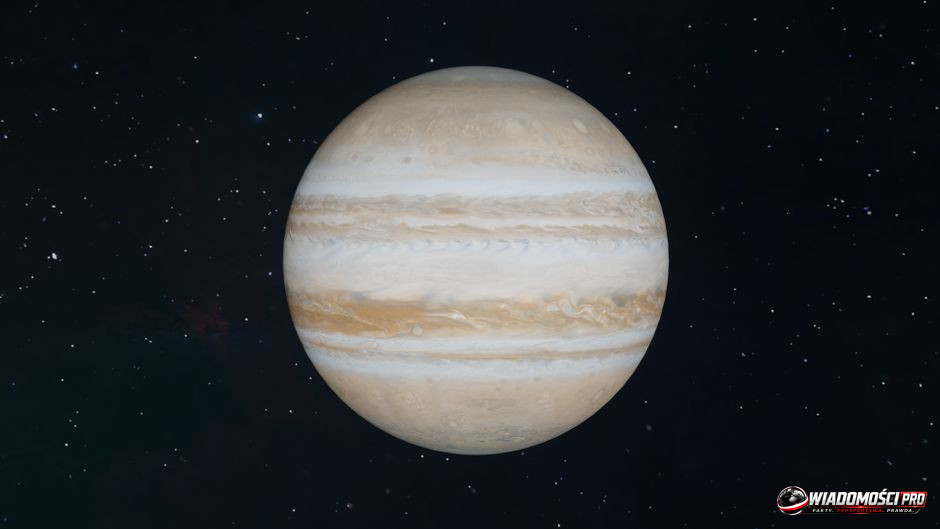
The Europa Clipper mission costs 5 billion dollars and aims to investigate whether conditions favorable for the emergence of life exist beneath the icy shell of Jupiter's moon. This project currently represents the most serious attempt to answer the question regarding the biological potential of solar systems beyond Earth. In carrying out this endeavor, NASA is focusing its resources on one of the most fascinating, yet simultaneously most hostile, environments in our part of space.
Mission launch and funding
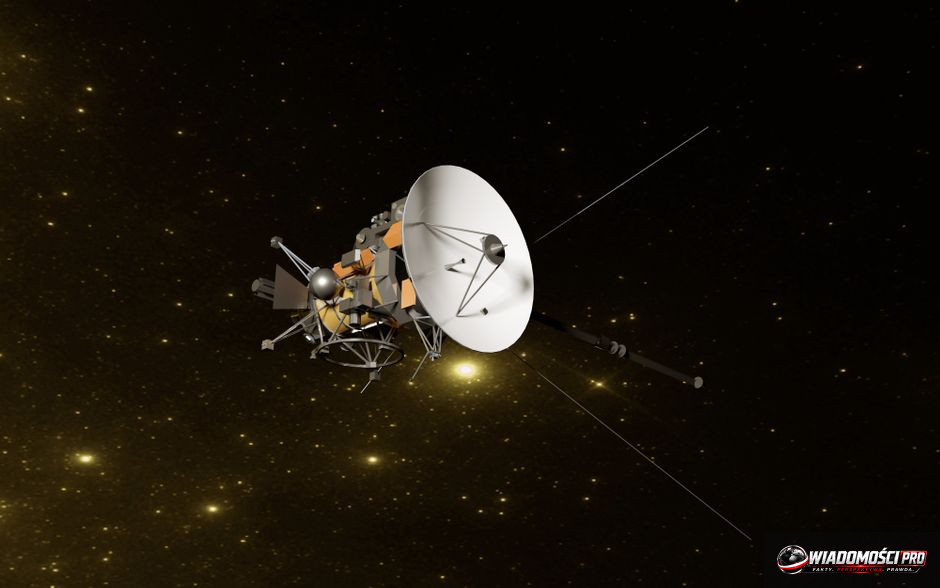
The launch of the probe in October 2024 opened a new chapter in the history of deep space exploration. The budget, set at 5 billion dollars, places this venture at the forefront of the most expensive unmanned projects that have ever left Earth's orbit. The choice of SpaceX's Falcon Heavy rocket was a decision dictated by the need to lift a massive amount of research equipment. The probe must possess its own power supply, advanced communication systems, and heavy radiation shielding to protect its electronics from the destructive influence of Jupiter's magnetic field. Without such a powerful launch vehicle, lifting a device the size of a small bus would be technically unfeasible.
Funding such a complex operation in the face of rising maintenance costs for other NASA scientific programs sparks discussions about the agency's priorities. This investment is not merely an expenditure on basic research, but a test of the capacity of the space industry in the USA. The success or failure of the mission will define the funding strategy for future expeditions toward the outer planets. If the probe manages to send back data confirming the existence of conditions favorable to life, this cost will be considered one of the most effective investments in the history of science. However, if it fails, the agency faces a difficult debate about accountability for such a massive amount of capital.
Destination: Why Europa?
Europa, the fourth-largest moon of Jupiter, has been at the center of astrobiologists' interest for years. It possesses an icy shell with a thickness estimated at over a dozen kilometers, beneath which, according to most scientific models, lies an ocean of liquid water. It is precisely the presence of water in a liquid state that is the key factor making this celestial body the number one target in the search for extraterrestrial life forms. Unlike many other moons, Europa shows signs of geological activity that could provide the energy needed to sustain biological processes.
Scientists do not expect Europa Clipper to find ready-made biological structures on the surface. The probe's task is much more fundamental: we need to check whether the ocean beneath the ice contains the appropriate chemical compounds, whether there is an exchange of matter between the surface and the interior, and whether the temperature inside the ocean allows for the existence of metabolism. This is a search for conditions, not for the organisms themselves. Understanding the dynamics of the icy shell will allow us to answer the question of whether life in Europa's oceans is merely a theoretical possibility or an actual ecological niche.
The research instruments on board the probe are tasked with scanning the chemical composition of the surface and measuring the thickness of the ice. Each of the flybys—and several dozen are planned—will be like a visit to a laboratory where we analyze samples without the need for landing. The lack of a lander is a conscious engineering decision. Landing on unknown, highly irradiated terrain would be burdened with too high a risk of failure. Instead, Clipper will use precise sensors to remotely study what is hidden underneath.
Travel schedule and key stages
The journey to the Jovian system is a marathon that spans years. The probe launched in October 2024, but its path to the destination is full of challenges resulting from orbital mechanics. To reach the target with a limited amount of fuel, engineers planned a trajectory utilizing gravity assists. The probe passed Earth and Mars, drawing the velocity necessary to push toward the outer solar system from their gravitational fields. Every maneuver is critical, as course correction at this distance from the Sun is costly in terms of energy and time.
The radio signal delay between the probe and Earth is tens of minutes, which precludes real-time control of the device. Europa Clipper must operate autonomously. Onboard software is responsible for maintaining the course, orienting the solar panels, and automatically triggering measurement sequences during flybys of Europa. It is a system that must demonstrate extraordinary reliability. Throughout the years of the journey, the electronics will be exposed to extreme temperature fluctuations and cosmic radiation.
The mission schedule assumes reaching Jupiter's orbit at the end of the current decade. Only then will the actual research phase begin, which will last several years. During this time, the probe will repeatedly cross Europa's flight path, performing close-ups that will allow for the creation of a geological and chemical map of this globe. Each of these stages is prepared with the goal of maximizing scientific data while maintaining the safety of the platform, which constitutes the backbone of the entire project.
Technology on board: How do we study a distant world?
The engineering behind Europa Clipper is a pinnacle achievement for NASA in the field of radiation protection. Jupiter possesses extremely strong radiation belts that are lethal to standard electronics. The probe's construction includes a special vault made of titanium and aluminum. Inside this armored chest, the most important onboard computers and data-processing processors are enclosed. It is there that the instructions that determine the success of the mission are stored.
The set of scientific instruments is diverse and well-thought-out for the purpose of detecting chemical traces. Infrared and ultraviolet spectrometers are tasked with identifying organic compounds on the surface. An ice-penetrating radar will allow us to look deep into the icy shell and determine where the ice is thinnest or where subsurface melting occurs. This is crucial to understanding how the ocean communicates with the moon's surface.
It is worth mentioning the magnetometer, which is one of the most important devices in this set. It allows for the detection of induced magnetic fields, which is direct evidence of the existence of a salty, conductive ocean beneath the ice. If the magnetometer confirms the existence of such anomalies during the flybys, it will be the hardest evidence of what is hidden underneath. Every component of the probe has undergone thousands of hours of testing in vacuum and radiation chambers to ensure it will survive for years in such a hostile environment.
Competition and cooperation in space exploration
The American Europa Clipper program is being carried out unilaterally, which is a conscious choice by NASA's management. Although European space agencies have their own missions studying the Jovian system, such as JUICE, the Americans decided on an independent approach to Europa. This strategy has consequences for the pace of research and the prestige of the discoveries. Operational independence allows for faster adaptation to changes during the mission, but at the same time, it closes the door to broad international cooperation at the operational level.
The competition for the title of the first institution to provide evidence for the existence of an environment favorable to life drives innovation. NASA strives for the position of a leader that sets standards in the exploration of the outer Solar System. Such dominance, however, comes at a high price—not only financial but also diplomatic. Excluding a broad coalition of partners means that in the event of success, it is American science that will reap all the laurels. From the perspective of the taxpayer who funds these billions, this is a clear signal regarding the importance of this project.
It is worth looking at this more broadly. Space exploration has ceased to be a joint effort of all humanity and has begun to resemble a technological arms race. Europa Clipper is the best example of this. It is a show of strength intended to demonstrate that, despite internal budget problems, American engineering is capable of meeting the most stringent technical requirements. Is such an attitude appropriate? That is a topic for a separate debate; however, in the context of the mission itself, it is the only way to maintain full control over the quality of the incoming data.
Expectations upon reaching the destination
Expectations for this mission are enormous. The scientific community hopes that the Europa Clipper probe will finally close the chapter of speculation regarding Europa's interior. We are not looking for little green men there, but for the chemical foundations of life as we know it on Earth: carbon, hydrogen, nitrogen, oxygen, phosphorus, and sulfur. If these elements are present in Europa's ocean in the right proportions, we will be able to state with a high degree of certainty that life is a more common phenomenon in the universe than previously thought.
On the other hand, we must prepare for disappointment. There is a real possibility that the probe will send data that rules out the existence of conditions favorable to life. It may turn out that the ocean is too salty, too cold, or devoid of the necessary nutrients. Such a result would be just as valuable to science as the discovery of life, because it would define the limits of the biological utility of celestial bodies in our system. Science does not always provide the answers we are waiting for, but it always provides knowledge that verifies our previous assumptions.
Skeptics often ask whether these 5 billion dollars could not have been spent on Earth. This is a question about the priorities of humanity. However, space missions like this push the boundaries of what we can build and how we solve technical problems. Technologies developed for Europa Clipper—from radiation shielding to autonomous navigation systems—will find applications in other fields, from medicine to energy. This is an investment in knowledge that cannot be measured by pure profit in the short term.
What this means for you
The Europa Clipper mission is not just a costly flight toward Jupiter. It is a test of our curiosity as a species. Can we invest massive capital in something that will not bring an immediate return, but only knowledge? The answer to the question of whether we are alone in the universe is one of the most important we can ask. Even if the probe confirms that Europa is a dead globe, we will learn something fundamental about the uniqueness of Earth. If, however, we find traces of biological activity there, our understanding of the universe will change forever. This mission is a bridge between what we know today and what may turn out to be the truth about our place in the galaxy.
Questions and answers
Why was Europa chosen, and not another moon of Jupiter?
Europa possesses an ocean of liquid water beneath the ice, which is in direct contact with the moon's rocky core. This enables the exchange of minerals and chemical ingredients, which is crucial for the emergence of life. Other moons, like Ganymede or Callisto, have oceans located much deeper, which makes them difficult to study.
Will the probe land on the moon's surface?
No. Europa Clipper is an orbital probe that will perform a series of flybys at a short distance from the surface. Landing is too risky due to the difficult terrain and high radiation, which would destroy a lander in a very short time.
When will we know the first results of the research?
The first scientific data will flow in after reaching Jupiter's orbit and beginning the flyby phase. This process will take years because the probe must first reach the Jovian system, which is scheduled for the end of the current decade.
Is the mission threatened by Jupiter's radiation?
Yes, radiation is the greatest engineering challenge. That is why the probe was equipped with a titanium-aluminum vault protecting the electronics. NASA designed the entire mission to minimize the time the probe spends in the planet's strongest radiation belts.
What are the chances of finding life?
Scientists are looking for conditions favorable to life, not direct evidence of the existence of organisms. Success will be the confirmation that the ocean beneath the ice contains the appropriate chemical ingredients, energy sources, and liquid water, which would make Europa an environment potentially suitable for habitation.
Why was the Falcon Heavy rocket chosen?
Falcon Heavy is one of the few rockets with enough payload capacity to lift such a heavy probe onto an interplanetary trajectory at the appropriate speed. Its reliability and technical parameters were crucial for the logistics of the entire project.
Is Europa Clipper the only project of this kind?
Currently, it is NASA's most expensive and most advanced mission in this direction. There are other European projects, such as JUICE, which are also studying the Jovian system, which creates a broad scientific picture of this region of the Solar System, however, Europa Clipper is the only mission so strongly focused on studying the habitability of Europa itself.
What is the main technological goal of the mission?
The main goal is to check whether existing radiation protection systems and autonomous research systems can effectively operate in the extremely difficult environment of Jupiter for many years. It is a testing ground for future deep space exploration.
Can taxpayers track the progress of the mission?
Yes, NASA provides information about the progress of the mission, the probe's trajectory, and publishes scientific data after they have been processed. Public access to this information is part of the agency's transparency strategy, despite the huge costs incurred by the US federal budget.
What will happen to the probe after the mission ends?
Usually, missions end with a controlled entry into the atmosphere of the planet or moon to avoid the risk of biological contamination that could affect future research. A detailed scenario for the end of the mission will be determined at the end of the probe's operational period.
Sources
- Start of the Europa Clipper mission to Europa - AstroNET – Polish Astronomical Portal
- Europa Clipper probe will search for life on Europa - Urania - Polish Astronomical Portal
- Start of the Europa Clipper mission [BROADCAST]. Americans will overtake Europeans in the search for life on Europa - Wyborcza.pl
- Beginning of the Europa Clipper mission - Kosmonauta.net
- Europa Clipper has launched. It will investigate whether there are conditions for life on Jupiter's moon - Polskie Radio 24
- Europa Clipper probe will search for life on Jupiter's moon, Europa - wszystkoconajwazniejsze.pl
- NASA sends a probe to Europa. The Europa Clipper mission has launched - WP Tech
- Flight to Jupiter for 5 billion dollars. Launch of Europa Clipper on board Falcon Heavy - Benchmark.pl
Article prepared by the Wiadomości PRO editorial team with the support of artificial intelligence. Facts come from the sources listed above.

Komentarze (0)
Ładowanie komentarzy...