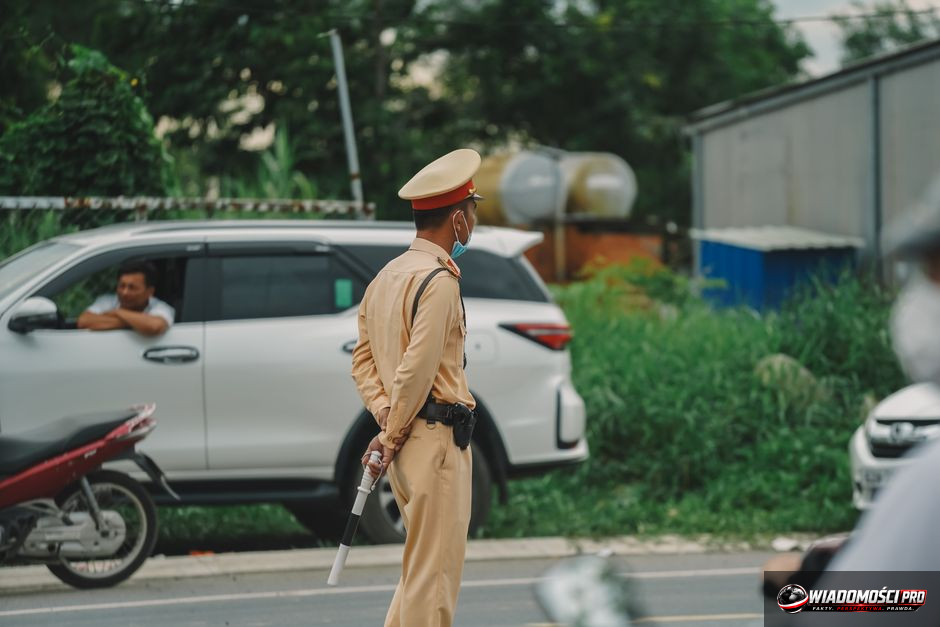
The government is introducing a two-year probationary period for new drivers and tightening penalties for gross speeding, including the possibility of a lifelong loss of a driver's license for recklessness. These regulations, which form the core of the amendment to the Act on Vehicle Drivers, are set to take effect in 2026, radically changing the current approach to verifying the skills of those behind the wheel. These changes are a response to the persistently high accident rate among the youngest road users, for whom a driver's license will cease to be merely a document and become a conditional privilege.
Two-year probationary period: A new standard for novices
From August 28, 2026, students receiving a category B driver's license will enter a completely new legal reality. The twenty-four-month probationary period, calculated from the date the license is issued, marks the end of the era of leniency. Anyone who gets behind the wheel during this time must reckon with rigorous restrictions designed to discipline drivers and eliminate habits that lead to recklessness.
In practice, this means that for two years, new drivers will be subject to stricter rules. The legislator specifies that the goal of these regulations is to eliminate the most dangerous behaviors, which statistically most often involve people with little experience behind the wheel. Recklessness will no longer be treated as a simple offense punishable only by a fine or penalty points. The new regulations provide that for gross speeding – defined as exceeding the limit by more than 50 km/h in a built-up area – a driver in the probationary period may lose their license for life.
For many fresh drivers, this means immense pressure. Instead of enjoying their newly obtained license, they must now calculate every move on the road. A mistake could cost them the document with no chance of a quick return to driving. The Ministry of Infrastructure, which is preparing the draft amendment, makes it clear: if a driver cannot drive safely, their adventure with motoring will end definitively before the two years are up. This solution is an attempt to shift the burden of responsibility onto the shoulders of the least experienced road users, which is intended to force the learning of humility from the very first kilometers behind the wheel. Is this an effective method for improving accident statistics, or rather shifting all responsibility onto beginners? The effectiveness of these regulations will be verified by judicial practice and statistics maintained by the National Police Headquarters in the first twelve months of the new regulations being in force.
Stricter penalties: When will you lose your driver's license?
The Ministry of Infrastructure is ending the game of leniency for road pirates. From August 28, 2026, the discussion about safety will cease to be academic and will turn into a hard catalog of sanctions intended to eliminate the most dangerous individuals from traffic. The system will no longer be superficial. If you get behind the wheel thinking that a public road is a racetrack, you must reckon with the fact that you will lose your license for good.
The draft act makes the matter clear and without ambiguity. The state is bringing out the heavy artillery against drivers who treat the regulations merely as a suggestion. Here is exactly what is changing in the penalty schedule. Lifelong loss of a driver's license for drastic violations of regulations is not a scare tactic, but a real tool for courts in cases of recidivism or exceptionally gross recklessness. Introducing stricter penalties for participating in illegal street races is another pillar of the changes. Organizers and participants of night "meets" must reckon with the immediate forfeiture of property or prison sentences.
Tightening criminal liability for reckless driving in built-up areas is crucial. Exceeding the speed limit in a 50 km/h zone by more than 50 km/h will be treated on par with a crime against traffic safety. The introduction of a two-year probationary period for new drivers completes this picture. This means that for the first 24 months after receiving the document, every serious incident will end not only with a fine but often with the necessity of going through the entire training process again. For young people, this is a cold shower. The Ministry is counting on a deterrent effect, although critics note that without effective enforcement and a constant presence of patrols on the roads, even the strictest law will remain a dead letter in the statute book. The police must realistically deal with tracking down night races so that this law does not remain only on paper. The margin for error for drivers has ceased to exist.
Impact of the amendment on the examination process
The driver's license exam has ceased to be merely a formal check of technical skills, becoming the first filter for selecting drivers in terms of responsibility. The 2026 amendment to the Act on Vehicle Drivers forces a change in mentality as early as the course stage. This is a continuation of the trend of tightening regulations that appeared with varying intensity in the years 2023–2025, but this time the emphasis is on prevention and the permanent exclusion from traffic of people with a high-risk profile.
Students must prepare for much stricter verification. State exams currently place primary emphasis on assessing defensive behaviors. In practice, this means that a mistake consisting of failing to foresee a threat or ignoring a potentially dangerous situation on the road ends in an immediate termination of the drive. Instructors admit that the number of exam points where one fails due to "lack of imagination," and not due to a technical error, has increased by several percent compared to last year.
The introduction of a two-year probationary period is a signal that the driver's license document itself is no longer a guarantee of freedom. For twenty-four months, young drivers are under special supervision, where every more serious violation of the regulations may result in the revocation of the license. The system is merciless. Combined with the threat of lifelong loss of a driver's license for gross recklessness, the exam becomes a verification not only of driving technique but, above all, of maturity to be a road user. For training centers, this means the end of "teaching for the exam." Now, survival on the road is what counts. The cost of a mistake is too high to treat training as a routine administrative process.
Implementation schedule for the new regulations
The government adopted the draft act in August 2026, which paves the way for a revolution in the system of training and punishing drivers. These are not plans for the distant future, but a real legal scenario that will begin to apply immediately after the document is published in the Journal of Laws and the required vacatio legis has passed. The Ministry of Infrastructure has not provided for a transitional period for current license holders. If you already have a driver's license, you can breathe a sigh of relief – the two-year probationary period will not work retroactively and will not cover people who obtained the document before the new regulations came into force.
For future students, however, the situation looks different. Officials have opted for a radical tightening of the course regarding recklessness on the road. The new driver's license 2026 is, in practice, "digital supervision" over a new driver for twenty-four months, during which every gross speeding violation will result in drastic consequences. In extreme cases, in the event of recidivism or particularly dangerous behavior, the legislator has provided for the possibility of a lifelong ban on driving vehicles. This is a signal to instructors and examiners that the mistakes of young drivers will no longer be treated as "rookie errors," but as a serious violation of public safety.
Below is a summary of the key implementation parameters you need to know:
- Date of adoption of the draft by the government: August 2026 (source: Wiadomości PRO).
- Probationary period for new drivers: 2 years (source: Wiadomości PRO).
- Coverage of changes for current drivers: No (source: Wiadomości PRO).
- Legal basis for entry into force: Publication in the Journal of Laws and vacatio legis (source: Wiadomości PRO).
The information chaos accompanying subsequent amendments means that candidates for drivers often do not know under what rules they will be examined. Here, the matter is stated clearly. The date of entry into force depends solely on the pace of legislative work in parliament and the speed of publication in the Journal of Laws. Every day of delay in making the decision to enroll in a course is a risk that you will already fall into a new, more restrictive legal regime.
Road safety: Position of institutions
The government makes the matter clear: the introduction of a two-year probationary period for new drivers is not a proposal, but a necessity forced by data. According to the Ministry of Infrastructure, previous measures were insufficient to stop the wave of tragic events. Statistics are merciless and indicate a clear overrepresentation of young people in accidents caused by driving at excessive speed. It is this age group that generates the greatest risk on Polish roads.
Officials argue that tightening penalties is preventive in nature. It is not just about punishing, but about eliminating from traffic people who grossly ignore the regulations. Hence the idea for the lifelong loss of a driver's license in cases of extreme recklessness. The Ministry wants the awareness of the irreversibility of sanctions to become a psychological barrier for young drivers who are just learning responsibility behind the wheel.
In practice, this means that the ministry is shifting the center of gravity from education to strict discipline. Road safety experts, although they admit that the number of accidents involving beginner drivers is alarming, approach these solutions with distance. They fear whether systemic deterrence will actually translate into an increase in skills, and not just into the number of people excluded from driving vehicles. The government, however, is not giving in. It argues that in the face of road mortality statistics, the privilege of having a driver's license must be associated with absolute respect for speed. Now the ball is in the legislator's court, and young drivers must prepare for a reality in which every mistake on the road can cost them the loss of their license forever.
What changes in the law for current drivers?
Many drivers with many years of experience can breathe a sigh of relief because the strictest restrictions hit beginners first and foremost. The system introduced on August 28, 2026, is not a sudden 180-degree turn, but the completion of a process that has been ongoing in Polish law since the beginning of 2024. At that time, in accordance with announcements from December 2023 and modifications from September 2024, the first seals on the examination system were introduced. Those changes were only a prelude to the full amendment we are facing today.
The government has opted to consolidate previously dispersed regulations into one coherent penalty system. While earlier amendments focused mainly on examination procedures, the current law focuses on the absolute enforcement of road safety.
Here is what specifically changes in daily life behind the wheel:
- Introduction of a two-year probationary period for people who are just receiving their driver's license. This is a time when every serious mistake can result in the loss of the license without the possibility of appeal.
- Tightening of the penalty schedule for gross speeding. The system no longer provides for a lenient tariff for recidivists.
- Introduction of a lifelong ban on driving vehicles in the event of gross recklessness, which is the most far-reaching change in the Polish traffic code in years.
For current drivers with more experience, the difference is fundamental. While the previous regulations, those from 2024–2025, allowed for some flexibility and gradation of penalties, now the line between a fine and the loss of the license has become very thin. The state has stopped asking about intentions and has started checking statistics in the CEPiK system. Anyone who thought they would escape the tightening of penalties by getting a driver's license "at the last minute" according to the old rules must now face the fact that the penalty schedule has become merciless to anyone who ignores speed limit signs. This is real pressure that is intended to eliminate road pirates, but at the same time, it imposes on drivers the obligation of constant monitoring of their speedometers.
What this means for you
The amendment hits primarily those just entering the world of motoring. All road users will benefit due to the potential decrease in the number of reckless drivers, while young drivers must reckon with higher education costs and stricter consequences for every mistake. The catch lies in the rigorous approach to the probationary period, which forgives much less than the previous regulations. The lack of a transitional period for current drivers is a nod to those who passed their exam a long time ago, but at the same time, it puts them in a situation where every new police check can end with a stricter sentence than before 2026, due to the tightened approach to speeding recidivism.
Questions and answers
Does the probationary period apply to people who already have a driver's license?
No, the probationary period applies only to people who obtain a category B driver's license after the new regulations come into force in 2026.
For what exact offense is there a threat of lifelong loss of a driver's license?
Lifelong loss of the license is provided for gross violations of regulations, including drastic speeding (over 50 km/h in a built-up area) and participation in illegal races.
Do the new regulations change the cost of the driver's license exam?
The draft amendment focuses on the penalty system and the probationary period; issues of exam prices remain at the discretion of local WORDs (Regional Traffic Centers) and are not the direct subject of this act.
Will a driver's license issued before 2026 be subject to replacement with a new one?
No, the regulations do not impose an obligation to replace documents for current drivers, and the probationary period will not work retroactively in relation to people who held the license before the date the act came into force.
Where can the full text of the draft amendment be found?
The draft is available in the Government Legislative Process after publication in the Journal of Laws, and detailed announcements are published by the ministry responsible for infrastructure and on websites monitoring parliamentary work.
***
(Editorial note: The above text is an analysis of legal changes planned for 2026. The lack of a transitional period for current drivers regarding the probationary period is a fact resulting from the assumptions of the draft, however, the tightening of the fine schedule for speeding recidivism will apply to all road users, regardless of the date of obtaining the license. Readers should verify the announcements published in the Journal of Laws on an ongoing basis, as the pace of legislative work may affect the final shape of the implementing regulations.)
*Editorial analysis indicates that the biggest challenge for the system will not be the tightening of the law itself, but its enforcement. The number of traffic police officers in relation to the number of vehicles registered in Poland remains at a level that may limit the effectiveness of these restrictions in daily practice. Additionally, the issue of a lifelong ban on driving vehicles will require clarification in the penal code to avoid mass appeals against the verdicts of courts of first instance. A young driver, entering the probationary period, becomes in the eyes of the state a subject under special observation, which from the perspective of road traffic psychology may lead to the phenomenon of "stressful driving," paradoxically lowering concentration on the road.*
*In the context of state exams, traffic centers across the country are already preparing for a change in the examiner's profile. From an official checking driving technique, the examiner becomes in a sense a "verifier of social maturity." This is a paradigm shift that may spark disputes over the subjectivity of assessing "defensive behaviors." The lack of clear, numerical indicators for this category of behavior may lead to an increase in the number of complaints filed by students to the bodies supervising WORDs. From the reader's perspective, the most important signal is that the "good advice" of instructors from years ago is becoming outdated in the face of new road surveillance systems.*
*In summary, 2026 will be the year in which Polish roads become a testing ground for a new philosophy of responsibility for speed. Regardless of whether we assess these changes as restrictive or necessary, it must be acknowledged that the time for "trial" mistakes is definitively coming to an end. Every decision behind the wheel after August 28, 2026, will have potentially irreversible legal consequences, which for young drivers means the necessity of a radical revaluation of their approach to speed.*
Sources
- New regulations 2026: Lifelong loss of driver's license, prison for recklessness, ban on racing - Gazeta Prawna
- Driver's license exam 2024. New regulations introduced significant changes - Dziennik.pl
- Rules for the driver's license exam at the last minute - Rzeczpospolita
- New regulations will hit young drivers. Better to get a driver's license quickly - Interia Motoryzacja
- New rules for driver's license exams. Changes already on January 1, 2024 - Dziennik.pl
- For this offense you will lose your driver's license. There will be new regulations - TVN24
- Changes for drivers. From September 10, 2024, new rules regarding driver's licenses - Motofakty
- Drivers will breathe a sigh of relief. New regulations already from September 10 - Gazeta Prawna
Article prepared by the Wiadomości PRO editorial team with the support of artificial intelligence. Facts come from the sources provided above.


Komentarze (0)
Ładowanie komentarzy...