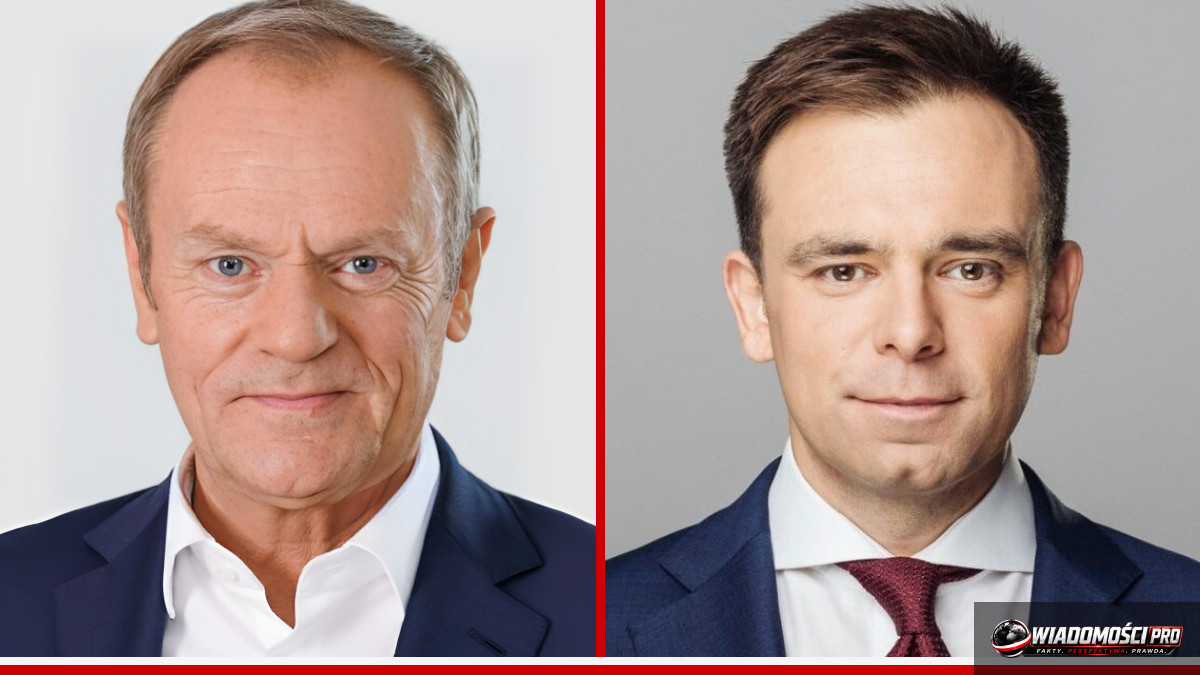
In 2027, the PIT rate will rise to 24%, and a CIT hike will burden businesses, which, in the government's assumptions, is intended to finance 26 billion PLN in additional funds for healthcare and priority investments in the military and nuclear energy. Finance Minister Andrzej Domański presented a budget draft that shifts the burden of financing state ambitions directly onto the shoulders of citizens and the private sector. This decision forms the fiscal foundation for the coming months and ends the period of discussion regarding alternative sources of budget revenue.
Main assumptions of the 2027 budget
The Council of Ministers has adopted the 2027 draft budget, in which the main fiscal tool is raising the basic personal income tax (PIT) rate to 24 percent. Simultaneously, Donald Tusk's government has decided to increase CIT burdens for businesses. These decisions aim to generate the funds necessary to handle rising state expenditures, which this fiscal year focus on three areas. The first is healthcare, which will receive an additional 26 billion PLN; the second is the modernization of the army in the face of geopolitical tensions; and the third is the development of nuclear energy.
The budget document leaves no room for interpretation regarding the pace of changes. The Ministry of Finance assumes that higher tax revenues will allow for the financing of previously deficit-ridden infrastructure projects. The choice of tax tools demonstrates the government's determination to ensure financial liquidity for key investments, despite the obvious political risk. The parliamentary debate on the shape of these regulations promises to be the most intense clash over the shape of public finances in this term.
Tax burdens and the taxpayer's wallet
Introducing a PIT rate of 24 percent directly translates into the amount of net pay received by employees. Taking as an example the average salary in the enterprise sector, which according to Statistics Poland (GUS) data hovers around 8,500 PLN gross, an increase in effective taxation by 12 percentage points relative to the current basic rate of 12 percent means a real loss for the household budget. A person earning 8,500 PLN gross, with current income-earning costs and the tax-free allowance, will feel the change as approximately 900–1,000 PLN less in their wallet per month. This is an amount that, for the average household, represents a significant dent in disposable income.
Citizens financing these changes become the primary investors in three key areas: medicine, defense, and the atom. This mechanism is based on a simple transfer of capital from the private to the public sector. Employees, seeing lower transfer amounts, will have to verify their consumer spending. Limiting purchases of durable goods or services may affect the slowdown of GDP dynamics in 2027. The government hopes that the increase in state spending will compensate for the decline in private consumption, however, economic history shows that such capital shifts rarely occur without friction.
Financing mechanisms and company health
The CIT hike hits the profitability of enterprises that already have to face rising labor costs and energy prices. For companies, this means the necessity of revising investment plans for the coming quarters. Instead of allocating profits to the development of machinery or hiring new specialists, management boards will be forced to transfer a larger portion of generated capital to the state budget. This phenomenon leads to a decline in the competitiveness of Polish entities on the international market.
Entrepreneurs point out that every subsequent tax hike, combined with rising excise duties, reduces the margin for error. Faced with the necessity of paying higher income tax, companies often decide to pass costs on to end consumers. As a result, higher CIT may become a hidden driver of inflation. The consumer, paying more for products and services, will feel a double blow: first with their paycheck, and then at the store checkout.
Expenditure priorities: Health, military, and the atom
The additional 26 billion PLN for healthcare is intended to be a response to growing staffing problems and shortages in hospital infrastructure. The medical sector, underfunded for years, is receiving the largest cash injection in the last decade. Experts note, however, that money alone does not solve the problem of the shortage of doctors and nurses. Without systemic changes in facility management, the additional billions may be absorbed by rising costs of current operations, without significantly improving the availability of specialists for patients.
Defense has become the second pillar of the budget. In an era of threats from the east, military spending has ceased to be treated as a cost and has begun to be perceived as the state's insurance policy. Armament purchases require huge outlays, which the government intends to finance precisely through increased revenues from PIT and CIT. Nuclear energy, as the third pillar, is intended to ensure Poland's energy security for the coming decades. This is a long-term project that requires stable financing, independent of economic cycles. The government is betting on the atom, knowing that it is the only way to replace phasing-out coal units with a low-emission and stable source.
Macroeconomic challenges for the economy
The 2027 budget is a game of very high fiscal risk. The Ministry of Finance assumes that the economy will maintain sufficient momentum for tax revenues to reach the assumed targets. Increased fiscalization, however, may trigger wage pressure. Employees, losing real purchasing power due to higher PIT, will demand gross salary increases. This, in turn, will drive up costs for employers, which, with higher CIT, could lead to a decline in the profitability of entire sectors of the economy.
The country's macroeconomic stability in 2027 will depend on whether the government manages to keep spending under control. Any exceeding of planned costs for investments in the atom or armaments will require further tax corrections. The financial market is watching these actions with concern, assessing the state's ability to service debt under conditions of high taxes. Foreign investors take into account the stability of the legal environment, and sudden changes in tax rates often act as a deterrent to them.
Investment and social risk
The choice of the three main directions for spending funds – health, military, and energy – is a clear signal to society. Donald Tusk's government is trying to address the most urgent needs, consciously accepting taxpayer resistance. Each of these projects is expensive and fraught with the risk of failure. In the case of health, it is the risk of inefficient spending; in the case of the military, delays in equipment deliveries; and in the case of the atom, the huge costs of building reactors.
Taxpayers, financing these undertakings, expect measurable effects. If in 2027 queues to doctors do not shorten and inflation continues to drain wallets, the government can expect strong social opposition. Budgetary policy based on increasing levies must be supported by results. Otherwise, it will become a tool that, instead of building security, will deepen citizens' frustration.
Perspective for enterprises
For the private sector, 2027 means the necessity of adapting to more difficult conditions. Companies must seek cost optimization to maintain margins with higher income taxation. Many entrepreneurs are considering limiting development investments, which in the long term may negatively affect the innovativeness of the Polish economy. Instead of building new production lines, funds will be frozen in tax reserves.
The SME sector is particularly exposed to the effects of these changes. Large corporations have tools for tax optimization, whereas small and medium-sized companies often do not have such an opportunity. They are the ones who will primarily feel the weight of the CIT hikes. Those in power must reckon with the fact that some companies may limit employment or move operations to countries with a more favorable fiscal climate. The stability of tax law is just as important in this regard as the tax rates themselves.
Verification of budget assumptions
Verification of budget assumptions will take place as early as the first quarter of 2027. Then it will become clear whether the projected tax revenues cover real financial needs. The Ministry of Finance has announced regular monitoring of the state treasury's status. Any deviation from the plan will require a quick reaction, which may mean further amendments to the budget act.
The debate on the budget that will take place in parliament will show whether the government manages to convince the opposition of its arguments. Arguments regarding the country's security are strong, but arguments about draining citizens' pockets have equally great social weight. The 2027 budget is therefore not only a financial document but, above all, a political manifesto of the current government. Every zloty of the 26 billion allocated to health will be closely tracked by public opinion.
What this means for you
The citizen, receiving lower net pay in 2027, becomes a direct sponsor of state investments. The increase of PIT to 24% is a real change in daily household mathematics. Entrepreneurs, struggling with higher CIT, are limiting their development plans, which may inhibit wage growth in the private sector. The promise of improving the quality of public services is for many the only hope that higher taxes will bring real benefit in the form of better medical care or increased military security.
Questions and answers
By how much will the PIT rate increase in 2027?
The government has adopted a budget draft in which the basic PIT rate is raised to 24%.
How much additional money will go to healthcare?
The 2027 budget provides for an injection of 26 billion PLN for purposes related to public healthcare.
Which sectors are a priority in the new budget?
The government has indicated three main pillars of expenditure: healthcare, military modernization, and the development of nuclear energy.
Does the CIT hike apply to all companies?
The budget draft assumes an increase in corporate income tax (CIT) rates, which will cover most businesses conducting economic activity.
What is the main justification for such high tax hikes?
The Ministry of Finance argues that the increase in PIT and CIT rates is necessary to finance strategic investments in the country's security and to save the healthcare system from financial collapse.
Does the 2027 budget provide for other sources of financing besides taxes?
The draft is based mainly on increased income tax revenues, which is intended to be a guarantee of the stability of implementing priority investments.
What is the projected market reaction to the CIT hike?
Experts predict that the CIT hike may slow down the dynamics of private investment and force companies to verify pricing strategies, which may translate into an increase in the prices of goods and services.
Will 26 billion PLN for health be enough to fix the system?
Although this amount is significant, experts point out that without deep structural and staffing reforms, cash alone may not be enough to permanently solve the problems faced by the public health service.
Why were exactly these three expenditure priorities chosen?
The choice of healthcare, the military, and the atom results from the current geopolitical situation and the necessity of ensuring the state's energy security in the long-term perspective.
Who will feel the tax changes most in 2027?
The changes will be felt by all taxpayers through lower net incomes and by entrepreneurs who will have to pay higher levies to the state budget.
What will be the role of parliament in the budget process?
Parliament faces an intense debate on the shape of the draft, in which the figures presented by the finance ministry will be subjected to detailed analysis by the opposition and independent economists.
Does the government foresee alternatives to the tax hike?
The presented budget draft does not include other significant sources of financing, which suggests that the PIT and CIT hike is the main mechanism securing budget expenditures for 2027.
What are the chances of maintaining macroeconomic stability?
This stability will depend on many factors, including GDP growth dynamics, the inflation level, and the effectiveness of spending funds on strategic investments.
Is nuclear energy already fully financed?
Budget funds for 2027 are intended to ensure the liquidity of investments, however, the development of nuclear energy is a multi-year project that will require continuous financing for the next decades.
What will be the long-term effects of the PIT increase for the labor market?
The PIT increase may lead to strong pressure for gross wage increases, which, with the simultaneous increase in the costs of doing business, may affect the structure of employment in Poland.
Sources
- Excise duty hike and new PIT thresholds are coming. Domański reveals key figures of the 2027 budget - Gazeta Prawna
- State budget for 2027. Donald Tusk announces billions for health, military, and the atom - Rzeczpospolita
- Tusk announces billions more. These expenditures are to be a priority - Strefa Biznesu
- Revolution in taxes and salaries. Will you gain or lose in 2027? - Fakt
- In 2027, 26 billion PLN more for healthcare. Shortages still large - infoDENT24
- Government is preparing the budget for 2027 - RadioMaryja.pl
- New PIT rate 24% and CIT up. Government adopted the 2027 budget draft - Comparic.pl
- Tusk revealed his cards. This is what the government wants to spend billions on in 2027 - Super Biznes
Article prepared by the Wiadomości PRO editorial team with the support of artificial intelligence. Facts come from the sources provided above.

Komentarze (0)
Ładowanie komentarzy...