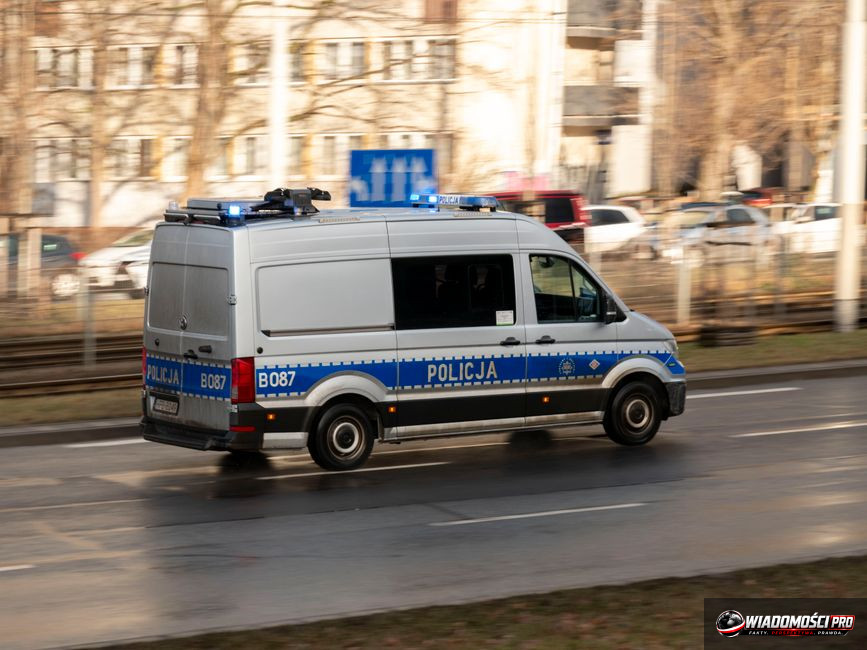
From 2026, young drivers will undergo a two-year probationary period, during which penalties for reckless driving will be tightened, including the introduction of the possibility of a lifetime loss of driving privileges for the most serious traffic offenses. Every newly licensed category B driver will be subject to strict selection, where one serious mistake means the definitive end of their driving adventure. This system cuts off discussions about privileges, turning the driver's license into a conditional document under constant supervision by the authorities.
The genesis of the changes in 2026
Polish roads are entering a phase of absolute enforcement of regulations. The evolution of the state's approach to road safety has ceased to be merely cosmetic regarding exams. Since the beginning of 2024, when the Ministry of Infrastructure began introducing the first adjustments to driving tests, we have observed a gradual tightening of the course. Motofakty reported on the changes from September 10, 2024, which were only a precursor to the coming wave of restrictions. However, the legislative moves at that time did not bring the expected improvement in accident statistics in the 18–24 age group.
The data that Gazeta Prawna analyzed in November 2025 became fuel for the legislation coming into force in 2026. The government abandoned attempts at behavioral education in favor of hard risk elimination. Instead of further adjusting exam sheets, a system was introduced that is intended to exclude the most dangerous individuals from road traffic before they could cause an irreversible tragedy. This is a transition from a learning model to a model of permanent threat elimination through restrictions that will prove to be a sentence for many young people.
Mechanics of the two-year probationary period
Anyone who receives a category B driver's license after 2026 enters a 24-month cycle of increased risk. This document ceases to be a confirmation of acquired skills and becomes a conditional permit to operate a vehicle. The lack of grace periods or lenient tariffs is the foundation of this regulation. A police officer stopping a novice has a range of disciplinary tools that allow for an immediate reaction.
A key element of the system is the obligation to undergo additional road safety training. The student does not finish their education the moment they receive their license. They must complete dedicated training modules within 24 months. The deadlines for completion are rigid. Failure to fulfill this obligation results in the automatic expiration of the driver's license. The system is binary. There is no room here for appeals regarding timeliness errors. If, during these two years, the driver commits gross violations, the police and courts receive full authority to impose a lifetime driving ban. This is the end of the era of warnings and lenient fines.
Offenses resulting in the loss of privileges
The legislator has clearly defined a list of actions that, during the probationary period, mean a definitive farewell to road traffic for the driver. Each of the following offenses is treated as a gross violation of safety rules:
* Participation in illegal street races – treated as a crime against health and life, resulting in absolute imprisonment.
* Exceeding the speed limit by more than 50 km/h in a built-up area – classified as a direct threat to the lives of pedestrians.
* Driving under the influence of alcohol or intoxicants – zero tolerance, regardless of concentration.
* Causing a traffic accident due to the driver's fault, resulting in serious bodily harm or the death of a road user.
* Fleeing the scene of a traffic incident, regardless of the cause and extent of the damage.
* Gross violation of right-of-way rules, leading to the creation of an immediate risk of collision.
Costs and logistics: the financial burden of the new regulations
The introduction of new regulations in 2026 hits the budgets of students directly. The process of obtaining privileges has become significantly more expensive than in 2024 or 2025. In addition to standard fees for the basic course and the state exam, young drivers must prepare for expenses related to mandatory road safety training. Estimated costs for these additional modules range from 800 to 1500 PLN for a full package.
Driving schools (OSK) have faced a logistical nightmare. The need to adapt staff and infrastructure to the new requirements has caused a bottleneck phenomenon. Already in August 2025, as indicated by Interia Motoryzacja, a sharp increase in interest in exams could be observed before the act came into force. Candidates desperately tried to escape the new costs, which led to paralysis in communication departments. In 2026, chaos became the norm. The waiting time for an available exam date in large metropolitan areas has extended by several more weeks, which further burdens the process of entering adulthood behind the wheel.
The economic calculation is simple. Every hour behind the wheel as part of mandatory training is a cost covered entirely by the student. Added to this is the potential cost of losing invested money. In the event of a lifetime ban, all previous investments in courses are irrevocably lost. This is a financial risk that young drivers were not previously aware of, and which now constitutes an inseparable element of obtaining a driver's license.
Does the law work retroactively? Status of current drivers
The Ministry of Infrastructure has repeatedly emphasized that the law in this regard does not work retroactively. The two-year probationary period applies only to people who obtain a driver's license for the first time after the act comes into force. If you received your document before 2026, your legal situation remains stable. You do not have to worry about additional exams or mandatory road safety training that await novices.
However, there is an important distinction regarding general criminal regulations. The legislator decided on a universal tightening of penalties for the most serious offenses. This means that the provisions regarding definitive exclusion from traffic are universal for all participants, regardless of seniority. An experienced driver who commits a gross traffic recidivism after 2026 or takes part in illegal races can be excluded from traffic just like a person who has held a driver's license for only a month. The law protects acquired rights in the context of administrative requirements, but does not protect against the state's aggressive penal policy.
Every road user in Poland must reckon with the risk of a definitive farewell to their driver's license if their behavior meets the criteria of the prohibited acts indicated in the amendment. The system has stopped distinguishing between "old" and "new" in terms of responsibility for the most serious crimes. This is a signal that there will be no lenient tariffs for anyone. The catch lies in the details: the law protects acquired rights, but does not protect against judicial severity in the face of recidivism.
Perspective of institutions and expert skepticism
The introduction of a two-year probationary period is the result of pressure to improve national safety. Officials argue that Polish roads require a drastic selection of people who cannot control their recklessness. Publications by Gazeta Prawna from November 2025 indicated that the main goal of the legislator is the complete elimination of behaviors that have become the bane of national routes. The government's argumentation is based on hard data regarding accident rates. Statistics in the 18–24 age group are alarming, and it is these that have become fuel for the new legislation.
Road traffic experts, however, approach these changes with reserve. Although no one questions the need to improve statistics, there are voices that the severity of the law will not replace systemic education. The problem lies in whether a young person after two years of "probation" will actually become a better driver, or will only learn to avoid police checks for the duration of the tightened regulations. The Ministry of Infrastructure claims that this is a necessary step towards European safety standards, but we will only know the real impact of these restrictions after several full statistical cycles.
The question remains whether the threat of losing privileges will effectively cool the enthusiasm of the youngest road users, or merely shift the problem to another sphere, forcing them into even riskier behaviors out of sight of patrols. There is a fear that creating such a high barrier to entry and maintaining privileges will lead to an increase in the number of people driving without the required documents, which would be the opposite of the intended effect. The system, which is supposed to improve safety, becomes a financial and legal barrier for a young person. Instead of a smooth entry into adulthood, drivers receive two years under special supervision, where the smallest mistake can result in the loss of privileges. This is an investment risk whose return can be nullified by a single offense.
Implementation challenges: is the system ready?
The logistics of training is currently the biggest question mark. There are no clear guidelines on how quickly training centers will be able to handle thousands of new drivers for whom completing the course is a condition for maintaining privileges. The Ministry is clear: the lack of a certificate means the automatic expiration of the driver's license. But has the state secured a sufficient number of examiners and instructors to meet this challenge?
For now, there are no specifics regarding the certification of new centers conducting mandatory road safety training. There is a risk that the demand for these services will exceed supply, which will lead to the creation of a gray market or drastic price increases that will hit the poorest candidates directly. The system, which is supposed to be a hard response to statistics, may prove incompetent in execution. For a young driver, a situation in which they cannot complete training for reasons beyond their control – such as the lack of available dates at a center – is extremely frustrating. If the law provides for the automatic expiration of privileges, it should also guarantee the availability of services that allow these privileges to be maintained. Currently, there are no guarantees from the government in this regard.
What does this mean for you in practice?
For young drivers, this means the need to adopt an attitude of full discipline from the first day behind the wheel. They gain the ability to hold a driver's license, but lose the margin for error. Every serious incident can mean the end of a driving career for years. The catch is the additional costs of training, which become a mandatory element of the process of obtaining privileges. From 2026, a driver's license is no longer a privilege, but a probationary period in which every decision behind the wheel is recorded and evaluated through the prism of strict regulations. Drivers must be prepared for the fact that their driving history will be tracked with more attention than ever before, and the system that is supposed to protect them is simultaneously ready for their immediate exclusion from traffic.
Questions and answers:
Does the probationary period apply to people who have had a driver's license for a year?
No, the probationary period applies only to people who obtain a driver's license after the date the amendment to the act comes into force in 2026.
What offense can result in the loss of a driver's license?
The loss of privileges is provided for the most serious offenses, such as participation in illegal street races and gross traffic recidivism, including exceeding the speed limit by more than 50 km/h in a built-up area.
Do the new regulations affect the price of the driving test?
Although the fee for the state exam at the WORD (Provincial Road Traffic Center) may remain constant, the need to undergo additional, mandatory road safety training significantly increases the total cost of obtaining privileges, raising it by several hundred to over a thousand PLN depending on the training center.
Does the law work retroactively for drivers who held privileges before 2026?
No, the law does not work retroactively. Drivers with a driver's license issued before the act comes into force are not subject to the two-year probationary period, however, they are subject to the same tightened penalties for the most serious offenses in the case of recidivism.
What happens if I don't complete the mandatory training within 24 months?
The lack of a certificate of completion of additional road safety training before the 24-month deadline results in the automatic expiration of the validity of the driver's license.
Is there a possibility to appeal against a driving ban?
The regulations assume a strict criminal path for the most serious offenses. In the case of a ban, appeal possibilities are limited to the standard judicial procedure, however, the legislator clearly aims to limit the possibility of mitigating these penalties in the case of traffic recidivists.
All these changes create a new legal landscape in which the mistakes of youth behind the wheel cost not only money, but can permanently change the life trajectory of every young driver in Poland. Understanding these mechanisms before taking the exam is now essential. There is no room for mistakes, no room for mercy. The system has been designed to verify the driver's attitude from the first kilometer driven. Anyone planning to obtain privileges must enter into their calendar not only the date of the exam, but also the planned date of mandatory training, which becomes a barrier to entry into the elite group of drivers.
The state no longer offers a lenient tariff. The police have received a clear mandate to monitor the activity of people covered by the probationary period. Police registries are connected in real-time, which means that every more serious violation of regulations anywhere in the country immediately goes into the verification system. If a driver does not maintain an impeccable attitude for 24 months, the system will ruthlessly eliminate them from traffic. This is not theory, this is the new reality that all candidates for a category B driver's license must accept.
It is also worth emphasizing that training centers that do not adapt to the new guidelines will lose their license to conduct road safety training. This forces the standardization of services, but also limits price competition. Young drivers thus become hostages of a system in which training costs are imposed by the market, and requirements by the act. The lack of alternatives to these trainings makes the price a secondary problem in the face of the threat of losing a driver's license.
Will the system work? We will know the answer in 2028, when the first drivers complete the full, two-year probationary cycle. Until then, Polish roads will be an experimental field for the new penal policy. One thing is certain: the mentality of young drivers will have to undergo the same metamorphosis as the regulations that now restrict them. Recklessness has become a luxury that no young driver's license holder can afford. Anyone who decides to take a risk must reckon with consequences that are not limited to penalty points or a fine. This is a fight to be in the system, which lasts for the first two years from the issuance of the document.
In a situation where the law becomes so restrictive, the role of the instructor at the training center changes from an educator to a mentor who prepares the student for brutal realities. Road safety education is to be not only theoretical, but above all practical, showing the real effects of traffic errors. But will this be enough to change the attitudes of people who seek adrenaline behind the wheel? Skeptics point out that no act will replace upbringing and road culture, but the legislator decided that education is too slow a process. The effect counts, and that effect is to be a radical reduction in the number of accidents through selection.
One thing must be remembered: a driver's license in 2026 is not just a plastic card. It is a two-year test in which there are no retakes. If you don't pass the test on the roads, you lose everything you invested in learning. This approach is radical, strict, and devoid of empathy for youth, but that is the assumption of the legislator. Understanding these rules is the first step to surviving in the new system. Anyone who thinks the regulations will bypass them is wrong. The system has been built to catch every violation.
There is no turning back from these changes. The legislative schedule is clear, and all examination centers in Poland are being prepared to implement the new protocol from January 1, 2026. Every student who starts learning today must be aware that their exam may take place under the new legal regime. It is not worth delaying if someone was counting on the old rules, but it is also not worth panicking. It is enough to strictly follow the regulations, which should have always been the foundation of safe driving.
The new regulations will hit young drivers, that is a fact. But they will hit above all those who cannot maintain moderation. For the rest, it is just another barrier that must be overcome on the way to independence behind the wheel. Time will tell if this road turns out to be a dead end, or a highway to higher safety standards, which officials talk about. For now, we have to wait for the first statistics after the introduction of these restrictions. They will be the final judge of the government's actions.
All calculations regarding costs are estimates, based on an analysis of the training market in 2025. There is no official price list for road safety training, which means that the market itself will verify how much young drivers will have to pay. The government has not introduced maximum prices, which may lead to an uncontrolled increase in costs in regions with low competition. This is one of many unregulated areas that may become the subject of legal disputes in the future.
In summary: the two-year probationary period is the most serious change in traffic law in years. Anyone planning to obtain a driver's license must acknowledge that the rules of the game have changed. There is no longer a lenient tariff for novices. Every offense is recorded, and every act of recklessness is strictly punished. This is a time of responsibility, in which young drivers must prove that they deserve to be full-fledged road users. If they don't, the system will eliminate them without hesitation.
This is what the new reality looks like. There is no room for sentiment in it, there is only room for following the regulations. For many, this is the end of an era of freedom, for others a chance to improve safety. Regardless of views, we must get used to the fact that Polish roads are becoming a place where a driver's license is treated as a privilege that can be very easily lost. This is a lesson in humility for everyone who sits behind the wheel in 2026.
Ultimately, this system is a mirror in which our road culture is reflected. If we cannot drive safely, the state forces us to do so through restrictions. This is a sad conclusion, but one flowing from hard statistics that cannot be ignored. Young drivers are now on the front line of this change. Whether they emerge victorious will depend only on them and their approach to the regulations.
There is no return to the old system. Everything described above comes into force on the day the act comes into force in 2026. Anyone planning to obtain privileges must be aware that they are entering a completely new world in which there is no room for the mistakes of youth. This is the most important information that everyone who wants to be a driver in the coming years must absorb.
For a young person, this is a challenge that requires maturity. Are Polish 18-year-olds ready for this? We will find out in practice. For now, we can only observe how this system shapes behavior on the roads. Every kilometer driven during the probationary period will be a character test. Every road sign will be a reminder of the severity of the law. This is a new era for Polish drivers. An era in which safety has been placed above everything else.
This approach, although controversial, has its justification in the numbers. If even one life is saved thanks to these restrictions, the government will consider it a success. But is the price of this success not too high for thousands of young people? That question remains open. But as long as the law is in force, there is no alternative. You have to adapt, or give up driving. This is the choice that young drivers face in 2026.
Safety first. This slogan, which guides the changes, is becoming a reality that cannot be argued with. Anyone who wants to drive must play by the new rules. These rules are clear, strict, and indisputable. This is the most important message for anyone who wants to obtain privileges in the new system. Good luck to everyone who decides to take on this challenge in 2026. You will need it, because the margin for error has ceased to exist.
Sources
- New regulations 2026: Lifetime loss of driver's license, prison for recklessness, racing ban - Gazeta Prawna
- Driving test 2024. New regulations introduced significant changes - Dziennik.pl
- Driving test rules at the last minute - Rzeczpospolita
- New regulations will hit young drivers. Better to get a driver's license quickly - Interia Motoryzacja
- New rules for driving tests. Changes already on January 1, 2024 - Dziennik.pl
- For this offense you will lose your driver's license. There will be new regulations - TVN24
- Changes for drivers. From September 10, 2024, new rules regarding driver's licenses - Motofakty
- Drivers will breathe a sigh of relief. New regulations from September 10 - Gazeta Prawna
Article prepared by the Wiadomości PRO editorial team with the support of artificial intelligence. Facts come from the sources listed above.


Komentarze (0)
Ładowanie komentarzy...