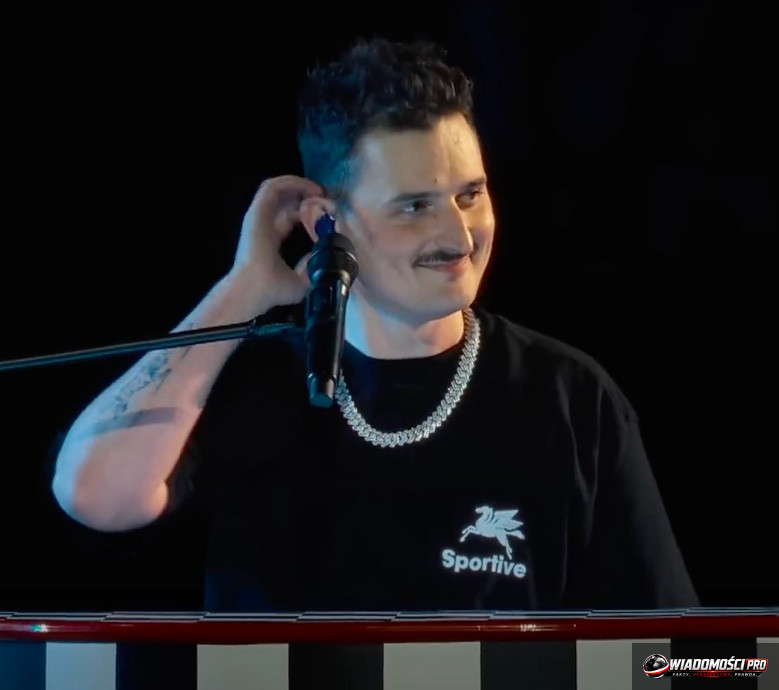
In 2026, Dawid Podsiadło carried out the "Obrotowy Tour" concert series, which included, among others, two performances each at stadiums in Chorzów and Warsaw. For the next season, the artist has already planned festival activities, officially confirming his participation in the ZORZA 2027 event, which will take place at the Muchowiec Airport in Katowice. This transition from closed, stadium structures toward the open space of an airport is a natural extension of the audience-building strategy that the singer has consistently implemented over the last two years.
The scale of stadium challenges in 2026
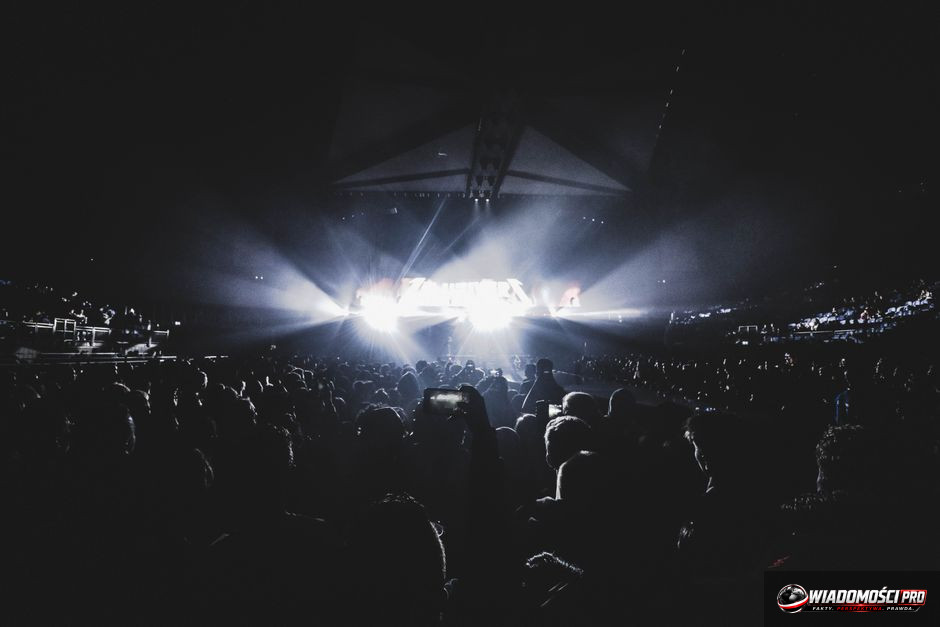
The 2026 concert season was marked by full stadiums, which became a benchmark for the Polish event industry. Dawid Podsiadło opted for a tour model in which key locations – Chorzów and Warsaw – were granted two concert days each. This solution is not just a matter of logistics. It is primarily a response to the enormous demand that became apparent as soon as the first dates were announced on August 31, 2025. The eBilet service, by publishing the schedule at that time, triggered a process that in a few months turned into the most talked-about musical event of the year.
Organizers faced the challenge of how to handle several hundred thousand people in a short time. Every stadium in Poland has its capacity limitations, ranging from the number of entrance gates and the flow of communication routes to catering points. Double performances in the same cities helped relieve pressure on ticketing systems, although for fans, it meant having to fight for tickets in several rounds. The decision to add a second date in Chorzów, announced on December 3, 2025, was technically forced. The artist's team realized that demand significantly exceeded the capacity of the stands and the stadium floor.
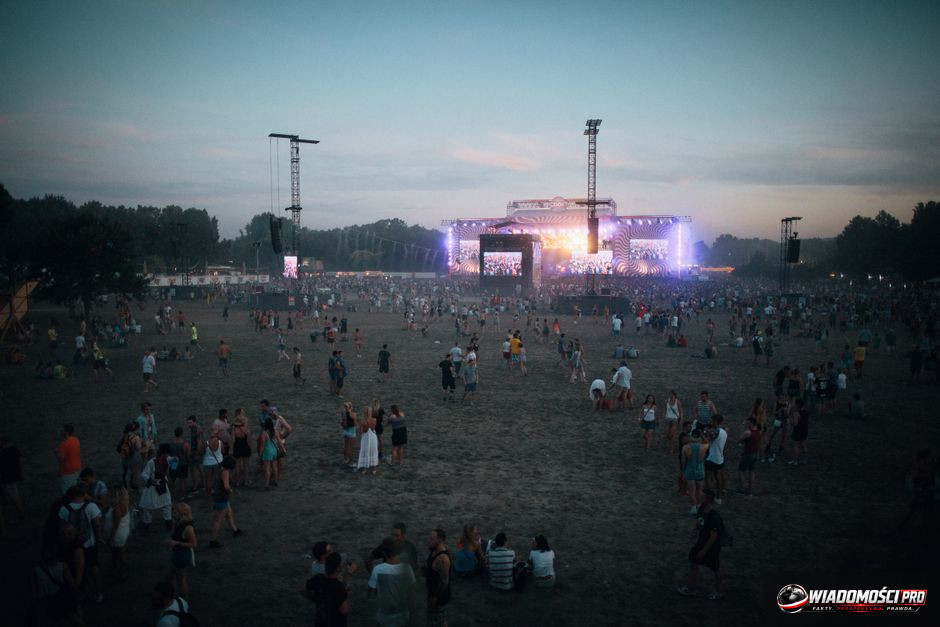
In this context, it is worth looking at how the comfort of participation is changing. A stadium, while offering excellent acoustics and sanitary infrastructure, imposes rigid time frames for entry and exit. An airport, like the one at Muchowiec where the ZORZA 2027 Festival will take place, changes the rules of the game. Open space allows for greater freedom of movement, but shifts the logistical burden to transport and the organization of a campsite or festival zone. Fans who have become accustomed to stadium comfort will have to adapt to a different type of event dynamic. Where a stadium is a closed unit, an airport becomes an ecosystem in which the artist is only one element of a broader experience.
The mechanics of success and demand management
The "Obrotowy Tour" campaign was conducted with a precision that the Polish music industry had not previously applied on such a scale. It all started with the announcement on September 1, 2025, when Kultura Onet reported the name of the tour. This was not the end, however, but merely the introduction to a months-long process of dosing excitement. Podsiadło's team did not put all their cards on the table in one day. Instead, each passing month brought new information, which kept the interest of the media and fans at a consistently high level.
The release of the concert clip for the song "Mori" in December 2025 was not just a musical promotion. It was an element of a communication strategy. The clip reminded viewers of the scale of the production, the visual details, and the emotions that accompany the concerts. It acted as a magnet for people who were still hesitant about buying a ticket. As a result, when the second concert in Chorzów was announced on December 5, 2025, sales started with even greater momentum. Such information management allows for the optimization of advertising costs – instead of a one-time, gigantic expenditure on promotion, it was spread over months, building a narrative of an "ongoing celebration."
Fans learned that in the case of Podsiadło, one cannot delay. Every announcement from Open FM or eBilet was treated as an alarm signal – first come, first served. For organizers, this is an ideal model because it eliminates the risk of unsold tickets. For the market, however, it means that "dynamic planning" is becoming the standard. If demand grows, a date is added. If not, the tour remains in its original form. This approach ensures that the artist is always one step ahead of the audience's expectations without risking oversaturation.
Artistic collaboration as a positioning tool
In 2026, Dawid Podsiadło's success was not based solely on solo performances. Collaborations that went beyond standard duets played a significant role in his image strategy. The collaboration with Daria Zawiałow, especially in the context of performing alongside a global star in November 2025, was a signal to the industry. Podsiadło ceased to be perceived as a local phenomenon and began to function in a broader, international context.
Joint performances with Daria Zawiałow allowed for an exchange of audience groups. Fans of both artists could feel that they were participating in something more than just a standard concert. This is building prestige through association. When an artist appears alongside a global star, their own standing in the eyes of listeners automatically rises. In November 2025, when news of the joint activities circulated in the media, it became clear that the "Obrotowy Tour" would have a hybrid character. It wasn't just about the songs, but about building a "total event."
For the reader, this means that every subsequent concert date announced, whether as part of a stadium tour or the future ZORZA 2027 Festival, must be analyzed through the prism of potential guests. The market has become accustomed to Podsiadło surprising them. If 2026 was a stadium domination, then 2027 at Muchowiec Airport could be an attempt to create a festival of international format, where guest performances will be the main highlight of the program. But will the audience be ready for such a change, given that they have become accustomed to stadium predictability?
ZORZA 2027 Festival: A new challenge at Muchowiec
The announcement of the performance at the ZORZA 2027 Festival in Katowice, which was confirmed by Radio Piekary on June 11, 2026, ends a certain stadium era. Shifting the concert focus to Muchowiec Airport is a strategic decision. The Silesian Stadium or the PGE Narodowy have their limits – not only in terms of attendance but also artistic ones. In a stadium, every concert must fit into specific acoustic and technical frameworks. An airport offers almost unlimited room for set designers to show off.
We can expect that in 2027, Podsiadło will abandon the simple replication of the stadium format. Muchowiec is a space that requires a completely different approach to sound and visualization. The stadium-based "Obrotowy Tour" was a success because it was "safe" – the audience knew what to expect. The ZORZA Festival will require greater flexibility from the artist. Organizers are already announcing this event as something that is meant to surpass stadium standards.
For a fan, this is a change of environment. A stadium means sitting in the stands or being in a crush on the floor. An airport means freedom, but also a challenge related to weather or transport logistics. If Podsiadło's management handles this challenge as efficiently as they did with selling out stadiums in 2026, the ZORZA Festival could become a new benchmark on the map of Poland. The question of whether the artist will maintain stadium-level attendance in a festival format remains open. The music market in Poland is unpredictable, and 2027 will be a test for Podsiadło to see if he can manage his brand outside the confines of sports facilities.
Financial and market analysis of success
The success of the "Obrotowy Tour" was not a matter of chance, but the result of mathematical calculation. When eBilet launched pre-sales in 2025, the artist's team had data that allowed them to predict interest. The decision to double the concerts in Chorzów and Warsaw was not a whim, but pure mathematics. The logistical costs of renting a stadium are fixed, regardless of whether 20,000 or 50,000 people show up. At full capacity, the profit from the second day is significantly higher because the basic technical infrastructure (stage, sound system) is already in place.
For the music industry, this model has become a template. Other artists are looking at what Podsiadło did and trying to copy his strategy. However, not everyone possesses such "trust capital" with fans. Podsiadło has built a brand that is resistant to economic fluctuations. Even in the face of high ticket prices, Poles wanted to participate in the "Obrotowy Tour." This shows that a concert has become a primary necessity for the modern consumer, rather than a luxury to be given up first.
However, it is worth asking about the sustainability of this model. Won't the market be "overheated"? If every artist tries to play two stadiums in every city, the supply of tickets will eventually exceed demand. Podsiadło was the first to sense this moment and announced the transition to a festival format at the right time. The ZORZA 2027 Festival is an escape forward. Instead of waiting for stadium concerts to become commonplace, the artist is changing the rules of the game, moving to a space that allows for greater artistic diversity and attracting a wider audience, not just the "stadium" one.
Impact on concert infrastructure
Every event on the scale of the "Obrotowy Tour" forces cities to invest. Warsaw and Chorzów, by hosting such huge crowds twice, had to optimize commutes, parking systems, and security. This does not remain without impact on local infrastructure. Fans who traveled to the concerts used hotels, restaurants, and public transport, which generated real revenue for the cities. This makes Podsiadło not just an artist, but a significant economic player.
In 2027, this burden will shift to Katowice. Muchowiec Airport will have to demonstrate its readiness to receive tens of thousands of people in a short time. The challenges that organizers faced in 2026 at stadiums will now be a challenge for the local authorities of Katowice. Is the city ready for such a scale of traffic? Experience with other festivals at Muchowiec suggests yes, but the scale of "Podsiadło" is different from the scale of local events. This will be a test for the entire region.
The reader should remember that logistics is not just numbers. It is real comfort – waiting time in line, water availability, cleanliness of toilets, ease of returning home after the concert. In 2026, these standards were high at the stadiums. At the ZORZA 2027 festival, expectations will be even higher because fans, already knowing the quality of Podsiadło's production, will not accept a drop in standards. Organizers must therefore not only provide excellent musical accompaniment but, above all, ensure that logistics do not overshadow the artistic experience.
The strategic role of media in building a legend
The communication strategy we observed from September 2025 was a model example of image management. Media outlets such as Kultura Onet, Open FM, and Rzeczpospolita became tubes through which the artist's team controlled the narrative. Every piece of information about the "Obrotowy Tour" was carefully balanced. There was no information chaos here. Everything happened in a specific order: announcement, speculation, confirmation of an additional date, clip premiere, tour finale.
Such a strategy allows for avoiding image crises. If anything went wrong, the team was always one step ahead of negative comments. Instead of defending against accusations of difficult ticket availability, they simply added more concerts. This is a solution that turns a problem (lack of tickets) into a success (huge interest). Fans felt taken care of, even if they had to fight for tickets. This is mastery in building relationships with the audience.
What does this mean for us in 2027? We can expect a similar, if not more aggressive, media campaign before the ZORZA Festival. The media will again heat up the atmosphere by publishing the names of artists who will perform alongside Podsiadło. This is a process that fuels itself. Podsiadło no longer has to seek attention – he simply manages it. For an observer of the music scene, this is a fascinating process that shows how much the Polish music market has changed over the last decade.
The future of concerts in Poland
Looking at what happened in 2026 and what is planned for 2027, one can conclude that Dawid Podsiadło has set a new standard for Polish performers. A stadium is no longer the pinnacle of dreams, but a tool in the hands of the artist. Now the goal is to create a new festival quality. The ZORZA Festival is intended to be something that combines stadium momentum with festival freedom.
For the industry, this is a signal: either you play in the first league, or you risk being unnoticed. Smaller artists will have to look for niches because the stadium and large-format market has been almost completely dominated by the biggest names. This, unfortunately, leads to polarization. On one hand, we have gigantic productions, and on the other – independent, small initiatives. The middle of the market, which until now was the most stable, is beginning to disappear.
Is this good? From a fan's perspective – yes, because we get a world-class show. From the market's perspective – it is a challenge that we will have to face in the coming years. Podsiadło, by changing the format of his performances, teaches us all a lesson in flexibility. He shows that success does not consist of sticking to one proven method, but in continuous evolution. 2027 at Muchowiec Airport will be the final confirmation of whether this path is the right one.
Questions and answers
What was the logistics of the "Obrotowy Tour 2026" like?
The tour was based on a stadium format with double performances in Chorzów and Warsaw, which allowed for handling the huge interest of fans confirmed in December 2025.
What is Dawid Podsiadło planning for 2027?
The artist's performance at the ZORZA 2027 Festival, which will take place at Muchowiec Airport in Katowice, has been officially confirmed.
Why was the 2026 tour considered the largest?
The scale of the tour resulted from record-breaking demand for tickets, which forced organizers to add subsequent stadium dates in key locations, making it the most talked-about undertaking of the year.
Did artistic collaborations influence Podsiadło's success?
Yes, among other things, the collaboration with Daria Zawiałow and performances alongside global stars raised the rank of the events and allowed the artist to build an image at an international level.
How does a stadium concert differ from a festival at an airport?
A stadium imposes rigid infrastructural and time frames, while an airport offers more space, though it requires a different approach to transport logistics and the organization of the festival zone.
Sources
- Dawid Podsiadło for several hundred thousand fans. Two concerts each in Chorzów and Warsaw - Rzeczpospolita
- Dawid Podsiadło Obrotowy Tour 2026 – the largest concert tour of the year - Kulturalne Media
- Dawid Podsiadło adds another stadium concert in 2026 [DATE, TICKETS] - Open FM
- ZORZA 2027 Festival in Katowice – Dawid Podsiadło at Muchowiec Airport - Radio Piekary
- Dawid Podsiadło at stadiums in 2026. Get to know the dates and cities! | eBilet NOW - eBilet
- Unbelievable! Daria Zawiałow and Dawid Podsiadło alongside a global star. Fans delighted - Fakt
- Dawid Podsiadło releases concert clip "Mori". Announcement of the second stadium concert in Chorzów 2026 - Open FM
- Dawid Podsiadło returns to stadiums. "Obrotowy Tour" already in 2026 - Kultura Onet
Article prepared by the Wiadomości PRO editorial team with the support of artificial intelligence. Facts come from the sources listed above.

Komentarze (0)
Ładowanie komentarzy...