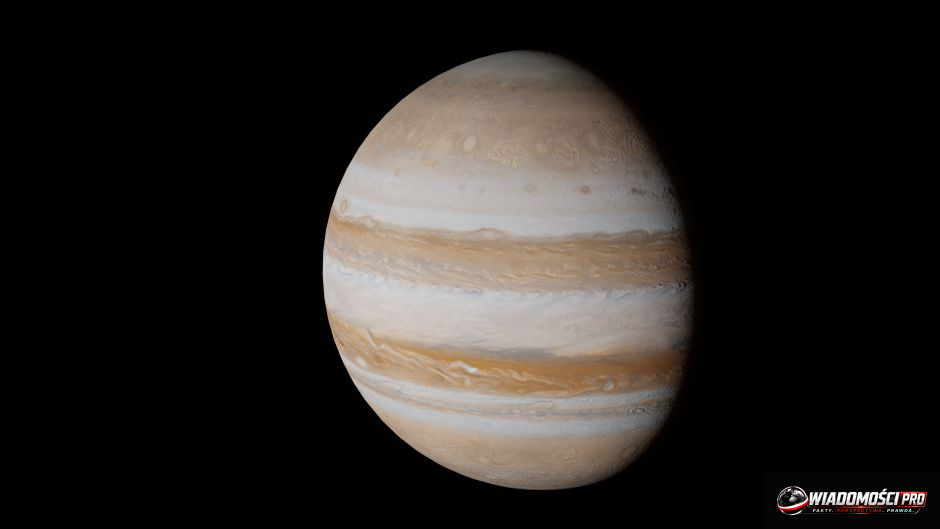
The budget for the Europa Clipper mission amounted to 5 billion dollars, and its main goal is to investigate whether conditions favorable for life exist beneath the icy crust of Jupiter's moon, Europa. This is the most expensive endeavor in the history of NASA's robotic planetary missions, raising questions about the limits of funding science in the face of the agency's limited budget. The probe is set to check whether the chemical foundations capable of supporting biological processes exist in the underground oceans hidden beneath kilometers of ice.
Mission launch and the power of the Falcon Heavy rocket
October 2024 went down in the history of astronautics as the moment of launch for one of the heaviest and most complex probes to ever leave the Earth's atmosphere. A Falcon Heavy rocket was used to launch Europa Clipper, which was a necessity due to the device's mass exceeding six tons at the time of launch. Engineers had to face the precise calculation of a trajectory that would allow the machine to gain the speed necessary to cover the vast distance separating us from Jupiter.
The choice of the SpaceX launch system was not accidental. The Falcon Heavy, possessing immense thrust, allowed for sending the probe on a direct trajectory, which shortens travel time compared to missions requiring multiple gravity assist maneuvers around the inner planets of the Solar System. Such an operation required flawless synchronization of ground systems and the rocket itself at the moment of launch from Cape Canaveral. Every kilogram of the probe's mass was the result of years of calculations, where the priority was to deliver as many research instruments as possible to Jupiter's orbit while maintaining structural integrity.
The probe is not heading directly toward Europa. It faces a long journey, during which it will use the gravity assists of Mars and Earth to gain the appropriate momentum. Engineers had to design the probe to survive the vibrations during launch and the extreme conditions prevailing in deep space. Despite the successful launch, the scientific community remains in a state of anticipation. The probe will only reach the vicinity of the Jovian system in a few years to begin a series of flybys that will provide data on the chemical composition of the surface and the physical properties of the ice.
Why Europa? NASA's research goal
For years, Europa has been one of the most important points on the map of the search for extraterrestrial biology. It is not a dead, rocky ball resembling the Moon, but a dynamic celestial body beneath whose icy crust hides an ocean of liquid water. It is estimated to contain twice as much water as all of Earth's oceans combined. It is precisely this environment, isolated from cosmic radiation by a thick layer of ice, and simultaneously heated by the tidal gravitational forces of Jupiter, that serves as a laboratory for astrobiologists.
NASA did not send the probe there to look for advanced forms of life. The main task is to verify the so-called building blocks. The mission is intended to answer the question of whether water in contact with the rocky substrate of the moon can lead to chemical reactions that, in Earth's oceans, became the basis for the emergence of the first microorganisms. It is about searching for energy, carbon, and nitrogen, which in the right concentration could support life.
The probe will not drill through the ice. Instead, its instruments are tasked with "scanning" what is underneath during each of the dozens of planned flybys. Analysis of the chemical composition and geological activity will allow for determining whether the water there is friendly to biological processes. If the mission confirms the presence of appropriate elements or thermal anomalies, the definition of the habitable zone in the Solar System will undergo a radical expansion. Science needs an answer to the question about the uniqueness of Earth's biosphere, and Europa is currently the best candidate to test this hypothesis.
Mission budget: 5 billion dollars for discoveries
The high cost of the venture raises questions about the effectiveness of such investments compared to other NASA programs. The sum of 5 billion dollars places the project in the same category as the construction of space telescopes, rather than typical planetary missions. For the American taxpayer, this is a signal that the search for biological traces outside Earth has become an engineering priority, and not just a theoretical one.
Such enormous funding does not result from the construction of the probe itself, but from the necessity of developing instruments capable of surviving in an extreme radiation environment. Jupiter possesses one of the strongest magnetic fields in the Solar System, which traps charged particles and creates a radiation trap deadly to electronics. Building shields that protect delicate components through years of work in this environment constituted a significant part of the budget.
In the funding, one can see NASA's determination to dominate research on Jupiter's moons. From a budgetary perspective, it is an investment fraught with risk. If Europa Clipper provides evidence for the existence of oceans capable of supporting life, the discussion about costs will fade in the face of the historical weight of such a discovery. However, if the data do not confirm the existence of the necessary conditions, the billions of dollars will remain a monument to human curiosity, which this time did not bring the expected breakthrough.
Work schedule: from planning to launch
The realization of this ambitious project required precisely planned logistics stretched over more than a decade. The beginnings of conceptual work date back to the years when NASA was just defining priorities in the search for water in the Solar System. March 2022 was the moment when the construction of the probe was officially started, moving from theoretical assumptions to the tangible assembly of components.
The work schedule was extremely tight. Every month of delay would generate additional costs, which with such a high budget could threaten the success of the entire endeavor. Engineers had to face the integration of many instruments, each of which had different requirements regarding power, cooling, and data transmission.
October 2024 marked the culmination of these efforts. The launch of the mission was the moment of transition from assembly in sterile halls to flight operations toward Jupiter. From a historical perspective, it is clearly visible how quickly NASA moved from design to implementation, even though the probe's journey itself will take many more years before it reaches its destination. Critics point out that for this money, several smaller planetary missions could have been carried out, instead of betting everything on one card in the search for life, the existence of which remains only a mathematical probability. Will Europa Clipper actually bring an answer, or will it turn out to be the most expensive proof that there is cosmic silence in our neighborhood? We will only know the answer to this question after the probe's multi-year journey is completed.
Competition for primacy in space research
The investment in Europa Clipper set new standards in the race for dominance in the deep space exploration sector. The American agency did not wait for the competition. The realization of the project effectively outpaced European plans for searching for life on the same object. The United States opted for a model of building a probe based on proven technologies, which was confirmed in the October 2024 announcements.
This race has a technological dimension. Whoever reaches the data from Europa first will define the future directions of astrobiological research and dominate the public debate for decades. The failure of the mission would not mean only the loss of equipment, but above all a painful image blow in the rivalry with other space powers, which are looking more and more boldly toward Jupiter's moons.
Europa Clipper must deliver results, because on the horizon, there are already more projects visible that can either confirm or quickly undermine the conclusions flowing from this American expedition. The probe is on its way, and the stakes for all players are the highest possible. NASA, by investing huge resources, is building not only a research vessel, but also the position of a leader who will be the first to be able to say whether life is lurking in the oceans of Europa, or only dead, salty water.
Technology on board the probe
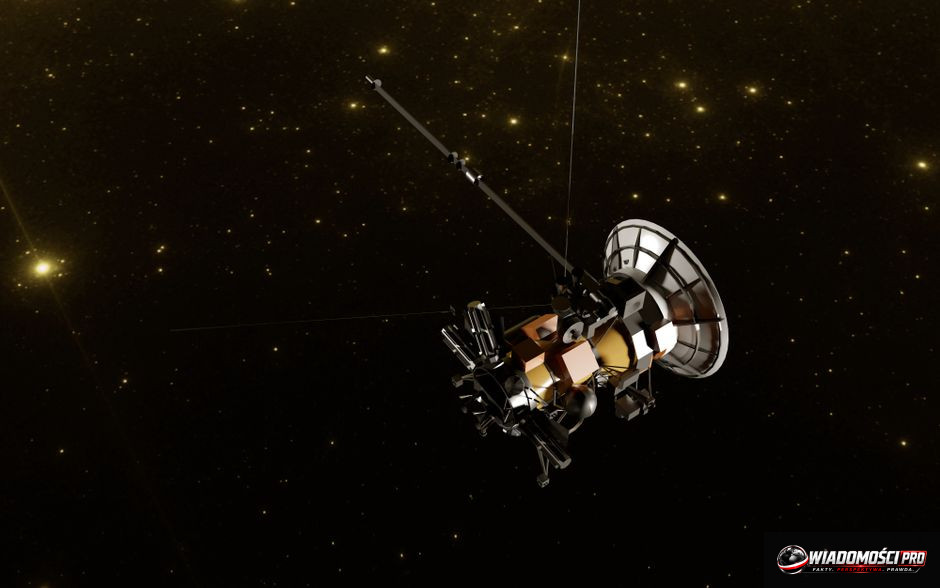
NASA engineers faced the task of creating apparatus capable of "scanning" an alien world from a distance of millions of kilometers. The probe has been equipped with precise instruments that are to answer the question of whether conditions favorable for life are actually hidden beneath Europa's icy crust.
Key elements of the equipment include:
- REASON (Radar for Europa Assessment and Sounding: Ocean to Near-surface), an ice-penetrating radar tasked with mapping the internal structure of the moon and detecting the presence of water beneath the surface.
- MISE (Mapping Imaging Spectrometer for Europa), an imaging spectrometer that will allow for the identification of the chemical composition of the surface, including salts and organic compounds.
- EIS (Europa Imaging System), a set of high-resolution cameras that will document geological changes on Europa's surface with unprecedented precision.
- ECM (Europa Clipper Magnetometer), a magnetometer designed to study the magnetic field induced in Europa's ocean, which will confirm the existence of a conductive layer of water.
Building such advanced apparatus required not only knowledge but also protection against radiation. A specialized housing, made of thick titanium and aluminum plates, protects the electronics from the destructive influence of Jupiter's magnetic field. An investment of 5 billion dollars raises justified questions about the agency's priorities, but from a technical point of view, it is the peak achievement of space engineering. Will these instruments be able to confirm the existence of life? That depends on whether the nature of Europa is as hospitable as mathematical models suggest.
What this means for you
The Europa Clipper mission is proof of NASA's determination in searching for an answer to the fundamental question about the existence of life outside Earth. By investing 5 billion dollars, the agency bet on creating a tool that has a chance to change our understanding of the Solar System. The risk of failure in the extreme conditions of Jupiter is real, however, and the vast distance makes every second of the probe's work a challenge for the operations team on Earth.
For the average observer, this mission means that science is entering a phase where theoretical speculations regarding oceans on Jupiter's moons are being replaced by hard data from research instruments. If Europa Clipper confirms that conditions for life are common in the Solar System, it will change our perception of humanity's place in the universe. If not, this mission will remain proof that science requires courage in spending funds on projects whose outcome is not guaranteed.
Questions about whether it is worth spending such enormous sums on space research in times of crises on Earth will return with every such mission. NASA defends itself with results, which, although often delayed in time, build the foundations of our knowledge about the universe. Europa Clipper is on its way, and the data it will begin sending in a few years will be the final judge of whether these 5 billion dollars were spent in a justified manner.
Questions and answers
How much did the Europa Clipper mission cost?
The total cost of the mission's realization amounted to 5 billion dollars.
When did the Europa Clipper probe launch?
The mission launch took place in October 2024.
What is the main goal of this mission?
The main goal is to investigate whether conditions favorable for life exist beneath the icy surface of Jupiter's moon, Europa.
What rocket was used to launch the probe?
The probe was launched into space using a Falcon Heavy rocket.
Will the probe drill through Europa's ice?
No, the probe does not possess equipment for drilling. Instead, it will use instruments such as the REASON radar to examine what is beneath the surface.
Why is the mission so expensive?
The high cost results primarily from the necessity of building advanced instruments and specialized shields that will allow the electronics to survive in the extreme radiation conditions prevailing near Jupiter.
Sources
- Launch of the Europa Clipper mission to Europa - AstroNET – Polish Astronomical Portal
- Europa Clipper probe to search for life on Europa - Urania - Polish Astronomical Portal
- Launch of the Europa Clipper mission [TRANSMISSION]. Americans will outpace Europeans in the search for life on Europa - Wyborcza.pl
- Europa Clipper has launched. It will investigate whether there are conditions for life on Jupiter's moon - Polskie Radio 24
- Europa Clipper probe to search for life on Jupiter's moon, Europa - wszystkoconajwazniejsze.pl
- NASA sends probe to Europa. Europa Clipper mission has launched - WP Tech
- Flight to Jupiter for 5 billion dollars. Launch of Europa Clipper on board Falcon Heavy - Benchmark.pl
- Beginning of Europa Clipper construction - Kosmonauta.net
Article prepared by the Wiadomości PRO editorial team with the support of artificial intelligence. Facts come from the sources provided above.

Komentarze (0)
Ładowanie komentarzy...