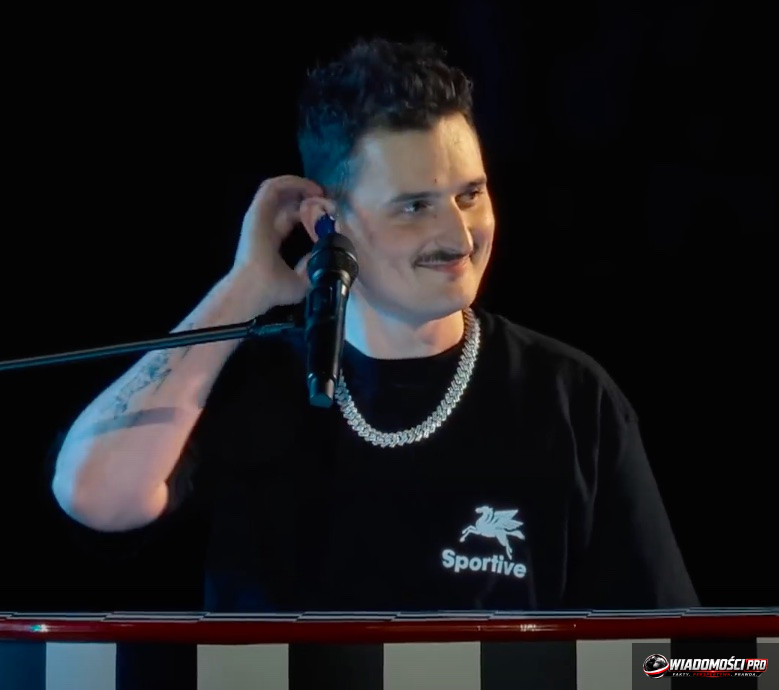
The "Obrotowy Tour 2026" includes concerts in Gdańsk, Wrocław, and Poznań, as well as two performances each in Chorzów and Warsaw. In total, the artist will perform for hundreds of thousands of fans at the largest stadium venues in the country. This is the biggest concert undertaking in the history of Polish popular music, testing the capacity of the country's largest arenas.
For the team managing Dawid Podsiadło's career, 2026 has become a testing ground for a new definition of mass entertainment. The decision to organize double concerts in Chorzów and Warsaw was not part of the original plan, but a forced reaction to demand that nearly crashed sales servers in December 2025. Instead of building a tour based on dozens of smaller cities, the organizers opted for a monolith – concentrating resources in Poland's key logistical hubs. This approach minimizes the costs of transporting heavy stage equipment but maximizes technical risk. Every hour of delay in preparing the stage at a stadium with a capacity of tens of thousands generates losses amounting to hundreds of thousands of zlotys.
Announcement dynamics and schedule adjustments
The tour schedule has evolved in a way unprecedented in the domestic show business. The first information about the "Obrotowy Tour" appeared on August 31, 2025, triggering an immediate market reaction. At that moment, the list of cities was short and specific: Gdańsk, Wrocław, Poznań, Chorzów, and Warsaw. However, just three months later, on December 3, 2025, the artist's management had to face the fact that the initial pool of tickets had sold out at a rate that made it impossible to satisfy even a fraction of the demand.
Adding second dates in Chorzów and Warsaw, officially confirmed on December 5, 2025, alongside the premiere of the concert clip "Mori," was an admission of underestimating the scale of the phenomenon. In the concert industry, such decisions are made as a last resort, as they require renegotiating contracts with stadium operators who often already have dates reserved for other sporting or cultural events. In Podsiadło's case, it was the stadium operators who had to adjust their calendars to the artist's needs, which puts him in a negotiating position unattainable for most Polish performers.
A key moment for understanding the tour strategy was June 2026. Data published on June 4 confirmed that despite the massive scale, the market still shows a hunger that tests the production team's capabilities. This is no longer just about ticket sales. It is about managing the flow of people on a scale that Polish stadiums have previously only faced during national football team matches.
Technical challenges of the stadium format
Organizing a concert at the Silesian Stadium or PGE Narodowy is not just a matter of sound systems. It is a logistical operation requiring the involvement of hundreds of people – from sound engineers and security specialists to logisticians responsible for transporting the entire stage setup. "Obrotowy Tour 2026" involves the use of technology that is debuting in Poland on such a large scale.
The costs of maintaining top-tier sound quality in such large open spaces are enormous. Fans expect the sound quality in the last row of the stands to be comparable to that on the stadium floor. This requires the installation of dozens of additional delay towers and advanced processor systems that correct the venue's acoustics in real-time. Each concert on this tour is a separate system calibration session.
Errors in this area are unforgivable. With ticket prices in the premium segment, the audience does not accept technical shortcomings. Podsiadło's team realizes that the artist's image, built over years, could be tarnished by a single system failure during a concert. That is why the tour logistics include redundant power systems and duplicated mixing consoles. These are not excessive measures – they are a safety requirement for such a tight schedule.
Artistic collaboration as a strategy element
In November 2025, reports emerged about joint performances by Dawid Podsiadło and Daria Zawiałow. Although the media focused on the sensational aspect of this collaboration, from a business perspective, it was a move aimed at diversifying the concert offering. Adding an artist with such a strong market position to the lineup allows for attracting two different groups of recipients under one banner.
The collaboration with Daria Zawiałow alongside world-class stars, reported on November 18, 2025, was intended to raise the quality bar. It builds a narrative where the "Obrotowy Tour" is not just another tour promoting an album, but an autonomous cultural event. Such an approach reduces the pressure on the music itself, shifting the weight to the spectacle. The audience buys a ticket for the experience, not just for the playback of songs known from the radio.
Analyzing these actions, one can see a clear trend of moving away from the solo performer model toward managing a concert brand. Podsiadło is becoming the center of an ecosystem where collaborators, technology, and logistics form a whole. The question of whether fans will accept this form of commercialization remains open, although attendance data indicates that there are currently no signs of audience fatigue.
How to buy tickets and what to watch out for
The process of purchasing tickets for the "Obrotowy Tour 2026" became a challenge for fans comparable to hunting for tickets for the biggest global stars. Official distribution channels, due to the massive traffic, often failed in the first minutes after sales launched. The lack of specific dates in publicly available press headlines from 2025 resulted from the fact that sales were conducted in a dynamic system, with batches of tickets added as subsequent dates were confirmed.
For buyers, the basic rule remains to use only the official platforms indicated by the organizer. The secondary market for Podsiadło concert tickets is fraught with a high risk of fraud. Prices on auction portals during peak demand moments have been known to exceed the face value by several hundred percent. From the organizer's point of view, the only way to fight this phenomenon is through personalized tickets, which, however, drastically increases the time it takes to enter the stadium.
Fans must be prepared for long wait times in queues at the gates. With stadiums filled to capacity, the process of admitting tens of thousands of people takes several hours. Entry logistics, which are rarely written about in enthusiastic announcements, are for many participants the biggest downside of going to a concert. This requires not only patience but also proper preparation – from water to clothing adapted to standing in a crowd for many hours.
The financial dimension of stadium dominance
The economics of a stadium tour differ fundamentally from concerting in arenas. The cost of renting a venue like PGE Narodowy is an expense of several hundred thousand zlotys per day, not counting the costs of preparing the turf, fire safety, and security. With two concerts in one city, organizers can count on some optimization of fixed costs, but on the other hand, they double the expenses for technical staff and security salaries.
The high ticket price is a direct reflection of these costs. Contrary to popular belief, the profit from one ticket does not go entirely into the artist's pocket. It must be divided among the stadium operator, the security company, the sound company, insurers, and the concert agency. In the stadium model, the margin is lower than in smaller venues, but it is compensated by the scale of sales.
This is a business model that requires perfect execution. If a concert is canceled due to unforeseen circumstances, the losses are gigantic and can threaten the organizer's financial liquidity. That is why such great emphasis is placed on insurance and contracts with performers, which in the case of stadiums are extremely detailed and rigorous.
Social risks and urban logistics
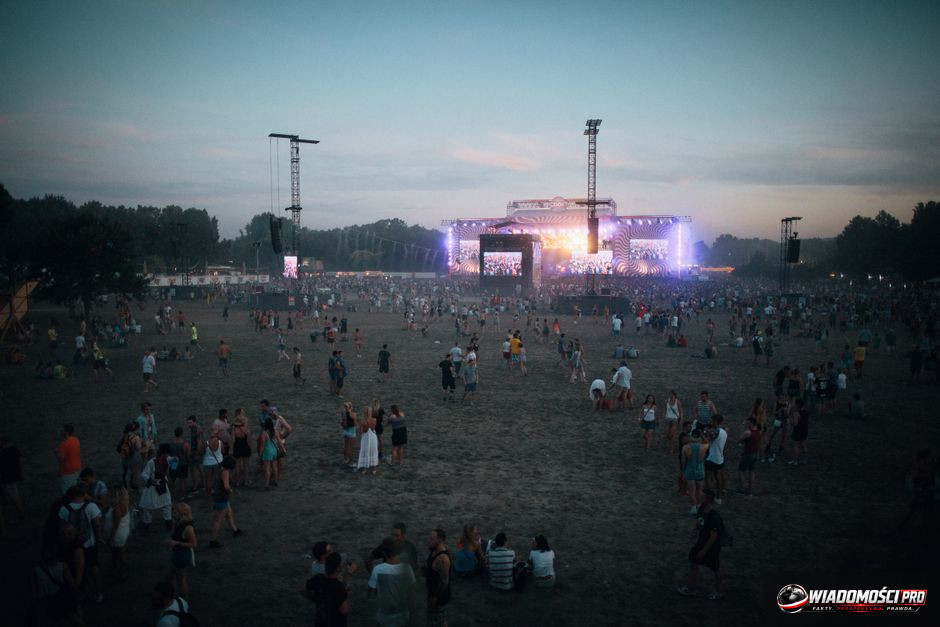
Stadium concerts in the middle of the holiday season are a challenge for host cities that often ends in traffic paralysis. Thousands of fans arriving in Warsaw or Chorzów are a huge burden on the local transport network. Experience from previous years shows that cities are rarely able to fully prepare for such a mass of people in such a short time.
The problem is not the concert itself, but the period immediately following it. The simultaneous exit of 50,000 people from a stadium causes congestion in the subway, at tram stops, and on access roads. This requires city authorities to launch additional public transport lines, which generates costs for taxpayers. In public debate, this aspect is often overlooked, focusing solely on attendance success.
Skeptics note that such a concentration of events in the largest cities deepens inequalities in access to culture. Residents of smaller centers are logistically excluded, as travel to the concert, accommodation, and return is a cost that often exceeds the price of the ticket itself. The "Obrotowy Tour" does not solve this problem; it actually perpetuates it by focusing on maximizing profit from one geographical point at the expense of broad territorial accessibility.
Will the quality of the spectacle survive the test of scale?
The biggest threat to the success of the "Obrotowy Tour" is material fatigue – both technical and human. Dawid Podsiadło, performing at such short intervals at huge venues, must maintain an identical level of energy and engagement. In the music industry, there are known cases where long-term stadium tours led to a decline in the quality of subsequent performances.
"Rotating" technology (if one interprets the tour name as a reference to stage solutions) suggests that the artist will be in motion, which requires excellent physical condition. Each concert is an energy expenditure comparable to a professional football match. If time pressure and the logistics of traveling between cities are added to this, the risk of error increases exponentially.
From the viewer's perspective, authenticity is most important. If the stadium turns into an impersonal juggernaut where the artist is just a small dot on the stage, fans may start looking for alternatives. The history of Podsiadło's career to date indicates that he can manage the emotions of a crowd, but a stadium is a different category of play. There is no room here for the improvisation that is possible in clubs. Everything must be planned with mathematical precision.
Summary and future prospects
The "Obrotowy Tour 2026" has set a new standard for Polish music. It showed that stadiums are no longer reserved exclusively for the biggest stars from the USA or Great Britain. Polish productions have reached a level where logistics, technology, and attendance are becoming the main indicators of success.
However, behind this success also lies a question mark regarding the future. Will the market not become saturated with such a scale of events? Will fans be able to finance subsequent, equally expensive tours? We will learn the answers to these questions in the coming years, but one thing is certain – after the "Obrotowy Tour," no one in the Polish music industry will measure success by the number of records sold anymore. The stadium has become the yardstick.
Questions and answers
In which cities will Dawid Podsiadło perform in 2026?
The "Obrotowy Tour 2026" concert tour includes performances in Gdańsk, Wrocław, and Poznań, as well as two concerts each in Chorzów and Warsaw.
Why were two performances scheduled in some cities?
The decision to organize double concerts was a direct result of the huge interest from fans, which exceeded the organizers' initial assumptions and forced adjustments to the tour calendar.
Will there be special guests on the tour?
Although the official list of names has not been confirmed by the organizers, the artist's strategy to date, including the collaboration with Daria Zawiałow, suggests that musical guests may appear during the concerts to enrich the spectacle.
What logistical challenges are associated with such a large tour?
The main challenges are ensuring top technical quality at open stadiums, managing the multi-thousand crowd at entrances and exits, and coordinating the transport of equipment between cities at short intervals.
Are tickets for all concerts already available?
Ticket availability changed dynamically during the sales period. Due to tickets selling out quickly, fans were directed to official distribution channels, and sales were conducted in batches as subsequent dates were confirmed.
Sources
- Dawid Podsiadło for hundreds of thousands of fans. Two concerts each in Chorzów and Warsaw - Rzeczpospolita
- Dawid Podsiadło Obrotowy Tour 2026 – the biggest concert tour of the year - Kulturalne Media
- Dawid Podsiadło adds another stadium concert in 2026 [DATE, TICKETS] - Open FM
- Dawid Podsiadło at stadiums in 2026. Get to know the dates and cities! | eBilet NOW - eBilet
- Unbelievable! Daria Zawiałow and Dawid Podsiadło alongside a world star. Fans delighted - Fakt
- Dawid Podsiadło returns to stadiums. "Obrotowy Tour" already in 2026 - Kultura Onet
- Dawid Podsiadło publishes concert clip "Mori". Announcement of the second stadium concert in Chorzów 2026 - Open FM
- Wild crowds flock to his concerts in Poland. Dawid Podsiadło reveals first details - Interia Muzyka
Article prepared by the Wiadomości PRO editorial team with the support of artificial intelligence. Facts come from the sources listed above.

Komentarze (0)
Ładowanie komentarzy...