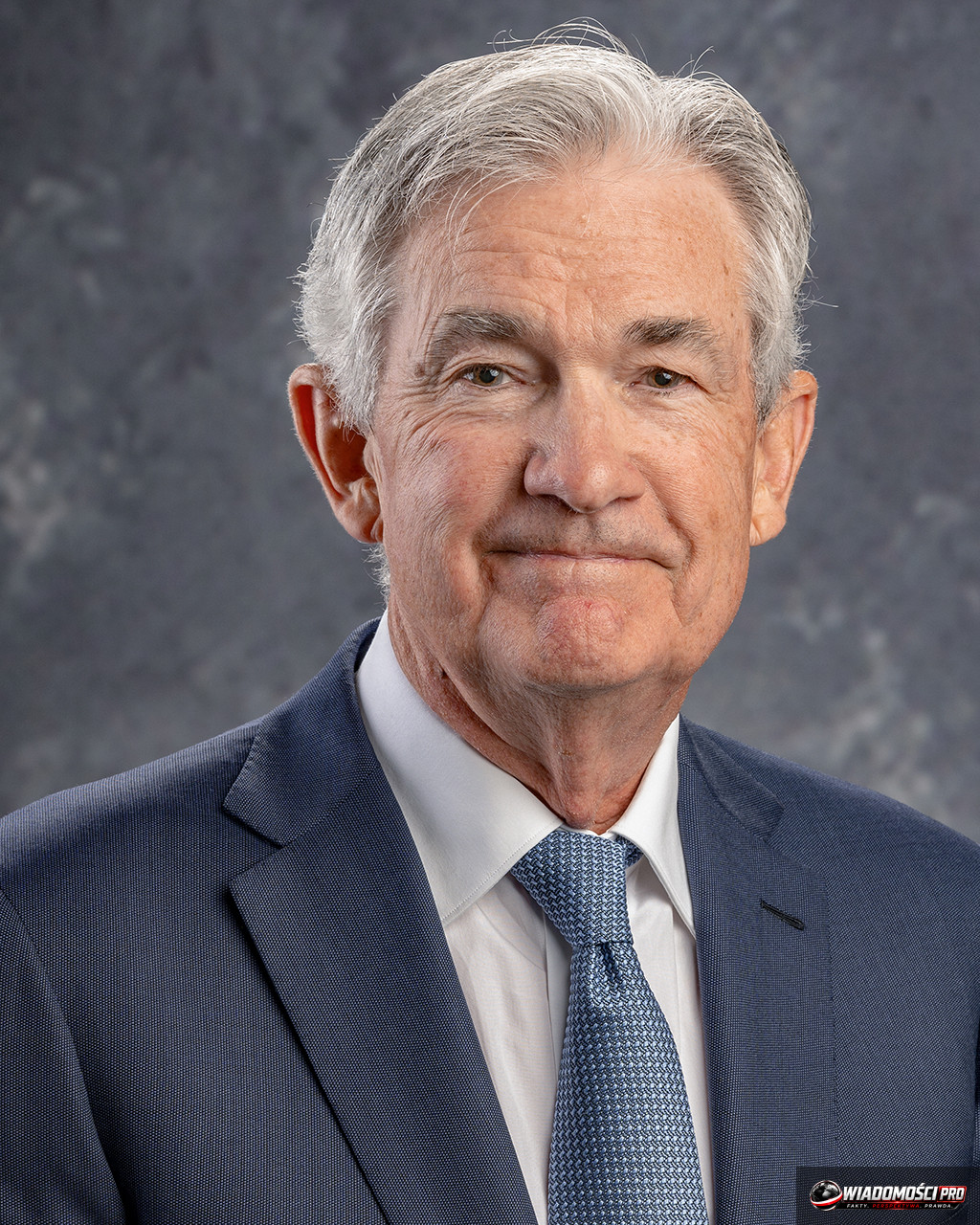
The US Federal Reserve has lowered interest rates by 50 basis points, setting a new range at 4.75-5.00 percent, which is a direct response to weakening labor market data. This decision ends a period of anticipation that has dominated financial market sentiment over the last few months, shifting the weight of the central bank's responsibility from fighting inflation to protecting employment levels. This move, while expected by many, forces investors to completely revise their strategies in the face of the changing dynamics of the American economy in 2026.
Anatomy of the FOMC decision: Why 50 points?
Setting the interest rate range at 4.75-5.00 percent is not accidental. Jerome Powell, Chair of the Federal Reserve, faced the necessity of choosing between the risk of entrenched inflation and the real threat of recession. Weak labor market data that flowed into Washington in the third quarter of 2025 left policymakers with little room to maneuver. Historically, 50-basis-point cuts are reserved for moments when the economy shows signs of structural cracks.
An analysis of the minutes from recent FOMC meetings indicates a deep division within the committee. Some members feared that such an aggressive move could be perceived by the market as an act of panic. However, the prevailing view, supported by the latest employment sector readings, suggested that keeping interest rates above 5.00 percent in conditions of slowing business activity would be a mistake with high social costs.
It is worth recalling the historical context. In September 2024, the discussion about cuts was only just beginning, and analysts such as those from Strefa Inwestorów warned that the Fed might disappoint the stock markets with its restraint. A year later, in September 2025, the situation had changed drastically. As noted by Bankier.pl, the Fed officially resumed its cutting cycle, which was considered a success for the market narrative that had been pushing for a change in monetary policy course for months. Today's 50 basis points are a consequence of that turn.
Labor market under the microscope: Fundamentals that are cracking
The situation in the American labor market has ceased to be merely a statistic and has become the main driver of the central bank's decisions. Employment indicators, which seemed resilient to high interest rates in the first half of 2025, began to show signs of exhaustion in the second half of the year. Companies began to halt recruitment processes, and in some sectors, particularly in services and construction, the first waves of layoffs appeared.
In his speeches, Jerome Powell began to place greater emphasis on the so-called employment mandate. In economics, the Fed has a dual mandate: maintaining stable prices and maximizing employment. For years, the fight against inflation dominated, but now priorities have been balanced. The weakness of the labor market is a signal that the restrictive financial conditions, which were meant to cool the economy, have begun to stifle it excessively.
Dziennik ING, in its commentary, described this decision as a "hawkish cut." This term seems contradictory, as cuts are associated with a dovish stance, but in the context of the Fed, it means that the central bank is reacting with a delay to data that should have triggered a reaction long ago. It is an admission of an error in assessing the pace of the economic slowdown. Investors must understand that the Fed does not operate in a vacuum. Every basis point is the result of a complicated game between CPI inflation data and the unemployment rate.
Evolution of expectations: From September 2024 to 2026
Tracing the path that American monetary policy has taken allows for a better understanding of the current moment. In September 2024, the debate around cuts was dominated by uncertainty. Many financial institutions predicted that the Fed would keep rates at a high level for much longer than the market expected. At that time, Bankier.pl reported on a situation where economists were wrong about the pace of cuts, which led to a periodic correction in the stock markets.
In 2025, the narrative changed diametrically. The service Subiektywnie o finansach pointed to the September meeting as a turning point. At that time, for the first time in a long while, the Fed decided on a move that clearly communicated a change in trend. What we observed in the final months of 2025 was an attempt to slowly withdraw from restrictive policy. However, 2026 brought new challenges.
In January 2026, as indicated by Money.pl analyses, the Fed was "holding its breath," and the market expected stabilization. Hopes for a "soft landing" of the economy were very strong. Today's decision on 50 basis points is a brutal verification of those hopes. It shows that the US economy needs more support than forecasting models assumed even two quarters ago.
What this means for you: Investment consequences of the decision
A 50-basis-point rate cut translates directly into the valuation of various asset classes. Investors should look at this move through the prism of the cost of money.
First, Treasury bonds. When interest rates fall, the prices of existing bonds rise. Investors who hold long-term debt securities will see an increase in the value of their portfolios. However, it should be remembered that the bond market priced in this move in advance. If expectations for further cuts were too optimistic, we may see some profit-taking.
Second, growth stocks. Technology companies, which often finance their development with external capital, benefit from lower rates. Cheaper credit means lower debt servicing costs and higher projected net profits in the future. Therefore, the technology sector usually reacts positively to monetary easing. On the other hand, if the rate cut is caused by a deep recession, even lower rates will not save companies from a decline in revenue resulting from lower consumer demand.
Third, the currency market. The US dollar may come under pressure after a decision of such a significant cut. Lower interest rates make the American currency less attractive to capital seeking higher returns on a global scale. Investors holding dollar-denominated assets should consider currency risk.
Finally, the real estate market and consumer loans. A 50-basis-point cut is a signal for commercial banks to lower mortgage interest rates. For the average American, this is an opportunity to refinance debt. However, if banks tighten credit policy for fear of client insolvency, the real impact of this decision on the economy may be limited.
Energy stability in 2026: A hidden ally
In the context of the Fed's decision, external factors that influence inflation are rarely mentioned. The Ekonomiczny ING service pointed out that regulated electricity prices in 2026 do not foresee significant changes. This is key information for understanding core inflation. The lack of price shocks in the energy sector gives the Federal Reserve more freedom in making decisions about easing policy.
If energy prices were rising uncontrollably, the Fed would be forced to keep rates high, even in the face of a weak labor market. The stability of energy costs in 2026 acts as a buffer that allows the central bank to focus on stimulating growth without the risk of an immediate spike in consumer prices. This is a factor that makes the current rate cut less risky from an inflation perspective than it might seem at first glance.
Jerome Powell and the politics of uncertainty
Chair Jerome Powell is in a difficult situation. On one hand, he must manage the expectations of Wall Street, which always counts on more, and on the other, he must respond to real macroeconomic data. His approach in 2026 is characterized by a high degree of caution. The "holding of breath" mentioned by the media in January 2026 was a strategy intended to buy the Fed time to assess the situation.
This strategy, however, failed when labor market data began to deteriorate. The current decision on 50 basis points shows that Powell is moving away from the "wait and see" method toward more proactive management of the business cycle. This is a change in image for a Chair who for a long time was accused of being too slow in his actions.
The question is, what next? Will the Fed announce a pause after this cut, or will we witness a series of cuts? Powell avoids clear declarations, which is typical for central bankers who want to maintain full flexibility. The market must get used to the fact that every subsequent meeting will be analyzed through the prism of the latest employment and inflation reports.
Perspective for the investor: How to read market signals?
An investor in the current environment must demonstrate great discipline. One cannot build a strategy based on the assumption that the Fed will always save the market from declines. History teaches that even with interest rate cuts, stock markets can go through periods of high volatility.
It is important to monitor the so-called yield curve. If the difference between short- and long-term bond yields remains worrying, it is a signal that the market still does not believe in a quick recovery. Currently, investors should focus on companies with high-quality balance sheets that are able to survive a period of economic slowdown without having to take on expensive debt.
For individual investors, it is crucial to understand that the decision to cut rates does not mean an automatic return to a bull market. It is rather an attempt to stop deteriorating trends. Instead of looking for "bargains" in sectors most sensitive to interest rates, a more reasonable approach is to diversify the portfolio with defensive assets that historically perform better in periods of macroeconomic uncertainty.
Summary: Is this enough?
The decision to cut rates by 50 basis points is a significant step, but it is not a guarantee of success. The US economy is in a transitional phase where old operating models have ceased to be fully effective. 4.75-5.00 percent is a level that is still restrictive, though less so than before.
The coming months will show whether this move is enough to stimulate the labor market or if we will witness further easing. Investors must be prepared for any scenario, without becoming too attached to one narrative. The financial market in 2026 is not a place for bravado, but for cool risk calculation.
Questions and answers
By exactly how much were US interest rates lowered?
The Federal Reserve lowered interest rates by 50 basis points, setting a new target range at 4.75-5.00 percent.
What was the main reason for this decision?
The main reason was the necessity to react to weakening data from the American labor market, which began to indicate a risk of excessive cooling of the economy.
How does the Fed's decision affect Treasury bonds?
An interest rate cut usually leads to an increase in Treasury bond prices, as market yields fall in response to monetary policy easing.
Should we expect further cuts in 2026?
Fed decisions will depend on current macroeconomic data, in particular on employment and inflation reports. Jerome Powell maintains a flexible approach, which means that each FOMC meeting will be evaluated individually.
What impact do energy prices have on inflation in 2026?
The lack of significant changes in regulated energy prices in 2026 acts as a stabilizer for core inflation, which gives the Federal Reserve more room to conduct looser monetary policy without fear of a sharp rise in consumer prices.
Why did analysts describe this cut as "hawkish"?
This term was used by Dziennik ING in the context of the central bank's delayed reaction to deteriorating macroeconomic data, which suggests that the Fed had to make a more radical move than if it had reacted appropriately earlier.
How should stock market investors react to the decision?
Investors should remain cautious, because although lower rates support the valuations of growth companies, deep cuts often result from fears of recession, which may negatively affect corporate revenues in the future.
Will the American currency gain from this?
A rate cut decision usually weakens the currency, as capital may seek higher returns in other jurisdictions, which puts the dollar in a more difficult position in the short term.
Has Jerome Powell's policy changed in 2026?
Yes, there has been a move away from the "wait and see" strategy toward more proactive management, which results from the need to protect the labor market from further degradation.
What is the key indicator to watch now?
Investors should monitor monthly labor market reports and CPI inflation indicators, as these determine future FOMC moves in the fourth quarter.
What is the main catch of this decision?
The catch is that such a deep rate cut is often seen as a signal that the economy is in worse condition than previously thought, which can lead to volatility in stock markets.
Can investors count on a return to a bull market?
A rate cut is not an automatic guarantee of a bull market; the market is preparing for a long and volatile end of the year, in which hard evidence from the economy regarding employment will be key.
How does the situation in the labor market affect interest rate decisions?
The weakness of the labor market forces the Fed to balance its dual mandate, which means that supporting employment has now become as important as stabilizing price levels.
Was the labor market resilient throughout 2025?
In the first half of 2025, the labor market seemed resilient, however, in the second half of the year, it began to show clear signs of exhaustion, which ultimately forced a change in Fed policy.
Which sectors may benefit most from lower rates?
Sectors sensitive to the cost of debt, such as technology and real estate, may benefit the most, provided that the economic slowdown does not hit consumer demand too hard.
Were investors surprised by the scale of the cut?
The market priced in cuts in advance, which means that the scale of 50 basis points itself was not a complete surprise to most investors, although it caused nervousness about the Fed's future steps.
What is the significance of the September 2024 decision for the current situation?
The September 2024 meeting was the beginning of the debate about easing, and its outcome, which disappointed the markets, shows the long road the Fed had to travel to finally admit the necessity of a radical cut.
Is the Fed currently guided by fear of recession?
The choice of 50 basis points suggests that within the committee, the fear of an economic breakdown outweighed the fear of a resurgence in inflation.
Why should investors avoid simple patterns?
Simple patterns, such as "lower rates always mean a bull market," fail in periods of high macroeconomic uncertainty, which is why precise analysis of every economic report is required.
What is Jerome Powell's main role in 2026?
His main role is balancing between stimulating the economy and avoiding a return of inflation while simultaneously managing the expectations of the financial market.
Sources
- Dziennik ING: "Hawkish cut" by the Fed in the shadow of weak labor market data and expected deep easing with the new Fed Chair. Regulated electricity prices will not change significantly in 2026. - Serwis Ekonomiczny ING
- Trump got his way. The Fed has resumed its interest rate cutting cycle - Bankier.pl
- The Fed is holding its breath. The market expects stabilization of rates in the US - Money.pl
- The September Fed decision may disappoint the stock markets. Debate around a possible interest rate cut in the US - Strefa Inwestorów
- The Fed cuts rates for the first time this year. What will be the effects? - Subiektywnie o finansach
- Half the world was waiting for this decision. The Fed indicated interest rates in the US - Money.pl
- When will the Fed cut interest rates? There is an announcement from Jerome Powell - Rzeczpospolita
- The Fed cuts interest rates sharply. Economists, however, were wrong - Bankier.pl
Article prepared by the Wiadomości PRO editorial team with the support of artificial intelligence. Facts come from the sources listed above.


Komentarze (0)
Ładowanie komentarzy...