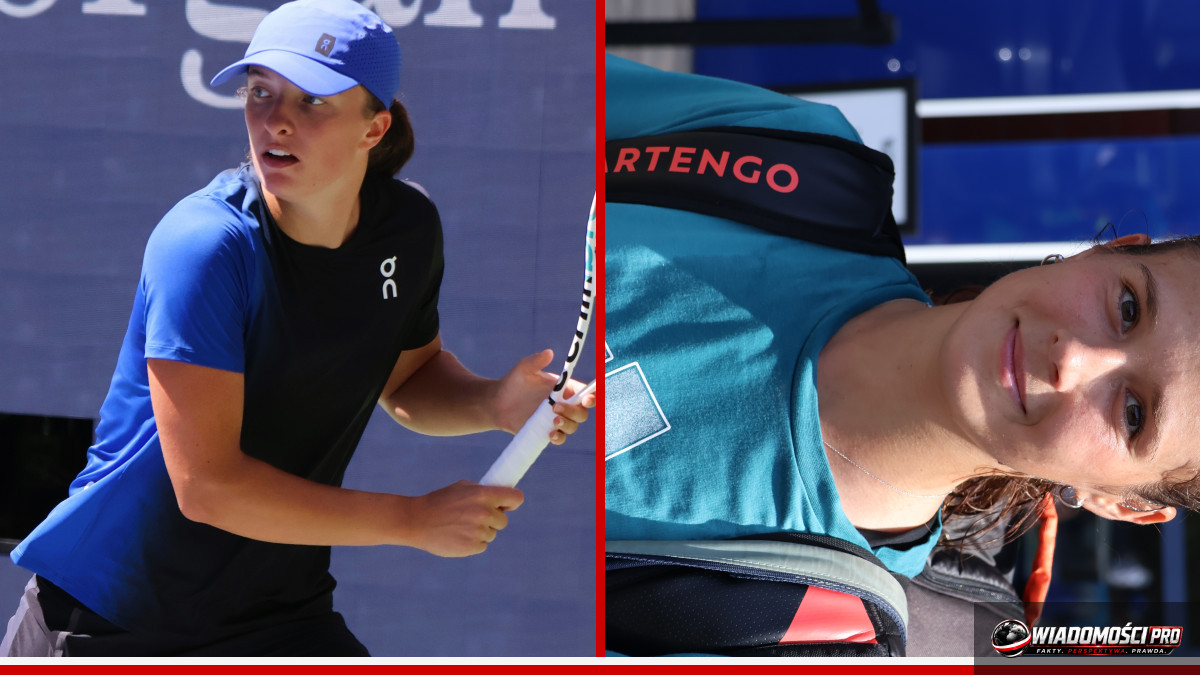
In her final group stage match of the WTA Finals in Riyadh, Iga Świątek conceded just one game to Daria Kasatkina, winning the match 6:1, 6:0. This result seals her dominance in the group and shows that the Pole has entered the decisive phase of the tournament with full control over the pace of play. The Russian was unable to find an answer to the aggressive returns and the imposed rhythm, which allowed the world number one to close out the competition in less than an hour.
Technical aspects of dominance on Saudi courts
The 6:1, 6:0 scoreline did not happen in a vacuum. Observing the way Świątek moves on the court, one can see a clear transition to flatter shots from the baseline. Kasatkina, whose main strength is defense and forcing opponents to make mistakes in long rallies, was this time forced to run from line to line herself. The Pole consistently directed balls to the baseline, shortening angles and knocking her opponent out of her favorite rotational rhythm.
The key to such a clear advantage was the effectiveness of the second serve. In Riyadh, Świątek reduced the number of unforced errors, which back in August, during the North American tournaments, occurred in high-pressure situations. The change involved greater patience in building points. Instead of finishing rallies after three shots, the Pole allowed Kasatkina to make a move, then took the initiative the moment the Russian lost her balance after a short, angled shot. This approach demonstrates a mental evolution – the leader has stopped looking for quick solutions by force, opting for precision, which in Riyadh proved lethal to her opponent's defensive style of play.
It is worth noting the physical preparation. Despite an intense August, Świątek moved with a lightness in Riyadh that suggests the coaching staff managed the workload appropriately after the semifinal clash in Cincinnati. The lack of signs of fatigue in such high temperatures and on fast surfaces is the result of recovery work, which became a priority after the disappointing performance in terms of ranking in the USA.
The August marathon: Toronto and Cincinnati
The road to Riyadh led through two intense stops that defined the current state of the Pole's preparation. On August 14, 2026, Świątek lifted the trophy in Toronto, winning the tournament after a series of matches in which she had to demonstrate great mental resilience. This victory was a signal of a return to form after earlier perturbations. Toronto showed that on fast hard courts, with proper footwork, the Pole is capable of dominating any player on the tour.
Just a week later, on August 22, 2026, the situation changed in Cincinnati. The semifinal defeat to Jessica Pegula was a painful lesson that cost the world number one 610 points. Analyzing that match, it was clear that Świątek had trouble maintaining consistency against Pegula's serve, who was able to effectively counter powerful shots. This defeat, although unpleasant, became the foundation for the tactical adjustments we are now observing in Saudi Arabia.
The transition from Toronto to Cincinnati is not just a change of location, it is primarily a change in physical requirements. In Cincinnati, the courts seemed faster, which forced Świątek to react faster at the net. The semifinal match, which ended on August 22, showed that the Pole still needs to optimize her reaction time on the return. Riyadh is therefore a testing ground where the conclusions from the American performances are being put into practice.
WTA ranking mechanisms after the August adjustment
The WTA ranking update from August 24, 2026, was a turning point for the top players. The loss of 610 points after the Cincinnati semifinal was not just a statistical drop, but a signal that the point system is ruthless toward players who do not defend their previous achievements. For Świątek, this meant the necessity of winning in Riyadh with greater determination, as every victory in the WTA Finals group stage moves her closer to stabilizing her number one position.
The changes to the point system, announced on August 13, 2026, gave the finals in Riyadh additional weight. WTA organizers introduced modifications that make the point differences between individual stages of the tournament more noticeable. This means that every match played in Riyadh weighs more than analogous matches during the regular season. Świątek, as the leader, is under the microscope – her performances are analyzed in terms of defending her position, which translates into pressure that cannot be underestimated.
The ranking situation forces the Pole to play "at one hundred percent" in every game. Unlike 1000-level tournaments, where one can afford a weaker start to a match and a comeback in the second set, in Riyadh the margin for error is minimal. Every game conceded to an opponent is a potential point that might be missing in the final season tally. The 6:1, 6:0 result against Kasatkina confirms that Świątek's staff is perfectly aware of this dependency and has prepared the player for full concentration from the very first ball.
Adaptation to the requirements of Riyadh
The tournament in Riyadh is characterized by a specific surface that rewards players who can play aggressively but also patiently. Świątek, who in the past was criticized for too many unforced errors when trying to finish rallies, is showing a completely different side in Riyadh. Her tennis has become more "economical."
In the match against Kasatkina, the Pole opted less frequently for risky shots down the line, choosing safer solutions to the middle of the court more often, which, however, had enough spin that her opponent was unable to launch an effective counter. This is a tactical change that allows her to save strength for the following days of the tournament. In a sport where tournaments are played day after day, such energy management is crucial.
One cannot ignore the psychological aspect. After the defeat in Cincinnati and the pressure related to the ranking, it was expected that Świątek might approach the matches in Riyadh with a certain degree of uncertainty. However, the opposite happened. From the first match, one can see a calmness in her that emanates from every ball played. The player who struggled with fluctuations in form in August seems to be fully reconciled with the role of the favorite in Riyadh.
Strategic end of the 2026 season
Ahead of Świątek is the knockout phase of the tournament, which will be a test not only of tennis skills but, above all, of resistance to the pressure that accompanies the fight for the final triumph. After an exhausting season, in which every top WTA player has gone through ups and downs, Riyadh becomes the ultimate validator. The Pole must now demonstrate the ability to maintain the current intensity, avoiding moments of deconcentration that cost her points in Cincinnati in August.
Crucial for the leader's further fate will be how her body reacts to the next days of competition. The intensity of matches in the WTA Finals is much higher than in regular tournaments, which results from the class of the opponents. Each of the participants who advanced to the knockout phase has a solid season behind her and knows how to exploit the slightest weakness of her rival. Świątek must maintain the tactical rigor she presented against Kasatkina, especially in the service area.
If the Pole maintains her current level of return, she will be extremely difficult to break by any opponent. Much depends on the draw for the knockout phase, but looking at her current form, Świątek seems to be the player setting the standards in Riyadh. Her August experiences, although difficult, prepared her to fight under conditions of extreme pressure. Now it is time to show whether this lesson will allow her to close the 2026 season with a trophy that will confirm her place at the top of world tennis.
In the coming days, not only technical skills will prove crucial, but also the ability to adapt to the playing styles of specific opponents, who will certainly draw conclusions from the Pole's recent matches in the knockout phase. Świątek must be ready for her opponents to try to change the rhythm of the game, perhaps using more frequent drop shots or changing the height of the balls to knock her off her game. Her reaction to these attempts will be the definitive test of the quality of her form at the end of this year.
What this means for you
Świątek's dominance in Riyadh is a clear signal: the August problems with form and points have been resolved. For a tennis fan, this means that the fight for the final WTA Finals title will have a clear favorite who is not afraid to take responsibility for the result. If you keep following the results in the knockout phase, you will see if this form will allow for full dominance all the way to the final.
Questions and answers
How many games did Iga Świątek concede in the match against Daria Kasatkina?
In the WTA Finals group stage match in Riyadh, Iga Świątek conceded only one game to her opponent, winning 6:1, 6:0.
What was Iga Świątek's result in the Toronto tournament?
On August 14, 2026, Iga Świątek won the entire WTA tournament in Toronto, which confirmed her high form on hard courts.
How many points did Iga Świątek drop in the ranking after Cincinnati?
After the tournament in Cincinnati, which ended on August 22, 2026, Iga Świątek recorded a loss of 610 points in the WTA ranking.
When were the changes to the WTA point system announced?
Significant changes to the point system were announced by the organizers on August 13, 2026.
How did the Cincinnati semifinal end for Iga Świątek?
The semifinal of the Cincinnati tournament, played on August 22, 2026, ended in a defeat for Świątek against Jessica Pegula, which directly affected her point total.
What is Świątek's current situation in Riyadh?
Świątek won the WTA Finals group stage, demonstrating high form and readiness to fight for the final victory in the tournament.
Was August 2026 a successful month for Świątek?
August was a mix of successes and challenges – from the victory in Toronto to the loss of points in Cincinnati, which ultimately shaped her form for the tournament in Riyadh.
What should be paid attention to in the WTA Finals knockout phase?
Maintaining concentration and the ability to quickly adapt tactically to the opponents' playing styles, while maintaining high service effectiveness, will be key.
Does the result against Kasatkina guarantee success in the tournament?
This result confirms high form, but the knockout phase requires repeating this level of play against the strongest players in the world top.
What is the significance of the August 24 ranking update?
This update verified the players' point totals after the Cincinnati tournament, forcing greater pressure on the leaders in subsequent starts, including in Riyadh.
What influenced such a large difference in the match against Kasatkina?
Świątek's aggressive style of play, the precision of her returns, and effective control of the rally tempo from the beginning of the match.
What impact did the victory in Toronto have on Świątek's form?
This victory was a key moment for rebuilding the leader's confidence in the second half of the season.
Does Świątek have a chance for a final victory in the WTA Finals?
The style of play presented in Riyadh and the lessons learned from the defeats in the USA place her as one of the main candidates for the title.
Why is the knockout phase in Riyadh so demanding?
Due to the class of the opponents and the high point stakes resulting from the changes to the WTA system introduced in August.
What is the main conclusion from Świątek's performances in August so far?
Świątek is able to quickly learn from defeats and adjust her tactics to the requirements of a fast surface, which makes her dangerous in every high-stakes match.
How is the work of Świątek's staff evaluated?
The high form in Riyadh suggests that the staff effectively managed the player's physical load after the demanding tournament in Cincinnati.
Is Świątek struggling with health problems in Riyadh?
Considering the quality of play in the match against Kasatkina, there is no indication of health problems – the leader moves around the court with full dynamism.
What did Świątek's tactical change in Riyadh consist of?
Moving to more patient point building and greater precision in shots, instead of forcing winners in every rally.
Was the result against Kasatkina predictable?
Considering the history of direct matches and the current form of both players, this result confirmed Świątek's advantage, although the style of the victory was particularly impressive.
What is the significance of maintaining the leader position for Świątek?
It is not only a matter of prestige, but also a guarantee of better seeding in key tournaments next season and higher financial earnings.
Sources
- Iga Świątek - Elena Rybakina. Check the match result - Przegląd Sportowy
- WTA Ranking 2026 – summary of the best tennis players. What place are Iga Świątek and Maja Chwalińska in? (update 24.08.2026) - sport.tvp.pl
- Iga Świątek – Jessica Pegula. See who won the semifinal in Cincinnati. Live result - Przegląd Sportowy
- Back on the winning path. Iga Świątek won the WTA tournament in Toronto - www.polsatsport.pl
- Power show in the final. Świątek the queen of Toronto - Eurosport Polska
- Significant changes in the ranking. Świątek's final will have double significance - Polskie Radio 24
- Iga Świątek – Jessica Pegula. See who won the semifinal in Cincinnati. Live result - Przegląd Sportowy
- Minus 610 pts. Here is the WTA ranking after Iga Świątek's night hit in Cincinnati - Przegląd Sportowy
Article prepared by the Wiadomości PRO editorial team with the support of artificial intelligence. Facts come from the sources listed above.
Komentarze (0)
Ładowanie komentarzy...