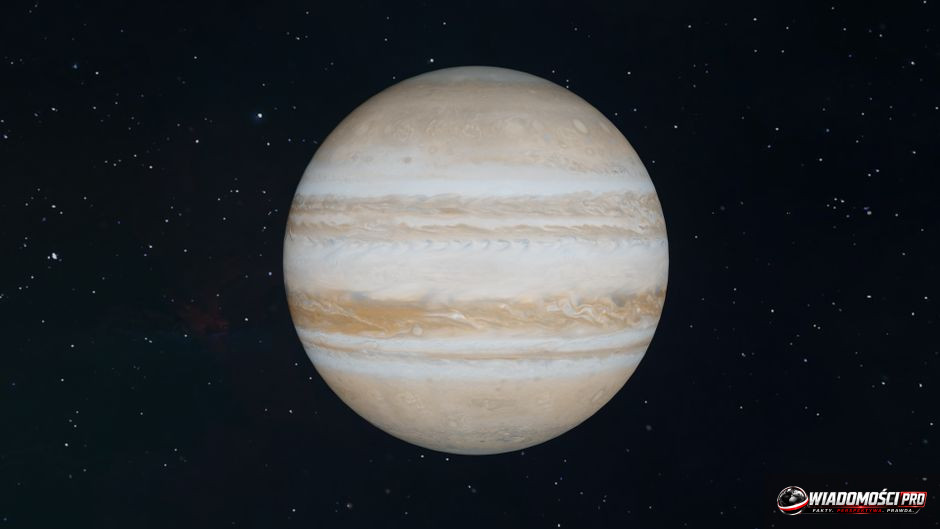
The Europa Clipper mission, carried out by NASA at a cost of $5 billion, is investigating conditions on Jupiter's moon to determine if environments favorable to life exist beneath its icy crust. The probe does not carry instruments to detect organisms, focusing instead on mapping the chemical conditions that could support them. This project pursues specific research goals, prioritizing geological and chemical analysis of the subsurface ocean over the search for direct biological evidence.
Budget and scientific goals of the mission
NASA has allocated 5 billion dollars to this project. This amount covers the construction of the probe, launch costs, and multi-year ground operations. The mission's lead scientist is Robert Pappalardo, and the engineering team is overseen by Jordan Evans of the Jet Propulsion Laboratory. The scale of the project exceeds typical planetary missions. The goal is not to find life, but to assess Europa's habitability. Scientists are studying three variables: the chemical composition of the ocean, the thickness of the ice shell, and the geological activity that could transport matter from the interior to the surface.
If a salty body of water exists under the ice, interactions between the ocean and the surface could bring organic compounds upward. Europa Clipper acts as a detective searching for chemical signatures. Understanding whether Europa is habitable requires moving from speculation to hard measurement data. The engineering team developed a system capable of operating in Jupiter's extreme environment. Each instrument is designed to provide data allowing for an assessment of whether chemical reactions supporting metabolism could occur in the ocean.
Mission launch: Falcon Heavy on the way to Jupiter
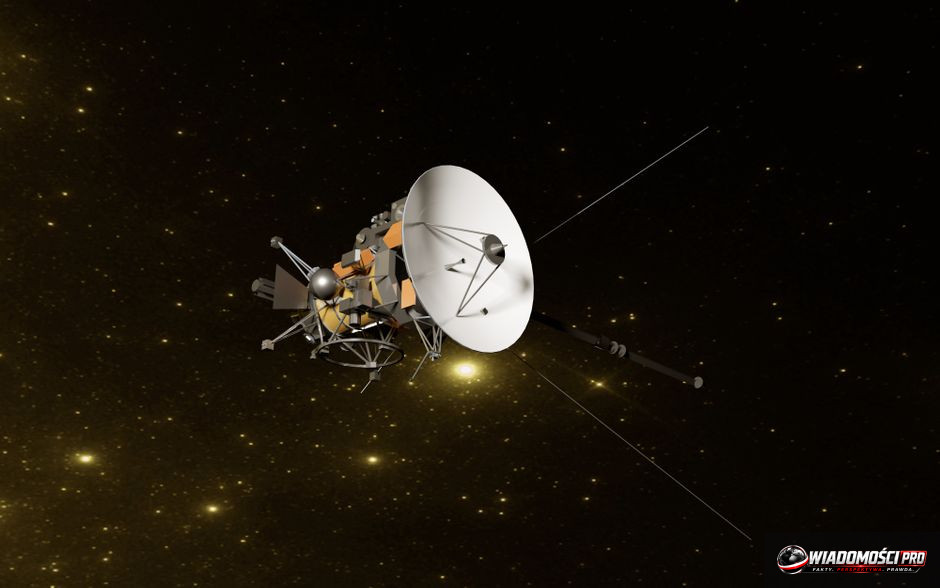
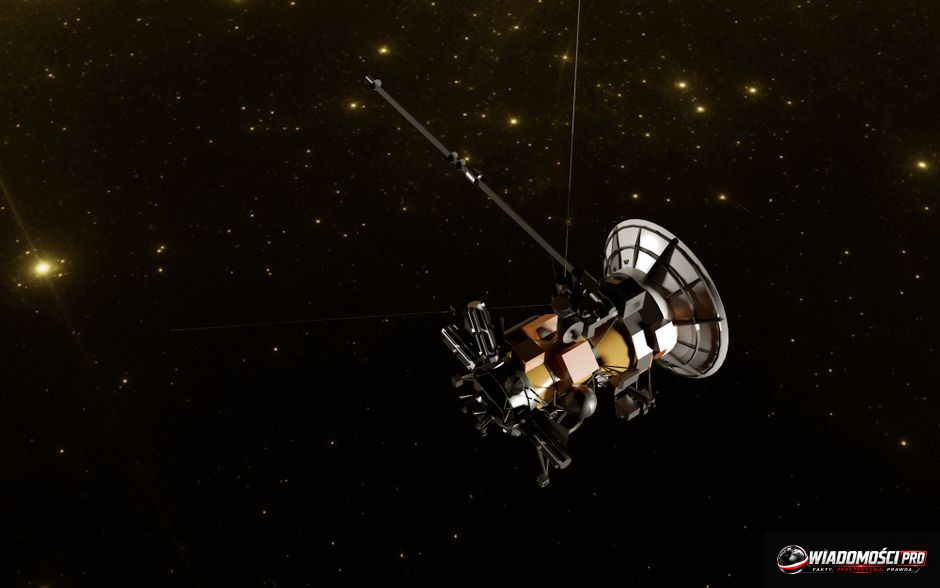
In October 2024, the probe began its journey toward Jupiter aboard a SpaceX Falcon Heavy rocket. The launch mass of the device is approximately 6,000 kilograms, a significant portion of which is fuel necessary for maneuvers near the gas giant. The choice of Falcon Heavy was dictated by the payload requirements for such a massive unit. The probe did not fly directly toward its target. The flight trajectory includes gravity assists from Earth and Mars, which allows it to gain speed with minimal fuel consumption.
During the nearly six-year journey, most onboard systems remain in sleep mode. The electronics have been tested for resistance to radiation, which will increase as it approaches Jupiter. SpaceX engineers optimized the launch procedure to minimize vibrations affecting the sensors. Upon arrival, the probe will begin a series of 49 flybys of Europa. The decision to avoid a permanent orbit around the moon is due to the need to protect it from Jupiter's destructive radiation belts, which damaged the systems of the Galileo probe in the past.
Technology on the trail of life: onboard instruments
The technological advancement of the mission stems from the necessity of remotely studying the globe's interior. The team led by Curt Niebur equipped the probe with a set of tools to scan the satellite. The REASON instrument (Radar for Europa Assessment and Sounding: Ocean to Near-surface) uses radio waves to map ice thickness. This radar will allow scientists to determine if there are pockets of liquid water beneath the surface. Working alongside it is the MISE spectrometer (Mapping Imaging Spectrometer for Europa), which analyzes the composition of surface molecules, such as salts, organic compounds, and water ice.
The EIS (Europa Imaging System) camera system will take pictures of the surface with a resolution reaching a few meters per pixel. This will allow geologists to identify young cracks and potential water vapor plumes. Using such a wide spectrum of sensors minimizes the risk of misinterpreting data. If the radar detects liquid and the spectrometer confirms the presence of organic compounds, the probability of an environment favorable to life will increase drastically.
To protect the electronics from radiation, engineers created a special "vault" housing. It is made of titanium and aluminum. It protects the central unit from bombardment by charged particles in Jupiter's magnetic field. Without this shield, the electronics would fail after a few months of operation in this region of the solar system. The probe must complete all planned flybys before the radiation dose exceeds the components' durability.
Why is Europa key to science?
The choice of Europa is based on a geophysical model that indicates the presence of liquid water beneath a thick layer of ice. Jupiter's tidal forces generate friction inside the moon, which maintains the temperature necessary for the existence of an ocean. Water is a solvent that enables the chemical reactions necessary for the emergence of life. Unlike Mars, where water exists only periodically or in the form of ice, Europa possesses an ocean that has likely existed for billions of years.
Long-term environmental stability is a condition for evolution. Scientists speculate that hydrothermal vents may exist on the floor of this ocean. The presence of life in similar places on Earth, even in the total absence of sunlight, provides a reference point for astrobiology. Europa Clipper will not find fish or plants, but it may detect metabolites in ejected matter. Skeptics point out that conditions may be too salty or acidic for biological forms known to us. Our knowledge of the chemistry of exotic oceans is currently limited to theoretical models.
Competition for primacy in space exploration
American dominance in the exploration of Jupiter's moons is a fact. NASA has a budget that allowed for the optimization of instruments for one specific goal. The European JUICE mission, which is also heading toward Jupiter, focuses on studying the entire system of this gas giant, which spreads resources across several moons. Washington focused on Europa, which is an example of a "concentrated force" policy.
In the background of the race, there is a competition over the management model of the space sector. Europa Clipper is a state mission, but it uses rockets from a private company. NASA is buying a launch service, not just a rocket. This allows for greater flexibility in managing the project's budget. If the mission does not bring groundbreaking discoveries, politicians may limit funding for future astrobiological projects. Every dollar spent must be justified to the public, which expects results. The success of Europa Clipper will open the door for subsequent missions, perhaps landers that could drill into the icy crust. Failure will close this chapter for decades.
Schedule and mission status in 2024
Currently, the probe is in the early stages of a long transfer flight. After launching in October 2024, the unit underwent a system calibration period. Engineers at the Jet Propulsion Laboratory in California monitor technical parameters 24 hours a day. Each onboard device is checked remotely. The mission schedule is precise. In the coming years, Europa Clipper will perform gravity-assist maneuvers that will allow it to gain the speed necessary to reach Jupiter.
Technicians are optimizing software to prepare the probe for the most demanding stage: entering Jupiter's gravitational field. The probe's technical status is stable. The solar power systems are working as expected. The solar panels, with a span of over 30 meters, are the largest ever constructed for an interplanetary mission. Thanks to them, the probe will be able to work for many years, collecting data.
Return on scientific investment
The $5 billion investment in the Europa Clipper mission must be considered in terms of opportunity costs and technical gains. From a scientific point of view, the return on investment (ROI) is primarily data on habitability that cannot be obtained otherwise. Instead of building ten cheap rovers, the agency chose one powerful research instrument. If it turns out that conditions under the ice are sterile, these funds will be remembered as a costly lesson in humility. On the other hand, confirming the presence of the right chemical elements will change our understanding of life in the universe.
In addition to scientific data, the return is the development of radiation and energy technology. The titanium shields and solar power systems designed for this probe will find application in future missions to the outer planets of the Solar System. Knowledge gained during flybys of Europa will allow for better planning of missions with landers in the future. The cost of the mission is converted into knowledge about whether we are alone in the universe. This is a hard economic result on the scale of global science.
Questions and answers
Will the probe land on the surface of Europa?
No, the design of the probe does not allow for landing. The mission is based on a series of 49 flybys, which allow for safe measurements without the risk of failure associated with difficult terrain and extreme radiation near the surface.
How long will it take to reach the destination?
The journey to the Jupiter system will take several years. The probe must cover a huge distance, using gravity assists from Earth and Mars, which lengthens the path but saves fuel.
Why was the Falcon Heavy rocket chosen?
This choice was dictated by the mass of the probe. Europa Clipper is one of the heaviest machines sent into interplanetary space, and the SpaceX rocket offers the necessary lift capacity to push it onto an interplanetary trajectory with sufficient speed.
Is the mission directly looking for life?
No. The probe is looking for conditions favorable to life, such as the presence of water, appropriate temperature, and chemical compounds. It does not have equipment for biological analysis of samples for the presence of living microorganisms.
What will happen to the probe after the mission ends?
After completing all planned flybys and collecting data, the probe will most likely be directed into a controlled impact into Jupiter's atmosphere to avoid potential contamination of the moon with Earth microbes.
What risk does radiation pose?
Jupiter has a strong magnetic field that accelerates particles to enormous speeds. This radiation is destructive to electronics, which is why the probe has been equipped with special titanium shields.
Will the data be publicly available?
Yes, NASA makes scientific data from its missions available after initial verification by research teams, which allows scientists from around the world to analyze the results of Europa Clipper's work.
What is the role of Robert Pappalardo?
As the project's lead scientist, Pappalardo is responsible for setting research priorities and coordinating the work of teams analyzing data from onboard instruments.
Is Europa the only target of research in this area?
Europa is the main target, but the mission will also collect data on Jupiter's environment, which will indirectly expand our knowledge of the entire system of this gas giant.
What are the biggest risks to the mission's success?
The main threat remains electronic failure caused by radiation and potential problems with communication systems over vast distances, which require precise antenna positioning.
Risk analysis and the future of research
Every flyby of Europa requires computational precision. The probe must maneuver in Jupiter's radiation belts, which exposes it to constant damage. Engineers at the Jet Propulsion Laboratory designed the software so that the probe can independently enter safe mode if an anomaly is detected. This technical solution is crucial because the signal delay between the probe and Earth makes real-time control impossible.
The financial risk is as high as the technical one. The $5 billion budget limits the room for maneuver for any corrections during the mission. Any additional extension of work time requires securing funds, which, in the face of changes in NASA administration, is not guaranteed. The project management must therefore demonstrate high efficiency in data management. If the mission provides evidence of an ocean rich in nutrients, it will become the foundation for all future astrobiological activities.
The value of the Europa Clipper project extends beyond astronomy itself. It is a test of engineering capabilities in extreme conditions. Power systems that work in Jupiter's orbit can be used in missions toward Saturn or Uranus. The science of Europa is the science of how environments capable of supporting life are formed. Without this knowledge, our theories about exoplanets will remain merely mathematical models. The Europa Clipper probe is a bridge between abstract theory and physical presence in the Jupiter system.
In summary, this mission represents the most advanced attempt to understand the habitability of a satellite other than Earth. Using 49 flybys will allow for the collection of data that will be analyzed by astrobiologists for the next few decades. The answer to the question of whether there are other places favorable to life in our Solar System now depends on the work of the probe's onboard instruments. Is this enough to change our perspective on the place of humans in the universe? We will know the answer when the first data from radars and spectrometers reach laboratories on Earth.
Flight logistics and navigation challenges
Navigation of the Europa Clipper probe is an extremely complex process. After launching from Earth, the flight trajectory was set to take advantage of gravity assists. The probe must perform a flyby maneuver of Mars in 2025, and then return to the vicinity of Earth in 2026. Each of these maneuvers requires precise fuel burning. If the probe uses too much fuel in the early stages, the number of planned flybys of Europa may be reduced.
This is why ground control in Pasadena monitors every flight parameter with the utmost attention. The probe moves at speeds exceeding tens of thousands of kilometers per hour. Even a small error in trajectory calculations could result in missing the target or entering layers of radiation that are too dense. Engineers must predict the behavior of instruments in conditions that cannot be fully replicated in Earth laboratories.
Technical limitations of communication
Communication with the probe at such a vast distance is a separate challenge. Europa Clipper uses a radio system operating in deep space bands. The main antenna must be precisely aimed at Earth to transmit data at a speed that is a fraction of the capabilities of a home internet connection. Every gigabyte of data sent from the vicinity of Jupiter is the result of many-hour transmission sessions through the Deep Space Network.
These limitations force data prioritization. The research team must decide which information is most important. Surface images take precedence over raw radar data, which requires long processing on Earth. This work model means that scientists do not see research results immediately. Every discovery requires patience and international cooperation.
The future after Europa Clipper
After the end of the Europa Clipper mission, the future of research on Jupiter's moons will become a subject of debate. If data confirms the existence of an active ocean, the scientific community will push for sending a lander. Such a project would be even more expensive and technically complicated. It would require the development of ice-drilling systems and the sterilization of instruments so as not to contaminate the moon with Earth bacteria.
The debate over next steps will take place at the political level. Is it worth spending more billions on moon research, or is it better to focus on missions toward exoplanets? Europa Clipper is a test that will resolve these dilemmas. This mission does not end research, but lays the foundations for future generations of explorers. All data collected by the probe will serve science for decades, regardless of whether we find life there or only chemical traces of its potential.
Ultimately, this mission shows human determination to understand nature. Despite the huge costs, risk of failure, and technical challenges, NASA took on this challenge. Europa remains the most mysterious place in our vicinity. Thanks to Europa Clipper, this mystery is finally becoming a measurable scientific problem, not a subject of science fiction. Each of the 49 flybys is a step toward knowing the truth about oceans that may be home to alien life forms. The probe is on its way, and the data it sends will change astronomy textbooks forever.
Sources
- Europa Clipper mission launch to Europa - AstroNET – Polish Astronomical Portal
- Europa Clipper probe to search for life on Europa - Urania - Polish Astronomical Portal
- Europa Clipper mission launch [BROADCAST]. Americans to outpace Europeans in the search for life on Europa - Wyborcza.pl
- Europa Clipper has launched. It will investigate if there are conditions for life on Jupiter's moon - Polskie Radio 24
- Searching for life in the Solar System beyond Earth. NASA sends a mission - Geekweek Interia
- Flight to Jupiter for 5 billion dollars. Europa Clipper launch aboard Falcon Heavy - Benchmark.pl
- NASA sends a probe to Europa. Europa Clipper mission has launched - WP Tech
- Start of Europa Clipper construction - Kosmonauta.net
Article prepared by the Wiadomości PRO editorial team with the support of artificial intelligence. Facts come from the sources listed above.
Komentarze (0)
Ładowanie komentarzy...