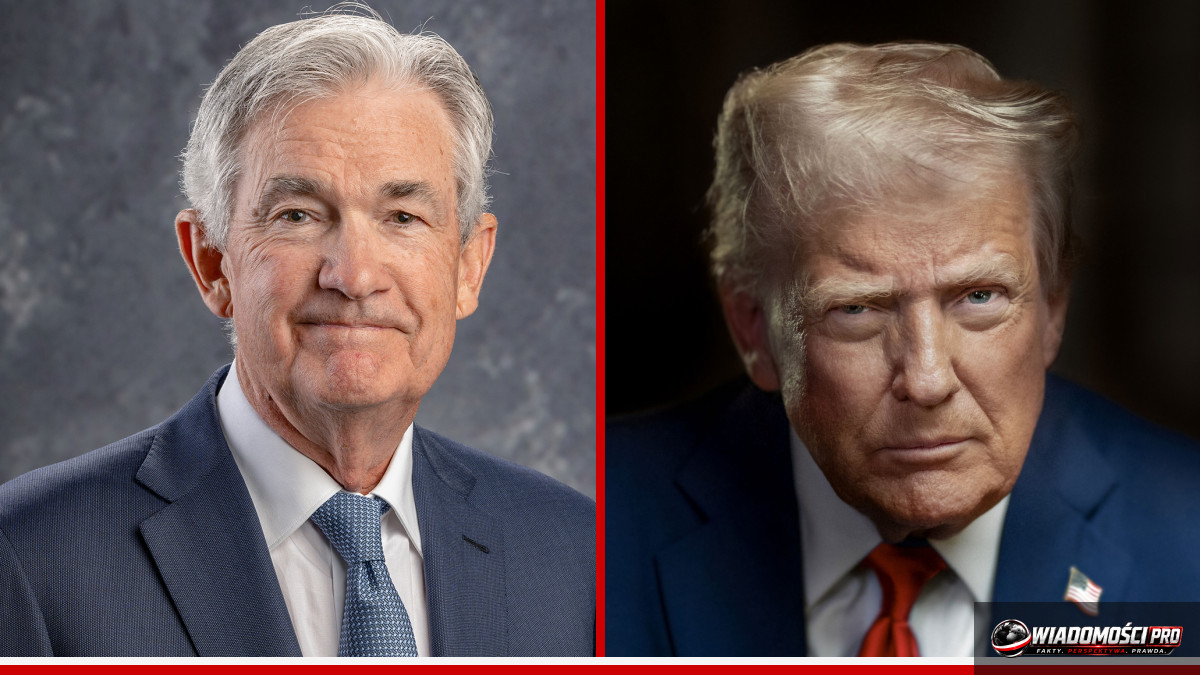
The US Federal Reserve has lowered interest rates by 50 basis points, setting the range at 4.75-5.00%. This decision officially resumes the monetary policy easing cycle in the United States. For investors, this is an immediate signal to restructure portfolios: Treasury bonds become more attractive due to price increases resulting from an inverse correlation with yields, the US dollar is under selling pressure, and the stock market is seeing a rotation of capital toward sectors sensitive to the cost of debt.
Mechanism of impact on market valuations
Reducing the cost of money by half a percentage point changes the fundamental parameters of financial asset valuation. The debt market reacts first. When the central bank cuts rates, the yields of bonds issued previously at higher interest rates become relatively more profitable, which drives up their market prices. Institutional investors, who for years of high rates kept capital in short-term debt instruments, are forced to extend the duration of their portfolios, seeking profits in the longer term before further cuts.
The stock market, on the other hand, reacts in two ways. "Growth" companies, whose valuations are based on discounted future cash flows, benefit from a lower discount rate. On the other hand, the easing cycle is often read as a reaction to weakening macroeconomic fundamentals. If the US economy does not show resilience, investors will begin to withdraw from cyclical stocks, moving funds to defensive companies with strong balance sheets. This rotation is not an immediate process, but a multi-month adjustment that is only gaining momentum after the decision announced by Jerome Powell.
It is worth paying attention to the US dollar exchange rate. Lower rates in the US reduce the attractiveness of the carry trade, where investors borrowed dollars to invest them in higher-yielding assets. The weakening of the American currency is a classic side effect of easing, which in turn creates new conditions for emerging markets. The latter benefit from greater global dollar liquidity, which may trigger a wave of buying in capital markets outside the US.
Behind the scenes of the decision and political pressure
The decision-making process at the Fed has ceased to be a technocratic exercise based on inflation charts in recent months. Business Insider Polska pointed this out on July 30, 2025, describing how the Federal Reserve found itself under strong pressure from Donald Trump. The former president publicly demanded cheaper money, arguing that high rates stifle innovation and the competitiveness of American industry. Although Jerome Powell consistently emphasized the institution's independence, the September cut of 50 basis points is, for many observers, clear evidence that the political debate about the shape of the economy has permeated the FOMC meeting room.
Reports from September 17, 2025, when Bankier.pl stated outright that "Trump got his way," close the discussion on whether the Fed acted solely based on pure macro data. The scale of the cut suggests that the arguments of proponents of fiscal and monetary stimulus have gained the upper hand over the hawkish faction within the committee. Such dynamics present investors with a new risk: how long will the Fed be able to maintain objectivity if the coming quarters bring further political demands in the face of weakening labor market readings?
Why economists' forecasts are failing
The history of the last two years is a series of forecasting errors. As Bankier.pl pointed out as early as September 18, 2024, economists were massively wrong in their assumptions regarding the trajectory of interest rates. The market too often assumed stabilization scenarios, while the Fed was forced into sharp moves under the influence of a changing reality. Similar sentiments prevailed in mid-September 2024, when Strefa Inwestorów warned that market expectations could lead to deep disappointment on the stock exchanges.
The problem is that the econometric models used by the largest financial institutions have ceased to effectively process the impact of political factors on central bank decisions. Analysts focused on CPI inflation and GDP dynamics, ignoring signals from the political environment, which in 2025 became a key factor influencing Powell's rhetoric. Today's 50-basis-point decision is therefore a final admission that the bank's earlier, more cautious approach was inadequate to the economy's requirements, forcing the market to painfully revise forecasts for 2026 and beyond.
This situation shows that investors should not rely solely on analytical consensus. In periods when the central bank is in the crossfire of political disputes, it is better to analyze raw data from the labor market and statements from the policymakers themselves, rather than believing in forecasts prepared by large brokerage houses, which often "chase" the market, updating their assumptions with a delay.
Labor market situation and the "hawkish cut"
Dziennik ING, in an analysis from December 11, 2025, used the term "hawkish cut," which at first glance seems contradictory, but perfectly captures the Fed's state of mind. On one hand, we have a deep 50-basis-point cut, which is a dovish action, but on the other, the motivation stems from fear of recession and bad data from the labor market. It is "hawkish" in the sense that the Fed is not cutting rates because the economy is healthy and inflation is defeated, but because the foundations are cracking.
The weakness of the labor market, mentioned in reports at the end of 2025, became the main driving force behind today's changes. If employment growth is slowing and the unemployment rate is showing an upward trend, the central bank must react faster and more strongly to avoid a hard landing. 50 basis points is not cosmetic. It is an attempt to get ahead of a crisis. Investors should therefore view this move as a type of insurance policy purchased by the Fed, and not as a signal for uncritical optimism.
For businesses, this means a change in the cost of capital, but with a simultaneous deterioration in demand prospects. Companies that based their development on cheap credit can now breathe a sigh of relief, but only on the condition that their customers – consumers – still have budgets for purchases. In conditions of a slowdown in the labor market, this second part of the equation becomes uncertain.
Energy and cost stabilization
In the energy sector, despite financial turbulence, the situation is paradoxically more predictable. Dziennik ING indicates that regulated electricity prices in 2026 will not undergo significant changes. This is key information for investors looking for stable dividends in times of volatility. Companies in the energy sector often behave like bonds – their valuations depend on the predictability of future cash flows, not on momentary movements in interest rates.
The stability of energy prices in 2026 removes a large part of cost uncertainty from the shoulders of enterprises. In the face of monetary policy easing, capital may, however, flow out of the utility sector toward technology or industrial companies that derive greater benefits from cheaper debt financing. Investors should therefore balance their portfolios, remembering that although the energy sector offers safety, in a rate-easing cycle, its relative attractiveness compared to more dynamic branches of the economy decreases.
Outlook for 2026: the end of the illusion of stabilization
Even at the beginning of 2026, the market was fed a narrative of stabilization. Money.pl, in a report from January 28, 2026, indicated that investors expected rates to be kept at an unchanged level, counting on the fact that the Fed's earlier actions would be enough to control the situation. Today's 50-basis-point decision brutally verifies these expectations. It turns out that the adjustment process is much deeper than assumed in the first months of the year.
This experience should teach investors humility toward the official assurances of central banks. Jerome Powell repeatedly suggested "patience" and "stabilization," only to ultimately make a 50-basis-point move. This type of inconsistency between communication and action is a signal that the Fed itself is in a phase of seeking balance. Instead of building strategies based on "stabilization" forecasts, one should adopt an opportunistic approach: react to data, not to press releases.
In the coming months, the key indicator will no longer be the Fed rate itself, but the trajectory of future cuts. Will we see another 50 basis points at the next meeting, or will the Fed pause? This uncertainty will be a source of volatility in currency and commodity markets. Investors should prepare for a period in which every publication of inflation or employment data will cause sharp price movements, resulting from the constant shifting of expectations regarding the central bank's further steps.
What does this mean for an individual portfolio?
For the individual investor, the most important lesson from the current situation is the need for diversification in the context of interest rates. A 50-bp rate cut is a moment to analyze exposure to long-term bonds. The increase in their prices may be an opportunity to realize profits if the investor held them in their portfolio before the cut. In turn, "value" stocks may begin to lose out to growth stocks, which benefit from lower debt servicing costs.
However, one should not fall into euphoria. History teaches that financial markets often discount rate cuts in advance, which means that the "fact" of the cut may become a pretext for so-called *sell the fact*. Investors who counted on a quick stock market rally may feel disappointed if macroeconomic data from the coming months confirm the risk of recession.
An important element of a portfolio in this environment should remain alternative assets, which historically perform well in periods of monetary volatility. Gold, often treated as a hedge against political uncertainty and the weakness of fiat currencies, may gain in an environment where the Fed is losing its inviolable aura of independence.
Summary of market mechanisms after the cut
The rate cut to the 4.75-5.00% range is a 180-degree turn from the belt-tightening policy of previous years. The Fed has moved from fighting inflation to fighting to keep the economy from cooling down. This process carries specific consequences for every type of capital.
1. **Bonds:** The rise in debt instrument prices is a natural consequence of the rate cut. Investors who entered the debt market before the decision are now in a profitable position. However, the risk is associated with potential inflation, which, with overly aggressive easing, could return, forcing the Fed to change course in 2026.
2. **Stocks:** Technology companies and those in the growth sector are receiving "oxygen." In turn, the banking sector may feel pressure on interest margins, which makes it less attractive in the short term.
3. **Currencies:** The dollar, losing interest attractiveness, may become weaker against the currencies of countries whose central banks maintain a more restrictive policy. This is an opportunity for exporters, but pain for importers using the dollar.
All these phenomena are happening in the shadow of politics. The fact that the decision to cut was so strongly linked to Donald Trump's expectations creates a new quality in American monetary policy. Investors must now include the political factor in their risk models. This is no longer just an analysis of the yield curve or the CPI index. It is a game in which political pressure can at any moment force the Fed to make a move that contradicts standard economics textbooks.
The future of monetary policy in the US is therefore more uncertain than ever. On one hand, we have the Fed's analytical apparatus, which tries to take care of price stability, and on the other – political pressure, which demands stimulus at any cost. In this clash of arguments, it is the individual investor who must remain vigilant. Every subsequent conference by Jerome Powell will be analyzed in terms of whether the Fed remains faithful to its mission or is becoming a tool in the hands of politicians.
The conclusions for a portfolio are clear: flexibility above all. In an environment where the world's main central bank makes such sharp turns, rigidly sticking to a "buy and forget" strategy is risky. One should actively manage risk exposure, monitor labor market data, and react to every signal that suggests the Fed may accelerate or slow down the pace of cuts.
Questions and answers
By how much were interest rates lowered?
The Federal Reserve lowered rates by 50 basis points, setting the range at 4.75-5.00%.
Why did the Fed decide to cut?
The decision resulted from a combination of weak labor market data and growing political pressure, which demanded cheaper financing for the economy.
Is this the end of rate hikes?
The September 2025 decision officially ended the tightening cycle and opened a new stage of easing, which means that a return to hikes is unlikely in the short term, unless an unforeseen jump in inflation occurs.
How did the markets react to this decision?
The reaction was immediate in the bond sector, where prices rose, and in the stock market, where capital began to rotate toward growth companies, pricing in the cheaper cost of debt servicing.
Will the Fed's decision affect energy prices?
According to data from December 2025, regulated electricity prices in 2026 are to remain stable, which means that the energy sector will not feel the direct impact of interest rate changes in its retail price list.
Can we count on further cuts?
The trajectory of further cuts remains dependent on upcoming macroeconomic data, especially those regarding unemployment, which have become the main determinant of the further path of easing for the Fed.
Sources
- Dziennik ING: "Hawkish cut" by the Fed in the shadow of weak labor market data and expected deep easing with a new Fed chair. Regulated electricity prices will not change significantly in 2026. - ING Economic Service
- Fed cuts interest rates sharply. Economists, however, were wrong - Bankier.pl
- September Fed decision may disappoint stock markets. Debate around a possible interest rate cut in the US - Strefa Inwestorów
- Fed holds its breath. Market expects rate stabilization in the US - Money.pl
- Federal Reserve under pressure from Donald Trump. Time for a key decision - Business Insider Polska
- When will the Fed lower interest rates? There is an announcement from Jerome Powell - Rzeczpospolita
- Fed lowers rates for the first time this year. What will be the effects? - Subiektywnie o finansach
- Trump got his way. Fed resumed interest rate cut cycle - Bankier.pl
Article prepared by the Wiadomości PRO editorial team with the support of artificial intelligence. Facts come from the sources listed above.



Komentarze (0)
Ładowanie komentarzy...