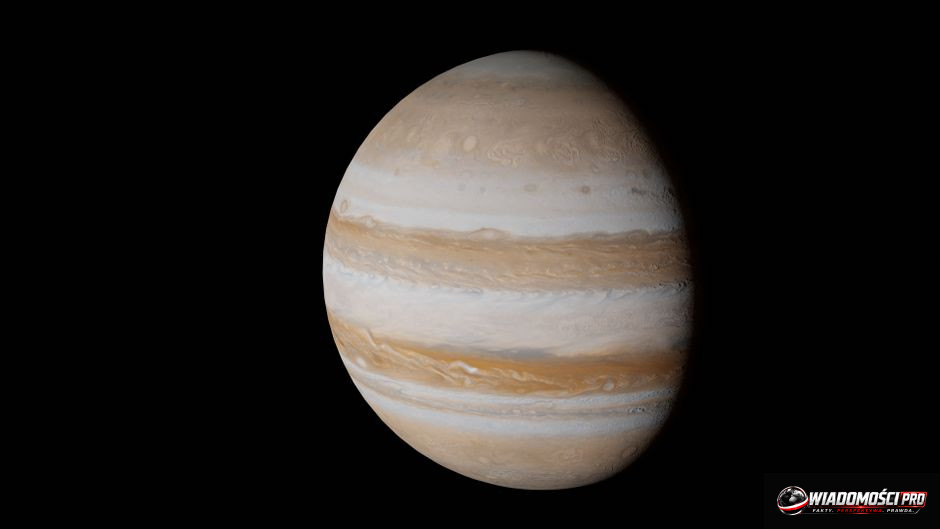
The Europa Clipper mission has consumed 5 billion dollars and was designed to check whether conditions favorable to life exist beneath the icy shell of Jupiter's moon. It is NASA's most ambitious project in the field of astrobiology, intended to determine whether a saltwater ocean hidden under kilometers of ice could constitute a stable environment for living organisms. The probe has already begun its multi-year journey, and its success will determine the directions of space exploration for the coming decades.
Why Europa?
Interest in Jupiter's moon is not a coincidence or a desire to fill a gap in the agency's launch calendar. Europa, although smaller than Earth's Moon, possesses parameters that make it one of the most important places in the Solar System. Astrobiologists point to three pillars of habitability: liquid water, an energy source, and the right chemistry. All three appear to be present on Europa.
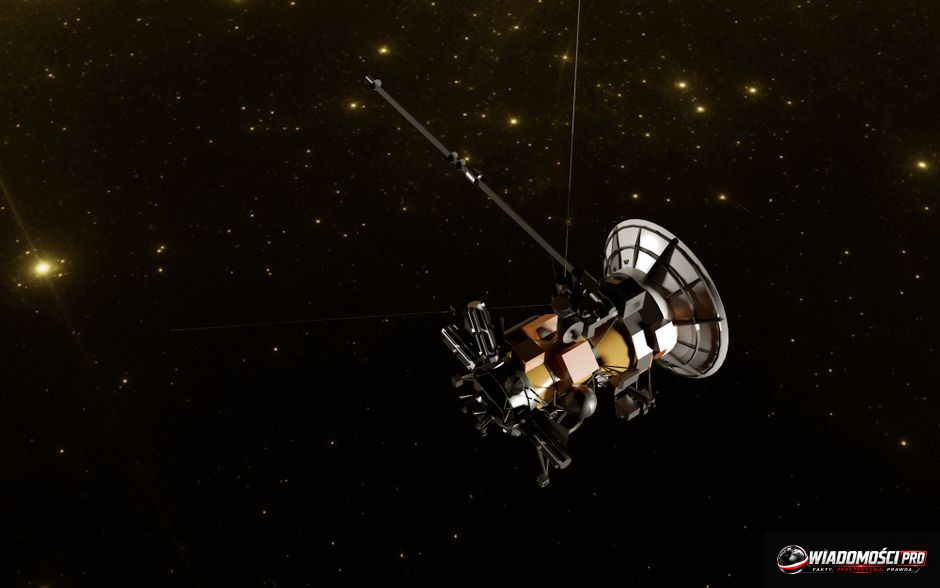
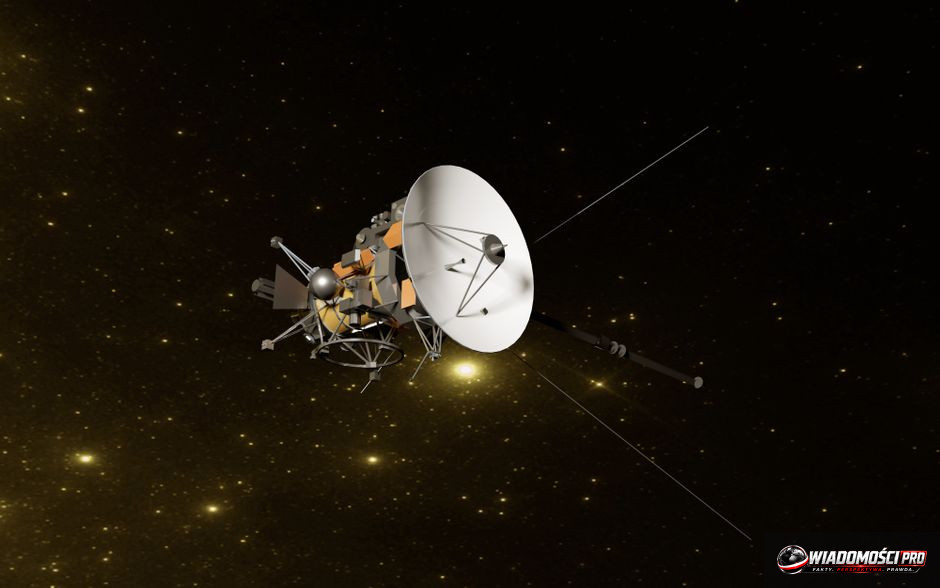
Beneath the icy surface, which is 15 to 25 kilometers thick, lies an ocean that, according to data from the Voyager and Galileo probes, may contain twice as much water as all of Earth's oceans combined. Furthermore, gravitational tides caused by Jupiter stretch and compress the moon's interior, generating the heat necessary to keep water in a liquid state. This heat drives geological processes that may deliver minerals from the core to the ocean. Europa Clipper is tasked with verifying these models by checking whether the chemical reactions necessary for the formation of complex organic molecules occur in this environment. However, we are not looking for fish or microorganisms here. We are looking for a "signature" of life, i.e., evidence that the chemistry of this place is rich enough to sustain biology.
Mission cost structure
The 5 billion dollar budget is spread across several key areas, each of which posed a separate engineering challenge. The largest portion of these funds was allocated to the construction of the probe itself and its extremely advanced set of scientific instruments. The costs of designing electronics resistant to Jupiter's extreme radiation consumed a significant portion of the funds. The probe must survive in an environment that is lethal to most terrestrial integrated circuits.
Approximately 178 million dollars of this pool is the cost of the launch itself using SpaceX's Falcon Heavy rocket. This choice was dictated by the need to ensure sufficient payload capacity to give the probe the escape velocity necessary to reach the Jupiter region in the allotted time. The rest of the budget covers multi-year ground operations, maintenance of the Deep Space Network, which will enable communication with the probe across billions of kilometers, and data analysis, which will continue long after the actual mission phase ends. It is an investment in people, infrastructure, and technologies that may be used in future missions, for example, in a planned lander.
Research instruments: The probe's eyes and ears
The mission's effectiveness depends on a set of nine main instruments. Each of them plays a specialized role in mapping the chemistry and structure of Europa. Instead of a generic set of sensors, we are dealing with precision apparatus.
The Europa-UVS (Ultraviolet Spectrograph) instrument is responsible for analyzing the moon's atmosphere in the ultraviolet range. It allows for the search for water vapor plumes that may eject matter from deep within the ocean into space. If such plumes are detected, the probe will be able to fly through them, analyzing their chemical composition without the need for landing.
MISE (Mapping Imaging Spectrometer for Europa) is the heart of surface research. This instrument maps the distribution of ice, salts, organic compounds, and other materials on the moon's surface. This allows us to understand exactly what is in the ice shell and where the elements that may be key to life come from.
REASON (Radar for Europa Assessment and Sounding: Ocean to Near-surface) is an ice-penetrating radar. Its task is to "X-ray" the shell to precisely determine its thickness and locate any potential pockets of water located closer to the surface. This is key to understanding how the ocean communicates with the surface.
Another important element is MASPEX (Mass Spectrometer for Planetary Exploration), which analyzes the composition of gases and molecules ejected from the surface. Thanks to it, scientists can "smell" the chemistry of the ocean. In turn, EIS (Europa Imaging System) provides high-resolution images, mapping the moon's geology, and E-THEMIS (Thermal Emission Imaging System) identifies areas where the ice is warmer, which may suggest recent geological activity. Additionally, SUDA (Surface Dust Analyzer) studies microscopic dust particles ejected from the surface, and ECM (Europa Clipper Magnetometer) measures the magnetic field, confirming the presence of a conductive ocean under the ice.
Flight logistics and navigational challenges
The launch of the Europa Clipper mission in October 2024 was an event that required perfect synchronization. The Falcon Heavy rocket had to place the probe on a trajectory that uses planetary gravity assists to gain the necessary speed. Without such a precise flight plan, the probe would not be able to reach Jupiter in a time that ensures the efficient operation of the equipment.
This journey is a challenge for the operations team. The probe must survive for years in deep space, where solar power becomes increasingly difficult as it moves away from the Sun. Europa Clipper's solar panels are enormous, which allows for energy generation even in such a distant place. However, energy management is not everything. The main threat remains Jupiter's radiation. The probe was designed to perform numerous flybys of Europa instead of entering a permanent orbit around the moon. This allows for avoiding staying in the strongest radiation field for too long, which significantly extends the life of the electronics.
Cost dynamics in science
Expenditures of 5 billion dollars in the space sector are often the subject of lively debate. Critics point out that for such an amount, ten smaller missions to Mars or the Moon could be carried out. Proponents, however, argue that Europa is a unique target that cannot be compared to any other object in the Solar System.
Modern astrophysics relies on large, centralized projects because the technologies needed to study distant moons are too expensive to be implemented in a dispersed manner. NASA, by betting on Europa Clipper, has demonstrated determination in seeking answers to the question of life beyond Earth. This "all-in" approach is risky, but it is also the only one that allows for the construction of apparatus with such advanced capabilities. Every euro or dollar spent on this project is also a cost of developing technologies that will find application in the aviation, telecommunications, and energy industries on Earth.
Competition for primacy in Jupiter research is also a stimulating factor. American dominance in this area, confirmed by the successful launch, forces European agencies to rethink their exploration strategies. Although Europeans planned their own missions in this region, the pace set by NASA makes Europa Clipper the main source of data for the entire global scientific community.
What does this mean for all of us?
NASA's investment goes beyond mere scientific data collection. It is an attempt to redefine our place in the universe. If the mission confirms the existence of an environment favorable to life on Europa, humanity will face a new ethical and scientific challenge. How should we approach the study of a moon that may be home to alien life forms? This question, which until now has been the domain of science fiction literature, is becoming a real issue for future generations of scientists.
From a taxpayer's perspective, 5 billion dollars is a huge sum, but in the context of military budgets or infrastructure spending on Earth, it represents a fraction of global costs. Is this the price for the answer to the question "are we alone"? If so, in the opinion of many astronomers, it is a low amount. On the other hand, skeptics are right to remind us that the probe will not provide us with direct evidence in the form of photos of organisms. We will have to be satisfied with the interpretation of chemical signatures. This requires patience and trust in the scientific methodology from us.
Research schedule
After launch, the probe needs time to reach the Jupiter system. This process is planned in such a way as to use the gravity of Earth and Mars to gain momentum. It is a long process, requiring not only computational precision but also equipment durability.
When Europa Clipper reaches its destination, a phase of intensive flybys will begin. The probe will approach Europa dozens of times, each time collecting data from a different area. This approach allows for the creation of a high-resolution map of the entire moon, which would be impossible with a single flyby. NASA scientists plan to coordinate these activities with other missions to maximize the use of available resources.
Will the result be satisfactory after years of waiting and billions of dollars? That remains open. Science on such an extreme scale does not guarantee success. We may discover that Europa is a dead icy world, which will also be valuable information, allowing us to better understand the evolution of planets. Every result, positive or negative, brings us closer to a fuller picture of the reality in which we live.
Questions and answers
Will the probe land on Europa's surface?
No, Europa Clipper was designed as an orbiter that will perform multiple flybys near the moon, not as a lander. Landing on Europa involves huge risks due to radiation and the unknown surface structure.
Why was the Falcon Heavy rocket chosen?
Falcon Heavy offers enough power to give the probe the appropriate speed necessary to reach the Jupiter system in the assumed time. This rocket is a proven launch system that allows for lifting heavy payloads into interplanetary trajectories while maintaining high reliability.
When will we know the first research results?
The first scientific data will start flowing in after the probe reaches the Jupiter system and begins the operational phase around the moon. It will be a gradual process, spread over years, during which the probe will successively transmit the collected data to Earth via the Deep Space Network.
Is the mission threatened by Jupiter's radiation?
Yes, radiation is the main technical challenge. The probe has special titanium and aluminum shields that protect the most sensitive electronics components. The mission architecture, based on fast flybys instead of long-term orbiting, was designed in such a way as to minimize exposure to Jupiter's lethal radiation.
Is Europa Clipper searching for life in the ocean?
The mission is not directly searching for life, i.e., specific organisms. Its task is to study the chemical composition, geological activity, and physical conditions that may indicate whether the environment under the ice shell is capable of supporting biological processes. The discovery of chemical signatures of life will be the main goal of the analysis of data sent by the onboard instruments.
What is SpaceX's role in this project?
SpaceX provided the service of launching the probe into space using the Falcon Heavy rocket. The launch contract included not only the rocket itself but also the logistics of preparing for the launch and integrating the payload with the launch system. This is an example of NASA's cooperation with the private sector, which is becoming a standard in modern space exploration.
Why wasn't another method of studying the ocean chosen?
Drilling into an ice shell with a thickness of over a dozen kilometers is currently beyond our technological reach. Flybys over the surface and analysis of molecules ejected from the ocean are the only real method of obtaining data on the chemical composition of sub-ice waters at today's level of technical advancement. Europa Clipper is the most effective tool we could create in the current budgetary and technological realities.
Sources
- Start of the Europa Clipper mission to Europa - AstroNET – Polish Astronomical Portal
- Europa Clipper probe will search for life on Europa - Urania - Polish Astronomical Portal
- Start of the Europa Clipper mission [BROADCAST]. Americans will overtake Europeans in the search for life on Europa - Wyborcza.pl
- Europa Clipper has launched. It will investigate whether there are conditions for life on Jupiter's moon - Polskie Radio 24
- Europa Clipper probe will search for life on Jupiter's moon, Europa - wszystkoconajwazniejsze.pl
- They are looking for life in the Solar System beyond Earth. NASA is sending a mission - Geekweek Interia
- Flight to Jupiter for 5 billion dollars. Europa Clipper launch on board Falcon Heavy - Benchmark.pl
- NASA sends a probe to Europa. Europa Clipper mission has launched - WP Tech
Article prepared by the Wiadomości PRO editorial team with the support of artificial intelligence. Facts come from the sources listed above.
Komentarze (0)
Ładowanie komentarzy...