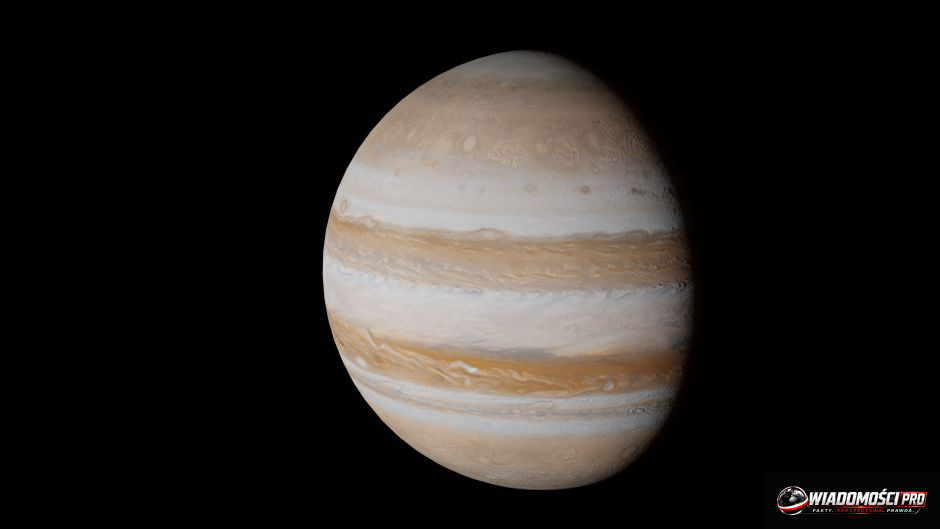
The Europa Clipper mission costs 5 billion dollars, and its primary goal is to investigate whether conditions conducive to the emergence and maintenance of life exist beneath the icy shell of Jupiter's moon. This endeavor represents the largest project in NASA's history dedicated exclusively to studying an object other than Earth that hides an ocean of liquid water in its interior. The American space agency is going all-in, sending the most advanced set of measuring instruments ever to leave our orbit toward Jupiter.
Architecture of scientific determination
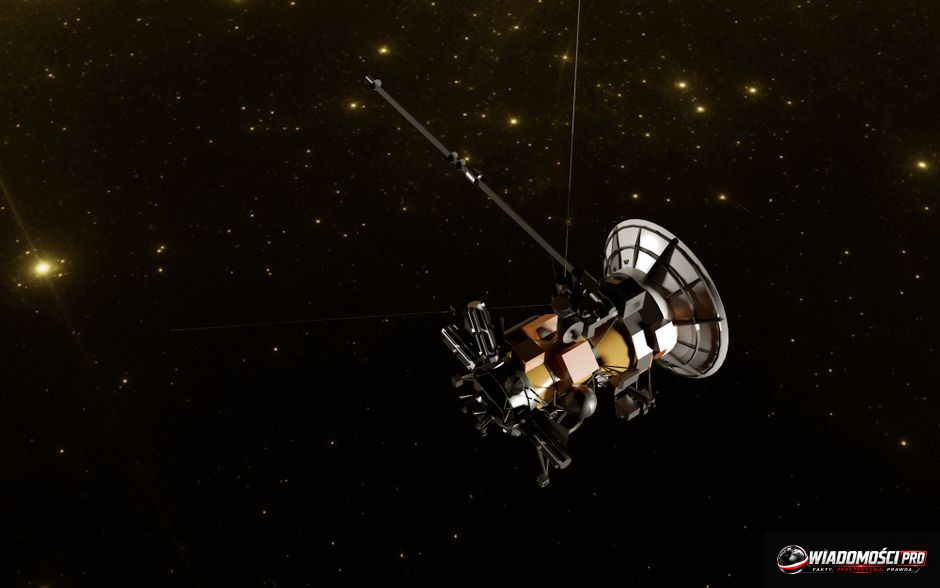
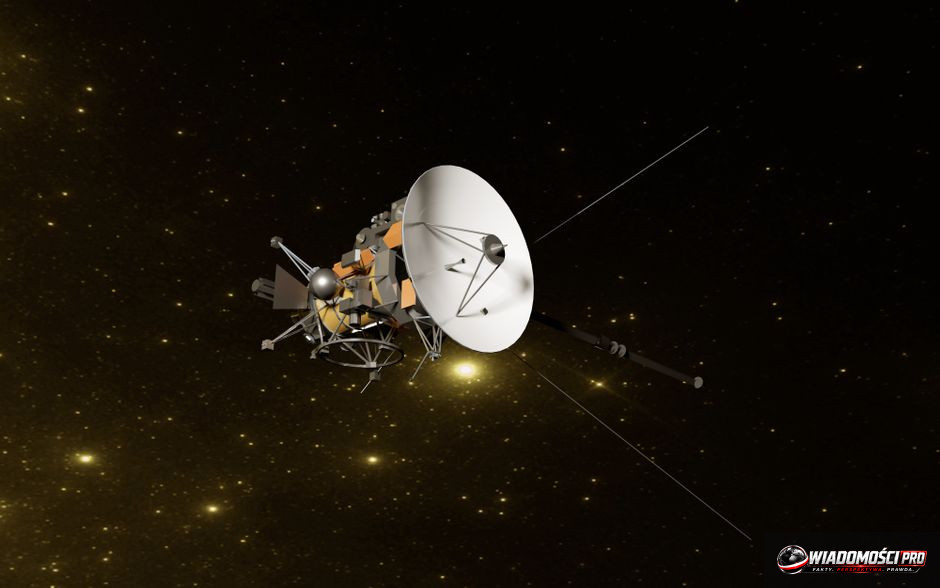
The engineers building the probe faced a challenge that goes beyond the standard requirements of interplanetary missions. The greatest enemy of the equipment is not distance, but the extremely strong magnetic field of Jupiter. The gas giant surrounds itself with radiation belts that can destroy unprotected integrated circuits in a short time. Therefore, the heart of the probe was placed in a special vault made of titanium and aluminum with walls nearly a centimeter thick. This armored casing is intended to protect the electronics from constant bombardment by charged particles, allowing the instruments to operate during numerous flybys of Europa.
The entire structure spans over thirty meters, mainly due to its massive solar panels. They must provide sufficient energy at a distance of 780 million kilometers from the Sun, where light intensity is more than twenty times lower than in Earth's orbit. Designers had to balance the probe's mass with its efficiency, which was one of the main factors shaping the final budget of the entire project. Every kilogram launched into space by the Falcon Heavy rocket had to be scientifically justified, and every device on board was assigned precisely defined tasks.
Instruments in the service of astrobiology
The success of the mission depends on how effectively the set of nine main research instruments handles the analysis of Europa's environment. Among them, REASON, the ice-penetrating radar, stands out. Its task is to "X-ray" the moon's icy shell, the thickness of which is estimated to be between several and a dozen or so kilometers. By emitting low-frequency radio waves, scientists will receive maps of the internal structure of the ice, which will allow them to locate potential pockets of liquid water closer to the surface.
Chemical composition imaging has been entrusted to the MISE spectrometer. This device records infrared radiation reflected from the moon's surface, which enables the identification of minerals, salts, and organic compounds. If particles ejected from the ocean are present on Europa's surface, MISE will detect their chemical signature. This is a key tool in the search for the "building blocks of life," i.e., carbon compounds that could indicate biological activity in the depths.
The Europa Imaging System, a set of high-resolution cameras, will be used for geological analysis. They will allow for the creation of an almost complete map of the moon, documenting every crack, ridge, and active area. E-THEMIS, a thermal imaging camera, will be responsible for detecting thermal anomalies. If there are places on the surface where heat from the interior escapes to the outside, this instrument will unerringly point out such locations, which may suggest the existence of cryovolcanoes or areas with a thinner ice cover.
Magnetism and dust: invisible evidence
Studying the moon's interior requires indirect methods, as reaching the ocean directly remains a challenge for future generations of missions. Europa Clipper will use ECM, a magnetometer, to measure the magnetic field induced in the ocean by Jupiter. The variability of this field will provide information about the salinity and depth of the water, which is essential to determine whether the ocean is stable enough for life to exist within it.
Complementing these studies is the PIMS instrument, used to monitor plasma in the moon's environment. Understanding how Europa interacts with Jupiter's magnetosphere is essential to eliminate measurement noise and correctly interpret data from the magnetometer. The probe also carries SUDA – a surface dust analyzer. This instrument is tasked with capturing tiny particles ejected from the surface into space and then studying their chemical composition during flight. This allows for the analysis of matter originating from the moon's interior without the need to touch its surface.
Mechanics of interplanetary travel
The launch in October 2024 began a multi-year navigational process. The probe is not heading directly toward the Jupiter system, as this would require too much fuel. Instead, the flight trajectory takes into account so-called gravity assists. Europa Clipper will first fly near Mars and then twice past Earth, using the gravity of these planets to gain the speed necessary to reach the outer regions of the Solar System.
Such a route means that it takes years to reach the destination. NASA engineers must manage the technical condition of the probe for a long time before the actual research phase begins. Each of the forty-nine planned flybys of Europa will be precisely calculated. During each one, the probe will take measurements that, when combined, will allow for the creation of a three-dimensional model of the moon. It is a tedious process, requiring immense patience from ground teams who must wait for data to be transmitted across billions of kilometers.
The puzzle of the ocean under the ice
Why does Europa arouse such great interest among astrobiologists? It all comes down to a mechanism called tidal heating. Jupiter, being a massive body, constantly exerts gravitational influence on its satellite. These forces cause the interior of the moon to stretch and compress, which generates heat. It is this heat that is the fuel driving Europa's geology and keeping the ocean in a liquid state.
On Earth, life exists where there is water, energy, and chemical elements. Europa possesses all these ingredients. Water in the ocean may react with the rocky seabed, potentially leading to the formation of hydrothermal vents. Such places on Earth's ocean floors are oases of life that do not need solar energy but use chemosynthesis. If similar processes occur on Europa, the chances of finding microorganisms there increase significantly.
Skeptics, however, point to the risk of chemical sterility. The ocean may be too salty or too acidic for life to develop in the form we know. There is also a possibility that the ice shell is thick enough to prevent any exchange of matter between the surface and the depths, making the ocean an isolated system. The Clipper mission will not definitively resolve this in a biological sense, but it will provide data that will allow for an assessment of the probability of a biosphere's existence.
Risk and financial management
Modern space exploration is based on balancing ambition with budget constraints. NASA, in deciding on such an expensive project, has taken on a huge responsibility. The amount spent on this endeavor is a subject of debate, especially in the face of the need to fund other missions, such as the Artemis program or space telescopes. Critics point out that spreading funds across smaller, more specialized probes could have yielded a broader range of scientific data.
The agency argues, however, that the scale of difficulty Europa Clipper faces required concentrating resources into one powerful tool. Building a probe with such high radiation resistance and such an extensive set of instruments would not have been possible within the framework of several separate, smaller missions. It is an investment in technology that in the future may become the foundation for bolder expeditions, including landers that could one day rest on the surface of the icy moon.
It is worth noting that NASA is not alone in this process in terms of knowledge. Data obtained by the probe will be analyzed by global scientific communities, making this project a contribution to the world's knowledge base about the Solar System. Even if the mission does not confirm the presence of life, the chemical and physical map of Europa itself will be the most accurate record of conditions near gas giants ever created.
What is missing from the puzzle
It must be openly admitted that the probe is unable to provide direct proof of the existence of life. It does not have a microscope that could send photos of organisms, nor a biological laboratory capable of conducting tests for the presence of DNA. The instruments are focused on "environmental premises." If the water is salty, contains carbon, and the temperature at the interface of the ice and the ocean is appropriate, the scientific community will consider Europa a habitable object.
This is a subtle difference that often escapes the public eye. We are looking not for creatures, but for conditions. This approach is safer from a scientific point of view, but less spectacular for observers. However, if Clipper detects complex organic compounds in water vapor plumes ejected from the surface – if such exist – it will be the greatest discovery since the first probes were sent toward the planets.
The future after 2030
The probe will reach the Jupiter system in 2030. That is when the most intensive phase of the mission will begin. Each flyby will require the involvement of hundreds of scientists and engineers. Data flowing back to Earth will require months of analysis to eliminate measurement errors resulting from radiation noise. It is a long-term project in which success is measured not in weeks, but in decades.
If the mission is successful, it will open the door for subsequent stages of research. Perhaps it is the data from Europa Clipper that will become the basis for choosing a site for a future lander that could drill through the ice. Without this initial, costly investment in reconnaissance, every subsequent attempt would be a lottery. NASA has chosen the path of systematic knowledge gathering, even if the price for it is the need to arm oneself with incredible patience.
The question of whether we are alone in the universe has accompanied humanity since the dawn of time. This mission will not answer it definitively, but it will narrow the search area to a few specific places in our immediate vicinity. If Europa turns out to be a dead lump of ice, we will have to look further, toward Enceladus or Titan. If, however, it turns out to be an active, chemically rich ocean, it will change our understanding of biology forever.
What this means for you
From an editorial perspective, this mission is a symbol of changing priorities in space exploration. There is a shift away from simple mapping of planetary surfaces toward advanced chemical and astrobiological analysis. The taxpayer, funding this project, receives in return not just photos, but the foundation for understanding the processes that led to the emergence of life on Earth. It is a long-term investment in knowledge, the return on which we will not see in the next quarter, but perhaps only in history books several decades from now.
Questions and answers
Will Europa Clipper land on the moon's surface?
No, the probe is designed to perform multiple flybys near Europa, not to land on its surface. Such a strategy allows for the safe conduct of a series of measurements in different regions of the moon, avoiding the risks associated with difficult terrain and strong radiation that would destroy a lander in a very short time.
How long will the journey to Jupiter take?
The journey to the Jupiter system is a multi-year process. The probe must travel millions of kilometers, using gravity assists from Earth and Mars to gain the speed necessary to reach its destination. Arrival at the Jupiter system is planned for 2030.
What exactly will the probe study?
The probe will analyze the chemical composition of the surface using spectrometers, study the thickness of the ice shell using the REASON radar, and measure the magnetic field, which will allow for the determination of the properties of the ocean located under the ice. A key goal is to check whether the water in this ocean possesses the chemical composition necessary to support biological processes.
Why was the Falcon Heavy rocket chosen?
This choice was dictated by the need to launch very heavy and complicated research equipment onto an interplanetary trajectory. Falcon Heavy is currently one of the few launch vehicles capable of providing the appropriate payload capacity, which was necessary for the probe to carry all the required instruments and the fuel reserve needed for maneuvers near Jupiter.
Sources
- Start of the Europa Clipper mission to Europa - AstroNET – Polish Astronomical Portal
- Europa Clipper probe to search for life on Europa - Urania - Polish Astronomical Portal
- Europa Clipper mission launch [TRANSMISSION]. Americans to outpace Europeans in the search for life on Europa - Wyborcza.pl
- Europa Clipper has launched. It will investigate whether there are conditions for life on Jupiter's moon - Polskie Radio 24
- Beginning of the Europa Clipper mission - Kosmonauta.net
- Europa Clipper probe to search for life on Jupiter's moon, Europa - wszystkoconajwazniejsze.pl
- Searching for life in the Solar System beyond Earth. NASA sends a mission - Geekweek Interia
- Flight to Jupiter for 5 billion dollars. Europa Clipper launch aboard Falcon Heavy - Benchmark.pl
Article prepared by the Wiadomości PRO editorial team with the support of artificial intelligence. Facts are sourced from the references provided above.
Komentarze (0)
Ładowanie komentarzy...