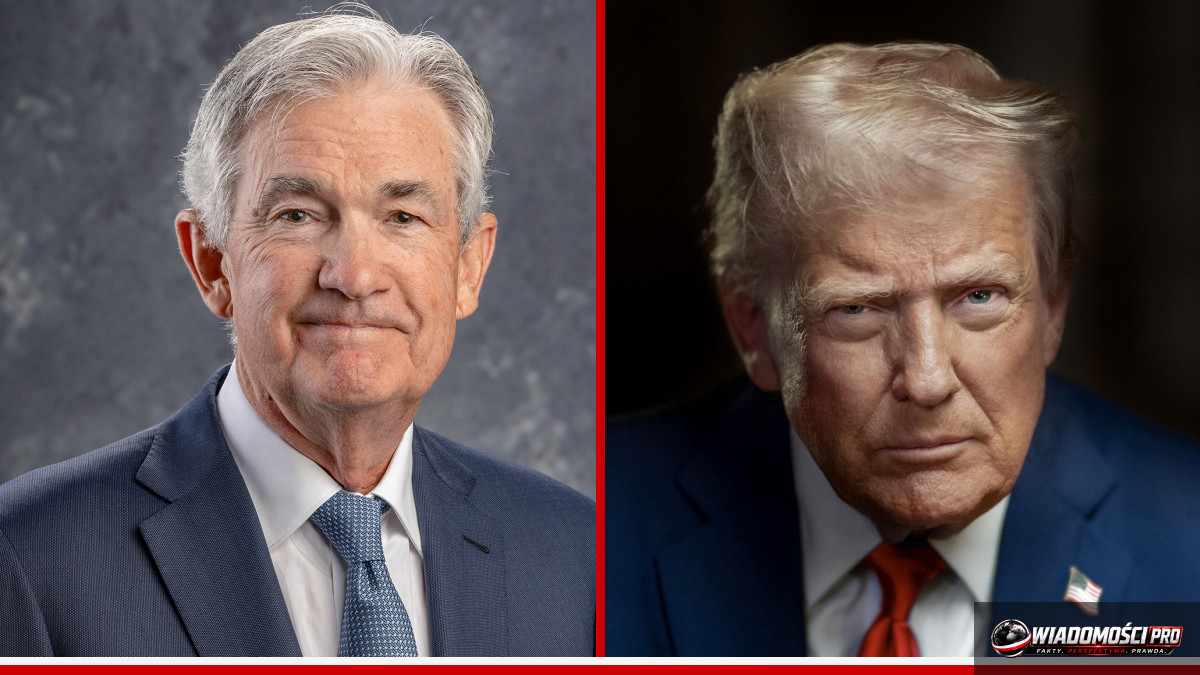
The Federal Reserve has lowered interest rates to a range of 4.75–5.00%, which significantly reduces the cost of financing debt in the US and redefines the profitability of global assets. For you, this means that the interest rates on your savings accounts will soon fall, while mortgage holders can expect gradual relief in their monthly installments. However, this is not just a technical adjustment, but a warning signal regarding the condition of the American labor market.
The mechanics of the decision: Why 50 basis points?
Choosing a scale of 50 basis points instead of the standard quarter-point is a decision that shifts the center of gravity in US monetary policy. The Fed did not decide on this move out of a desire to stimulate growth, but out of a necessity to save the labor market. Data that arrived in December 2025 showed that the US economic engine is losing power. Employment has ceased to be a guarantor of stability, and macroeconomic indicators have begun to alarm analysts at ING, who warned in their reports about the risk of recession.
This "hawkish cut" is an expression of determination. Jerome Powell and his colleagues concluded that the cost of inaction was higher than the inflationary risk resulting from cheaper money. Policymakers in Washington spent months maneuvering between maintaining high rates to stifle inflation and the pressure to maintain employment. They chose the latter. For an investor, this means that the era of "expensive money"—which has lasted for months—has come to an end. Capital that previously sought safety in high-coupon bonds must now look for new homes.
Politics in the background: The shadow of Donald Trump
The process of reaching the current interest rate level was not a sterile academic exercise. Since July 2025, an atmosphere of political pressure has hovered over FOMC decisions. The Donald Trump administration repeatedly articulated its expectations toward the central bank, demanding a loosening of policy to stimulate the economy before key political reckonings. Headlines from that period clearly indicated that the Fed's autonomy was being tested by the election calendar and political ambitions.
September 2025 was the moment when the central bank finally buckled under the weight of these expectations, resuming the rate-cutting cycle. The earlier "hawkish" approach, which economic media wrote about extensively, was replaced by a more pragmatic approach. The market learned then that every meeting in Washington is a hostage not only to inflation data but also to political expectations. The restraint in January 2026 was an attempt to save face and show that the Fed does not act under dictation, but the current decision to cut by 50 basis points finally confirms that it is the economy and the labor market that dictate the terms.
Stock market: A lesson from the past
Stock market investors, remembering September 2024, are approaching today's changes with a great deal of distrust. Back then, the market expected decisive moves, and disappointment with the scale of the Fed's actions led to a severe correction in indices such as the S&P 500. Historically speaking, aggressive rate cuts in response to weak labor market data often ended in initial declines because the market was pricing in an impending recession, not just the effect of "cheap money."
Today's decision is a moment when stock markets must answer the question: was the Fed late with its reaction? If so, then even lower debt servicing costs for listed companies will not protect valuations from declines. Highly indebted companies that have been balancing on the verge of profitability for the last few quarters may breathe a sigh of relief thanks to lower financing costs, but investors are looking deeper. They are looking for an answer to the question about consumer demand. If the labor market collapses, no rate cut will restore margins that depend on the sale of products and services.
What about your portfolio?
For a private individual, the Fed's decision is a signal to review personal finances. If you hold surpluses in savings accounts, you must prepare for the coming months of "thaw" in banks. Deposit interest rates are closely linked to market interest rates, and commercial banks have already begun adjustment processes, reducing rates for new savings products.
For borrowers, the situation is more complex. Although the cost of money in the US is falling, this does not mean an automatic drop in installments in Polish banks tomorrow. The mechanism of monetary policy transmission is stretched over time. However, the global trend of a cheaper dollar affects bond yields, which over time shifts investor expectations toward emerging markets. If you are planning to take out a loan in a foreign currency or have obligations linked to the dollar exchange rate, you must count on exchange rate volatility. Remember that the financial market does not like a vacuum—if money becomes cheaper in the US, capital flows where it can still count on a higher risk premium.
Forecasts: Is this the beginning or the end?
The market expects that the current move is just the opening of a series. The consensus among economists points to further monetary policy easing in subsequent quarters of 2026. The mechanism is still the same: the Fed is afraid of a hard landing. If the US economy does not slow down in a controlled manner, the pressure for further cuts will grow, even if inflation remains at an elevated level.
An important stabilizing factor to keep in mind is energy. Data for 2026 suggests that regulated electricity prices will remain at a relatively stable level, which limits the risk of a cost-push inflation spike. The lack of "energy shocks" gives the Fed some room for maneuver. Thanks to this, the central bank can focus on the labor market without worrying about a sharp rise in energy prices, which could immediately negate the effects of monetary stimulus.
Nevertheless, enthusiasm after today's decision may be premature. Investors who played for a stabilization scenario in previous months must now confront their models with the actual actions of the Reserve. The coming months will be a test period—we will see how realistic the market's expectations are regarding the actual capabilities of the American central bank.
Labor market as the main risk factor
The disastrous labor market data from December 2025 became fuel for today's decision. The Fed had no choice. A situation where employment stops growing and the economy shows the first signs of choking required intervention. ING analysts emphasized that this "hawkish cut" was forced by hard indicators, not by a desire to please Wall Street.
For long-term investors, this is a signal to avoid companies whose valuations were based on the assumption of unlimited employment growth in the US. Now, efficiency counts. Companies that can generate profits with lower employment will win in the new environment. This is a fundamental shift in the investment paradigm. The era of cheap money, which drove valuations regardless of company fundamentals, is giving way to an era of selection.
Scenarios for the investor and borrower
If you are an individual investor, your main task now is to assess the stability of your income. The financial market is pricing this move as a reaction to weaker economic fundamentals, which means that the risk of losing financial liquidity has increased. Instead of looking only at the cost of debt, start analyzing the stability of your income sources. Financial markets do not like uncertainty, and the reaction to this change is only just gaining momentum.
For a mortgage holder, the news about the rate cut is optimistic, but requires a cool head. A drop in rates means cheaper financing, but you must remember that if the economy falls into a recession, your financial security may be threatened from a completely different side—due to job loss or a drop in real income. Therefore, savings that will now yield less in accounts should constitute your safety cushion, not capital for aggressive investing in risky assets.
Questions and answers
Is this the highest cut in this cycle?
A 50-basis-point cut is a signal of the Fed's determination in the face of weakening economic data and currently represents the most radical step in this easing cycle.
How will the decision affect loan prices?
The drop in rates to the 4.75-5.00% range will bring a gradual reduction in the costs of financing debt in the US, which in the long term will translate into cheaper consumer and mortgage loans, although this process will not be immediate.
Will rates continue to fall?
The market expects a continuation of monetary policy easing in subsequent quarters of 2026, provided that labor market data does not show an improvement that would justify a return to restrictive policy.
What should I pay attention to in the coming months?
Key will be monthly reports from the American labor market and communications regarding inflation, which will verify whether the Fed has enough room for further cuts without triggering price pressure.
Is the current move a signal that the US economy is in a recession?
The Fed's decision is a reaction to the risk of recession, not a confirmation that we are already in one. The central bank is trying to make a preemptive move to avoid a hard landing.
What assets might gain from this decision?
Historically, in periods of rate cuts, capital often moves toward commodities and growth companies, however, due to the risk of an economic slowdown, investors remain cautious and look for assets with solid fundamentals.
Is it worth closing savings accounts now?
The decision to close savings accounts should stem from your personal financial strategy, not market panic. If you are looking for alternatives, remember the risk that accompanies higher rates of return in the current, uncertain economic climate.
What does the rate cut mean for the US dollar?
Lower interest rates in the US usually lead to a weakening of the dollar in relation to other currencies, which affects global capital flows and may increase the attractiveness of emerging markets.
Can the Fed return to hikes in 2026?
A scenario of returning to hikes is unlikely unless inflation unexpectedly shoots up, which would force the Fed to change priorities from saving the labor market to fighting prices.
Will the Fed's decision affect electricity prices in 2026?
According to forecasts, regulated energy prices in 2026 will not undergo significant changes, which is one of the few predictable elements in the current macroeconomic environment.
Summary of the market situation
The Federal Reserve has made a decision that changes the rules of the game for global capital. Investors who had counted on stabilization until now have been forced to revise their forecasts. The mechanism that the Fed has triggered is intended to prevent a deep crisis in the labor market, but it carries risks that no one can yet fully estimate.
For the average citizen who observes these moves from the perspective of their bank account, the most important lesson is patience. A change in rates is a process that unfolds over months. Banks will be slow to react to the benefit of customers on loans and fast in lowering interest rates on savings accounts. This is a natural market mechanism that must be taken into account in your budget plans.
The next six months will be a test period for the American economy. If labor market data begins to improve, the Fed may halt further cuts. If, however, the downward trend in employment continues, we will witness further moves toward lowering the cost of money. In this scenario, having a diversified portfolio and analyzing the stability of income sources becomes more important than ever before.
The financial market is currently in a phase of looking for a new equilibrium point. Every session on the US stock exchanges will now be analyzed in terms of whether the Fed "hit the mark" with its decision, or perhaps only pushed inevitable problems into the future. For an investor, this means the need to stay up to date, but also to avoid hasty decisions made under the influence of press headlines.
The stability that the market expected in recent months turned out to be illusory. A new game for profitability is beginning, in which capital is looking for a safe haven, not necessarily believing in a soft landing for the economy. Is this cut just the beginning of a long easing cycle, or just an emergency brake? We will only know the answer to this question when the first employment data for the second half of 2026 lands on analysts' desks. Until then, one should prepare for a period of increased volatility, in which the most important virtue remains financial discipline.
One cannot forget that every rate cut in the US is a signal sent to the rest of the world. Global financial markets are inextricably linked. The Fed's decision to cut by 50 basis points ricochets into bond yields in Europe and Asia, forcing central banks of other countries to take a stand. We are at a moment where global monetary policy is undergoing a significant transformation, and we will feel the consequences of this move for many quarters to come.
It is worth following communications regarding subsequent FOMC meetings, but with distance from short-term market emotions. The true direction of the US economy will be determined not by interest rates themselves, but by the condition of the American consumer, whose purchasing power largely depends on the stability of jobs. If this foundation holds, the economy has a chance to emerge from the current slowdown unscathed. If not, today's decision will be remembered as a desperate attempt to avoid a catastrophe that was already unstoppable.
Sources
- ING Journal: "Hawkish cut" by the Fed in the shadow of weak labor market data and expected deep easing with the new Fed chair. Regulated electricity prices will not change significantly in 2026. - ING Economic Service
- Trump got his way. The Fed has resumed the interest rate cutting cycle - Bankier.pl
- Fed holds its breath. The market expects interest rate stabilization in the US - Money.pl
- September Fed decision may disappoint stock markets. Debate around a possible interest rate cut in the US - Strefa Inwestorów
- Fed cuts rates for the first time this year. What will be the effects? - Subiektywnie o finansach
- Half the world was waiting for this decision. The Fed indicated interest rates in the US - Money.pl
- Fed cuts interest rates sharply. Economists, however, were wrong - Bankier.pl
- Federal Reserve under pressure from Donald Trump. Time for a key decision - Business Insider Polska
Article prepared by the Wiadomości PRO editorial team with the support of artificial intelligence. Facts are derived from the sources listed above.


Komentarze (0)
Ładowanie komentarzy...