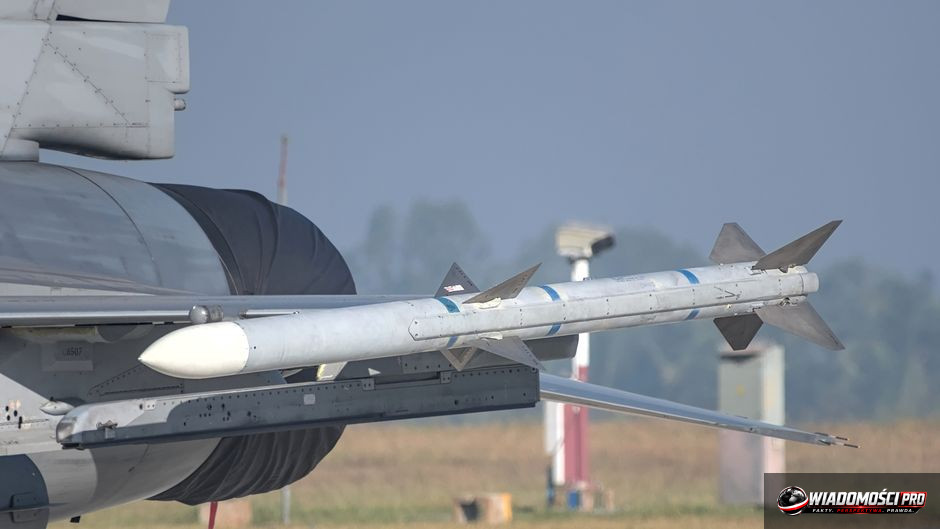
The 6.1 billion euro package will be entirely allocated to financing advanced air defense systems, including Patriot batteries, IRIS-T systems, and missiles for NASAMS launchers, which directly strengthens Ukraine's defensive potential. These funds will go to European defense companies to ensure the continuity of interceptor missile supplies during the autumn-winter period. The decision was made on August 24, 2026, exactly on the 35th anniversary of Ukraine's independence, which gives it a clear political dimension in the face of ongoing Russian aggression.
Spending architecture: Where will the money go?
Brussels has unlocked a massive tranche that will not feed into the Ukrainian state budget but will be transferred directly to the accounts of arms manufacturers. The European Commission manages this fund, setting priorities based on an analysis of ammunition consumption on the front line. The money is intended to fill the gap in interceptor missile supply chains, the shortages of which have become a critical threat to Kyiv. Every euro from this pool is assigned to a specific production contract.
The main beneficiaries of the decision are companies that already have active assembly lines compatible with the Ukrainian arsenal. At the forefront is MBDA, a European giant specializing in missile technology. This company is receiving a signal to maximize its production capacity to meet the demands of the Ukrainian command. The choice of contractors is not accidental. It is based on the ability to deliver finished products in a relatively short time without the need to build new factories from scratch.
Air defense in the reality of 2026 is a system of connected vessels. Kyiv needs not only launchers but, above all, thousands of missiles of various classes. Funds will flow into the production of ammunition for Patriot systems, which serve as the backbone of air defense for large urban centers. Another priority is investment in IRIS-T systems, manufactured by Germany's Diehl Defence. This solution is proving effective in intercepting Russian drones and cruise missiles that strike the country's critical infrastructure daily.
Table: Allocation of funds and support structure
| Area of support | Indicative share of the package | Main contractors / Suppliers |
| :--- | :--- | :--- |
| Patriot Systems (PAC-3) | 2.8 billion euros | Raytheon, Lockheed Martin |
| IRIS-T SLM Systems | 1.5 billion euros | Diehl Defence, Airbus |
| AMRAAM / NASAMS Missiles | 1.2 billion euros | Kongsberg, Raytheon |
| Loitering ammunition and parts | 0.6 billion euros | MBDA, Rheinmetall |
The above calculations are based on logistical assumptions regarding the unit costs of state-of-the-art anti-aircraft batteries and the technical specifications of ammunition that must be constantly replenished in front-line warehouses. Kyiv is not buying equipment in a vacuum. It is buying the ability to survive the winter, during which the consumption of interceptor missiles increases exponentially. Every piece of this puzzle must be delivered according to the schedule agreed upon during the summit in Brussels.
Europe's industrial engine: The role of key players
Six billion euros is a massive injection of capital for European factories that have operated in limited production mode for years. Currently, the situation has changed drastically. Rheinmetall, expanding its plants in Germany and Hungary, is responsible for servicing and supplying components for artillery and short-range air defense systems. This company has become a pillar of European security, ensuring that equipment delivered to Ukraine remains operational despite intensive use.
MBDA is focusing on the production of Meteor missiles and Brimstone systems, which are increasingly being integrated with Ukrainian air platforms. The decision of August 24, 2026, gives these companies a guarantee of long-term demand. Without a clear financial declaration from EU structures, the companies' boards would not have taken the risk of investing in new assembly lines. Now they have certainty that every missile produced will find a buyer, which eliminates business risk.
However, the bottleneck remains qualified personnel and access to strategic raw materials. Even with billions of euros at their disposal, European producers are facing a deficit of electronic components and specialized metal alloys. The contracting process is not a one-time transfer but a complex operation spread over stages. The first payments will reach contractors within the next month, which will allow for the initiation of purchasing processes for second- and third-tier subcontractors.
Logistical challenge: From Brussels to the front line
Kyiv is receiving political confirmation of support, but the physical delivery of equipment is a process that requires time. In wartime conditions, every hour counts, while the European defense bureaucracy operates on a scale of months. This discrepancy causes frustration for the Ukrainian command. Volodymyr Zelensky has repeatedly emphasized that announcements are important, but only the presence of missiles in launchers prevents the Russian air force from achieving total dominance over the Ukrainian sky.
The problem remains the integration of different systems. The Ukrainian army operates on a mix of post-Soviet and Western equipment. The 6.1 billion euro package aims to unify the air shield based on NATO standards. Every new Patriot or IRIS-T battery must be plugged into a battle management system. This requires training crews and securing logistics for spare parts. The construction of this technical infrastructure takes place under constant shelling, which makes the process even more complicated.
Skeptics point out that the European industry cannot keep up with the rate of ammunition consumption. If Russian attacks maintain their current momentum, even billions of euros spent on new orders may not be enough to satisfy defense needs. Brussels, however, is counting on centralized procurement to achieve economies of scale. This will lower the unit cost of missiles and accelerate the production process.
Financing: The mechanism of frozen assets
The European Commission is increasingly bold in reaching for profits from frozen Russian assets. The transfer of 1.4 billion euros from this source, announced on August 5, 2026, is a signal that Europe is changing its philosophy of financing war efforts. Instead of burdening only the taxpayers of member states, Brussels is using capital generated by the aggressor. This solution allows for an increase in the pool of funds without the need to amend national budgets.
The sum of 6.1 billion euros complements earlier tranches. Recall that in June 2026, Ursula von der Leyen announced a 3.2 billion euro package, which has already been directed for implementation. Combining these amounts, we get a picture of systemic support intended to ensure Ukraine's stability over the coming quarters. Each of these amounts is subject to rigorous audits. Brussels requires full transparency in the expenditure of funds, which, in the face of wartime reality, is sometimes perceived by the Ukrainian side as an additional administrative burden.
The political dimension of this decision cannot be overstated. Announcing the package on Ukraine's Independence Day is a clear signal to the Kremlin: the European Union is not withdrawing from long-term support. Despite internal frictions within the Community, decisions regarding defense are made with strategic continuity.
Front-line reality: Why air defense?
Air defense has become a priority because the Russian strategy is currently based on destroying energy and logistics facilities. Lack of air protection means no ability to conduct offensive operations, but above all, it means civilian deaths and economic paralysis. Ukrainian commanders point out that Russian "Geran" type drones are cheap to produce and are used en masse to deplete Ukrainian interceptor missile resources.
If Kyiv uses expensive Patriot-type missiles to combat cheap drones, it will quickly face the specter of empty warehouses. That is why diversifying systems is so important. Funds from the EU package will allow for the purchase of ammunition for NASAMS systems, which are more cost-effective in fighting smaller aerial targets. This optimization approach allows for more rational resource management.
Investment in modern systems is also an investment in the security of the European neighborhood. If the Ukrainian sky is sealed, the wave of refugees caused by the lack of electricity and heat in cities will be minimized. This expenditure is preventive for all of Europe, securing the continent against further destabilization caused by the effects of the war.
Economic effects for producers
Defense companies in Europe are in the phase of their greatest expansion since the end of the Cold War. The 6.1 billion euro package is becoming fuel for a sector that was struggling with a lack of orders just three years ago. Rheinmetall, with plants in various EU countries, is becoming a European leader in the production of artillery components. For local labor markets in Germany, France, or Poland, this means thousands of new jobs in the high-tech sector.
The defense industry is a specific market. Here, component certification takes months, and quality requirements are extremely high. You cannot simply increase production by adding another shift at a factory. Certified raw materials are needed, which are in short supply in the current market situation. Brussels bureaucracies are trying to facilitate this process through joint procurement, which is intended to prevent member states from bidding against each other for the same resources.
The 6.1 billion euro package is a test for this new policy. If the system works, Ukraine will receive equipment faster. If it proves inefficient, the money will remain in budgets, and there will be a shortage of missiles on the front line. The success of this plan depends on coordination between Brussels and the boards of individual defense companies.
Skepticism and operational risks
Is 6.1 billion euros enough? President Zelensky, in his speech on August 24, 2026, clearly stated that Ukraine needs much more to turn the tide of the war. This amount, while impressive, on the scale of war needs is only enough to maintain the current defense. The biggest risk remains corruption and inefficiency within the Ukrainian equipment distribution system.
Brussels has introduced a number of control mechanisms to monitor whether missiles have reached where they should. This creates tensions between Kyiv and Brussels. Ukrainians demand flexibility and speed, while EU officials demand guarantees that the money will not be misappropriated. Additionally, the European defense industry is still in a transition phase. Companies like MBDA must reconcile orders for their home armies with the needs of Ukraine. This creates conflicts of interest.
Member state governments do not want to empty their own arsenals to send weapons to the east. The 6.1 billion euro package is intended to solve this problem by financing "new production" rather than selling off stocks from national warehouses. This is a long-term strategy intended to transform European industry into a stable base for a fighting Ukraine.
What does this mean for you?
The European Commission's decision is a signal that Europe is moving to a war economy, at least in the defense sector. As a reader, you should look at this not through the prism of the amount itself, but through the prism of whether European factories will actually increase production. Money is the easiest part of the puzzle. The real challenge is turning 6.1 billion euros into concrete, ready-to-use missiles that will land in Ukrainian launchers before winter arrives.
Questions and answers
What exactly will the 6.1 billion euros be spent on?
The funds will be allocated mainly to air defense systems (such as Patriot, IRIS-T) and missiles necessary to protect Ukrainian cities and critical infrastructure from Russian attacks.
Is this the only financial support for Ukraine in 2026?
No, this is another stage of aid. Earlier, on August 5, 2026, 1.4 billion euros in profits from frozen Russian assets were transferred, and in June 2026, a package worth 3.2 billion euros was launched.
Why was the decision made on August 24?
This date coincided with Ukraine's Independence Day, which has a symbolic dimension and is a direct response to President Zelensky's appeals for increased support in the face of intensifying hostilities.
Which companies will benefit from this package?
The main beneficiaries will be European defense companies, such as Rheinmetall, MBDA, and Diehl Defence, which are responsible for the production of anti-aircraft systems and missile ammunition.
What are the main risks to the success of this plan?
The main risk is the limited pace of production in European plants, a deficit of skilled workers, and complex supply chains for electronic components, which may delay equipment deliveries to the front.
Will this money go directly to the government in Kyiv?
No. These funds are dedicated to defense purposes and will be settled directly with military equipment manufacturers, which is intended to ensure their effective expenditure according to their intended purpose.
Does this package end the support processes?
No, it is only another element of a long-term support strategy that will be continued depending on the development of the situation on the front and the availability of European Union budget funds.
Technological and staffing challenges
In addition to the issue of financing itself, a key challenge remains the adaptation of Ukrainian personnel to operate increasingly modern equipment. The Patriot system requires long-term training, which takes place at bases in Europe and the United States. The 6.1 billion euro package also partially covers the costs of logistics for this training and the servicing of systems already in use. Without properly trained operators, even the most advanced technology becomes useless in the face of Russian tactics of saturating the airspace.
The issue of spare parts is often overlooked in public debate, yet it is the make-or-break factor for a defense system. In the case of IRIS-T systems, the need to replace worn-out elements after every few hundred hours of operation is a technical requirement. The manufacturer, Diehl Defence, had to significantly increase its warehouse resources near the border with Ukraine to ensure supply continuity. These operational activities are directly financed from EU funds, which shows that 6.1 billion euros is not just the cost of purchase, but an entire package for maintaining combat capability.
In parallel, the development of FPV drones and loitering ammunition forces missile manufacturers to quickly change the software of targeting systems. MBDA is working on updates that allow air defense systems to distinguish small aerial targets from birds or electronic interference faster. It is an arms race where every software update can save the lives of residents of Ukrainian cities. EU funding also covers these research and development works, which are necessary for the survival of systems in conditions of intense electronic warfare conducted by Russia.
Strategic importance for the EU
From Brussels' perspective, supporting Ukraine is also a testing ground for European defense policy. Joint procurement, which was previously only a theoretical assumption, is now becoming a real tool of foreign policy. If the financing model from August 24, 2026, proves effective, it could become a template for future Community actions in other areas of armaments, such as the production of 155 mm artillery ammunition or the construction of European unmanned systems.
The skepticism of some member states regarding the pace of spending funds is understandable. In countries like Hungary or Slovakia, politicians regularly raise the issue of the costs of support for national budgets. However, the European Commission's argument remains unchanged: the cost of a potential Ukrainian defeat would be incomparably higher for Europe than current expenditures on armaments. This narrative currently dominates in the European Parliament, which allows for maintaining consensus despite internal political differences.
Finally, 6.1 billion euros is not just numbers in tables. It is concrete Patriot launchers, IRIS-T missiles, and NASAMS systems that will reach Ukrainian units in the coming months. For Kyiv, it is a signal that Europe understands the gravity of the situation and is ready for a long-term effort, even if it involves the need to restructure entire branches of heavy industry. The question of the effectiveness of this support, however, remains open and will be verified with every subsequent wave of attacks on Ukrainian infrastructure. The coming months will show whether the European industrial machine can handle this challenge at the imposed pace.
Sources
- The Union transfers further billions to Ukraine for defense. The decision is made on an important day - Business Insider Polska
- "We are increasing aid": EU approves 6.1 billion euros for Ukraine's defense - Euronews.com
- 6.1 billion euros for Ukraine. EU will finance air defense systems and missiles - Bankier.pl
- EC approved another 6.1 billion euros for armaments for Ukraine - Kresy.pl
- European Commission approved 6.1 billion euros for Ukraine - Do Rzeczy
- Volodymyr Zelensky appeals to the world. "Give Ukraine everything that will stop this war" - Polskie Radio 24
- EC will transfer 1.4 billion euros of profits from frozen Russian assets to Ukraine - OKO.press
- Von der Leyen in Gdańsk: 3.2 billion euros today, another 6 billion soon for Ukraine - Tygodnik Solidarność
Article prepared by the Wiadomości PRO editorial team with the support of artificial intelligence. Facts come from the sources listed above.


Komentarze (0)
Ładowanie komentarzy...