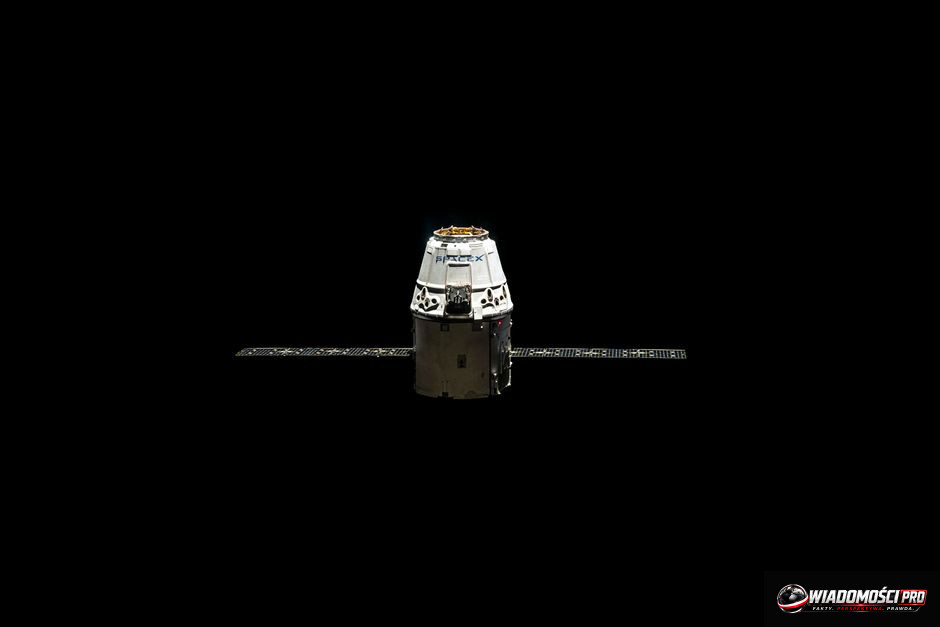
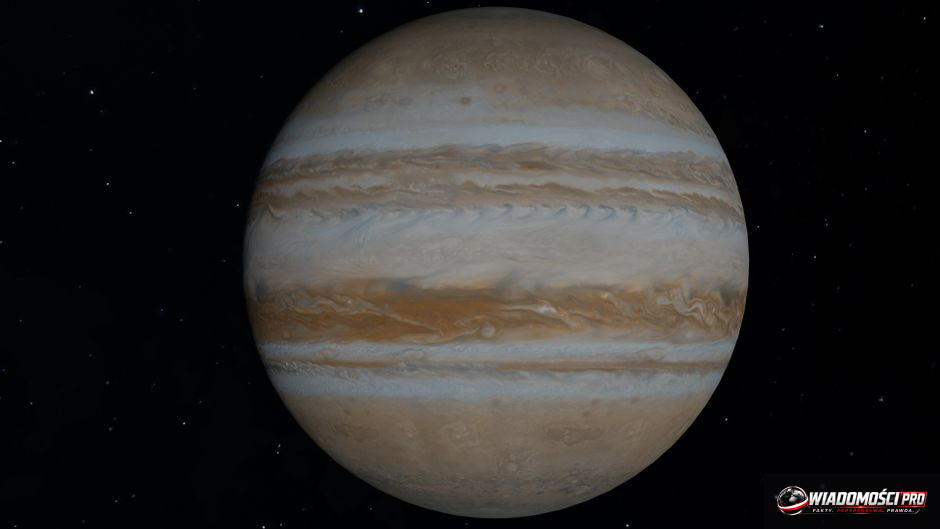
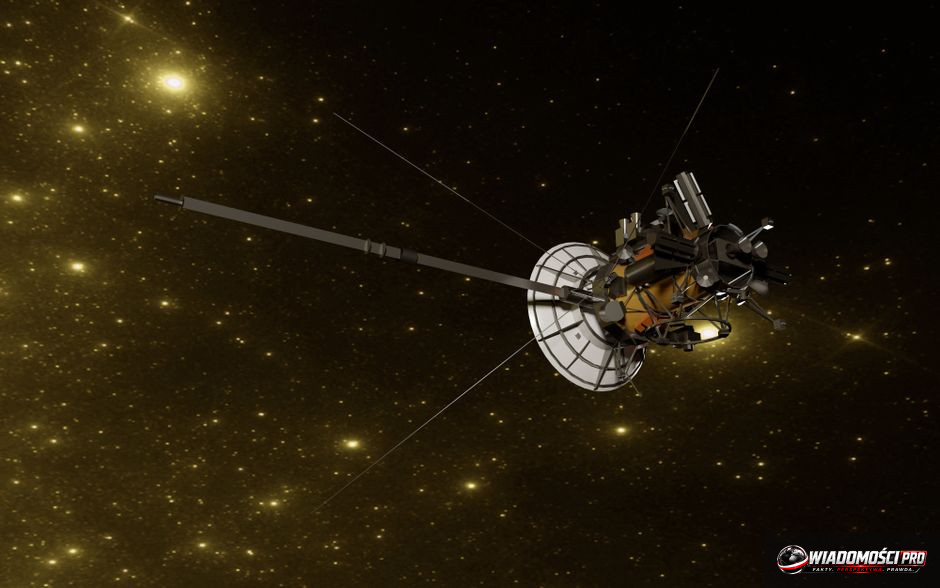
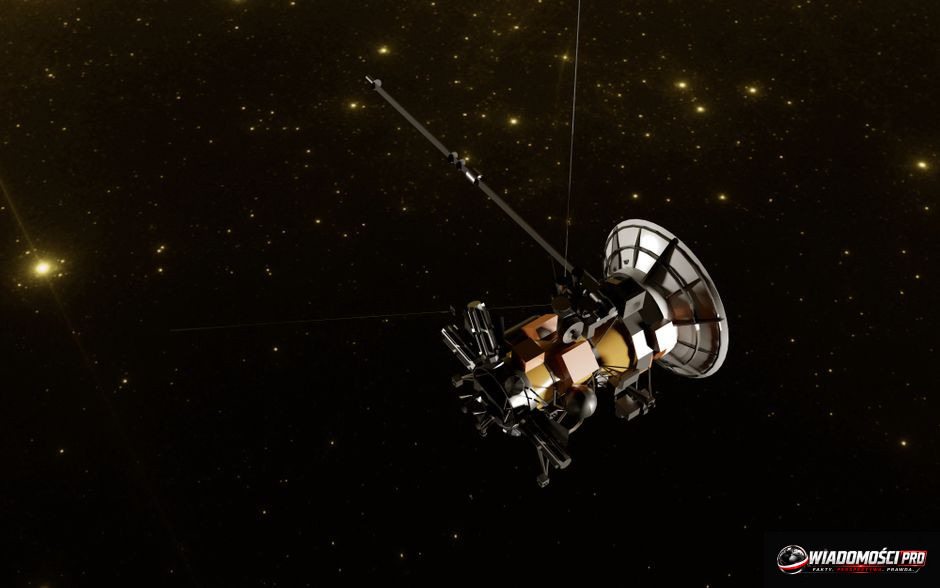
The Europa Clipper mission costs $5 billion and aims to investigate whether Jupiter's icy moon, Europa, possesses conditions favorable for the emergence of life. The probe was designed as the most advanced astrobiological tool in the agency's history, capable of chemical analysis of the ocean hidden beneath a kilometer-thick layer of ice. The mission's launch, which took place in October 2024 using a SpaceX Falcon Heavy rocket, marks a new era in the exploration of the outer Solar System.
The technology used in the project is a response to the extreme environmental challenges present in Jupiter's vicinity. The planet generates a magnetic field so powerful that charged particles trapped within it create a radiation zone lethal to electronics. To survive in these conditions, NASA engineers enclosed key computers and control systems in a special "vault" made of titanium and aluminum. The walls of this armor are nearly one centimeter thick and weigh 150 kilograms, acting as a physical barrier against radiation that would otherwise destroy the probe's operational memory within just a few weeks of orbiting Jupiter.
The Europa Clipper probe is not merely a device for visual observation. It is a flying laboratory equipped with nine scientific instruments, each of which serves a distinct function in the process of verifying the moon's habitability. The Europa Imaging System (EIS) will provide high-resolution maps, recording surface details with an accuracy of several dozen centimeters. Meanwhile, the Europa Thermal Emission Imaging System (E-THEMIS) will be used to identify warm areas on the surface, which could suggest the existence of recent water outflows or cracks in the icy crust.
The most important role in studying the moon's interior is played by the Radar for Europa Assessment and Sounding (REASON). This instrument will send radio waves deep into the ice, analyzing reflections from the boundaries between layers of materials with different densities. Scientists hope that it will allow for the precise determination of the ice shell's thickness and the detection of pockets of liquid water that may be located relatively close to the surface. This data is crucial, as it is the contact between water and the rocky seafloor that provides the minerals necessary for biological processes.
Another link in the apparatus is the Mapping Imaging Spectrometer for Europa (MISE), designed to map the distribution of ice, salts, organic compounds, and amorphous substances on the surface. Understanding the chemical composition of the ice will help determine whether material originating from the deep ocean is being transported to the exterior, which would be direct evidence of matter exchange between the interior and the surface. The MASPEX (Mass Spectrometer for Planetary Exploration) instrument will, in turn, analyze gases in Europa's thin atmosphere, studying the chemical composition of molecules escaping from the surface as a result of meteoroid bombardment or geological processes.
For researchers, the question of environmental stability remains key. Europa does not have its own magnetic field, so it is fully exposed to the influence of Jupiter's magnetosphere. The Plasma Instrument for Magnetic Sounding (PIMS) and the Magnetometer (ECM) will allow for the analysis of induced magnetic fields. The results of these measurements will confirm the existence of a saltwater ocean, which, as an electrical conductor, reacts to Jupiter's variable magnetic field. Without hard evidence for the existence of a global, liquid ocean, any hypotheses about life on Europa will remain in the realm of theoretical speculation.
The journey to the destination is a complex ballistic maneuver. The probe did not fly directly toward Jupiter, as the mass of the instruments and fuel required the use of gravity assists. In February 2025, the spacecraft will perform a flyby near Mars, and in December 2026, it will return to the vicinity of Earth to gain the additional speed necessary to reach the Jovian system in 2030. Each of these maneuvers carries risks, and the flight control team at the Jet Propulsion Laboratory must maintain full system readiness throughout all the years of the interplanetary flight.
NASA's exploration of Europa is also an expression of a shift in strategy in space research. For decades, the main goal was Mars, but the discovery of active processes in the Jovian system has revised priorities. If Europa Clipper confirms the presence of ingredients necessary for life, it will mean that in the Solar System alone, there are at least two worlds—besides Earth—with biological potential. This is a perspective that changes the foundations of astrobiology, shifting the focus of the search from "dead" rocky planets to "living" icy moons.
From a technical point of view, this mission serves as a testing ground for future landers. The probe will not land on the surface because the radiation environment is too harsh for long-term mechanical work on the surface. Instead, Clipper will perform 49 close flybys of Europa, approaching as close as 25 kilometers from the surface. This will allow for the collection of high-quality data while limiting exposure time to the most destructive radiation.
Critics of the project, looking at the high operating costs, point to the risks associated with technical failures. The complexity of the probe is so great that any glitch in the software or the mechanism for deploying the solar panels, which have the surface area of a basketball court, could jeopardize the success of the entire endeavor. NASA has accustomed the public to successes, but with missions at such a great distance, the margin for error in communication and control is drastically limited. The radio signal delay between Earth and Jupiter is between 33 and 53 minutes, which precludes real-time control. The probe must rely on autonomous systems.
In an international context, NASA has clearly set a pace that other agencies are unable to maintain. Although the European Space Agency (ESA) is carrying out its own JUICE mission, studying Jupiter's icy moons, Europa Clipper is a tool dedicated exclusively to one goal. Focusing resources on a single object allows for deeper knowledge than in the case of "fly-by" missions conducted alongside other tasks. The United States, by funding this project, is betting on a qualitative advantage in scientific data that will be analyzed for decades.
For the scientific community, 2030 will be a breakthrough moment. Data flowing from the probe will allow for the creation of chemical maps that we can only guess at today. If the presence of organic compounds in water vapor plumes ejected from the moon's surface is confirmed, the probe will be able to analyze them in flight by entering the particle clouds. This is technology that was previously available only in theoretical design assumptions, and now it is becoming a reality.
One cannot ignore the fact that this project is under great political pressure. In the face of tight federal budgets, NASA must demonstrate that the funds spent translate into real progress in science. Each flyby of Europa will be monitored by global media, and every photo sent from hundreds of millions of kilometers away will become a subject of public discussion. Is humanity ready for information about potential life beyond Earth? This question goes beyond the framework of engineering and enters the philosophical sphere, but the Europa Clipper mission provides the tools to seek the answer in an empirical way.
The mission schedule is tight and requires operational discipline. After entering Jupiter's orbit in 2030, the probe will begin a sequence of flybys that will last about four years. During this time, instruments such as the SUDA (Surface Dust Analyzer) dust detector will collect microscopic particles ejected from the surface by meteorite impacts. Each such particle is a time capsule, carrying information about the composition of the icy crust. This data will be transmitted to Earth using a telecommunications system based on a high-gain antenna, which will allow for the transmission of a large amount of information despite the vast distance.
It is worth noting that the success of this mission does not depend on a single discovery. It is a series of small steps: measuring ice thickness, mapping temperature, analyzing atmospheric chemistry, and verifying the magnetic field. Only the synthesis of all this data will allow for conclusions that are not speculative in nature. NASA has built a system in which instrument redundancy allows for cross-verification of results. If one instrument indicates an anomaly, another will be able to confirm or exclude it, which is the standard in high-risk research.
For the average reader, this mission means that science is entering a phase of detailed inventorying of the Solar System. We are no longer just looking for water; we are looking for stable chemical environments. If Europa turns out to be a habitable world, the natural step in the coming decades will be to send a lander that could collect samples directly from the surface or from cracks in the ice. Europa Clipper is an essential prelude to such an expedition – without terrain mapping and radiation risk assessment, landing would be a suicide mission for any device.
Understanding what is happening under Europa's ice is key to understanding the processes of life's evolution in general. If life arose in the dark, cold oceans of Jupiter's moon, it means that it does not need direct starlight, but only geothermal energy. Such a conclusion would radically increase the number of potentially inhabited worlds in our galaxy, as planets and moons with oceans under ice may be common in the cosmos.
All these actions lead to one conclusion: Europa Clipper is not just expensive equipment. It is an investment in knowledge that will last for decades. Regardless of whether the probe detects life or only confirms the presence of conditions to sustain it, the result of the mission will be a historical benchmark. The Americans have staked their ability to carry out the most complex engineering projects, and now they are waiting for a result that will either confirm our place in the universe or redefine the boundaries of our knowledge of biology.
Questions and answers
How much did the Europa Clipper mission cost exactly?
The mission budget is $5 billion, which includes design, construction of the probe, development of research instruments, and operational costs of the launch and flight.
What exactly is the probe looking for on Europa?
The probe is searching for conditions favorable to life by analyzing the chemical composition of the ocean under the ice, mapping the surface for geological activity, and studying the moon's interaction with Jupiter's magnetic field.
What rocket did the probe launch on?
Europa Clipper was launched into space aboard a Falcon Heavy rocket, manufactured by SpaceX.
What is the main threat to the probe's electronics?
The greatest threat is the extreme radiation near Jupiter, which can destroy electronic components, which is why the probe has been equipped with special titanium-aluminum armor.
When will the probe reach its destination?
The Europa Clipper probe is expected to reach the Jovian system in 2030, after performing a series of gravity assist maneuvers near Mars and Earth.
Will the probe land on the surface of Europa?
No, the mission does not include a landing. The probe will conduct research during 49 close flybys over the moon's surface to minimize exposure time to radiation.
Sources
- Launch of the Europa Clipper mission to Europa - AstroNET – Polish Astronomical Portal
- Europa Clipper probe to search for life on Europa - Urania - Polish Astronomical Portal
- Europa Clipper mission launch [TRANSMISSION]. Americans to outpace Europeans in the search for life on Europa - Wyborcza.pl
- Beginning of the Europa Clipper mission - Kosmonauta.net
- Europa Clipper probe to search for life on Jupiter's moon, Europa - wszystkoconajwazniejsze.pl
- Searching for life in the Solar System beyond Earth. NASA sends a mission - Geekweek Interia
- Flight to Jupiter for 5 billion dollars. Europa Clipper launch aboard Falcon Heavy - Benchmark.pl
- NASA sends a probe to Europa. Europa Clipper mission has launched - WP Tech
Article prepared by the Wiadomości PRO editorial team with the support of artificial intelligence. Facts come from the sources listed above.
Komentarze (0)
Ładowanie komentarzy...