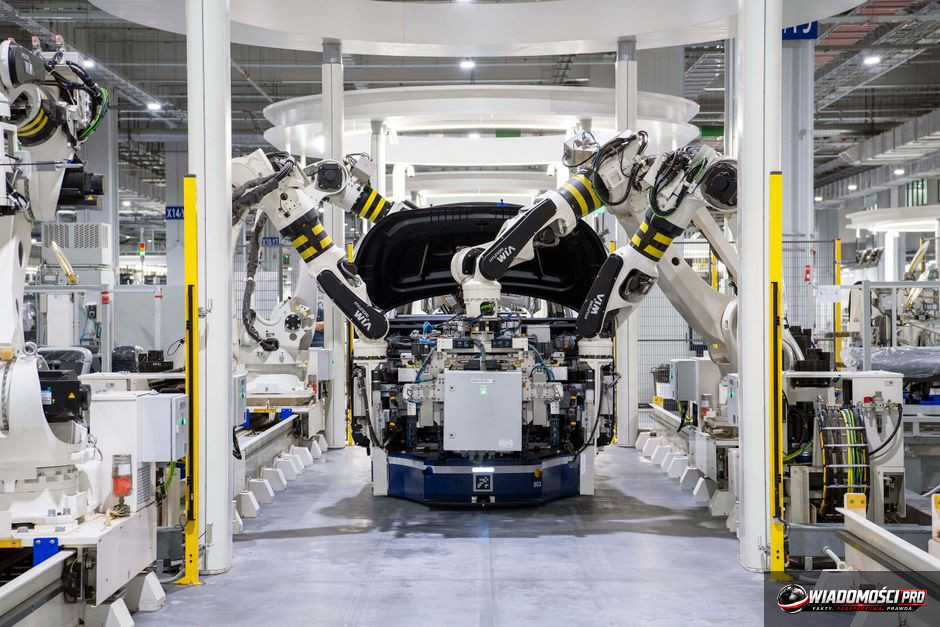
Ford's collaboration with Geely, which involves the production of a new SUV on the GEA platform in Valencia starting in 2029, aims to significantly reduce costs and accelerate electrification, effectively securing the future of the Spanish plant. This is the only path to maintaining the operational continuity of the Almusafes factory in the face of declining profitability of independently designed models. This decision marks a departure from the company's previous technological policy in favor of integration with architecture provided by the Chinese partner.
Facts: Production, schedule, and technology
On July 25, 2026, Ford and Geely officially confirmed the establishment of a joint venture. The subject of the agreement is the implementation of the GEA (Geely Electric Architecture) platform in Ford's European plants. The choice fell on the Valencia factory, which will become the main production hub for the new electric SUV after 2029. The GEA architecture was designed by Geely as a highly modular solution, allowing for the implementation of various types of powertrains and battery configurations while maintaining the same chassis mounting points.
For the Valencia factory, this means a radical change in tooling. The current lines, adapted for the assembly of internal combustion and hybrid cars, require dismantling and replacement with new robotic systems that can handle the precise positioning of battery cells within the GEA architecture. From a logistics perspective, Ford is adopting ready-made process standards developed by Geely, which is expected to shorten technological downtime. The schedule assumes that the first units will roll off the assembly line in 2029. By then, the Almusafes plant will undergo a modernization process that will allow for the retention of jobs in the production sector.
The GEA platform is characterized by extensive onboard electronics and the integration of energy management systems, which determine range efficiency in electric cars. Ford gains access to ready-made infrastructure, eliminating the need to incur research and development costs for its own platform dedicated to mid-sized SUVs. The value of this partnership is expressed in the savings resulting from economies of scale, as components produced by Geely are used in millions of cars worldwide.
Analysis: Why Geely and what are the business risks
The decision to cooperate closely with the Chinese giant stems from mathematical necessity. The costs of designing an electric platform from scratch that would meet strict EU standards and the expectations of European customers have become unaffordable for Ford within its own budget. Analysts note that Ford's European division has been struggling for years with high labor costs and pressure from Asian manufacturers, who offer electric cars at lower prices with higher margins.
Using Geely's technology is a way for Ford to avoid marginalization. The risk faced by the board concerns, above all, technological sovereignty. Switching to an external platform means that product development in terms of powertrains, battery management, and control electronics is largely transferred to Geely's research units. In this arrangement, Ford focuses on design, interior finishing, and adapting the final product to the tastes of the European consumer. This is a transition from the role of an engineer-creator to that of an engineer-integrator.
A significant risk factor is the geopolitical situation. The European Union is introducing increasingly strict regulations regarding the origin of components and protecting the market from Chinese expansion. The joint venture must be transparent and compliant with legal requirements regarding local production to avoid potential countervailing duties that could negate the profit from lower production costs. Ford must therefore balance cost efficiency with the requirements of EU industrial policy.
Perspective: What this means for the customer
For a potential buyer of a new Ford electric SUV, the key argument will be price and the availability of modern technological solutions. The GEA platform offers advanced driver-assistance systems and high energy efficiency, which directly translates into the vehicle's real-world range. If Ford manages to maintain competitive pricing, the model produced in Valencia could become an attractive alternative to offerings from brands like MG, BYD, or even the Tesla Model Y.
Customers accustomed to the brand's American heritage may, however, experience cognitive dissonance. For decades, Ford has built its identity around specific mechanical solutions and a specific "feel" of the car on the road. The use of Chinese architecture forces Ford's engineers to extremely precisely tune the steering and suspension so that the car retains the brand's characteristic driving dynamics. Whether they succeed in blurring the differences resulting from a different base construction will be the ultimate test for the company's image.
From a service point of view, sharing a platform with Geely could bring benefits. Spare parts based on the mass production of the Chinese partner could be cheaper and more easily available, which will lower the vehicle's operating costs in the long term. This is an important argument for fleets and individual customers who fear expensive repairs in electric cars after the warranty period.
Transformation of the Almusafes plant
The Valencia plant is no longer just a car factory. It is a place where the future of Ford in Europe is being decided. Modernizing production lines for the GEA platform is a multi-stage process. The first step is to adapt logistics infrastructure to receive components from China or from Geely's European suppliers. Next, it is necessary to train thousands of employees in operating new electrical systems, which differ from traditional internal combustion units.
Factory authorities are not providing official figures regarding investment outlays for modernization, but the scale of the undertaking suggests that it is one of the largest investments in the Spanish automotive sector this decade. From the perspective of the local labor market, maintaining the plant is a success that allows avoiding a wave of mass layoffs. From the perspective of Ford's global strategy, Valencia is becoming a testing ground for the "external technology in own body" business model.
It should be emphasized that while the current strategy assumes the use of the GEA platform, in the future, Ford may look for further synergies. If the model proves to be a market success, one can expect the implementation of the Geely platform in other segments as well, for example in commercial vehicles or urban crossovers. Everything depends on how quickly the Valencia plant reaches full operational efficiency after 2029.
Image and market challenges
For over a century, the Ford brand has been synonymous with its own innovations – from the Model T assembly line to the development of EcoBoost engines. The transition to Chinese technology is a challenge for loyal fans of the brand. Ford's marketing activities after 2029 will have to emphasize not the origin of the technology, but reliability, safety, and branded service. If consumers do not notice a difference in quality, the project will be considered a success. However, if the car is perceived as a "rebadged" Chinese product, sales may not reach the assumed volumes.
Competition in the European EV market is brutal. Tesla has managed to dominate the segment thanks to vertical integration, and manufacturers from China offer equipment that is only available as premium options in European brands. Ford, by joining forces with Geely, is trying to copy this model of efficiency, but must add its own brand recognition and dealer network. It is a race against time where the stake is maintaining the position of one of the leading car manufacturers in Europe.
Skeptics note that dependence on a platform supplier could limit Ford's flexibility in the event of changing market trends. If the market demands a different type of bodywork or new power solutions in five years, Ford will be dependent on Geely's development cycle. This limitation of decision-making freedom is the price for avoiding costs that cannot currently be borne independently without drastically raising car prices for end customers.
Summary of operational strategy
Ford's collaboration with Geely is not just about one SUV model. It is the foundation upon which the financial stability of the European division is to be based. The goals are clearly defined: reduction of unit costs, acceleration of time-to-market, and maintaining production in Valencia. Data regarding margins per unit have not been disclosed, which is standard for a joint venture, but analysts predict that the operating margin has a chance to increase by several percentage points compared to Ford's current electric cars.
For Almusafes employees, the key is that the plant has gained a perspective for the next decade. Previously, a realistic scenario was the phasing out of production and the gradual reduction of operations. Now the factory has been given a second life. The question remains about production volume – will the plant work at full capacity, or will it be limited to one shift? The board has not yet provided detailed volume forecasts for 2029 and subsequent years.
All eyes are now on the team of engineers in Cologne and Valencia. They are tasked with the "Europeanization" of the product. They must ensure that IT systems are compatible with European digital services and that the driving characteristics correspond to European roads. If this succeeds, Ford will prove that a marriage with an Asian technology giant is a recipe for the survival of traditional brands in the new automotive reality.
Questions and answers
When exactly will the production of the new SUV in Valencia start?
Production of the model based on the Geely GEA platform at the Valencia plant is scheduled to begin in 2029.
Why did Ford decide to cooperate with Geely?
The cooperation is dictated by the need to drastically reduce research and development costs and accelerate the process of electrifying the offer, which would be difficult to achieve independently given Ford's current cost structure.
Will the GEA platform affect the final price of the vehicles?
Yes, using the ready-made GEA platform allows for significant optimization of production costs through economies of scale, which is intended to enable Ford to offer electric cars at prices more competitive with Asian brands.
What are the risks for Ford associated with this partnership?
The main risks include the loss of technological sovereignty, dependence on the supplier's development cycle, and potential image problems associated with moving the heart of the vehicle's construction to a Chinese partner.
Is production in Valencia safe after this implementation?
The implementation of the GEA platform gives the Valencia plant a new operational perspective and secures its place in the corporation's structures for the coming years, eliminating the specter of the facility's closure.
Are there other models planned on the GEA platform?
Currently, official information only concerns the new SUV. Ford has not provided data on a possible expansion of cooperation to other vehicle segments in European factories.
Will Ford still design cars independently?
Ford retains influence over the design, finishing, and final characteristics of the vehicles, but in terms of powertrain technology and platform architecture, it cedes the field to the partner, which constitutes a change in the company's business model.
What is the role of the Spanish plant in this project?
Valencia acts as a production hub, which, after the modernization of assembly lines, will become a center for assembling cars based on Chinese electric architecture, adapted to European requirements.
Will customers feel a change in the quality of the cars?
The goal of Ford's engineers is to adapt the GEA platform in a way that is imperceptible to the user, while maintaining the brand's quality standards. The success of this project will be verified after the first road tests in 2029.
Sources
Article prepared by the Wiadomości PRO editorial team with the support of artificial intelligence. Facts come from the sources listed above.


Komentarze (0)
Ładowanie komentarzy...