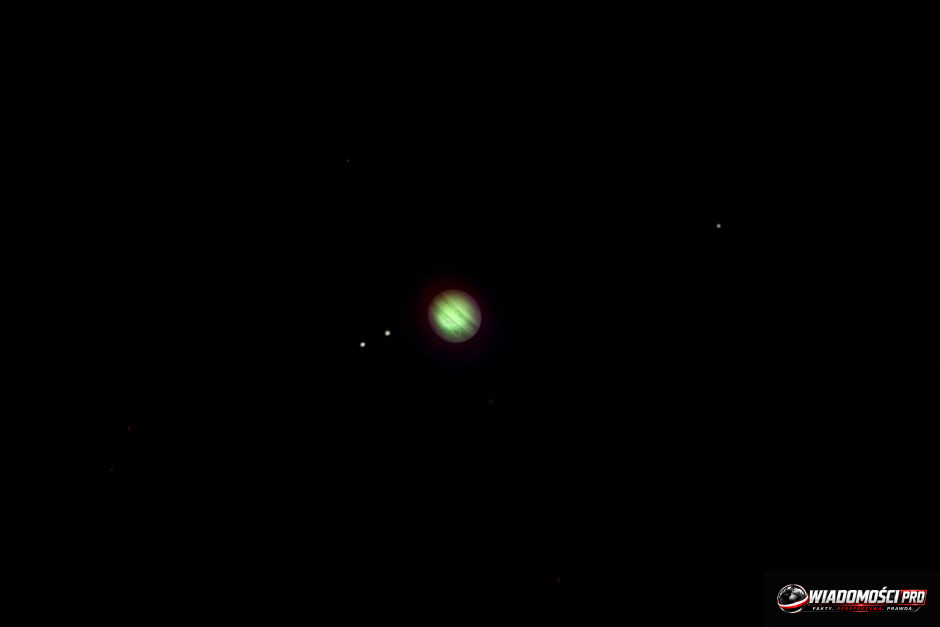
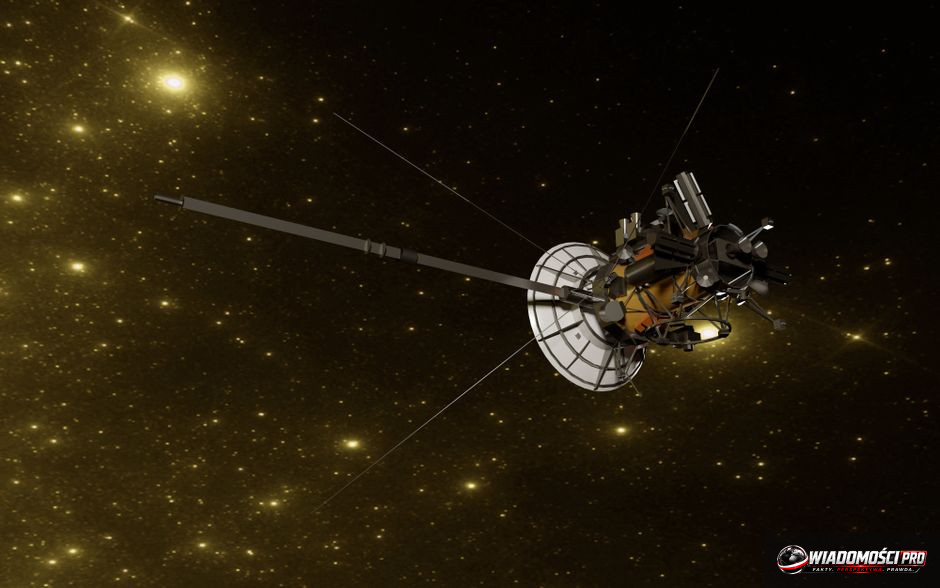
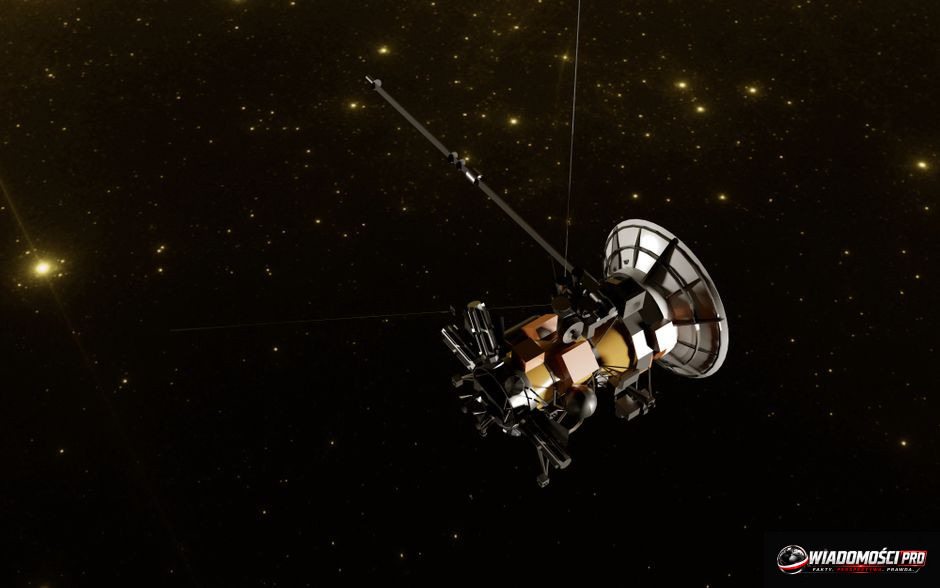
The construction and execution of the Europa Clipper mission cost $5 billion. The probe launched in October 2024, beginning its journey toward Jupiter's icy moon. The planned arrival date is 2030. The probe will not land on the surface but will conduct a series of flybys that will allow researchers to investigate whether an ocean capable of supporting life exists beneath the thick layer of ice.
Scientific goal: Why Europa?
For years, Europa has been at the center of astrobiologists' interest due to its unique geological structure. Beneath an ice shell 15 to 25 kilometers thick lies a saltwater ocean, which is estimated to contain twice as much liquid as all of Earth's oceans combined. The Europa Clipper mission is tasked with verifying whether this vast body of water possesses the chemical ingredients necessary for the formation and maintenance of biological processes.
Scientists point to the tidal phenomenon, which is crucial for the existence of life in this region of the Solar System. Jupiter's gravity and interactions with neighboring moons, such as Io and Ganymede, cause Europa to stretch and compress. This friction generates heat, which keeps the ocean in a liquid state even at such a great distance from the Sun. Clipper is equipped with a suite of nine scientific instruments, including spectrometers, a magnetometer, and ice-penetrating radars. With these, researchers will attempt to determine the thickness of the icy shell and the salinity of the reservoir hidden beneath it.
The presence of water is merely the foundation of the investigation. For life processes to occur, chemical elements such as carbon, hydrogen, nitrogen, oxygen, phosphorus, and sulfur are also required. The probe is set to analyze the chemical composition of particles ejected from the moon's surface into space. If the research confirms the presence of complex organic compounds, Europa will become a prime candidate in the search for extraterrestrial life.
Failure in this endeavor would mean the loss of years of work by hundreds of engineers, but even a lack of detected biosignatures will provide invaluable geological data. Understanding how icy worlds form and evolve will allow for better modeling of processes in other planetary systems. The probe will transmit information about surface topography, which will help in planning future, potentially landing missions.
Finance and logistics: $5 billion in space
The realization of a project of such large scale required the commitment of enormous financial resources. The $5 billion budget covers not only the construction of the probe itself but also operational costs, salaries for the research team, and the maintenance of ground infrastructure. NASA made the decision to fund the program, recognizing it as a priority within its plans for deep space exploration.
Using SpaceX's Falcon Heavy rocket was essential to launch the heavy probe onto the correct trajectory. This vehicle is characterized by high payload capacity, which allowed for the launch of a device with a launch mass exceeding 6 tons. Logistical costs included the precise preparation of launch sites and cooperation with the private sector, which has become a new standard in American space policy.
The funds spent were primarily allocated to advanced electronics and shielding systems. The probe must survive in conditions that are lethal to most Earth-based devices. Every element of the construction was tested for resistance to radiation, low temperatures, and launch vibrations. The investment in such expensive safeguards stems from the fact that there will be no possibility of performing any service repairs in the vicinity of Jupiter.
Managing the budget in such a long-term project required accounting for inflation and potential technical delays. NASA had to balance scientific ambitions with economic realities, which repeatedly led to the optimization of production processes. Ultimately, this amount reflects the complexity of the mission, which is intended to provide answers to humanity's most fundamental questions.
Travel schedule: When will we reach Jupiter?
The probe's journey to its destination is precisely calculated in time and space. The launch in October 2024 began a process that will take a total of about six years. Due to the vast distance from Earth to Jupiter, engineers had to use a strategy of gravity-assist maneuvers so that the probe could gain the speed necessary to reach the region of the gas giant.
In 2025, the probe will perform a flyby near Mars, and in 2026, it will approach Earth, using the gravity of both planets as a cosmic slingshot. These maneuvers allow for fuel savings, as supplies are limited and must be sufficient for later course corrections and engine operation when entering Jupiter's orbit. Without this solution, the probe's launch mass would have to be significantly higher, which would have made the mission technically unfeasible or disproportionately more expensive.
The mission schedule is divided into phases. After reaching the Jovian system in 2030, a period of braking and positioning the probe into orbit around the gas giant will begin. The probe will not enter orbit around Europa itself but will perform flybys in its vicinity. Each such approach is an opportunity to collect data while avoiding the strongest radiation directly at the moon's surface.
After 2030, the probe will begin a multi-year measurement campaign. The plan provides for nearly 50 flybys over Europa. Each of them will be short, which requires extreme precision in controlling onboard instruments. Data will be transmitted to Earth with a delay resulting from the distance, meaning scientists will work on information that reaches them in "batches" throughout the duration of the mission.
The race to discover life: USA vs. Europe
The American agency NASA has long competed for primacy in Solar System research. The Europa Clipper mission is a clear signal that the United States wants to maintain its position as a leader in the search for biological traces. This rivalry has not only a scientific dimension but also a prestigious one. Obtaining evidence of life beyond Earth would change the balance of power in global science and space policy.
The European Space Agency (ESA) is also conducting its own programs to explore Jupiter's moons. The JUICE mission, carried out by the Europeans, focuses on studying Jupiter and its icy moons, including Europa, Ganymede, and Callisto. Although both programs are complementary, clear differences in priorities can be seen. NASA has bet everything on one specific goal, while Europe has chosen a more balanced approach to studying the entire Jovian system.
The geopolitical context of these actions cannot be overstated. The nation that first confirms the existence of an ocean capable of supporting life will set the standards for future crewed missions and potential exploitation of space resources. Washington is investing in this project, knowing that success will ensure its long-term dominance in the discourse on life in space.
International cooperation, although it exists at the level of data exchange, does not exclude healthy competition. Each agency strives to provide more precise instruments and more modern technical solutions. For the scientific community, this is a beneficial situation because a dual look at the same objects increases the credibility of the results. However, it is NASA, through the scale of funding and the scope of the Clipper project, that is moving to the forefront of the race.
Technical challenges: Radiation and cold
Jupiter is not only the largest planet in our Solar System but also a source of enormous threats to electronic equipment. A probe operating in its vicinity must face an extremely strong radiation belt. Charged particles, accelerated by Jupiter's magnetic field, bombard everything within their reach.
Engineers decided to use a special housing for the probe's key systems. This is the so-called "vault," made of thick titanium and aluminum plates. Its task is to minimize the impact of radiation on the device's processors and memory. Without this protection, the electronics would fail within just a few weeks of being in Jupiter's orbit.
Beyond radiation, temperature remains a challenge. At the distance from the Sun where Jupiter is located, there is piercing cold. The probe's systems must be kept in an operational state using internal heat sources and thermal insulation. Energy management is key here. The probe's solar panels have a huge surface area, which is necessary to collect enough energy from sunlight that is so weak in this part of the system.
Tests in vacuum chambers, simulating conditions in space, lasted for years. Every cable, every sensor, and every printed circuit board had to pass rigorous quality control. NASA cannot afford a mistake, given the distance from Earth and the lack of possibility for intervention. These challenges make Europa Clipper one of the most advanced machines that has ever left our planet.
Researcher expectations and the future of the mission
Expectations for the mission are enormous, and the scientific community is eagerly awaiting the first signals from deep space. Scientists are primarily hoping that Clipper's instruments will allow them to understand whether the ocean beneath Europa's surface is chemically "active." The goal is to check whether the water is in contact with the rocky bottom, which would allow for the chemical reactions necessary for the emergence of life.
Some researchers point to the possibility of geysers ejecting water from the depths to the moon's surface. If the probe flies through such a cloud of vapor, the spectrometers will be able to detect traces of organic molecules without the need for landing. This would be a discovery on the scale of 20th-century breakthroughs in astronomy. On the other hand, there is a risk that the data will prove inconclusive, which would force years of further analysis and perhaps the need to send subsequent, more specialized probes.
The success of the mission could permanently change our perception of Earth's place in the universe. If it turns out that life can develop in such extreme conditions as those under Europa's ice, the probability of life existing in other planetary systems will increase significantly. This will change the definition of the "habitable zone," which is currently limited mainly to a planet's distance from its star.
For NASA, this mission is also a test of organizational capability. Completing the project on time and delivering data for analysis will confirm the agency's position as a leader in innovation. We must wait until 2030, when the probe reaches its destination and begins sending the first images and measurement results. That will be the moment when theoretical models are confronted with the reality of an icy world.
What this means for you
From the perspective of an ordinary observer, this mission is proof that humanity still possesses an investigative instinct that directs us toward the unknown. Although $5 billion seems like an astronomical amount, from the point of view of national budgets, it is a fraction of the expenditures allocated to other purposes. In return, we gain access to knowledge that pushes the boundaries of human imagination.
For science enthusiasts, Clipper is a promise of an answer to one of the most important questions: are we alone? Even if the probe does not find living organisms, the mere knowledge that conditions favorable for life exist under Europa's ice will be a success. We gain a new perspective on our own planet, which, in the face of discoveries in the Solar System, becomes just one of many fascinating places in space.
However, it is worth remembering the risks. Exploration of such distant regions always involves uncertainty. The probe may fail, instruments may stop working under the influence of radiation, and results may remain unclear. Yet, it is precisely this risk that drives technological progress. Thanks to the work on Clipper, engineers are developing solutions that will find application in energy, electronics, and material protection on Earth in the future. This mission is, therefore, an investment not only in space but in our own technological development.
Questions and answers
Why did NASA choose the Falcon Heavy rocket for this mission?
The Falcon Heavy rocket was chosen due to its ability to launch a heavy payload onto an interplanetary trajectory. It provides the right power-to-cost ratio, which is crucial given the probe's mass exceeding 6 tons.
Will Europa Clipper land on the moon's surface?
No, the mission does not involve landing. The probe is to conduct a series of 49 close flybys over Europa, scanning its surface using a suite of remote sensing instruments, which will allow for safer research in Jupiter's strong radiation field.
When will we know the first research results?
The first scientific data will begin to flow to Earth after the probe reaches the vicinity of Jupiter in 2030. The analysis of the collected information will be a multi-year process, requiring time to process signals sent by the probe from a vast distance.
What exactly will the probe study on Europa?
The main goal is to analyze the icy shell and the ocean hidden beneath it. The probe will study the chemical composition of the surface, searching for organic compounds, measure the thickness of the ice, and study the moon's geological and magnetic activity to assess its potential to support life.
Does the mission have competition from other space agencies?
Yes, the Europa Clipper mission is part of a global race to explore Jupiter's moons. The European Space Agency (ESA) is carrying out the JUICE program, which is also studying the Jovian system, creating natural rivalry and complementarity of scientific activities between the USA and Europe.
How will the probe deal with Jupiter's radiation?
The probe has been secured with a special "vault" made of thick titanium and aluminum plates, which protects sensitive electronics from the destructive impact of charged particles in Jupiter's radiation belts. Additionally, the flight trajectory has been planned to avoid spending the longest time in areas with the highest radiation intensity.
How long will the trip to Jupiter take?
The trip takes about six years. The mission launched in October 2024, and the probe will reach the Jupiter region in 2030, using gravity-assist maneuvers at Earth and Mars to gain the speed necessary to reach its destination.
Sources
- Start of the Europa Clipper mission to Europa - AstroNET – Polish Astronomical Portal
- Europa Clipper probe to search for life on Europa - Urania - Polish Astronomical Portal
- Start of the Europa Clipper mission [BROADCAST]. Americans to outpace Europeans in the search for life on Europa - Wyborcza.pl
- Beginning of the Europa Clipper mission - Kosmonauta.net
- Europa Clipper probe to search for life on Jupiter's moon, Europa - wszystkoconajwazniejsze.pl
- Searching for life in the Solar System beyond Earth. NASA sends a mission - Geekweek Interia
- Flight to Jupiter for $5 billion. Launch of Europa Clipper aboard Falcon Heavy - Benchmark.pl
- NASA sends a probe to Europa. Europa Clipper mission has launched - WP Tech
Article prepared by the Wiadomości PRO editorial team with the support of artificial intelligence. Facts are derived from the sources listed above.
Komentarze (0)
Ładowanie komentarzy...