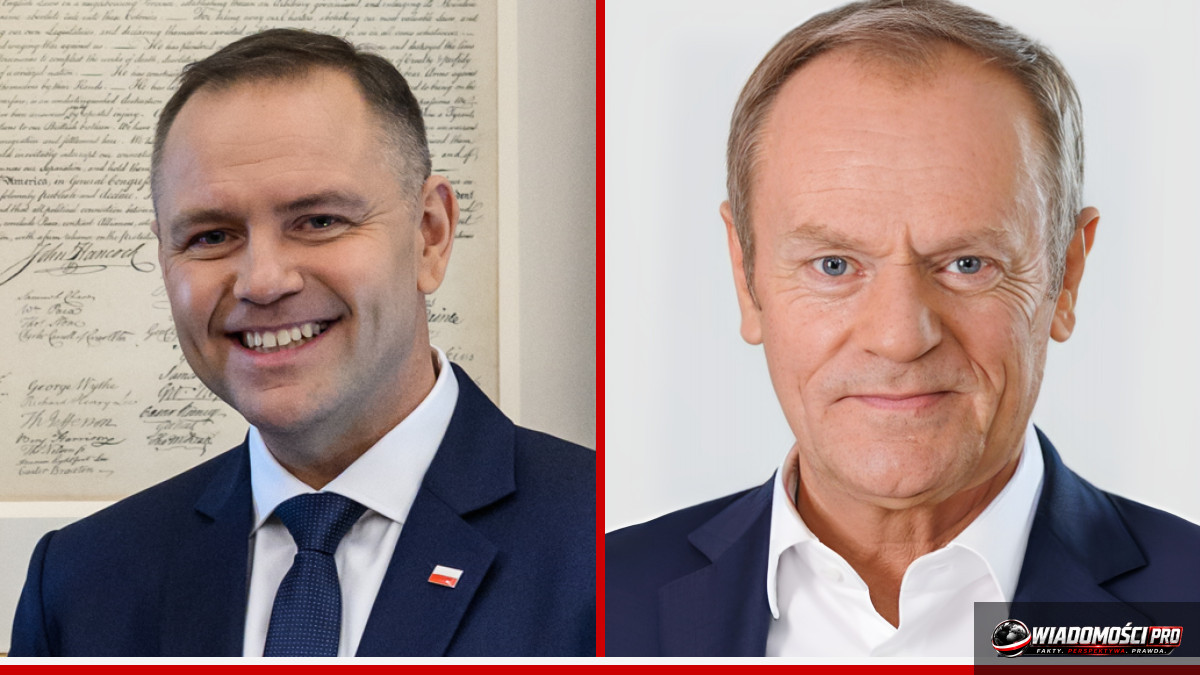
The October 15th Coalition is preparing for a September attempt to override President Karol Nawrocki’s veto on the cryptocurrency market act, which requires a 3/5 majority vote in the presence of at least half of the statutory number of deputies. The ruling camp is currently exactly 12 votes short of success, making the outcome of the clash highly uncertain. Mobilizing the missing votes will become the ultimate test of the coalition's cohesion before the end of 2026.
Procedural framework of the parliamentary clash
The constitutional process for overriding a presidential veto leaves no room for interpretation. Article 122, paragraph 5 of the Constitution of the Republic of Poland imposes rigorous conditions: to reject the head of state's objection, at least 231 deputies must participate in the vote, and 3/5 of those voting must support the rejection. In the current balance of power, with the full attendance of 460 parliamentarians, this threshold is 276 votes. The coalition theoretically has a majority that allows it to pass laws by a simple majority, but this safety buffer disappears in the case of presidential vetoes.
The parliamentary math is ruthless. If the full house is present, the government must consolidate not only the deputies of the Civic Coalition, Poland 2050, and the PSL, but also win over 12 people from outside this circle or force the opposition to abstain. Every absence of a ruling coalition parliamentarian, every refusal to vote, or a sudden change of position by individual deputies brings the project closer to being definitively discarded. This procedure is not merely a technical vote. It is a stress test for an alliance that was built on the foundation of opposition to the previous government.
Genesis of the conflict: from the Code of Criminal Procedure to digital assets
The tension between the government and President Karol Nawrocki reached a critical point in the spring of 2026. Relations between the Sejm and the President were put to the test on March 27, 2026, when the echo of the dispute over vetoes regarding changes to the Code of Criminal Procedure dominated the political agenda. That situation exposed the strategy of the Presidential Palace, which had set a course for the systematic blockade of government projects. Prime Minister Donald Tusk, commenting on the head of state's behavior at the time, pointed directly to the persistence of the PiS environment, which was allegedly behind Nawrocki’s decisions.
For political observers, the March events were a clear signal that the issue of cryptocurrencies would become another hostage of this dispute. When President Nawrocki officially vetoed the cryptocurrency market act on April 17, 2026, the fintech market took it as a blow to the sector's development plans. Media outlets, including Money.pl, RMF24, and PolsatNews.pl, reported on the president's decision almost simultaneously, emphasizing that the Sejm had been placed before a difficult choice. The spring votes showed that the chamber is deeply divided, and the lack of a unified position on digital assets became a gap that the presidential objection struck.
Political analysis: will the coalition manage to consolidate?
The effectiveness of the September attempt to override the veto depends solely on the political will of the leaders. Experience so far shows that the October 15th Coalition struggles with internal heterogeneity, which becomes a burden in votes requiring a qualified majority. The PSL and Poland 2050, as smaller coalition partners, have repeatedly emphasized their distinct positions on economic issues. Official declarations by leaders oscillate around the necessity of introducing regulations, but unofficial reports from the sidelines suggest that for many deputies, this issue is secondary.
An analysis of the voting method from April 17, 2026, described by "Rzeczpospolita," reveals that the margin of error is almost zero. Attendance and discipline within the ruling camp were insufficient at the time to think about victory. Coalition staffs are currently working to avoid a repeat of April, when a lack of unity became the main reason for the legislative failure. The September vote requires not only the mobilization of their own deputies but also an attempt to win over people from the so-called non-attached or part of the opposition, which is an extremely difficult task in the current parliamentary atmosphere.
The market in the shadow of political deadlock
The lack of a cryptocurrency market act has tangible consequences for the Polish digital economy. Entrepreneurs dealing with blockchain technology, digital asset exchanges, and individual investors have been waiting for months for clear guidelines regarding taxation and supervision. President Nawrocki’s veto of April 17, 2026, made Poland a higher-risk jurisdiction for capital investing in innovation. Keeping the act in the parliamentary freezer is read by the industry as a direct action to the detriment of the competitiveness of domestic companies.
Coalition politicians realize that failure in September will have real consequences for them. If the government fails to push through the regulations it authored itself, it will send a signal to the market that its efficacy ends at the threshold of the Presidential Palace. Investors, observing the September vote, are drawing conclusions about the stability of the law in Poland. If the act fails, one can expect an outflow of capital to jurisdictions with a more predictable regulatory environment, which for the Polish fintech sector means losing its position in the European market.
Challenges of parliamentary math: estimates and realities
Let’s return to the dry arithmetic. To override a veto, a 3/5 majority is needed. In the current composition of the Sejm, assuming full attendance, this means the necessity of obtaining at least 276 votes "in favor." The October 15th Coalition, with standard support, does not have this number of votes without external support. Every absence of a coalition deputy weakens this structure. If fewer deputies appear in the chamber, the 3/5 majority threshold becomes even harder to reach, as it is calculated based on the number of those voting, not the full composition.
Discussions are ongoing behind the scenes about whether it is possible to win over part of the opposition. The chances of this are assessed as minimal unless there is a consolidation within the coalition that could not be achieved in the spring. The Polish Press Agency reported on April 14, 2026, on the setting of the voting date, emphasizing the tense atmosphere around the project. Several months have passed since then, which have been used to try to convince the unconvinced, but according to unofficial information, none of the coalition partners has declared full, unconditional support that would guarantee success.
Image risk for the Tusk government
For Donald Tusk and his government, the September vote is a test of the Prime Minister's authority within the coalition. If Tusk fails to mobilize his deputies, he will show that his influence on the legislative process is limited. In politics, image has strategic importance. A loss in the vote on President Nawrocki’s veto will be perceived as a sign of government weakness, which may embolden the president to veto subsequent, perhaps even more important, bills for the government.
A possible override of the veto would be a signal that the coalition is capable of learning from its mistakes. Instead of counting on accidental support, the ruling party would have to demonstrate precise organization of parliamentary work. Every deputy who does not show up for the vote in September will have to reckon with political consequences within their own grouping. Leaders of the coalition parties know that this vote will go down in history as the moment when they either confirmed their ability to govern or admitted their powerlessness in the face of a presidential veto.
Analysis of the parties' arguments: why was the veto maintained?
President Karol Nawrocki, justifying his veto in April 2026, pointed to the imperfections of the draft act. His entourage raised arguments regarding the security of digital asset trading and consumer protection, claiming that the government's proposals are too liberal and could expose citizens to financial losses. From the perspective of the Presidential Palace, the veto was an act of concern for the public interest. From the government's perspective – pure political obstruction aimed at legislative paralysis.
This dichotomy of arguments has accompanied us since the beginning of the conflict. While the government emphasized the necessity of introducing regulations to exit the gray zone and attract investors, the president used a narrative about dangerous experiments in the financial market. This battle of arguments has not changed since April. In September, both sides will again present the same reasons, with the difference that this time the stakes are higher because it is the final attempt to end this process before the end of the year.
Will Poland lose its chance for a crypto market?
Experts point out that the lack of regulation in Poland does not mean that cryptocurrency trading will cease. It only means that it will take place outside of state control, which is a paradoxical situation given the intentions of the authors of the act. If the September vote ends in failure, individual investors will remain in a legal vacuum, and crypto industry companies will move their headquarters to countries with a friendlier legislative climate. Poland, instead of becoming a hub for blockchain technology, may become a country that missed this opportunity due to a political dispute.
Instead of analyzing only parliamentary arithmetic, one should focus on what the lack of clear regulations means in practice for the citizen. No protection, no clear taxation rules, and no transaction security. All this adds up to an image of a state that, in a political clash, forgets about the needs of the market and its citizens.
Summary of the situation before the September finale
September 2026 will become the moment when we either close the chapter titled "cryptocurrency act" or witness another impasse. The October 15th Coalition is preparing for an attempt that, for many observers, is doomed to failure due to the president's hardline stance and the opposition's reluctance. Nevertheless, the government does not cease its efforts to convince the undecided.
The key to success is not new substantive argumentation, but pure mobilization. In a parliament where every vote weighs the same, only attendance counts. If it is possible to gather 3/5 of the deputies, the act will enter into force, changing the rules of the game in the digital asset market. If not – Poland will remain behind its European competition, and Karol Nawrocki’s veto will be permanently inscribed in the history of this dispute as an obstacle insurmountable by the current ruling team. Anyone following the fate of this act must be prepared for a scenario in which politics takes precedence over economics. This is the essence of the current legislative crisis.
Questions and answers
Why did the president veto the cryptocurrency act?
President Karol Nawrocki filed a veto on April 17, 2026, arguing that the project had imperfections and expressing concerns about investor safety and consumer protection in the face of the digital asset market.
What are the Coalition's chances of overriding the veto?
The chances are assessed as limited due to the necessity of obtaining a 3/5 majority, which, given the current balance of power, requires full unity of the coalition and the support of some opposition deputies. Exactly 12 votes are missing.
What happens if the Sejm does not override the veto?
In the event that the required majority is not obtained, the president's veto will be maintained, and the cryptocurrency market act will not enter into force, which means continued regulatory uncertainty for the fintech industry in Poland.
Is the September vote final?
It is a key attempt intended to resolve the impasse that has lasted since April. A potential government defeat in this vote will most likely close the path to passing the regulations in their current form in the near future.
Do coalition partners support the government on this issue?
Negotiations are ongoing within the coalition, but there is no official declaration of full support from all factions, which makes the outcome of the vote unpredictable.
Sources
- President's veto maintained. Tusk: PiS was stubborn - TVN24
- Sejm decided on Karol Nawrocki’s veto. It concerns the Code of Criminal Procedure - Interia Wydarzenia
- President's veto on cryptocurrencies. Sejm decided - Money.pl
- President's veto returns to the Sejm. One detail stands out - Wiadomości Onet
- Sejm to decide on cryptocurrencies. Date set - Polish Press Agency SA
- Cryptocurrencies divided the Sejm. Who voted how, who abstained - Rzeczpospolita
- Sejm decided on the president's veto to the cryptocurrency market act - RMF24
- President's veto on cryptocurrencies. Sejm decided - PolsatNews.pl
Article prepared by the Wiadomości PRO editorial team with the support of artificial intelligence. Facts come from the sources listed above.



Komentarze (0)
Ładowanie komentarzy...