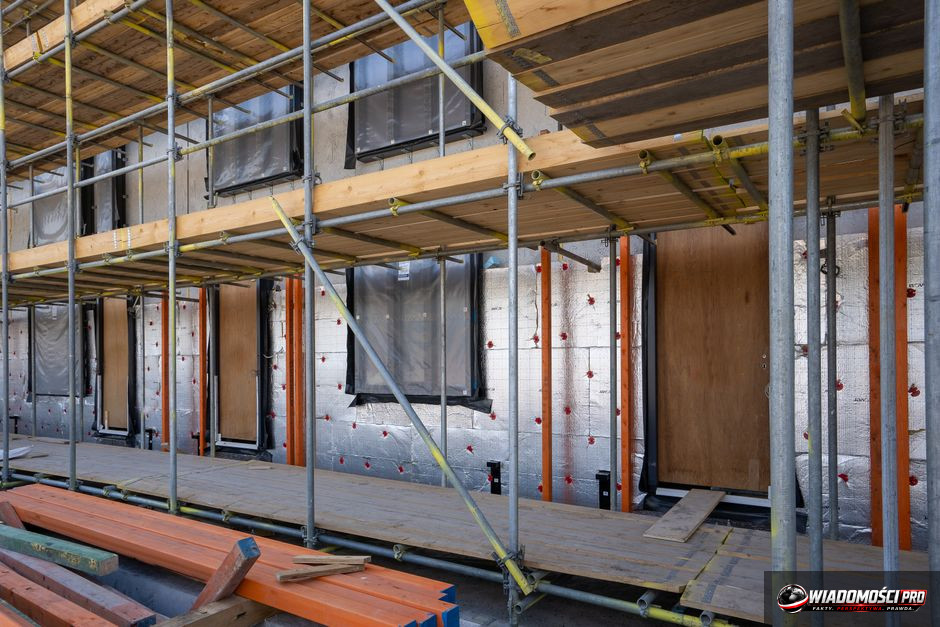
The act adopted on August 22, 2026, enables obtaining a refund of up to 50% of thermal modernization investment costs, while simultaneously simplifying the path for applying for funds within special-purpose funds. This is the biggest change in regulations in years, which is intended to genuinely relieve the household budgets of Poles. This decision ends a period of uncertainty for thousands of single-family home owners who have hitherto struggled with a maze of bureaucratic requirements.
Main assumptions and goals of the amendment
The government draft changes the rules of the game for private investors. Instead of a multi-stage verification process, which was opaque to the average citizen, a clear mechanism for refunding half of the expenses has been introduced. The goal is a radical improvement in the energy efficiency of buildings, which in the era of fuel price fluctuations is becoming a necessity, not a choice.
The support covers a wide spectrum of work: from external wall and ceiling insulation, through window replacement, to the modernization of heating systems. However, a systemic approach is key. The legislator rewards investments that genuinely lower energy demand, not just cosmetic changes. Beneficiaries must demonstrate that the planned work will lead to a specific energy standard, which is verified by an audit.
Property owners often fear preparatory costs. A professional energy audit, necessary to submit an application, is an expense of around 800–1500 PLN. Although this is an initial cost, the act in its new form assumes that it will be included in the pool of eligible costs, which makes it almost financially neutral for people planning deep modernization. This is a departure from the previous practice, in which the audit was purely a loss for the investor, rather than an investment in a more certain return.
The amendment is also intended to unlock capital that has so far remained frozen due to protracted procedures. Introducing a strict deadline of 30 working days for the consideration of an application by officials is an attempt to discipline the administration. If the IT system can handle the load, the waiting time for a decision will shorten drastically compared to the period when applications sat in offices for months.
Who can benefit from the new support?
The system is aimed primarily at owners of single-family homes whose buildings were built using older technologies. It is these facilities that generate the greatest heat loss and the highest bills, which at the fuel prices of April 2026 – when 95-octane gasoline cost 5.97 PLN and diesel 6.71 PLN – is becoming an unbearable burden for many families. The state no longer offers money to everyone, but focuses on resources with the worst energy characteristics.
The beneficiaries are three main groups:
- Owners of single-family homes who previously did not meet the restrictive income criteria. Now, the main determinant is the technical condition of the building.
- Housing communities, provided they demonstrate that the actions taken will lead to a permanent reduction in heat consumption by a minimum of 25%.
- Owners of facilities with the lowest energy class, who gain priority in documentation processing within the IT system.
An important aspect is the own contribution. Even with a 50 percent refund, the investor must have capital at the start. Assuming that a comprehensive thermal modernization of a 120 m² house costs on average between 60,000 and 100,000 PLN, the necessity of laying out 30,000–50,000 PLN remains a barrier for many families. The government did not provide for direct subsidies for the own contribution in this amendment, which means that the poorest people may still have difficulty entering the modernization process without credit support.
It is also important that the support is not intended for current repairs or aesthetic renovations. Every expense settled as part of the refund must have a direct justification in improving the building's insulation or the efficiency of the heating system. Any attempts to "tack on" floor replacement or facade painting without insulation to the subsidy will be automatically rejected by the system.
Simplification of procedures: what is changing?
Digitization of the process is the foundation of the changes. Abandoning paper documentation in favor of the gov.pl portal is intended to eliminate errors that previously caused applications to be rejected at the formal stage. The number of required attachments has been reduced by 40%, which is a real relief for investors. Instead of providing piles of certificates from various offices, the applicant relies on a digital energy audit model.
The way of communicating with the office has also been changed. In the case of formal deficiencies, the system will automatically send a notification with a request for completion, setting a specific deadline. This eliminates situations where an application was suspended for half a year without the investor's knowledge. Limiting the time for processing documents to 30 working days is the most awaited change. However, if officials do not manage the verification in time, the act provides for a "silent consent" mechanism in specific cases, which is a rarity in Polish construction law.
However, the risk of system overload cannot be ignored. At the moment of launching the call for applications in Q4 2026, a rapid increase in the number of portal users is expected. Experience from previous programs shows that digital infrastructure can be just as inefficient as traditional offices. Therefore, investors should prepare for potential bottlenecks in the first weeks of the new regulations being in effect.
It is worth noting that digitization also applies to the way contractors are verified. The new act introduces a database of certified companies, which is intended to protect beneficiaries from unreliable contractors. Choosing a company from this list will automatically speed up the verification of invoices, which is a significant convenience for people who do not want to personally oversee every aspect of settlements with the tax office or the special-purpose fund.
Financial analysis: return on investment
The economics of the project are based on a simple calculation. With a 50 percent refund, the return on investment (ROI) period is cut in half. If a standard building insulation renovation pays for itself in savings on bills within 12 years, thanks to the act, this time is shortened to about 6 years. This is a real argument for people hesitating to take out a thermal modernization loan.
Forecasted heating savings range from 25% to 30% annually. Taking into account the instability of fuel prices, which the government had already reported in March and April 2026, this investment becomes a form of insurance. Becoming independent from imported raw materials through thermal modernization is the cheapest way to fight energy inflation.
Here is how the key financial parameters shape up:
- Maximum refund of eligible costs: 50%.
- Minimum energy savings threshold: 25%.
- Cost of audit included in the refund: yes, up to the limit specified in the regulation.
- Integration with RES: photovoltaics and heat pumps are fully refunded as part of the modernization package.
Skeptics, however, note that the contractor market will react instantly to the subsidies. An increase in demand for insulation services may lead to price increases by construction companies of 10–15%. As a result, part of the financial benefit from the subsidy may be captured by contractors. Investors should therefore carefully verify cost estimates and not rely solely on one quote, even if the company has the appropriate certificates.
It is also worth remembering about taxes. The refund of investment costs is not taxed, which is a significant benefit. The government secured this provision in the act, avoiding a situation where beneficiaries would have to report the received subsidy in their PIT tax return as income.
Implementation schedule of the regulations
The legislative process, initiated on August 22, 2026, is being conducted at a pace unprecedented for construction matters. The government realizes that delaying the entry into force of the regulations by another few months could mean another winter with high bills for many families.
The schedule assumes the following steps:
1. September 2026: Parliamentary debate and work in infrastructure committees.
2. October 2026: Votes in the Senate and the President's signature.
3. November 2026: Final launch of the application platform on gov.pl.
4. December 2026: First payments for applicants who submitted complete documents in the expedited mode.
Only the issue of financing raises doubts. The government, which after two years in power has to face economic challenges and a tense international situation, declares securing funds in special-purpose funds. However, with the largest government in the history of the Third Polish Republic, the costs of administrative handling of this project may turn out to be surprisingly high. There is a risk that part of the funds intended for thermal modernization will be consumed by the expanded bureaucratic structure instead of going directly to homeowners.
The political situation further complicates the matter. The rivalry within the ruling camp, described in the media as the end of the leaders' "love," may affect the pace of legislative work. If the act becomes the subject of a political campaign, we can expect attempts to introduce last-minute amendments, which never serves the stability of the law. For the citizen, however, it is crucial that the act itself is a government project, which means it has guaranteed support from the parliamentary majority.
Strategic importance for the economy
The government's actions in the area of thermal modernization are a response to the broader context of national security. In the face of geopolitical uncertainty and defense agreements with Germany, the government is looking for ways to strengthen the country's resilience to crises. Energy is a key link here. Reducing the consumption of gas and coal in the residential building sector is not only a concern for ecology but a strategic independence from the import of raw materials.
The Prime Minister's talks with representatives of the technology sector, including the CEO of Google, regarding cybersecurity, show that the government wants to bet on modern digital solutions in every aspect of state management. The gov.pl portal, as a tool for handling thermal modernization applications, is intended to be a showcase of this digital transformation. The success of this project will be a test for the efficiency of digital administration.
From an economic point of view, the program is intended to stimulate the sector of small and medium-sized construction companies. Instead of large infrastructure projects, capital flows directly to thousands of local contractors. This is intended to counteract the slowdown in the construction industry, which was visible in economic reports in the autumn of 2025. But is the market ready for such a wave of orders? The shortage of qualified workers is a real problem that may prolong the investment process more than any official regulations.
Finally, it is worth asking about the durability of these changes. Will energy standards in Poland actually increase after the program ends in a few years? The government is counting on the market to develop new habits. If 50% of the costs are financed by the state, investing in home insulation will become a social standard, not a whim of the wealthiest. This is a long-term process, the effects of which we will see only in the coming winters, when energy consumption statistics in the residential sector finally begin to fall permanently.
What this means for you
If you are planning a renovation, the most important signal is to hold off on purchasing materials until the system is fully implemented in Q4. Thanks to this, you will gain a chance for a refund of half of your expenses, instead of paying for everything out of your own pocket. Remember, however, that an energy audit is necessary – without it, the application will be rejected at the start, regardless of how modern windows or insulation you install. For owners of older houses, this is a real chance to significantly lower bills, provided that you manage to get through the digital procedure and find a timely contractor in the face of the forecasted investment boom.
Questions and answers
From when can applications for the new support be submitted?
Applications can be submitted after the full launch of the path on the gov.pl portal, which is planned for Q4 2026.
Does the support also cover window replacement?
Yes, the replacement of joinery is one of the key elements qualifying for a refund as part of comprehensive thermal modernization.
What is the maximum subsidy amount?
The act does not specify a rigid monetary limit, but guarantees a refund of up to 50% of documented eligible investment costs.
Do I have to conduct an energy audit before starting work?
Yes, an audit is required to confirm the initial state of the building and plan actions that will allow for achieving the assumed level of energy savings.
Does the 50% refund also apply to labor costs?
Yes, the act includes labor costs as part of eligible costs, provided that the services are performed by companies listed in the register of certified contractors.
What happens if the office does not process the application within 30 days?
The act provides for a supervisory mechanism that is intended to force offices to meet deadlines, including potential disciplinary liability for delays in processing documentation.
Sources
- There is a decision regarding fuel prices in Poland. The Prime Minister just announced it - Money.pl
- Government scares again with a Russian attack on Europe and intends to sign a defense agreement with Germany - RadioMaryja.pl
- Today a liter of 95 gasoline is to cost no more than 5.97 PLN, and diesel 6.71 PLN - Rzeczpospolita
- Unofficial: there is a government decision regarding fuels - Money.pl
- Cybersecurity and investments – conversation between the Prime Minister and the CEO of Google - www.gov.pl
- The time of Tusk and Hołownia's "love" is coming to an end. A fierce campaign is ahead of us - Interia Wydarzenia
- The largest government of the Third Polish Republic? - TVN24
- Are the true face of Donald Tusk's government revealed by the numbers? Here are the economic results 2 years after the elections - wnp.pl
Article prepared by the Wiadomości PRO editorial team with the support of artificial intelligence. Facts come from the sources provided above.


Komentarze (0)
Ładowanie komentarzy...