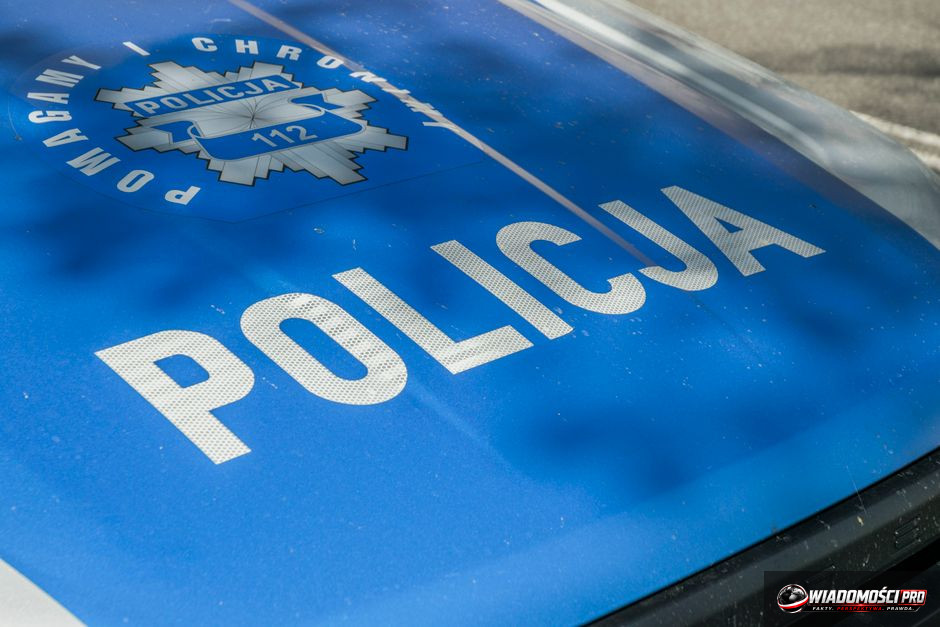
The Polish police have received 44 new BMW M340i xDrive patrol cars with 374 HP and all-wheel drive. Thanks to advanced laser speed guns, these vehicles eliminate any chance for road pirates to successfully escape. This is the latest stage of fleet modernization, designed to provide officers with a decisive technological advantage on Polish motorways and expressways.
Technical specifications: What is under the hood of the new police BMW?
The M340i xDrive model is a machine that breaks away from the image of an average service vehicle. Under the hood is a three-liter, six-cylinder turbocharged inline engine generating 374 HP. A torque of 500 Nm is available across a wide rev range, allowing for acceleration from zero to one hundred kilometers per hour in under 4.5 seconds. These are parameters previously reserved for sports vehicles, not cars used for daily traffic patrol work.
The permanent xDrive all-wheel drive changes the way officers can conduct a pursuit. Unlike older generations of patrol cars, where transferring power to the rear axle during a sudden maneuver often resulted in a loss of traction, the BMW system intelligently distributes torque between the front and rear wheels. In practice, this means the patrol car maintains stability even during dynamic cornering or sudden lane changes at high speeds.
The driver-assistance electronics in this model are not just an add-on, but an integral part of the safety system. Stability control, active suspension, and precise steering make the car an extension of the officer's will. This is not about recklessness, but about the ability to safely catch up to an offender in conditions where a civilian car with lower performance might lose contact with the road surface.
It is worth noting the refinement of the powertrain. The B58 engine, as it is called, is a design valued for its durability over high mileage, which is of colossal importance in police service conditions. These patrol cars do not sit in garages. They are in constant motion, often working in a two-shift system. The choice of this specific model suggests that the Ministry of the Interior has opted for mechanical durability that will reduce downtime in service centers.
Laser precision: How does the police target pirates?
Engine power alone would be useless without the right tool for measuring speed. The new BMWs are equipped with laser systems that operate on a completely different principle than traditional radars based on the Doppler effect. A laser meter sends a beam of light that reflects off a specific point on the vehicle. The measurement takes fractions of a second and is almost impossible to detect by popular radar detectors or speed camera warning systems.
The laser beam is very narrow, which allows for selectively targeting a specific car even in heavy traffic. An officer can isolate a vehicle moving too fast, ignoring other road users. This solution ends discussions about whether the radar measured the speed of the car being overtaken or perhaps a truck driving next to it. The precision of the device is certified and constitutes hard evidence in the event of a court inspection.
The effectiveness of these meters is particularly high on long, straight sections of motorways. A driver who is speeding usually sees the patrol car only when it is already too late to react. Even if the offender notices the unmarked BMW, the measurement system will manage to record the offense from a long distance, often before the driver takes their foot off the gas.
These systems are integrated with video recorders that save not only the moment of speed measurement but also the course of the offense. Footage from the camera mounted in the BMW is evidence that cannot be easily challenged in court. For officers, this is a huge convenience, as it eliminates the need for tedious explanations of the circumstances of the stop. Everything is visible on the device's screen.
Who received the new BMWs and which units have them?
The decision to purchase 44 BMW M340i xDrive units is the result of an analysis of the needs of individual provincial headquarters. The vehicles were sent to traffic departments responsible for the most heavily burdened communication routes. Major motorways, such as the A1, A2, and A4, are areas where the speeds developed by drivers are the highest, and the threat resulting from recklessness is the most real.
Units specializing in so-called "fast traffic patrol" were given priority in receiving the new machines. Headquarters in provinces with the highest transit traffic intensity, such as Masovian, Silesian, or Greater Poland, have the largest number of such patrol cars. The choice of units was dictated by accident statistics and the number of detected offenses in a given area.
This is not a one-time purchase for the entire country, but a systematic rearming of "Speed" groups. These groups, established to fight aggressive behavior on the roads, require tools that do not lag behind the performance of cars used by wealthier drivers. The police do not hide the fact that the goal is to have a fleet that will not have complexes when facing a fast premium-class car.
It is worth noting that the assignment of these cars is associated with rigorous training. Officers who sit behind the wheel of a BMW M340i xDrive must undergo specialized courses in improving driving technique. Driving a car of such power in pursuit conditions requires not only skill but above all composure, which is not taught in standard police training.
Fleet evolution: How do the current BMWs compare to their predecessors?
The modernization of the police fleet is a process that can be divided into several stages. The first BMWs that reached the Polish police in 2017 were a shock to many drivers. At that time, for the first time on a mass scale, the police switched from budget cars to high-performance machines. It was the beginning of a new era of unmarked patrol cars.
The next milestone occurred in 2022, when the largest purchase of BMW patrol cars in history was finalized. At that time, hundreds of cars entered service, which permanently changed the balance of power on the roads. The current 44 units that joined the service in 2026 are an evolution of this approach. These are no longer just "fast cars," but highly specialized measurement tools.
Comparing the 2017 generation to the current one, there is a clear change in the approach to equipment. Older models relied on video recorders that required a long measurement of average speed over a distance. This forced police officers to drive at a close distance behind the offender, which was risky and less clear to the driver. Today's laser systems allow for much more discreet and effective work.
The costs of purchasing such an advanced fleet are high, which often sparks public debate. However, from the point of view of the police budget, these costs are amortized by the durability of the vehicles. The BMW M340i xDrive is a car that, in civilian use, easily covers hundreds of thousands of kilometers. In service, with proper maintenance, these 44 units can serve for years while maintaining their technical parameters.
Strategic goal of the purchase: Safety above all
The official police statement regarding the purchase of 44 new BMWs is clear: it is about improving safety. Statistics show that the main cause of fatal accidents on Polish roads remains excessive speed. Investing in cars that can effectively eliminate the most dangerous drivers from traffic is, in the eyes of the ministry, fully justified.
The police strategy is based on the so-called deterrence effect. The awareness of drivers that they can be overtaken at any moment by an inconspicuous-looking BMW forces them to be more focused. It is not about issuing the largest number of tickets, but about forcing drivers to obey speed limits. The more high-performance unmarked cars on the roads, the higher the level of uncertainty among road pirates.
Many experts point out that simply owning a fast car will not replace education. However, when dealing with a person who consciously breaks the law, education often fails. Here, the argument of force comes into play. The police have a tool that takes away the driver's illusion that they can escape responsibility. This is a systemic approach aimed at "quieting down" the most nervous sections of expressways.
Skeptics note, however, that increasing the number of fast patrol cars can lead to dangerous situations when drivers attempt to escape regardless. That is why training officers is so important. A police officer in a BMW M340i xDrive must know when to call off a pursuit so as not to endanger other road users. The safety of bystanders is always a priority over catching the perpetrator.
How to recognize an unmarked patrol car on the road?
Recognizing an unmarked patrol car is a favorite topic of discussion on automotive forums. There are many myths about how to spot a "secret agent." Some point to license plates, others to the presence of antennas, and still others to the unusual behavior of the driver. The truth is that modern unmarked patrol cars are designed to blend into the crowd.
A silver, gray, or black BMW M340i xDrive looks like thousands of other cars on the road. It has no characteristic markings, and the warning lights are hidden behind the radiator grilles or behind the rear window. When the car is driving at a normal pace, it is almost impossible to distinguish from a civilian vehicle. Only when the warning lights are turned on does the patrol car become visible.
However, it is worth observing the surroundings. The police often use the tactic of driving at the pace of traffic, but with very vigilant observation. If the car behind us maintains a constant distance and seems to be "scanning" vehicles, this may be a signal to be cautious. Often, in such patrol cars, you can also see officers who are not busy with their phones but are focusing solely on the road.
The most important tip for a driver, however, is not to look for patrol cars, but to change habits. If we assume that every vehicle behind us could be unmarked, our driving will automatically become calmer. This is the only effective way to avoid a ticket. Any attempt to "guess" whether the car behind us is police or an ordinary driver is a waste of time and energy that should be focused on observing the road.
What this means for you
For the average driver, the introduction of 44 new BMWs means that the risk of being stopped on expressways has increased significantly. Modern laser systems are merciless, and the 374 HP engine power means that police officers are able to catch up with almost anyone who breaks the law. The end of the era of impunity on motorways is becoming a fact, and the only way to avoid trouble is to obey the applicable speed limits.
The appearance of these cars in service is a signal that the police have stopped relying on outdated methods. Now, speed control is fast, precise, and difficult to challenge. For the driver, this means the need for greater discipline behind the wheel. It is not about driving slowly, but about driving according to the law, aware that the eyes of the police can be everywhere.
Questions and answers
Are the new BMWs faster than most cars on Polish roads?
Yes, the 374 HP power and xDrive drive make the BMW M340i xDrive possess performance that allows it to have an advantage over most civilian vehicles moving on Polish roads, which makes a police pursuit almost always successful.
How many new patrol cars exactly have entered service?
44 new BMW patrol cars have reached the Polish police, which have been distributed to traffic units across the country, with particular emphasis on motorways and major expressways.
Will these cars be used only for speed measurements?
Although their main task is to combat road piracy using laser speed guns, due to their technical parameters, these vehicles are also used in the broadly understood patrolling of major communication routes and in situations requiring a quick reaction to traffic offenses.
Is the laser system in the BMW difficult to detect?
Yes, the laser beam is very narrow and directed point-blank at the vehicle, which makes it almost impossible to detect by standard warning devices used by drivers, unlike traditional microwave radars.
Is the purchase of such expensive cars economically justified?
The Ministry of the Interior argues that investing in durable and efficient premium-class vehicles allows for longer operation in difficult conditions, which in the final analysis may be more cost-effective than frequently replacing cheaper, less durable patrol cars with new units.
What are the biggest advantages of the xDrive drive in a police BMW?
The xDrive all-wheel drive allows for safe and stable transfer of high engine power to the road surface in all weather conditions, which is crucial during dynamic pursuits, where traction determines the success or failure of the officers.
Can every officer drive these new BMWs?
No, driving patrol cars with such high performance requires officers to have appropriate qualifications and undergo specialized training in improving driving technique in extreme conditions, which ensures the safety of both the police officers and other road users.
Will these 44 patrol cars affect accident statistics?
The police assume that the increased presence of such technologically advanced cars on major routes will have a preventive effect on driver behavior, which in the long term should contribute to a decrease in the number of the most serious road incidents caused by excessive speed.
Sources
- 44 new BMWs for the police. 374 HP under the hood and laser speed guns - Radio dla Ciebie
- Police to get new patrol cars. They have 374 HP each and all-wheel drive - WP Moto
- Traffic police got new BMWs. Drivers should also remember this equipment - Newsmax Polska
- Police BMWs already on the roads. How to recognize them? - WP Moto
- Police received the last BMWs. This is the largest such purchase in history - WP Moto
- Akrapovič made an exhaust for the BMW R 18. The Big Boxer will sound even better - WP Moto
- Unmarked police cars. Which cars should you watch out for? - WP Moto
- Drivers watch out for black BMWs - highway police have a new unmarked patrol car - WP Moto
Article prepared by the Wiadomości PRO editorial team with the support of artificial intelligence. Facts come from the sources listed above.

Komentarze (0)
Ładowanie komentarzy...