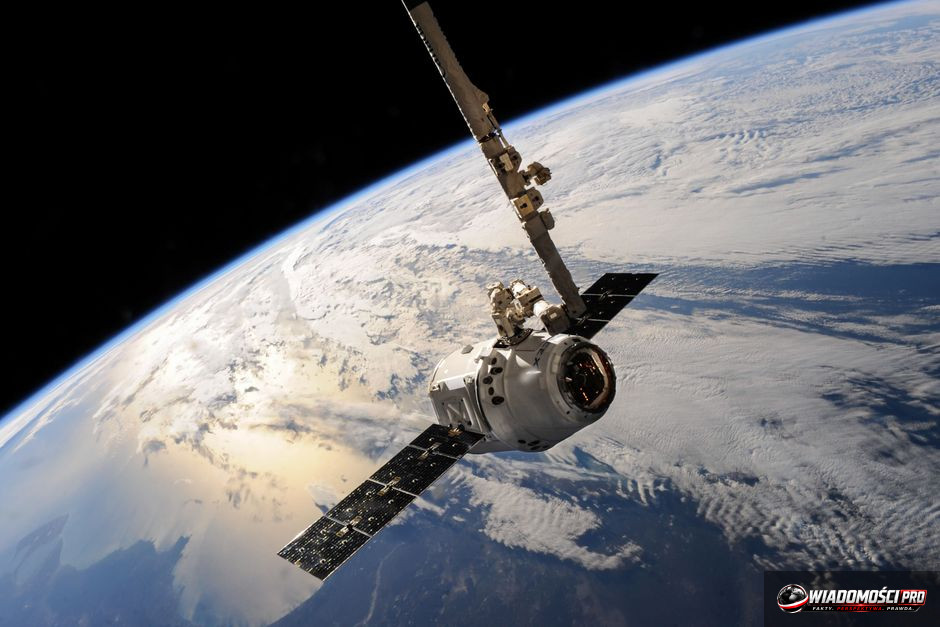
The Europa Clipper mission, with a budget of $5 billion, will not directly find life, but will verify whether conditions favorable to biology exist in Europa's hidden ocean. The probe, launched by a Falcon Heavy rocket, will conduct a series of 49 flybys of the moon, focusing on mapping the chemical composition and the structure of the icy shell. The onboard instruments are not designed to detect microorganisms themselves, but to search for the essential building blocks of life, such as water, energy, and organic compounds.
Logistics and funding: The real costs of the expedition to Jupiter
Five billion dollars is a sum that pushes the boundaries of modern planetary engineering. This budget was not spent solely on building the probe, but on creating an entire support ecosystem that must survive in the extreme conditions of the Jovian environment. The project team, led by Jordan Evans, mission manager at the Jet Propulsion Laboratory, had to manage finances in a way that allowed for a decade of development work. The mission's launch, carried out in October 2024 using a SpaceX Falcon Heavy rocket, was the culmination of these efforts. The choice of this launch vehicle was dictated by the probe's mass, which exceeds six tons. It is one of the heaviest research units ever sent toward the outer planets of the Solar System.
The $5 billion expenditure also includes the construction of a specialized radiation protection system. The probe will operate within the range of Jupiter's strong magnetic field, which exposes the electronics to constant bombardment by high-energy particles. Engineers decided to create a "vault" made of titanium and aluminum with wall thicknesses reaching up to 9.2 millimeters. This structure protects the most sensitive systems from degradation that would otherwise occur within a few months. Every dollar spent on this project is audited by NASA, which forces scientific teams, such as the one led by Curt Niebur, the mission's program scientist, to strictly adhere to schedules.
The logistics of the journey rely on the precise use of gravity assists. The probe does not have enough fuel to fly directly to Jupiter with such a high mass. Therefore, in 2025, the spacecraft will approach Mars, and in 2026, it will approach Earth again. These maneuvers allow for increasing the unit's speed without the need to burn hundreds of tons of chemical fuel. This is the project's financial survival strategy. Every engine burn after reaching Jupiter's orbit in 2030 will cost a fraction of the resources that traditional propulsion methods would have consumed.
Biological potential: What are we actually looking for under the ice?
Astrobiology in the case of Europa focuses on three foundations: water, chemistry, and energy. Europa possesses an ocean that, according to data from the Galileo probe, could be between 60 and 150 kilometers deep. This is twice as much water as in Earth's oceans. Scientists, including the mission's principal investigator Bonnie Buratti, point out that it is not just the existence of water that is key, but its contact with the rocky seafloor. If water reacts with minerals on the ocean floor, chemical compounds necessary for metabolism could be created.
Europa is not a dead glacier. Tidal forces exerted by Jupiter and neighboring moons, such as Io and Ganymede, cause tidal heating. The interior of the moon is constantly stretched and compressed. This generates heat. Thanks to this process, water remains in a liquid state despite the enormous distance from the Sun. The Europa Clipper probe has been equipped with instruments such as REASON (Radar for Europa Assessment and Sounding: Ocean to Near-surface). This radar is designed to penetrate ice up to several kilometers thick. If there are pockets of water beneath the surface, REASON will detect differences in the medium's density.
We are not looking for radio signals or signs of civilization. We are looking for amino acids, simple sugars, and salts that could be ejected to the surface through cryovolcanism or cracks in the crust. If the MASPEX spectrometer detects complex organic molecules in the gases escaping from the surface, it will be a signal that highly complex chemical processes are occurring in the ocean. It is precisely this data that will determine the research success or failure. This is not a search for life in the biological sense, but an investigation of "habitability."
Technological challenge: Electronics in the radiation belt
Jupiter's magnetic field is 20,000 times stronger than Earth's. The radiation belts it creates are capable of destroying unprotected electronics in a short time. The engineering team had to develop a way to extend the mission's life to at least 2034, when data collection is scheduled to end. The probe will perform flybys of Europa in an elliptical orbit. Each flyby lasts a short time, which allows avoiding exposure to the strongest radiation for extended periods.
Onboard instruments, such as E-THEMIS (Europa Thermal Emission Imaging System), will map surface temperatures. This will allow identifying places where the ice is thinner or where recent geological activity is occurring. If the thermal imaging camera detects thermal anomalies, it will be proof that the moon's interior is active. Such knowledge is essential to understand whether water from the ocean is actually reaching the surface. Without this understanding, it is impossible to assess the chances of life existing on the ocean floor.
The risk of failure is inherent in every stage of this operation. Even with a titanium shield, radiation affects the stability of the onboard computer memory. NASA has introduced redundancy systems – every key operation has a backup processor. If the main system fails, the backup will take control of the probe. This is an approach that excludes the errors that occurred in missions of the 1990s. Designing this probe is the result of 20 years of experience gained during the Cassini and Juno missions.
Research methodology: How the eye of science works in space
The Europa Clipper mission does not involve landing. Instead, the probe will use 49 close flybys, approaching the surface as close as 25 kilometers. During each of these flybys, the instruments will operate at full power. Data will be transmitted to Earth using a high-gain antenna that sends information to the Deep Space Network. Sending data from a distance of 600 million kilometers takes 30 to 50 minutes one way.
The MISE (Mapping Imaging Spectrometer for Europa) imaging spectrometer will create maps of the chemical composition of the ice. We will see where salts are concentrated and where organic matter is. This is not fortune-telling; it is an analysis of the atomic composition of the surface. If water from the ocean reaches the surface, the spectrometer will "see" its chemical composition. This is the most accurate way to check the "menu" of Europa's ocean without the need for drilling.
The onboard magnetometer (ECM) will measure Europa's induced magnetic field. This is an indirect method, but extremely effective. The ocean, as a conductive liquid, reacts to Jupiter's variable magnetic field. Changes in the moon's induced magnetic field will tell us how salty the ocean is and how deep below the surface it is located. This is pure physics. We don't need a microscope to understand that water exists beneath the surface and that it has a chemical composition favorable to potential life.
Risk and responsibility: Is $5 billion too much?
The question of the justification for the $5 billion budget is a constant element of the debate about NASA's priorities. Critics point out that this amount could fund dozens of smaller missions to Mars or the Moon. From the perspective of the US federal budget, Europa Clipper is a project that must demonstrate its utility not only scientifically but also technologically. Was it worth spending so much money? The answer depends on how we define progress.
The technological progress generated during the construction of Europa Clipper includes new methods of sensor miniaturization and advanced electronics cooling systems. These technologies will find their way into industry, medicine, and the military sector. This is the standard life cycle of space technologies. However, the most important argument remains humanity's ambition. Are we alone? The answer to this question is worth $5 billion if it only gives us certainty that life beyond Earth exists or that we are the only intelligent beings in this corner of the galaxy.
Politically, the Europa Clipper mission is a success for NASA because it consolidates resources around one clear goal. There is no dispersion here. All engineering forces are directed at Europa. If the mission fails, it will be a blow to the American agency's image. That is why every element of the probe was tested in thermal vacuum conditions that simulate the Jovian environment. This is the most tested probe in NASA's history.
The future after the flybys: The mission's legacy
When the probe finishes its flybys in 2034, the data will be analyzed for the next two decades. This will not be the end, but the beginning. If Europa Clipper confirms that the ocean is rich in organic compounds, the next mission will have to be a lander. This is the natural order of things. Europa Clipper paves the way, checking where it is safe to land and where life might potentially be found.
American dominance in this area is visible in the way NASA builds the mission architecture. Europa Clipper does not cooperate with ESA directly at the probe level, but the data will be made available to the international community. This is a global project in the scientific sense. Astronomers from all over the world are waiting for the results from the REASON radar. They will be the ones creating mathematical models of Europa's interior.
It is worth noting that Europa Clipper is a mission that does not give a "yes" or "no" answer. It gives a "perhaps, in these specific places." This is science in its purest form. There is no room for sensation here; there is room for verifying hypotheses. If the probe does not find evidence of life, it will mean that life is not as common as we thought, or that our detection techniques require even more refinement. This conclusion is just as important as finding life.
Questions and answers
Will the probe land on Europa's surface?
No, the Europa Clipper mission is a project based on a series of 49 flybys. The probe does not have a landing system because Europa's surface is too unpredictable, and landing in the conditions of Jupiter's radiation is currently unfeasible.
How long will the probe's journey to Jupiter take?
The probe was launched in October 2024, and its arrival at Jupiter's orbit is planned for 2030. The journey will take about six years due to the need to perform gravity assist maneuvers.
What are the most important instruments Europa Clipper possesses?
Key instruments include the REASON radar for studying the ice interior, the MISE and MASPEX spectrometers for analyzing chemical composition, the E-THEMIS thermal imaging camera, and the ECM magnetometer.
Why was Europa chosen?
Europa is considered the most promising object in the Solar System due to the presence of a liquid ocean beneath a thick layer of ice, which makes it an environment potentially suitable for life.
Can Jupiter's radiation destroy the probe?
The radiation is extremely high, which is why the probe was enclosed in a titanium-aluminum vault that protects the electronics from destruction by high-energy particles.
What will happen if we don't find any signs of life?
The absence of signs of life will be valuable geological and chemical information for scientists, which will allow for a better understanding of what conditions are necessary for the emergence of organisms, which will influence the goals of future expeditions.
What is SpaceX's role in this mission?
SpaceX provided the Falcon Heavy rocket that launched the probe from Earth. The choice of this rocket was dictated by its high payload capacity, necessary to accelerate such a massive unit.
Is the $5 billion budget justified?
This budget reflects the costs of engineering, radiation protection, logistics, and the multi-year maintenance of the scientific team, which is an investment in answering the fundamental question about the existence of life beyond Earth.
How does the probe send data to Earth?
Data is transmitted via a high-gain antenna using radio waves to the Deep Space Network, which allows for the reception of signals from a distance of hundreds of millions of kilometers.
Is this the only mission toward Jupiter's moons?
No, this is one of several research missions in this system, but Europa Clipper is the most dedicated to studying Europa itself as a potential habitat for life.
Is Europa the only moon with an ocean?
No, other moons, such as Enceladus at Saturn, also possess oceans, but Europa is considered the most accessible and promising target for current NASA technologies.
Will the probe be able to change its route after reaching its destination?
The probe is equipped with maneuvering thrusters that allow for orbit correction and precise setting of flyby parameters over selected areas of Europa.
Who handles data analysis?
Data analysis is conducted by multidisciplinary teams of scientists from NASA, JPL, and other collaborating research institutes around the world.
Does the mission have an impact on the development of Earth technologies?
Yes, the development of radiation-resistant systems and sensor miniaturization has direct applications in terrestrial engineering and future space technologies.
What is the biggest threat to the mission's success?
The biggest threat remains the destructive impact of Jupiter's magnetic field on the probe's electronics, which is why engineers placed huge emphasis on structural safeguards.
Europa Clipper is proof that technology has reached a point where we can study the oceans of other worlds without leaving home. NASA has bet everything on one card, investing billions in a system that is meant to check whether life is Earth's privilege or a common phenomenon in the cosmos. The probe is on its way. The instruments are ready for work. Each flyby will bring us closer to the truth. Regardless of whether life teems under Europa's ice or there is a sterile silence, this mission will forever change our understanding of biology. This is not a matter of optimism or hope. It is a matter of hard data that will flow from a distant corner of the Solar System in the coming years. We are witnessing the greatest test that humanity has ever subjected its knowledge of the universe to.
It is worth noting that the success of this mission will be measured not by the number of organisms discovered, but by the precision of chemical maps. If Europa Clipper points to a place where water mixes with organic matter, it will mean that the next step in space exploration is already clearly defined. It is precisely this specific information that is what has the most value for science. The probe is not looking for evidence that we are wrong; it is looking for confirmation of the laws of physics and chemistry in an environment we do not yet know.
For the reader, this means one thing: the next decade will be a time of waiting for results that could revise our place in the cosmos. It will not be a sudden discovery, but a slow assembly of a puzzle from data transmitted over hundreds of millions of kilometers. Europa Clipper is our best tool to see what is hidden in the dark beneath the icy shell. It is a project that engages thousands of people, from SpaceX engineers to JPL astrobiologists. Each of them hopes that Europa hides a secret that has been waiting to be discovered for billions of years.
We cannot forget that space is a hostile environment, and every success is won through hard work. Europa Clipper is not flying there to celebrate; it is flying to work. The probe has 49 flybys to perform, and each of them is an operation requiring the highest precision. If everything goes according to plan, in 2034 we will know more about Europa than we ever imagined. This is the only way to answer the questions we have been asking ourselves since the dawn of humanity.
Uncertainty is a natural element of this process. NASA does not guarantee finding life; it guarantees delivering data. This is an honest approach. Scientists know that a lack of results is also a result. If Europa turns out to be dead, we will understand how difficult it is for life to emerge in conditions so far from the Sun. This is knowledge that will allow us to better assess the chances of finding life on other icy moons, such as Enceladus or Titan.
Looking at the mission's budget, one must remember the scale. Five billion dollars is a cost that, on the scale of the global economy, is relatively small compared to the value of the knowledge we can gain. If even one percent of this knowledge is used in Earth medicine or energy, the mission has already paid for itself. This is the best investment we could make in the name of science.
Europa Clipper is the pinnacle of planetary engineering. Every component of the probe, from radars to power systems, was designed with the extreme conditions of Jupiter in mind. It is a project that does not accept compromises. If the electronics fail, the mission will lose its eyes and ears. That is why JPL engineers put so much effort into protecting every integrated circuit. This is a respect for science that is visible in every detail of this construction.
The probe will send data for years. Every bit of information will be analyzed by hundreds of researchers. This is a process that does not end at the moment of reaching Jupiter, but only begins then. Every photograph, every spectrometer reading will be subjected to verification. This will be a time when science will have to prove its value in the face of such great expectations.
At the end of this road, an answer awaits us. Maybe it won't be what we expect, but it will be true. Europa Clipper is our best tool to discover it. Every day of the flight is a step closer to the truth about life in the Solar System. Regardless of what we find, this mission will be remembered as a breakthrough in our history.
There is no turning back. The probe is on its way, and the data collection process began the moment the Falcon Heavy rocket was launched. Now everything depends on the quality of the instruments and the precision of the maneuvers that await the probe in the Jovian system. This is a challenge that humanity has been waiting for for decades. Europa Clipper is our answer to the fundamental question about life in the universe.
We cannot overestimate our expectations, but we also cannot underestimate them. What Europa Clipper can bring is a new definition of biology. If life can exist in such extreme conditions, it changes our view of all other planets that we previously considered dead. This is what makes this mission so important.
Expectations are huge, but science, in its essence, is based on hard data. We will impatiently follow every telemetry transmission that brings us closer to understanding what is hidden under the ice of a distant moon. Every bit of information is a step toward the truth about life beyond Earth. It is our best tool to discover it.
Regardless of the result, this mission will be remembered as the moment when we stopped asking and started checking. This is the most important difference that defines scientific progress in the 21st century. Europa Clipper is not just a space mission. It is a great experiment that aims to define the boundaries of our knowledge.
Let Europa be our mirror, in which we check whether life is common or whether we are alone in the vast void of the cosmos. This is the most important test we have ever conducted. If this mission provides even a shadow of evidence for life, it will change everything. If not, we will learn humility in the face of nature's power.
Europa Clipper is finally an expression of our technological maturity. Building such advanced equipment that will survive in such a hostile environment is a testament to our capabilities. It is a project that engages thousands of specialists and shows what we can achieve when our resources and knowledge are focused on one important goal.
Therefore, looking at Europa Clipper, we are not just looking at a probe. We are looking at our own ambitions, our technologies, and our pursuit of understanding the world we live in. It is a project that goes beyond the borders of one agency or one country. It is a project of humanity.
Each of us will be able to follow the probe's progress in real time. Data will be available to researchers from all over the world. This is openness, which is the key to scientific success. Europa Clipper is a joint work that has a chance to answer the question that has been troubling us for thousands of years.
We are waiting for signals from Jupiter. Each of them will bring us closer to understanding whether something we would call life is hidden under Europa's ice. This is the most important journey in the history of modern astronomy. Let Europa Clipper bring us the answers we deserve.
Regardless of the result, the fact that we sent such a sophisticated tool to such a distant corner of the cosmos is a triumph of human curiosity over technological and budgetary limitations. It is our best tool to discover the truth about life beyond Earth. Every bit of information is a step toward this great answer.
Europa Clipper represents the pinnacle achievement of modern planetary engineering. This mission, powered by the might of Falcon Heavy rockets and funded by a budget of $5 billion, is not just another flight into space. It is an uncompromising attempt to face one of science's greatest riddles.
Are we alone? The answer we receive after the probe's series of flybys may forever change our perception of biology, chemistry, and humanity's place in the universe. Expectations are high, but science, in its essence, is based on hard data, not on hopes. We will impatiently follow every telemetry transmission that brings us closer to understanding what is hidden under the ice of a distant moon.
Every bit of information is a step toward the truth about life beyond Earth, and Europa Clipper is our best tool to discover it. Regardless of the result, this mission will be remembered as a breakthrough moment in the history of human striving to know the unknown. It is a project that defines our era.
We believe that what the probe discovers will be a milestone. Not just for science, but for all of us who look at the stars with the hope of finding something more. Europa Clipper will not fail, even if the results are negative – science knows no failures, it only knows new facts.
Our history in space is just beginning. Europa Clipper is an important chapter of it. We will be reading it for years to come, waiting for every new chapter that the probe writes in the history of astronomy. This is a time when knowledge will become our most important currency.
Let Europa Clipper be a symbol of what we can achieve when we strive for the truth. It is a mission that teaches us humility and at the same time fills us with pride. We are ready for what it brings. Europa is waiting, and we are on our way to learn its secrets.
With every day, the probe is closer to Jupiter. With every day, our knowledge of the Solar System grows. This is a process that has no end. Europa Clipper is just a stop on the way to understanding the universe. But what an important stop it is.
We will follow this mission with attention. Every report, every chart, every photograph. This will be the most important astronomy lesson we have ever received. Europa Clipper may not bring us aliens, but it will bring us understanding. And that is worth every penny.
The Europa Clipper mission is our great "check." Are icy worlds home to life? Is the ocean under the ice a place where biology can flourish? The answers to these questions are already on the way. The Europa Clipper probe is our best way to know them.
Let this mission be a reminder that as humanity, we can do great things. Even in times of division, science remains what connects us. Europa Clipper is a joint success for all of us. We are waiting for the results with impatience.
What we discover will belong to all of humanity. Every fact, every analysis, every conclusion. Europa Clipper is our common intellectual property. We will analyze it together. This is a time when science will become the most important part of our lives.
We are ready. The probe is ready. Europa is waiting. Let this mission bring us the knowledge we have been seeking for generations. Europa Clipper is our best step toward the stars. May it be successful.
Sources
- Start of the Europa Clipper mission to Europa - AstroNET – Polish Astronomical Portal
- Europa Clipper probe to search for life on Europa - Urania - Polish Astronomical Portal
- NASA sends probe to Europa. Europa Clipper mission has launched - WP Tech
- Start of the Europa Clipper mission [TRANSMISSION]. Americans to overtake Europeans in the search for life on Europa - Wyborcza.pl
- Beginning of the Europa Clipper mission - Kosmonauta.net
- Flight to Jupiter for $5 billion. Europa Clipper launch on board Falcon Heavy - Benchmark.pl
- Europa Clipper probe to search for life on Jupiter's moon, Europa - wszystkoconajwazniejsze.pl
- Searching for life in the Solar System beyond Earth. NASA sends mission - Geekweek Interia
Article prepared by the Wiadomości PRO editorial team with the support of artificial intelligence. Facts come from the sources listed above.

Komentarze (0)
Ładowanie komentarzy...