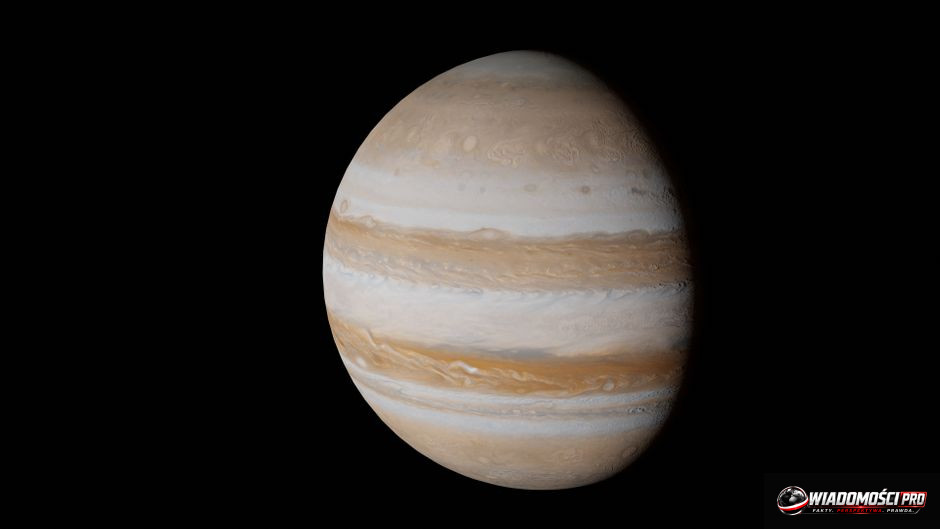
The Europa Clipper mission costs 5 billion dollars and aims to investigate whether the ocean hidden beneath the icy shell of Jupiter's moon – Europa – possesses conditions conducive to sustaining life. This is undoubtedly one of the riskiest and most expensive projects in the history of deep space exploration. NASA has bet everything on one card, sending a probe to a place where Jupiter's radiation can destroy the most advanced electronics in record time.
Engineering in the shadow of deadly radiation
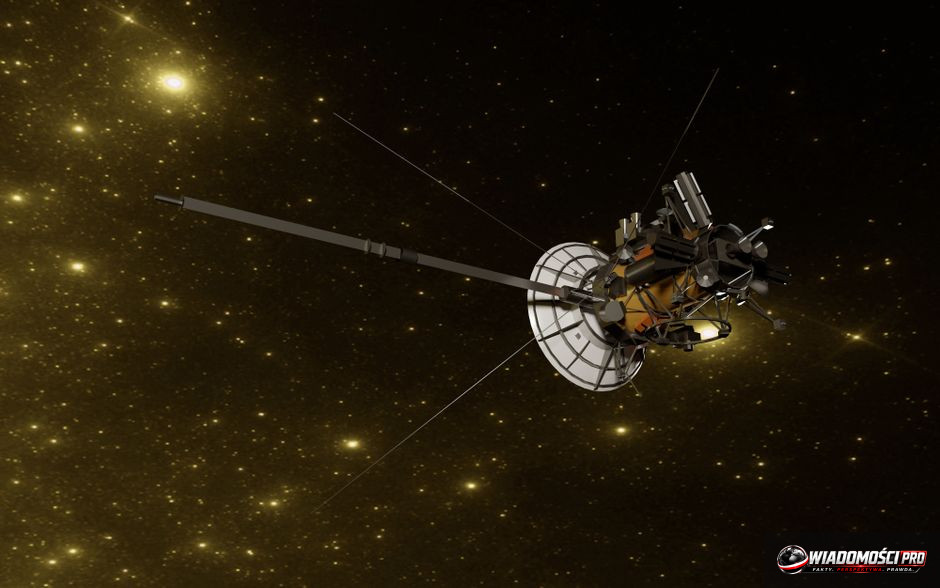
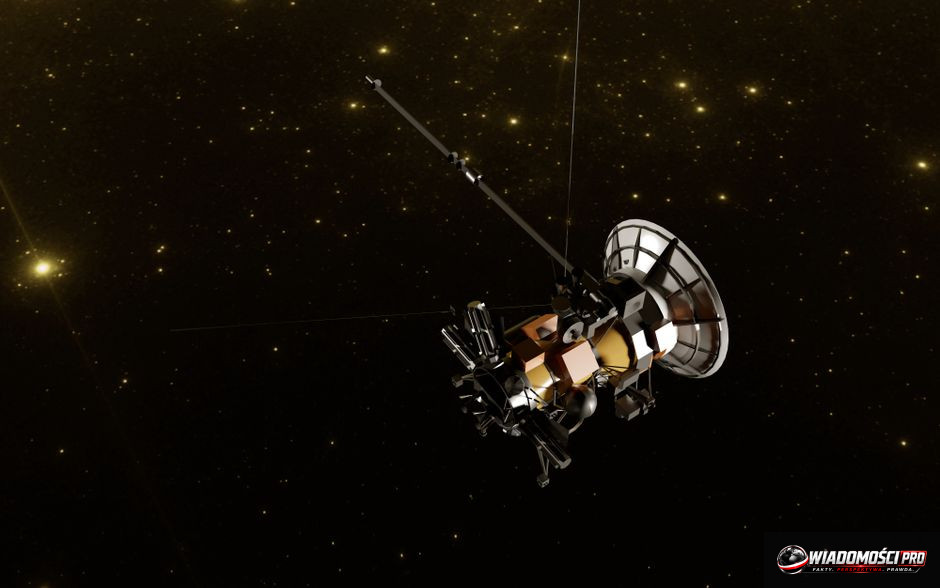
The probe's design is not the result of compromises, but of the brutal necessity of protecting the equipment from the destructive influence of Jupiter's magnetosphere. The probe has been enclosed in a special vault made of titanium and aluminum nearly a centimeter thick. This armor is intended to minimize the degradation of electronics, which during the mission will be exposed to radiation doses comparable to millions of X-rays. Engineers at the Jet Propulsion Laboratory could not afford a standard approach to system design. Every component, from processors to sensors, had to undergo rigorous testing in radiation chambers simulating the conditions near the gas giant.
Spending such vast financial resources stems directly from the need to develop technology that will not fail halfway there. The construction of the probe itself involved years of work on systems that must make decisions independently, as a radio signal from Earth takes nearly an hour to reach its destination. This is not the autonomy seen in science-fiction films, but a necessity resulting from vast distances. Europa Clipper operates in an environment where a calculation error in the software is equivalent to losing a multi-billion dollar investment.
Focusing on flybys rather than landing is dictated by probability. A lander would require not only extra fuel but also technology for a soft landing on an unknown surface, which, given the current state of knowledge about Europa's surface structure, would be gambling with fate. Instead, engineers opted for precisely calculated flybys that will allow the probe to maneuver safely in the immediate vicinity of the moon while avoiding the most dangerous radiation zones.
Scientific instruments: the eyes and ears of the probe
The Europa Clipper probe is not just a piece of metal with a camera. It is a flying laboratory equipped with a set of nine research instruments, each of which has its strictly defined role in the puzzle that scientists want to solve. The most important of these is REASON (Radar for Europa Assessment and Sounding: Ocean to Near-surface). This radar instrument is used to probe the interior of Europa. Its task is to penetrate the icy shell and detect potential pockets of liquid water and determine the thickness of the ice, which is crucial for understanding whether the ocean has contact with the surface.
Another key element is MISE (Mapping Imaging Spectrometer for Europa). This is an imaging spectrometer that will allow for the creation of a map of the surface's chemical composition. Thanks to it, we will learn whether the ice contains organic compounds, salts, or other substances that could have been brought up from the interior of the ocean during geological processes. Understanding what is on the surface itself is essential to inferring what is happening deep beneath it. Without MISE, the mission would lose its chemical context, limiting itself only to photos of geology.
One cannot overlook EIS (Europa Imaging System), a set of wide- and narrow-angle cameras that will provide us with the highest resolution photos in the history of studying this moon. These images will allow for the identification of geologically active areas, such as cracks or young terrain forms, which may be evidence of cryovolcanism. Each pixel from these cameras will be analyzed by hundreds of researchers looking for the slightest traces of changes in surface morphology.
Additionally, on board is SUDA (Surface Dust Analyzer), an instrument measuring the composition of dust and particles ejected from Europa's surface into space. If plumes of matter are emerging from the interior of the ocean, SUDA will be able to capture these particles and analyze their chemical composition without the need for landing. This is the most direct way to "touch" the ocean that we have in our current technological arsenal. The cooperation of all these tools creates a cohesive system designed to extract the maximum amount of scientific data from every flyby.
Flight mechanics: precision on a Solar System scale
The launch of the Falcon Heavy rocket in October 2024 was only the beginning. To reach the Jovian system, the probe must perform a complicated series of gravity assist maneuvers. Europa Clipper is not flying directly toward Jupiter, as this would require an amount of fuel that no currently available rocket is capable of carrying. Instead, the probe uses the gravity of Earth and Mars to gain the speed necessary to cover the vast distance.
This is a complicated game of cosmic billiards. Every maneuver must be calculated with an accuracy of a fraction of a millimeter per second. If the probe passes the planet a few kilometers too far or too close, the entire flight trajectory will change, which could undo years of preparation. NASA's navigation team manages this process with great attention, knowing that the margin of error is almost zero. This shows that even with the best equipment, it is mathematics and orbital physics that determine success, not just the power of the rocket.
The deep space cruise phase is a period during which most of the probe's systems remain in hibernation or limited operation. Engineers use this time to calibrate instruments and test software. Every code update sent from Earth undergoes multiple verifications, because uploading a faulty patch to the onboard computer when the probe is millions of kilometers away is a scenario every engineer would prefer to avoid.
Europa under the microscope: why this moon?
Jupiter's moon has intrigued researchers for years precisely because of its structure. Europa is not a dead rock. Beneath its icy surface pulses an ocean that likely contains more water than all of Earth's oceans combined. It is a giant, hidden reservoir whose nature remains a mystery to us. The probe will not land on the surface to drill through the ice because current technology does not allow for it. Instead, it will use a series of close flybys, scanning the area and analyzing data that will allow us to assess the friendliness of this environment for potential biological forms.
Skeptics often ask why we didn't choose Enceladus, Saturn's moon, where geysers eject water directly into space. The answer lies in logistics and NASA's priorities. Europa is closer, larger, and offers much more material for analysis from a geological perspective. The Jovian system is more accessible to current propulsion technologies, and Europa serves as a testing ground that is meant to tell us how to search for life in subsurface oceans throughout the Solar System.
An important aspect is also the issue of energy. Tidal forces generated by Jupiter and neighboring moons, such as Io and Ganymede, constantly knead the interior of Europa. This friction generates heat that keeps the ocean in a liquid state, even though the moon is far from the Sun. This is a heating mechanism that makes Europa unique on a system-wide scale. Were it not for these tidal forces, Europa would be a dead, frozen ball of ice. Our mission aims to understand the scale of this process and check whether it provides enough energy to power the chemical processes needed for life to arise.
Finances and risk: was it worth paying so much?
Funding of 5 billion dollars raises legitimate discussions about priorities. In a world where space agency budgets are under constant political pressure, every dollar must be justified. Critics point out that for this sum, one could send dozens of smaller satellites into Earth orbit, which would bring measurable benefits for climate or telecommunications. NASA, however, argues that flagship missions like Europa Clipper serve an inspirational and technological function that goes beyond pure economic profit.
The development of technologies necessary to survive in Jupiter's radiation environment finds application in the defense industry, the satellite sector, and nuclear energy. It is an investment in knowledge that pays off in the long term through innovation. However, the risk of failure cannot be ignored. If the instruments fail or if the probe is damaged by micrometeoroids, the entire amount will be considered lost. In NASA's history, there have already been such situations that cast a shadow over entire research programs.
For decision-makers in the US Congress, Europa Clipper is a project that must deliver results. It is not enough to send "pretty pictures." Hard spectrometric data, gravity maps, and evidence of geological activity are needed. If the mission only provides confirmation of what we already know, auditors may block funding for future exploration projects in the future. The stakes are therefore higher than just searching for life. The stake is the future of the American planetary exploration program.
Mission schedule: years of waiting for a signal
The mission schedule is brutally stretched over time. The launch in 2024 is just the beginning, and the actual research will begin after entering Jupiter's orbit, which will happen in a few years. This is a process that requires unprecedented patience. The engineers and scientists who designed the instruments will be at a completely different point in their careers when the first full results arrive.
Key stages of the mission include a series of flybys, each of which will last only a few hours. In this short time, the probe must perform thousands of measurements, take hundreds of photos, and send data to onboard memory. Then, over the next days or weeks, it will transmit this data to Earth with the limited bandwidth provided by the Deep Space Network. This is not real-time streaming. This is the painstaking collection of bits of information that, only after being put together, will create an image of Europa.
One cannot overlook the role of the launch vehicle itself. SpaceX's Falcon Heavy proved its worth by carrying the probe into space. The choice of this rocket was dictated not only by costs but also by availability and performance. SpaceX has become an integral part of the American space program, and the success of the launch is a shared success, combining NASA's experience with the dynamics of the private sector. This synergy is becoming a new standard in space exploration.
NASA's ambitions and the race to discover life
The American agency does not operate in a vacuum. The European Space Agency (ESA) is carrying out the JUICE (JUpiter ICy moons Explorer) mission, which also focuses on Jupiter's moons. Although these missions have different priorities, their goals overlap. NASA decided on an approach more focused on Europa, treating it as an absolute priority. This is a clear signal that the United States wants to maintain its position as a leader in the search for life beyond Earth.
The competition for primacy in astrobiological research is visible in the way missions are planned. NASA focuses on specialized, high-precision instruments, while other agencies seek a broad spectrum of data from various objects. This approach diversifies risk. If Europa Clipper fails, perhaps data from the JUICE mission will allow us to draw conclusions that will save our understanding of the Jovian system. However, it is NASA that bears the greatest financial and technological burden.
The question remains what will happen if the probe does not find any traces conducive to life. Does this mean the end of the search? Absolutely not. Science is about excluding hypotheses. If Europa turns out to be dead, we will turn our attention to Enceladus, Titan, or even distant exoplanets. Every "no" is another step toward finding a "yes." Europa Clipper is just one element of a broader strategy that aims to answer the question of whether we are alone in the universe.
What's next? Perspectives after reaching the destination
The finale of the mission will occur when the probe has performed all planned flybys and exhausted its fuel. Then the most intensive phase of data analysis will begin. If the instruments confirm the presence of organic compounds in the waters hidden under a thick layer of ice, the research results could fundamentally change our knowledge of cosmic biology. This is not just a matter of discovering microorganisms, but of redefining the definition of a habitat in the Solar System.
International cooperation in data analysis will be key. NASA makes data available to scientists from all over the world, which allows for independent verification of results. This is the best guarantee of reliability. If a signal indicating potential life appears in the data, it will be analyzed by dozens of teams to rule out measurement errors or radio interference.
Skeptics, however, point to the risk of misinterpretation. History knows cases in which data from planetary missions were overinterpreted by the media and public opinion, leading to unjustified expectations. NASA must maintain great restraint in communication. Every press release must be based on hard evidence, not speculation. Only in this way can the trust of the taxpayers who financed this venture be maintained.
What this means for you
For the general public, the Europa Clipper mission is primarily proof that space exploration remains the domain of humanity's greatest challenges. Science and US prestige gain, but the cost of the mission raises legitimate discussions about the efficiency of spending public money in the face of earthly challenges. Is it worth spending billions on an icy moon when we have climate and energy crises on Earth? This is a question that every taxpayer must answer for themselves.
From the point of view of the history of science, this mission is inevitable. Humanity has always strived to know the unknown. From geographical discoveries to the conquest of space – it is written into our nature. Europa Clipper is the next step in this journey, regardless of whether we find life at the end or just another dead rock in space. The very attempt to answer this question is worth every dollar spent on the development of technology that will one day allow us to explore even deeper.
Questions and answers
Why did NASA choose Europa and not another moon?
Europa has a global ocean of liquid water that is heated by Jupiter's tidal forces, making it the most promising place to search for conditions conducive to life in the Solar System.
When will the probe reach its destination?
The journey to the Jovian system takes several years, and the first flybys over Europa are planned after the gravity assist maneuver phase is completed and the probe enters orbit around the gas giant.
Is this the most expensive NASA mission in history?
Although 5 billion dollars is a very high amount, it falls within the budgets provided for NASA's "Flagship" missions, which are characterized by the highest level of technological complexity.
What happens if the instruments fail?
The probe has numerous redundant systems, but in the event of a critical failure of the main research instruments, the mission could be limited to collecting basic data, which would significantly reduce the scientific value of the project.
Can the mission be extended?
The decision to extend the mission depends on the technical condition of the probe, the battery charge level, and the availability of funds that will be allocated by Congress in subsequent fiscal years.
Is the probe able to send photos in real time?
No, due to the vast distances and communication bandwidth limitations, transmitting data takes many days, and photos are received by Deep Space Network stations as data packets that are only assembled into an image on Earth.
Sources
- Launch of the Europa Clipper mission to Europa - AstroNET – Polish Astronomical Portal
- Europa Clipper probe to search for life on Europa - Urania - Polish Astronomical Portal
- Europa Clipper mission launch [BROADCAST]. Americans to outpace Europeans in the search for life on Europa - Wyborcza.pl
- Beginning of the Europa Clipper mission - Kosmonauta.net
- NASA sends probe to Europa. Europa Clipper mission has launched - WP Tech
- Europa Clipper probe will search for life on Jupiter's moon, Europa - wszystkoconajwazniejsze.pl
- Flight to Jupiter for 5 billion dollars. Europa Clipper launch aboard Falcon Heavy - Benchmark.pl
- Searching for life in the Solar System beyond Earth. NASA sends mission - Geekweek Interia
Article prepared by the Wiadomości PRO editorial team with the support of artificial intelligence. Facts come from the sources provided above.
Komentarze (0)
Ładowanie komentarzy...