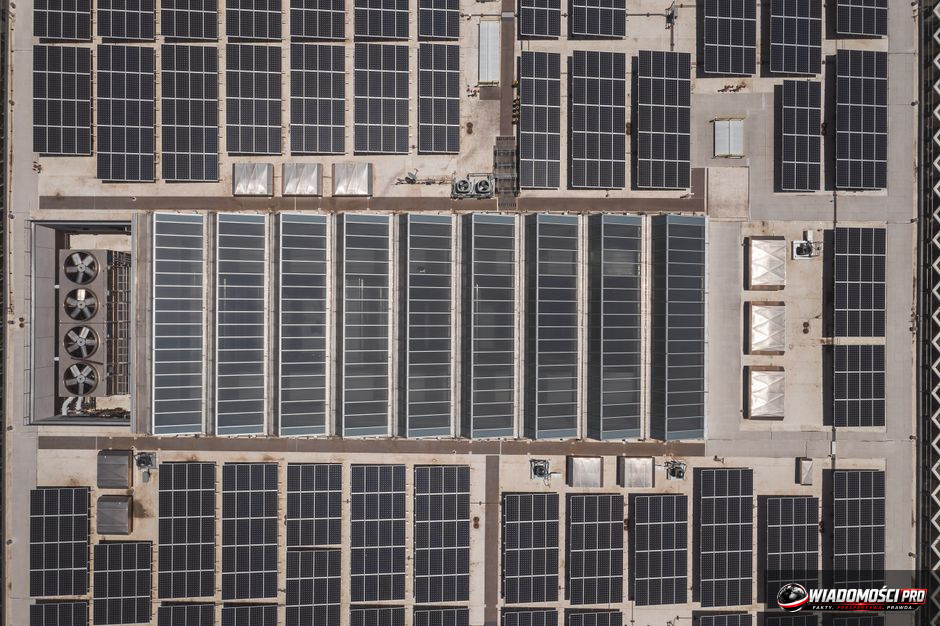
The estimated cost of a photovoltaic installation for a single large-scale facility ranges from 0.8 to 2.5 million PLN, with projected energy savings for chains reaching up to 40% annually, depending on the roof specifications. This investment has ceased to be a voluntary business choice, becoming a necessity in the face of deadlines imposed by the legislator. By the end of 2028, operators of supermarkets with a usable area exceeding 2,000 square meters must fully adapt their infrastructure to new energy standards, which in practice means multi-billion expenditures for the entire retail sector in Poland.
New legal requirements: what must a supermarket owner change?
December 31, 2028, is marked on the calendars of property managers for all major retail chains in Poland. The legislator has set this date as the final deadline by which large-scale facilities must meet energy efficiency requirements. The obligation to install PV systems covers every facility with a usable area exceeding 2,000 square meters. The scale of this undertaking is unprecedented. Property owners no longer have room for negotiation or postponing decisions, as failure to install by the deadline entails administrative consequences, the details of which are currently a source of concern for the boards of retail companies.
The investment process does not begin with purchasing panels, but with an in-depth energy and structural audit. Mandatory inspections check the technical condition of the roof truss, the load-bearing capacity of the structure, and the solar potential of the given location. This documentation forms the foundation of the project. Without it, no contractor will undertake installation work. The investment estimate, ranging from 0.8 to 2.5 million PLN per facility, reflects the vast range of engineering challenges. Many older supermarkets, built in the previous decade or earlier, have structures that were not designed for the additional load of several dozen tons generated by racks, panels, and ballast. In such cases, costs increase significantly, as it becomes necessary to reinforce the roof's load-bearing elements before proceeding with the installation of the actual PV system.
Projected savings of 40% annually are not a guaranteed result for every building. The final energy gain depends on the orientation of the roof slope relative to the cardinal directions, the angle of inclination, and any potential shading from neighboring buildings or ventilation installations. The retail industry is highly skeptical of government models calculating profitability. There is a real risk that for facilities with poorer sunlight exposure, the return on investment period will significantly exceed assumptions, which will negatively affect the financial liquidity of facilities already struggling with low margins.
Currently, investors remain in a regulatory vacuum. The lack of specific guidelines regarding subsidies or tax breaks dedicated specifically to large-scale modernization means that the financial burden rests solely on the owners' shoulders. Financing from own funds or taking out commercial loans in the face of high interest rates calls into question the profitability of many retail outlets. Chains are waiting for systemic support, but for now, they must operate in market realities where capital is expensive and legal requirements are absolute.
Cost analysis: how much does an installation really cost for a chain?
In 2026, investing in photovoltaics on supermarket roofs is becoming a battle for management to maintain margins in the face of rising electricity prices. The cost range between 0.8 and 2.5 million PLN results primarily from differences in the technical standard of the buildings. Newly constructed facilities, designed with PV loads in mind, are significantly cheaper to modernize than older halls, where every additional ton on the roof requires costly expertise and structural intervention.
Maintenance costs and potential inverter failures are often underestimated in initial business plans. Investors who decide to install today treat photovoltaics as an insurance policy against further energy price spikes, rather than a quick way to generate profits. Energy self-consumption allows for the elimination of the need to purchase it from the grid at market prices, which is the main driver of investment decisions. However, if installation maintenance is neglected, the projected efficiency of the cells will drop drastically within a few years, which will extend the capital payback period.
Summary of estimated financial data:
- Cost of installation for a large-scale facility: 0.8 – 2.5 million PLN.
- Cost per 1 MW of installed capacity: 2.5 – 4 million PLN.
- Projected energy savings: up to 40% annually.
These values are based on the editorial team's own data, as official government statistics regarding dedicated subsidies for this sector still do not exist. The lack of subsidies means that every investment decision is burdened with high business risk. Retail chains must estimate profitability on their own, relying on internal audits that do not always take into account the volatility of electricity prices in the long term.
Savings and energy efficiency: is it worth it?
Self-consumption is the heart of the economics of these projects. Electricity produced during midday hours, when sunlight is highest, goes directly to the supermarket's refrigeration systems, air conditioning, and lighting. It is during these hours that energy demand in stores is highest, which makes the self-consumption model extremely efficient. Reducing energy purchase costs by 30-40% translates into concrete savings in the company's budget, which can be reinvested in other areas of operational activity. At current electricity prices, the ROI usually closes in the range of 5 to 8 years.
For transmission system operators, large-scale installations serve a stabilizing function. Stores that produce their own electricity during the summer peak drastically reduce grid load at times when demand for refrigeration across the country reaches extreme values. This relieves the infrastructure during hours of the highest blackout risk. However, one cannot ignore the fact that savings of 40% are a maximum value. In reality, panel efficiency drops with surface contamination in logistics centers with high traffic, which is an often overlooked factor.
Investors counting on quick profit must prepare for the fact that the actual payback time may lengthen if installation maintenance is treated lightly. The economic calculation is clear only if we include full maintenance costs, including regular panel cleaning in areas with high dust levels. Without this, the projected 40% savings will remain only a theoretical calculation on paper, not translating into real financial results for retail companies.
Technical challenges: the roof as a power plant
Installing photovoltaics on the roof of a supermarket with an area of several thousand square meters is a logistical and engineering operation with a degree of difficulty disproportionately higher than in the case of residential installations. Investors must face three main barriers that determine the final price of the project.
First, roof load-bearing capacity. In facilities built before 2010, many structures were not calculated for an additional load of several kilograms per square meter. The need to reinforce the roof truss or replace the roof covering before installing panels can increase the investment cost by up to a quarter of the initial budget. This challenge is particularly acute for chains owning properties in older shopping centers.
Second, integration with energy management systems, or EMS. Intelligent control of energy flows in real time is necessary so that surplus electricity is effectively used inside the facility rather than wasted. The problem is that EMS system standards for large retail facilities are still not fully unified, which leads to communication problems between inverters and refrigeration or air conditioning equipment.
Third, fire safety requirements. Regulations in this area are evolving toward increasingly stringent standards. Operators are forced to use more expensive components with increased fire resistance and install advanced systems that disconnect voltage on the DC side in the event of a failure. The lack of uniform design guidelines for large-scale roofs remains the biggest unknown at present. Companies that ignore these requirements risk losing the warranty for the entire installation and the danger of fire, which in the case of such large facilities could bring irreversible losses.
Impact on the labor market and the RES sector
Mass installation of panels on supermarket roofs forces a rapid reorganization of the labor market in the installation sector. Contracting companies are struggling with staffing pressure the industry has not seen in years. A project of this scale requires not only certified installers but also engineers with high-altitude work permits and knowledge of industrial electrical engineering. In 2026, specialists capable of handling large commercial projects remain a scarce commodity, which translates into higher labor costs.
This situation drives the boom for domestic manufacturers of mounting systems. Polish capital in this segment is gaining, as imported racks often do not meet Polish standards for snow load or wind resistance. This is a real chance for stable growth for Polish factories, provided they maintain the production quality required by investors.
However, there is an infrastructure bottleneck that is talked about too little: energy connections. While laying the panels themselves takes only a few weeks, the process of obtaining connection conditions for installations with power exceeding micro-installation standards can drag on for months. Many distribution system operators are not prepared for such a large number of applications from commercial facilities. As a result, many supermarkets will end up with installed panels that remain disconnected from the grid due to a lack of modernization of energy nodes. As of August 20, 2026, no official data regarding the scale of these delays has been confirmed, but unofficial signals from the energy industry are worrying.
What next? Perspectives after 2028
After 2028, Polish retail will enter a phase of full business model transformation. The strategies of the largest chains clearly point to the creation of energy clusters. This solution will allow for balancing energy surpluses between stores and logistics centers within a single entity. From an accounting perspective, this is much more profitable than selling surpluses to the grid at market prices, which are often unfavorable to the producer.
Regulations regarding emission standards after 2030 will hit smaller retail facilities that until now could count on transition periods. For owners of smaller stores, this is an alarm signal. Modernization will cease to be a voluntary choice and will become a legal requirement to avoid penalties for exceeding the carbon footprint. The next inevitable stage will be integration with energy storage. Without them, PV installations lose efficiency in the evening hours when the demand for refrigeration in supermarkets remains high.
Currently, there are no official cost forecasts for the implementation of storage systems on a mass scale in Polish retail. The real financial burdens for the chains remain a big unknown, and the market is still waiting for specific guidelines regarding subsidies for these technologies. Without state support, the transformation after 2028 may be sharply slowed down by excessively high initial costs, which will put many retail outlets in a very difficult economic situation.
For consumers, this means price stabilization for products in the long term thanks to lower operating costs for chains, but in the short term, chains may pass investment costs onto margins. The catch remains the technical capabilities of old buildings, which may require costly reconstruction, which could ultimately affect the prices of goods on the shelves.
Questions and answers
Does every supermarket have to install panels?
The obligation applies to large-scale facilities over 2,000 sqm, excluding buildings where an audit shows a lack of technical feasibility for installation due to structural reasons.
Who will finance this investment?
The investment rests on the property owners, although the industry is actively lobbying for dedicated support programs from the KPO (National Recovery Plan) or EU funds, which could ease the financial burden of modernization.
What happens if a chain does not finish by 2028?
The act provides for a system of administrative penalties for failure to fulfill the obligation by the deadline, but the exact enforcement mechanisms have not yet been detailed in executive regulations.
Article prepared by the Wiadomości PRO editorial team with the support of artificial intelligence. Facts come from the sources provided above.



Komentarze (0)
Ładowanie komentarzy...