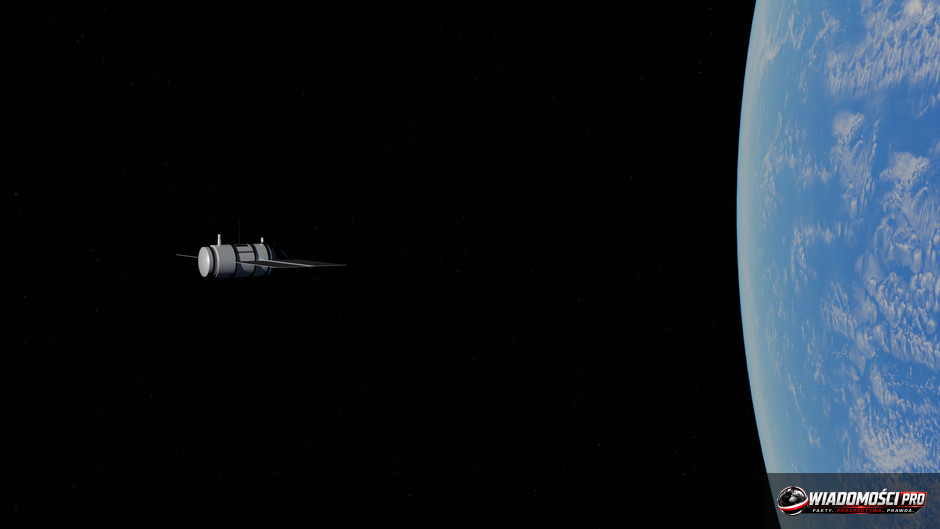
The Europa Clipper mission costs 5 billion dollars, and its main goal is to investigate whether conditions conducive to sustaining life exist beneath the icy shell of Jupiter's moon. This flagship NASA endeavor is the culmination of decades of planning, aimed at determining whether environments capable of supporting biological processes exist outside of Earth. The probe, which left Earth's atmosphere in October 2024, is the most advanced planetary laboratory ever sent toward the gas giant.
The financial dimension of exploration
An investment of 5 billion dollars in a single research project raises questions about the priorities of space agencies. NASA treats this expenditure as a necessary cost to obtain data that no other instrument could provide. This budget covers not only the design phase, which lasted years, but also logistics operations, the construction of equipment capable of withstanding Jupiter's extreme radiation, and long-term operational support from the ground team.
Modern astrobiology requires equipment that must survive in conditions where electronics are exposed to constant bombardment by charged particles in Jupiter's radiation belts. It is precisely the necessity of using specialized radiation shielding for the probe's electronics that significantly increased production costs. Every component had to be tested in simulated conditions, which in practice meant building two copies of many sub-assemblies.
For the NASA administration, the decision to provide such high funding was an attempt to maintain its position as a leader in deep space exploration of the Solar System. From a taxpayer's point of view, this amount is abstract, yet on the scale of the US federal budget, it represents a fraction of defense or social spending. This project is treated as an investment in knowledge about the chemical evolution of the cosmos. If the probe provides data confirming the presence of a habitable ocean, this cost will be considered historically justified. In the case of negative results, it will be a note in astrophysics textbooks explaining why some worlds remain dead despite the presence of liquid water.
Europa – an icy world with biological potential
Europa is not just a block of ice drifting around the largest planet in the Solar System. It is a geologically active object, beneath whose shell—estimated to be a dozen to several dozen kilometers thick—lies a global saltwater ocean. Mathematical models indicate that the amount of water in this subsurface reservoir could be twice the volume of all Earth's oceans combined.
The energy needed to keep the water in a liquid state comes from tidal interactions caused by the gravity of Jupiter and neighboring moons, such as Io or Ganymede. These processes cause deformations of the moon, which generates heat in its interior. This is a key piece of the puzzle. Without an internal energy source, Europa's ocean would be merely a frozen block of ice, incapable of sustaining any form of organic chemistry.
The probe is not tasked with drilling into the ice. Such an operation is currently beyond the reach of available technology. Instead, Europa Clipper will perform a series of close flybys, during which onboard instruments will analyze the chemical composition of the atmosphere and surface. There are indications that water from the ocean may escape to the surface through cracks in the icy shell in the form of geysers. The probe will search for chemical signatures indicating metabolic processes or the presence of complex organic compounds, which are the necessary building blocks of life as we know it on Earth.
Mission launch: The power of the Falcon Heavy rocket
October 2024 brought the long-awaited launch of the probe. NASA made the decision to launch Europa Clipper aboard a Falcon Heavy rocket belonging to the company SpaceX. This choice was not accidental. The Falcon Heavy has sufficient thrust to give the heavy probe the appropriate initial velocity needed to begin the multi-year journey toward Jupiter.
The logistics of the launch were precisely planned to minimize risk to such an expensive instrument. The use of a private launch vehicle fits into the agency's new strategy, which increasingly delegates transport aspects to the commercial sector. Thanks to this, NASA's resources can be focused on the science itself, rather than on maintaining its own fleet of launch vehicles. The Falcon Heavy has already proven itself in many difficult missions, which gave scientists the necessary confidence during the countdown procedure.
The launch itself was only a technical introduction to a mission that will last for years. The probe must now cover the distance separating us from Jupiter, using gravity assists from inner planets to gain the speed necessary to enter orbit around the moon. Every maneuver on this route is critical. Navigation errors could mean losing contact with the probe or a failed entry into the target's gravitational field. The team of engineers at the Jet Propulsion Laboratory is constantly monitoring the flight trajectory, ensuring that the probe does not deviate from its designated course.
Technological race: USA versus Europe
American dominance in space exploration is not accidental. The Europa Clipper mission is a manifestation of Washington's technological advantage, as it decided to carry out this task independently. While European space agencies, such as ESA, focused on other research goals, NASA took the initiative in studying Jupiter's moons.
This rivalry has not only a scientific but also a prestige dimension. Being the first to discover evidence of life beyond Earth is a milestone that will change the history of humanity forever. The Americans did not want to wait for international consortia, which often get stuck in a thicket of bureaucracy and budget negotiations. Instead, they bet on their own capital and proven engineering solutions.
Europe—as a continent—possesses a rich intellectual base, but in this specific case, the role of Europeans is reduced to observing the success of the American mission. ESA is planning its own expeditions toward the Jupiter system, but it will be the NASA probe that is the first to analyze Europa's environment in such detail. In the world of science, the publication of research results is available to everyone, but it is the owner of the probe who first gains access to raw data. This gives American scientists a unique advantage in interpreting results and publishing the first conclusions.
Probe equipment: How are we searching for life?
The Europa Clipper probe has been equipped with a set of instruments tasked with looking beneath the icy shell without the need for direct contact with the water. The research apparatus includes, among other things, ice-penetrating radars, which are tasked with creating a three-dimensional map of the moon's internal structure. This data will allow for determining where the shell is thinnest and whether pockets of liquid water exist within it.
Another key element is the spectrometers, which will analyze the chemical composition of particles ejected from the surface. Thanks to them, scientists want to identify the presence of salts and organic molecules, which could testify to the existence of hydrothermal processes on the ocean floor. If such processes are occurring, they could provide energy for potential microorganisms, similar to what happens in Earth's hydrothermal vents on the ocean floor.
One cannot forget about the high-resolution cameras that will photograph Europa's surface during every flyby. Although imaging cannot prove the presence of life, it will allow for a better understanding of the geological processes shaping the terrain. Understanding the dynamics of cracks and ice movements is necessary to assess whether the ocean is active. Each of these instruments was designed with extreme radiation in mind, which makes the probe one of the best-protected machines in the history of space exploration.
Schedule: A long road to Jupiter
The mission schedule is spread over many years. After its launch in 2024, the probe is in a long-term cruise phase through the Solar System. This is a period during which instruments remain in sleep or diagnostic mode, and engineers from Earth check their readiness to work in deep space conditions. Only after reaching the vicinity of Jupiter will the actual research phase begin.
This journey is a necessary cost that we must bear to reach such a distant target. The inability to shorten the flight time forces scientists to have enormous patience. During this time, the ground team is busy preparing algorithms for the analysis of data that will flow from the probe after it reaches its destination. It is tedious work, requiring precision and the anticipation of every possible technical scenario.
For the general public, this period is almost invisible, which leads to a temporary forgetting of the project's costs. However, for the world of science, this is a time of intensive preparation. Every month of the journey is an opportunity to calibrate systems and plan specific flyby maneuvers. If any failure occurs during these years, NASA will not have the ability to send a repair crew. Everything must work autonomously and reliably.
Astrobiological context
The question of whether we are alone in the universe has accompanied us since the beginning of civilization. The Europa Clipper mission is the first such advanced attempt to answer this question using tools that do not rely on speculation, but on direct physicochemical measurements. Even if the mission does not detect life, the answer to the question of whether Europa's environment is capable of supporting it will be a breakthrough in astrobiology.
Currently, our definitions of life are based solely on the Earth example. Europa may provide us with evidence that biology can develop in completely different conditions, which will expand the boundaries of the "ecosphere" in our planetary system. If it turns out that life can exist under a thick layer of ice, in total darkness and at low temperatures, then the number of potentially inhabited worlds in the galaxy will increase drastically.
This is why the cost of the mission is so high. We are not paying for a piece of metal sent into space, but for the opportunity to verify fundamental assumptions about our place in the universe. If the probe confirms that Europa possesses all the ingredients needed to sustain life, the next step will be lander missions that will attempt to collect samples directly from the surface or from geysers. These, however, are plans for the distant future. Today, we are focusing on what Europa Clipper will provide us.
Technical challenges in the shadow of Jupiter
Jupiter is not only a huge planet but also a powerful source of radiation that destroys electronics. The Europa Clipper probe was constructed in such a way that its key systems are protected by a thick layer of titanium and aluminum. This protection is necessary because every approach to Europa involves entering a zone of increased radiation.
Engineers had to solve the problem of heat dissipation while simultaneously ensuring protection against radiation. This is a technical challenge that no previous planetary mission has faced. The probe must be durable enough to survive years of intensive work in these conditions. Each flyby of the moon is a test of the equipment's endurance, which could end in success or the slow degradation of the instruments.
For scientists, the most important issue is the quality of the data obtained. Even small disturbances in the operation of sensors can affect the interpretation of results. Therefore, the probe's software is constantly updated and optimized to squeeze the maximum amount of information out of every flyby. It is a race against time and radiation, where every byte of data is worth its weight in gold.
Future after the mission
When the probe finishes its work, the data it collected will be analyzed for decades to come. This is a mission that extends beyond the time horizon of a single generation of scientists. The people who designed the instruments today will pass on their knowledge to their successors, who will handle the interpretation of the final results.
This approach to science is characteristic of NASA's flagship missions. It is not just about current discoveries, but about building the foundations for future generations of explorers. If Europa Clipper proves to be a success, it will open the door to building permanent research bases in the Jupiter system. If, however, the results are disappointing, it will allow for the redirection of resources toward other objects, such as Enceladus—a moon of Saturn, which also shows geological activity and possesses an ocean under the ice.
Ultimately, regardless of the result, this mission pushes the boundaries of what we are capable of studying. We are witnessing a moment in which technology allows us to look into the interior of an alien world from a distance of millions of kilometers. It is precisely thanks to this 5-billion-dollar budget that our knowledge of the Solar System ceases to be a collection of assumptions and becomes science based on hard data.
Questions and answers
Will the probe land on the surface of Europa?
No, the Europa Clipper probe will conduct research from orbit around Jupiter, performing numerous flybys close to the moon.
How long will it take to reach the destination?
The journey to the Jupiter system takes years, and the mission was planned taking into account the long flight time through the Solar System.
Why was Europa chosen specifically?
Europa is considered one of the most promising objects in the Solar System due to the presence of liquid water beneath the icy shell.
Sources
- Start of the Europa Clipper mission to Europa - AstroNET – Polish Astronomical Portal
- Europa Clipper probe to search for life on Europa - Urania - Polish Astronomical Portal
- Start of the Europa Clipper mission [BROADCAST]. Americans will overtake Europeans in the search for life on Europa - Wyborcza.pl
- Beginning of the Europa Clipper mission - Kosmonauta.net
- NASA sends a probe to Europa. The Europa Clipper mission has launched - WP Tech
- Europa Clipper probe to search for life on Jupiter's moon, Europa - wszystkoconajwazniejsze.pl
- Flight to Jupiter for 5 billion dollars. Launch of Europa Clipper aboard Falcon Heavy - Benchmark.pl
- Searching for life in the Solar System beyond Earth. NASA sends a mission - Geekweek Interia
Article prepared by the Wiadomości PRO editorial team with the support of artificial intelligence. Facts are derived from the sources listed above.
Komentarze (0)
Ładowanie komentarzy...