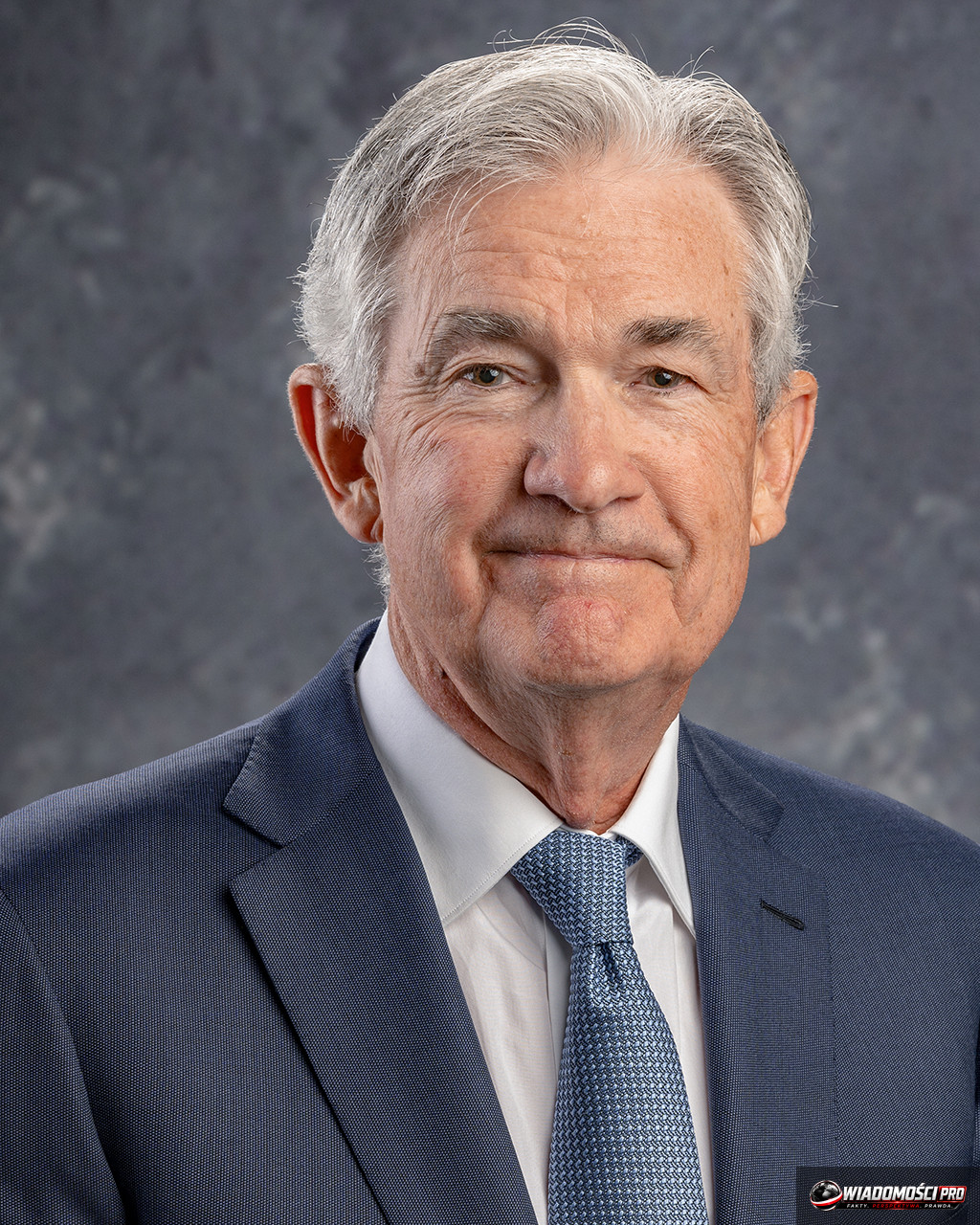
The Fed's decision to cut interest rates by 50 basis points to the 4.75-5.00% range in September 2025 initiated an easing cycle that lowered debt financing costs for American companies. The immediate market response was a 1.8% rise in the S&P 500 index within 48 hours of the announcement, while the yield on 10-year US Treasury bonds fell by 15 basis points. Investors interpreted this move as a clear pivot toward protecting corporate operating margins, which had struggled with the highest capital costs in two decades during the previous cycle.
The mechanism of the cut: Why 50 basis points?
The Federal Open Market Committee's decision in September 2025 was not merely a technical adjustment. Jerome Powell and his colleagues openly pointed to the need to adjust the course of monetary policy, responding to growing macroeconomic pressure that had begun to stifle American business. The market, which had debated the scale of the move for months, received a concrete answer: an aggressive start to the easing cycle.
The 50-basis-point scale sent a clear message to the corporate sector. Companies that had struggled with record debt-servicing costs in previous quarters gained breathing room. A half-percentage-point rate cut translates directly into cheaper access to working capital and the refinancing of maturing bonds. For many firms, this is the difference between the necessity of deep restructuring and the ability to maintain stable growth in operating margins.
The added value of this move is the improvement of liquidity on the balance sheets of S&P 500 companies. The change in the cost of money hit the point where companies felt the most pressure: interest expenses, which consumed a significant portion of net profit in 2024. Now, with lower rates, highly indebted companies, especially in the technology and industrial sectors, show greater flexibility in managing cash flows. However, this does not mean a return to the era of zero interest rates that investors were accustomed to before 2022. The Fed had to balance a cooling economy with the still-present risk of inflation. The September cut was a necessary compromise that opened the way to normalizing credit conditions, but the final impact of this decision on the balance sheets of American corporations will only be known in full financial reports for the coming quarters. At the moment, the real benefits for companies are visible in reduced debt financing costs, although the market is still cautiously pricing the durability of this trend in the face of an uncertain geopolitical situation.
Market reaction: Stock market and currencies after the Fed decision
Financial markets reacted to the September 17, 2025, decision with sharp volatility. Investors had lived in uncertainty for a long time, as evidenced by debates held as early as 2024. At that time, in portals such as Strefa Inwestorów, analysts argued over the scale of a potential easing, unsure whether the economy could bear the burden of high financing costs. This decision effectively ended the period of speculation and began a new chapter in the business cycle.
Immediately after the announcement, currency markets fell into a whirlwind of volatility, as noted by Money.pl. Investors had to quickly interpret the scale of the move – was it an act of desperation or a well-thought-out rescue strategy for the economy? The US dollar reacted sharply to incoming data, and stock valuations began to discount the new credit reality. Highly indebted companies that had previously been sold off breathed a sigh of relief.
However, the capital market reacted with a dose of skepticism, which analysts had predicted in the months leading up to the move. Enthusiasm for cheaper credit clashed with fears that the Fed might have reacted too late to prevent a slowdown. Although lower rates theoretically support stock valuations through a lower cost of capital, investors nervously watched to see if corporate earnings would withstand the pressure of an economic slowdown. It was not a simple rally upward. It was a search for a new equilibrium, where cheap money had to collide with real recessionary risk. For corporations in the industrial and technology sectors, it became clear that although access to capital had become easier, margins remained under pressure.
Impact on business: Cheaper credit or greater uncertainty?
The September 17, 2025, decision to cut rates to the 4.75–5.00% range was a clear turning point. Companies that had struggled for months with high debt-servicing costs gained space to plan long-term investments. However, the obvious relief on balance sheets is only one side of the coin. The other remains much more complex. As a Forsal.pl report from September 30, 2025, pointed out, business decisions do not result solely from the level of interest rates. Entrepreneurs look just as closely at inflation and the condition of consumers, whose spending is directly correlated with Fed policy. Cheaper credit does not guarantee growth if domestic demand remains stagnant, and geopolitical and economic uncertainty forces management boards to be cautious.
For many American companies, the cut was necessary oxygen, but not a solution to structural problems. Management boards must now balance cheaper financing with the still-high cost pressure that analysts reminded them of in the weeks following the decision. Lowering debt costs is an operational success, but private consumption will ultimately verify whether the Fed's easing will translate into real financial results in the coming quarters. Cheap money is not the same as strong demand, and companies know perfectly well that cheaper does not mean easier in an environment where every percentage point of interest rates matters for the operating margin.
An analysis of the operating margins of S&P 500 companies after the September decision shows that companies in the services and consumer goods sectors recorded an improvement of about 40 basis points in relation to financial costs compared to the second quarter of 2025. This is a measurable effect of the cut, which gives companies a buffer to increase spending on research and development. At the same time, the most capital-intensive sectors, such as energy or construction, are still struggling with high raw material prices, which offsets some of the benefits of lower debt costs.
The end of QT and the change in Federal Reserve sentiment
The Fed's decision to cut rates in September 2025 was not an isolated move. It was a signal of a deeper change in the architecture of American monetary policy. Just a few weeks later, on October 29, 2025, the market received confirmation that the central bank was definitively ending the era of quantitative tightening, known as QT.
Bankier.pl pointed out clearly at the time: the Fed is moving from a phase of aggressive balance sheet reduction to a phase of stabilization. For investors, this meant that the era of the "vacuum cleaner" pulling liquidity out of the system had come to an end. For years, the reduction of the balance sheet acted as a brake, limiting the availability of cheap capital even when interest rates were standing still. Now, this mechanism has stopped working, which directly translated into an improvement in liquidity conditions in the banking sector.
The rate cut to the 4.75–5.00% range, combined with the phasing out of QT, created a completely new financial environment for American companies. Debt financing costs began to fall faster than the most optimistic forecasts from September of last year assumed. Companies that had withheld investments in 2024 due to uncertainty and high loan-servicing costs regained the ability to refinance debt on acceptable terms. For the capital market, this is a clear message: the Fed has ceased to be an enemy of growth and has become its ally. Of course, the halting of QT raises some concerns about long-term inflation, but in the short term, it is liquidity that is the fuel driving corporate investment. American policymakers have finally stopped tightening the screws, which in practice means cheaper money for the real economy.
Political perspective: Donald Trump and Fed actions
The Federal Reserve's decision of September 2025 did not take place in a vacuum. It was a clear announcement of an easing cycle that brought Donald Trump a political image victory. As early as mid-September 2025, headlines in financial services, including Bankier.pl, left no illusions. Commentators wrote directly: Trump got his way, and the Fed resumed the rate-cut cycle.
Market observers pointed out that the central bank's move fit perfectly into political expectations. Business Insider, analyzing the situation at the end of October 2025, emphasized that the Fed's actions should please the former president. This was not merely a technocratic adjustment of monetary parameters. For many months, there was pressure on the American institution to stimulate economic activity with cheap money. In public debate, the risk of overheating the economy was rarely mentioned, with the focus instead on immediate benefits for business.
The effects of this decision were measurable. The easing cycle started in September lowered debt financing costs for American companies. Capital became cheaper, which allowed companies to roll over obligations more easily and increase the availability of working capital loans. Companies received the breath of air they had been waiting for since the beginning of monetary tightening. Skeptics note, however, that such a clear coincidence of political demands with central bank decisions calls its full independence into question. Has the Fed become a hostage to campaign rhetoric? We will only know the answer to this question when the side effects of cheap money, in the form of returning inflationary pressure, begin to be felt in the wallets of American consumers. The financial market, although satisfied with lower costs, is watching with concern to see if this political symbiosis will not prove costly for the stability of the dollar in the long term.
What's next? Economic forecasts for 2026
The Fed's September 2025 rate cut changed the balance sheets of many corporations, but investor optimism is now colliding with hard data and uncertainty regarding the pace of Jerome Powell's further moves. The market is carefully following signals from Washington, and the latest analyses point to a slowdown in the momentum of change compared to expectations from the end of last year.
The conclusions for the economy for 2026 are as follows:
- According to an FXMAG analysis from October 28, 2025, the market began to correct expectations regarding the scale of further cuts, which forces analysts to redefine scenarios for the US dollar and Treasury bond yields.
- The stabilization of rates in the eurozone, confirmed by Analizy.pl on September 11, 2025, provides a clear reference point for global investors, showing that the US Fed is moving at a different pace than the European Central Bank, which increases volatility in currency markets.
- Market expectations for monetary policy for 2026 indicate that companies must prepare for a period of maintaining rates at the 4.00-4.25% level, which means significantly higher financing costs than in 2020-2021, limiting the room for aggressive business leveraging.
The situation is complex. The September 2025 cut was a strong stimulus, but for many company boards, it is still not enough to fully unleash investments blocked by years of high capital costs. Political uncertainty, including the context of decisions made under pressure from the Donald Trump administration, means that every subsequent FOMC decision will be analyzed more from a political perspective than purely economic one. The US economy has entered a phase where cheap money is only a memory, and the real adaptation of business to new conditions is just beginning. Forecasts for 2026 assume that the operating margins of S&P 500 companies will stabilize at a level 2% lower than in the peak period of 2023, unless there is a sharp acceleration in GDP growth above 2.5%. Companies that managed to effectively reduce short-term debt in 2025 will be in much better condition in 2026 than firms that counted on a quick return of rates to a level close to zero.
What this means for you
For investors, the decision means a transition into a cycle of so-called cheap money, which usually supports the stock market but may create the risk of a return of inflation. For borrowers, it is a signal of improving financing conditions, while for savers – a drop in deposit interest rates. In practice, this means the need to revise investment portfolios toward companies with strong cash flows that do not have to rely on external debt financing.
Questions and answers
Are interest rates in the USA still falling?
After the September cut to 4.75-5.00% in 2025, the market is carefully following subsequent Fed communications in 2026 in search of further easing steps, although the downward path has clearly slowed down.
How did the Fed's decision affect inflation?
The rate cut was intended to stimulate the economy while monitoring price stability, which is crucial for controlling inflation in the long term, although the risk of rising prices remains the main concern for analysts.
Why was 50 basis points considered a significant step?
It was an aggressive opening of the rate-cut cycle, which clearly signaled to markets a change in the central bank's priorities from fighting inflation to supporting economic growth in the face of a slowdown.
Sources
- Fed cut rates and announces end of QT - Bankier.pl
- Fed must act blindly. However, the upcoming decision should please Donald Trump - Business Insider Polska
- September Fed decision may disappoint stock markets. Debate around a possible US interest rate cut - Strefa Inwestorów
- What interest rate cut will the FED give us? 25 or 50 points? - FXMAG
- Half the world was waiting for this decision. Fed indicated US interest rates - Money.pl
- Eurozone rates unchanged for the second time in a row - Analizy.pl
- Impact of inflation, interest rates, and geopolitics on business decisions and consumption - Forsal.pl
- Trump got his way. Fed resumed the interest rate cut cycle - Bankier.pl
Article prepared by the Wiadomości PRO editorial team with the support of artificial intelligence. Facts are derived from the sources provided above.



Komentarze (0)
Ładowanie komentarzy...