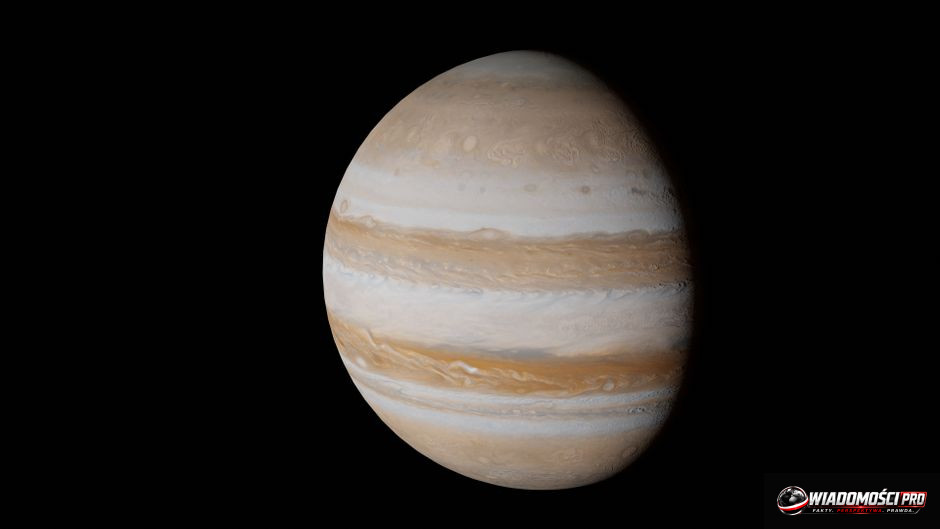
In brief
- The total cost of the NASA mission is 5 billion dollars.
- The probe launched in October 2024 using a Falcon Heavy rocket.
- The main goal is to analyze the biological potential of Jupiter's moon – Europa.
Mission goal: What does Europa's icy shell hide?
Mission goal: What does Europa's icy shell hide?
Europa Clipper is not just another flight into the unknown, but a precision strike at a specific location. For 5 billion dollars, NASA has sent an advanced laboratory toward Jupiter that is intended to answer one of the fundamental questions of modern science: are we alone? The cost of the mission sparks emotions, especially when compared to the budget constraints of other research projects, but the stakes are high. We are not looking for microbes directly. We are looking for the chance of their existence.
The probe focuses on studying the chemical and physical conditions that prevail under the moon's thick, icy shell. Data flowing to us from space has suggested one thing for years: Europa possesses a global ocean hidden under kilometers of ice. It is there, in the darkness, far from the direct influence of the Sun, that scientists see a potential cradle of life. Understanding whether this ocean is habitable requires analyzing the interactions between the icy surface and the water hidden beneath it.
Many experts point to the risks. Europa is an extremely difficult environment, bombarded by Jupiter's strong radiation, which poses challenges for onboard electronics. Five billion dollars is a sum that demands success. If the equipment does not withstand these conditions or if the collected data turns out to be inconclusive, critics of the spending will gain a powerful argument against funding such expensive expeditions. On the other hand, confirming even trace evidence of the chemical suitability of this ocean for life will redefine our place in the Solar System. This is not a cheap sightseeing trip. It is an attempt to check whether biology can develop outside of Earth under completely different conditions.
Technology: Falcon Heavy in the service of science
Technology: Falcon Heavy in the service of science
The Europa Clipper mission, with a budget totaling 5 billion dollars, could not have gotten off the ground without the right means of transport. A key logistical element of this undertaking was the Falcon Heavy rocket, manufactured by SpaceX. It was this launch system, known for its immense thrust, that carried the probe into space in October 2024. The choice of Elon Musk's design was not accidental, although it sparked some discussion in the scientific community regarding the costs of maintaining such extensive missions by NASA.
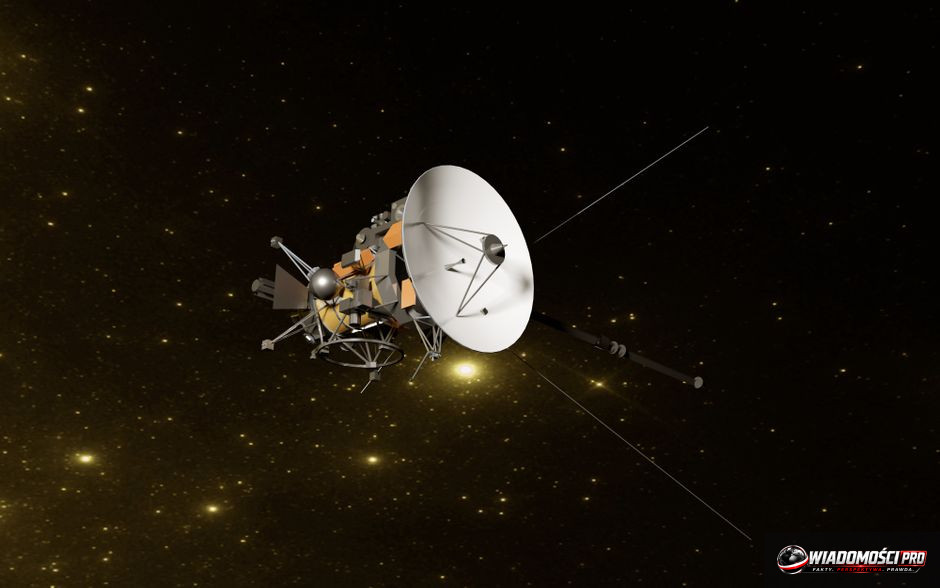
The choice of Falcon Heavy is a pragmatic engineering decision, not a matter of prestige. The rocket had to handle the massive weight of the probe, which was packed with research instruments. The purpose of these complex devices is to analyze the environment under the icy shell of Jupiter's moon to ultimately answer the question of whether conditions conducive to sustaining life exist there. This is a fundamental goal that justifies the gigantic expenditure, even if at the current stage of research it does not guarantee success in the form of direct detection of organisms.
It is worth noting a certain contrast. While the public is sold a narrative about a giant leap toward the discovery of life, engineers look at it more coolly. The launch of the mission was only the beginning of a series of extremely risky orbital maneuvers. The probe must not only reach its destination but also survive the deadly radiation in the vicinity of Jupiter, which makes the rocket itself just the first – though necessary – stage of a long and expensive journey. If Europa Clipper fails, 5 billion dollars will become a symbol of the most expensive failure in the history of exploring Jupiter's moons. For now, however, thanks to a successful launch in October 2024, the equipment is on its way.
Finances: Is 5 billion dollars a high price for knowledge?
Finances: Is 5 billion dollars a high price for knowledge?
The official budget for the Europa Clipper project totaled 5 billion dollars. This is a sum that no longer surprises anyone in the space sector, although for the average taxpayer, it remains an abstract number. This money was not spent solely on the construction of the probe itself. The investment includes a multi-year design process, advanced launch logistics, and operational support that will last for many more years.
Within this funding, engineers and scientists must pay for every stage of the journey, from assembling complex research equipment to maintaining communication with a device located hundreds of millions of kilometers away. From the perspective of a government agency, this is a costly undertaking, but on the scale of global defense or infrastructure spending, this amount pales in comparison. The question of the justification for such an expenditure returns with every launch of a major research mission. Is the answer to the question of whether conditions conducive to life actually exist under the icy shell of Jupiter's moon worth as much as a medium-sized sports stadium?
Skeptics will note that for 5 billion dollars, dozens of smaller, less risky research projects could have been funded on Earth. Supporters will respond that knowledge about potential biological activity in the Solar System is priceless. In practice, NASA is betting on one powerful card. There is no room here for design errors or cost-cutting on components, because every failure at such a great distance means the definitive loss of the entire capital. Europa Clipper is therefore a hostage to its own scale. It will either provide groundbreaking data about Europa's oceans, or it will remain the most expensive proof that in science, a high price does not always guarantee success.
Schedule: A journey through the Solar System
The Europa Clipper mission is an undertaking stretched over years, requiring NASA engineers to perform precise logistical planning on a scale the Solar System has not yet seen. The 5 billion dollar investment does not end with the launch of the probe itself. It is an expensive ticket to check whether conditions conducive to sustaining life actually exist under the icy shell of Jupiter's moon, which is the primary goal of this operation.
The implementation of the project has been scheduled for the long term, covering the period from 2024 through 2030 and subsequent years. Each stage of this journey is fraught with risk, which, with such a high budget, becomes a political and scientific issue for the taxpayer. The American space agency does not hide the fact that the schedule is rigid, and any delays generate additional operational costs that could further strain the mission's budget.
Below are the key points of the schedule that set the rhythm of the research team's work:
- October 2024: mission launch, the moment the probe left Earth, beginning its multi-year journey toward Jupiter.
- Years 2024–2030+: duration of the mission, during which the probe performs key flybys, collecting data necessary to assess Europa's habitability.
For outside observers, such a time span is a test of patience. Six years is an eternity in the world of technology, and a mere blink of an eye in the world of astrobiology. It is hard to shake the impression that with these five billion, NASA has bought not only equipment, but above all, time to provide an answer to the most fundamental question: are we alone in our cosmic neighborhood? If the mission ends in failure after 2030, the debate over the justification for such huge expenditures in the face of other space agency priorities will become inevitable.
Competition and cooperation in the search for life
Competition and cooperation in the search for life
The Europa Clipper mission, which cost an astronomical 5 billion dollars, went beyond the framework of an ordinary scientific project from the very beginning. It is not just an attempt to answer the question of whether conditions conducive to life actually exist under the icy shell of Jupiter's moon. It is a show of strength by the American space sector. NASA, by deciding to take this step, clearly outpaced European agencies in the pace of preparations for a research mission to Europa. While on the old continent, discussions about priorities and funding could drag on for years, in the United States, the decision was made to fully fund and implement a project of such a huge scale.
Looking at this race from a historical perspective, one can see a clear dominance of Washington. The Americans not only financed the undertaking but also set a pace that European partners were unable to match. As a result, NASA became the only player to send an advanced probe toward Jupiter in such a short time. The project is pioneering in the study of Jupiter's moons, and although it formally fits into international scientific cooperation, the taste of success is enjoyed mainly by the Americans.
Will this arms race in space bring us better science? That is doubtful. Instead of an integrated, global financial and technological effort, we are seeing a duplication of resources. Each agency wants to have its own success, which, with such gigantic costs, raises the question of the efficiency of spending public money. Europa Clipper is undoubtedly a triumph of engineering, but it is also a monument to American dominance, which is reluctant to share the lead in such prestigious projects. Would joint funding not have allowed for the realization of even bolder goals in the Solar System? There is simply no answer to this question in NASA documents.
Mission status in August 2026
Mission status in August 2026
Today marks exactly 22 months since Europa Clipper left Earth atop a Falcon Heavy rocket. The probe is currently in the middle of a long-term flight through the Solar System, executing a complex trajectory that is intended to allow it to reach its destination. Although a lot of time has passed since the launch in October 2024, the key months for NASA engineers are yet to come.
Currently, all onboard instruments are in monitoring mode. This is a state of operational sleep, in which electronics are checked for efficiency, and the probe's life support systems operate in passive mode. There is no talk here of spectacular discoveries or sending photos from close flybys. The probe must simply survive a multi-month journey in deep vacuum. Every day of flight is a costly operation, the total budget of which totaled 5 billion dollars. This is a huge sum even by space agency standards, but this price includes not only the hardware itself, but also decades of planning and precise design of research equipment.
It is worth tempering the enthusiasm. Although we have spent a fortune, for now, we know nothing more than we did before the launch. The mission is intended to check whether conditions conducive to life actually exist under Europa's icy shell, but until the moment of entering Jupiter's orbit, we remain in the sphere of theoretical assumptions and mathematical calculations. The 5 billion USD investment is a huge credit of trust given to scientists who must prove that the expenditure was justified. Now it remains to wait for signals from deep space, confirming that the systems are ready to begin research in the Jupiter system after a long hibernation. Any deviation from the schedule will now cost taxpayers millions more.
What this means for you
For the taxpayer, this means a large expenditure, but for science, it is a breakthrough step in understanding whether Earth is the only place with life in the universe. The catch remains the huge distance and the waiting time for the first full research results.
Questions and answers
Why was Europa chosen and not another of Jupiter's moons?
Europa possesses one of the most promising liquid water oceans in the Solar System, which makes it the primary target in the search for life.
When will we know the first research results?
The probe needs many years to reach Jupiter, and full scientific data will flow in successively after reaching the moon's orbit.
Is this NASA's most expensive mission?
With a budget of 5 billion dollars, it is one of the most expensive and advanced unmanned missions carried out by NASA in the last decade.
Sources
- Start of the Europa Clipper mission to Europa - AstroNET – Polish Astronomical Portal
- Europa Clipper probe will search for life on Europa - Urania - Polish Astronomical Portal
- Start of the Europa Clipper mission [TRANSMISSION]. Americans will outpace Europeans in the search for life on Europa - Wyborcza.pl
- Beginning of the Europa Clipper mission - Kosmonauta.net
- NASA sends a probe to Europa. The Europa Clipper mission has launched - WP Tech
- Europa Clipper probe will search for life on Jupiter's moon, Europa - wszystkoconajwazniejsze.pl
- Flight to Jupiter for 5 billion dollars. Launch of Europa Clipper on board Falcon Heavy - Benchmark.pl
- Searching for life in the Solar System outside Earth. NASA sends a mission - Geekweek Interia
Article prepared by the Wiadomości PRO editorial team with the support of artificial intelligence. Facts come from the sources listed above.


Komentarze (0)
Ładowanie komentarzy...