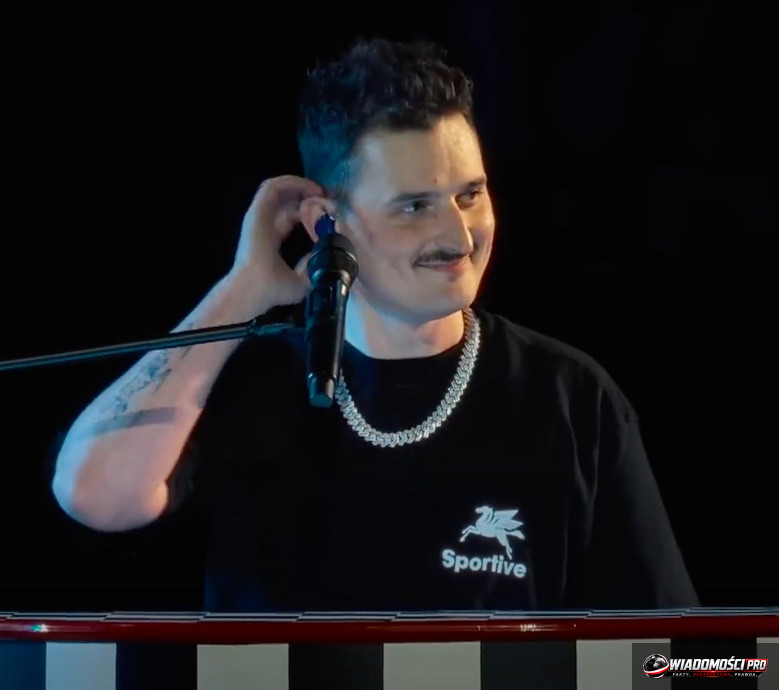
As part of the "Obrotowy Tour 2026," Dawid Podsiadło played a series of stadium concerts, including double performances in Chorzów and Warsaw, with the tour covering seven Polish cities. These events took place between June and August 2026. The scale of the venture included Warsaw, Chorzów, Poznań, Gdańsk, Wrocław, Kraków, and Szczecin, becoming the largest concert cycle in the country.
Stadium scale: a new concert reality
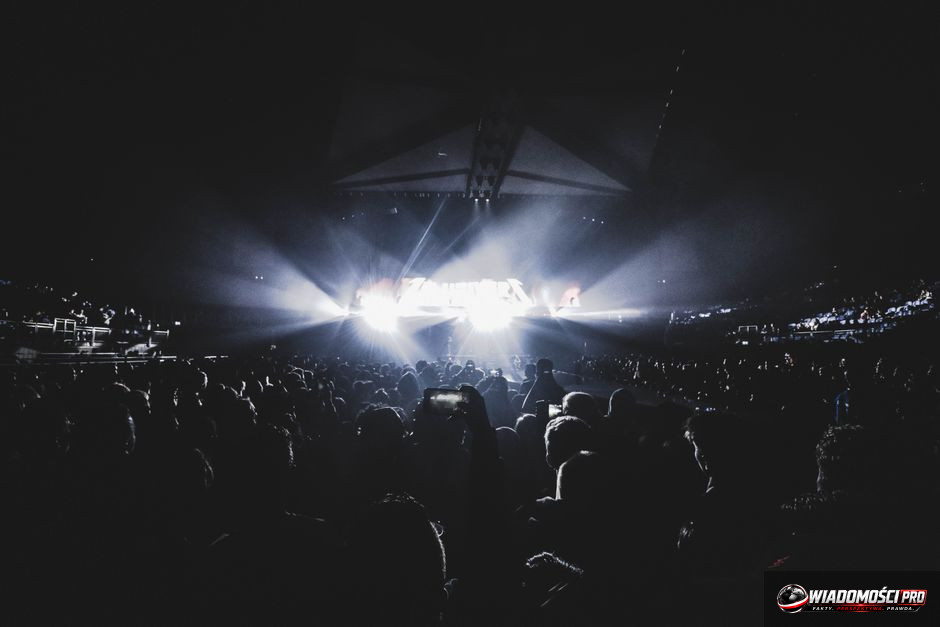
Moving from arenas to stadiums is not just a change of address. It is an engineering challenge that requires managing space for tens of thousands of people. By deciding on a full stadium tour, Dawid Podsiadło shifted the focus of Polish popular music toward venues that require a rigorous approach to sound reinforcement and logistics. The seven selected cities are metropolitan areas with the infrastructure capable of handling such large flows of people. This is a strategic choice that definitively closed the era of smaller venues in favor of maximizing reach.
The double performances in Warsaw at PGE Narodowy and in Chorzów at the Silesian Stadium became the showcase of this tour. Organizing two evenings in a row at the same location is an extreme test for the technical crew. It requires the assembly of a stage that must not only look good but, above all, withstand intensive use. Crowd logistics in these cities were a key element of planning, aimed at avoiding traffic paralysis. Each of these venues imposes its own rules – from acoustic specifics, which can be unpredictable in stadiums, to the availability of parking spaces and catering zones.
The decision to announce the entire tour on August 31, 2025, allowed fans a year to prepare. For the concert industry, this was a clear signal of changing market dynamics. Instead of chaotically building a calendar, the artist's team opted for a closed, specific schedule. This allowed for better management of the production budget and avoided scheduling conflicts with other major sporting events that dominate stadium venues during the summer months.
Table: Obrotowy Tour 2026 schedule
| City | Venue | Date | Status |
| :--- | :--- | :--- | :--- |
| Warsaw | PGE Narodowy | June 12, 2026 | Double concert |
| Warsaw | PGE Narodowy | June 13, 2026 | Double concert |
| Chorzów | Silesian Stadium | June 20, 2026 | Double concert |
| Chorzów | Silesian Stadium | June 21, 2026 | Double concert |
| Poznań | Enea Stadion | July 04, 2026 | Stadium concert |
| Gdańsk | Polsat Plus Arena | July 11, 2026 | Stadium concert |
| Wrocław | Tarczyński Arena | July 18, 2026 | Stadium concert |
| Kraków | Municipal Stadium | August 01, 2026 | Stadium concert |
| Szczecin | Municipal Stadium | August 15, 2026 | Stadium concert |
Attendance legacy and ticket economics
The artist's previous visits to Poznań, during which he gathered a total of 100,000 fans, formed the foundation of the strategy for the "Obrotowy Tour 2026." This number was hard evidence for the organizers that the market was saturated but still receptive. The result from Poznań became the benchmark against which every subsequent city on the tour was compared. Filling such gigantic spaces became the norm, not the exception to the rule.
Ticket prices for events of this class ranged from 150 to 400 PLN. These amounts reflect the costs of organizing the spectacle, where stage technology, lighting, and advanced sound systems must meet the demands of a huge space. Each sector of the stadium is a separate zone that must be professionally serviced, and fans, by purchasing tickets, become part of the mechanism ensuring high-quality audiovisual experiences. The decision to skip smaller towns was painful for some of the audience, but from a business perspective, it allowed for the optimization of logistical and technical costs.
Demand management: a lesson from December 2025
The market's reaction to the tour announcement exceeded forecasts as early as the pre-sale phase. On December 3, 2025, faced with the rapid depletion of the ticket pool, the decision was made to add more concerts. This is a maneuver typical of the world's biggest stars, requiring flexibility from stadium operators. Podsiadło, as one of the few Polish performers, has developed a position that forces venue managers to prioritize his needs in the schedule.
Ticket sales systems were put to a test that the largest e-commerce sites would be proud of. Minimizing the risk of server failure was a priority, as every minute of downtime in the purchasing process generates real losses and frustration. The organizers opted for transparent communication. Information about subsequent dates appeared when demand reached a critical point, which helped avoid artificially inflating expectations.
For the viewer, the ticket purchasing process became a kind of logistical operation. This phenomenon shows that a stadium concert has become a high-value commodity for the Polish fan, one that must be actively pursued. The professionalization of this process, from anti-bot security to clear resale rules, proves that the Polish entertainment market has learned its lesson from previous years, when chaotic distribution discouraged many participants.
Marriage with Daria Zawiałow: more than just a guest appearance
The artistic collaboration announced on November 18, 2025, between Dawid Podsiadło and Daria Zawiałow became one of the most significant points of the tour. Inviting a guest of this caliber to the stadium stage is a conscious expansion of the target group. Fans of both artists created a unique mix of energy in the stadiums, which translated into the reception of every song. This was not just courtesy, but a well-thought-out move that raised the status of the events.
The stadium became a place for the exchange of aesthetics. Podsiadło, as the host, was able to give part of the space to his guests, which for the viewers was a signal that "Obrotowy Tour 2026" is an open project. Today's audience expects more than just a reproduction of studio versions of songs. The presence of recognized artists on one stage is proof of building an environment where Polish performers support each other rather than just competing. Such a model changes the industry's perspective, showing that a stadium is a space for dialogue between artists, not just a monument for a single soloist.
Technical challenges of stadium logistics
Preparing concerts at venues like the Silesian Stadium or PGE Narodowy requires engineering at the highest level. Acoustics in an open space is an enemy that the technical crew fought at every performance. The use of advanced "line array" speaker systems and the precise placement of delay towers allowed for achieving quality that satisfied even the most demanding live music fans. Mass safety is another pillar that is crucial to the success of such a tour.
The flow of tens of thousands of viewers through stadium gates, the operation of catering zones, and efficient evacuation in emergency situations are tasks for hundreds of technical and security staff. Every hour of delay in stage assembly generates measurable costs, which is why time discipline on the "Obrotowy Tour 2026" was ironclad. From a producer's perspective, every concert is a separate military operation. Equipment transport, accommodation for hundreds of crew members, and power security – all this adds up to a budget that, at a stadium scale, is counted in millions of zlotys.
The Polish market, thanks to tours like this one, has entered the European league, where technical standards do not lag behind the world's largest productions. However, this sets the bar very high – every subsequent artist who wants to enter stadiums must now face the expectations of an audience accustomed to the perfection that Podsiadło's team has developed. The competition for the viewer's attention has shifted from the musical level to the level of a total spectacle.
Reshuffling in the Polish concert market
The dominance of the "Obrotowy Tour 2026" in the summer event calendar meant that the balance of power in Polish show business has changed. When one performer occupies key weekends in the largest metropolises, other artists had to look for dates in the middle of the week or on the periphery, which often affected their attendance. The scale of the event confirms this thesis: the title of the biggest tour of the year, two concerts in Chorzów and Warsaw, and seven cities covered by the tour create an undeniable picture of dominance.
Cooperation with the largest sports facilities in Poland is a signal that the mass entertainment market has reached a point of saturation in smaller halls. Promoters must now reckon with new expectations, where the stadium becomes the natural environment for the biggest names. Podsiadło's attendance success shows that the Polish listener is ready for production standards that we previously associated mainly with visits by global stars.
The other side of the coin is the risk of market monopolization. If stadiums are booked a year in advance by a handful of top artists, smaller musical initiatives may be pushed to the margins. The industry has gained a huge injection of cash but has lost some flexibility in the summer schedule. This reshuffling will resonate for seasons to come, forcing promoters to look for new solutions in concert logistics.
What this means for the recipient
From an editorial perspective, the success of the "Obrotowy Tour 2026" means a deep professionalization of the Polish concert market. Fans have gained access to world-class events, and the industry has developed a business model based on stadium performances that minimizes the risk of losses through careful demand research before announcing dates. For the average listener, however, this means the necessity of planning trips well in advance and fighting for tickets, which has become almost as exciting as the concert itself.
Stadiums have changed the nature of contact with music. Instead of an intimate club, we now have multi-thousand crowds, which for some is the fulfillment of dreams of a grand spectacle, and for others, a loss of authenticity. However, it cannot be denied that Dawid Podsiadło managed to combine these two worlds, creating a spectacle that, despite its scale, still tries to maintain the personal character of the artistic message.
Analyzing the tour, one cannot ignore the fact that its success was not a matter of chance. It was the result of months of work by a team that predicted every move – from announcing dates to selecting guests. It is worth remembering, however, that such a scale of events also carries certain risks. The loss of intimacy in favor of stadium momentum is a price paid by both the artist and the listener. Is it acceptable? Attendance at stadiums in 2026 seems to give an affirmative answer to this question.
The modern concert market in Poland has undergone a transformation from local entertainment toward a global industry. Dawid Podsiadło has become the face of this change, showing that a Polish artist can fill PGE Narodowy twice in a row. This is a result that a decade ago seemed unrealistic for a performer singing in Polish. Today, it is a reality to which everyone must adapt – from sound engineers and organizers to fans who spent long hours in front of computer monitors in line for tickets.
Each of the concerts, from Gdańsk to Kraków, was a separate chapter of this story. Fans who participated in these events became part of the process of creating a new quality. This tour not only showed that stadiums are for musicians but also proved that the Polish listener is ready to invest in a musical experience that goes beyond the framework of an ordinary concert.
The next concert season in Poland will be marked by an attempt to match these standards. Other artists will have to decide: whether to stay in safe arenas or decide on the stadium risk. Podsiadło's success is both an inspiration and a warning for them about the high demands that the stadium audience makes today.
Questions and answers
How many concerts of the tour took place in Warsaw?
Two stadium concerts were held in Warsaw at PGE Narodowy, in accordance with the tour schedule.
Did Dawid Podsiadło perform in Poznań in 2026?
Yes, the artist returned to Poznań as part of the tour on July 4, 2026, building on the attendance success of previous years.
When were the tour details announced?
The main assumptions of the tour were announced on August 31, 2025, with subsequent schedule updates in December 2025.
How many cities in total did the Obrotowy Tour 2026 cover?
The tour covered seven Polish cities: Warsaw, Chorzów, Poznań, Gdańsk, Wrocław, Kraków, and Szczecin.
What was the significance of the collaboration with Daria Zawiałow?
The artistic collaboration announced on November 18, 2025, was an important element in building the tour's reach and raising the status of the spectacle.
Why did the organizers decide on double concerts in Chorzów and Warsaw?
The decision resulted from the huge interest of fans, which forced the organizers to increase the number of available seats in the largest metropolitan areas.
Was the tour planned well in advance?
Yes, the official announcement of dates a year in advance allowed fans to prepare logistically for the events.
What technical challenges accompanied the tour?
The biggest challenge was stage logistics at stadiums, ensuring high-quality acoustics in an open space, and managing the safety of thousands of viewers.
Did the attendance success of Poznań influence the shape of the tour?
Yes, the result of 100,000 fans from previous years became a direct argument for promoters when planning the "Obrotowy Tour 2026."
Were additional concerts announced during the sale?
Yes, on December 3, 2025, the organizers decided to add more dates, which was a direct response to the rapid sell-out of the first pool of tickets.
Did the stadium concerts affect other artists?
The dominance of Podsiadło's tour forced other performers to look for alternative dates and locations, which affected the flexibility of the summer schedule.
What were the main stadium locations of the tour?
The tour visited stadiums in Warsaw, Chorzów, Poznań, Gdańsk, Wrocław, Kraków, and Szczecin, creating a network of key points on the concert map of Poland.
Sources
- Dawid Podsiadło for hundreds of thousands of fans. Two concerts each in Chorzów and Warsaw - Rzeczpospolita
- Dawid Podsiadło Obrotowy Tour 2026 – the biggest concert tour of the year - Kulturalne Media
- Dawid Podsiadło adds another stadium concert in 2026 [DATE, TICKETS] - Open FM
- Dawid Podsiadło in stadiums in 2026. Get to know the dates and cities! | eBilet NOW - eBilet
- Dawid Podsiadło returns to stadiums. "Obrotowy Tour" already in 2026 - Kultura Onet
- Unbelievable! Daria Zawiałow and Dawid Podsiadło alongside a world star. Fans delighted - Fakt
- Popular artist again in Poznań. We know where and when - TVP Poznań
- Famous artist returns to the stadium in Poznań. Previously gathered 100,000 fans! - Głos Wielkopolski
Article prepared by the Wiadomości PRO editorial team with the support of artificial intelligence. Facts come from the sources listed above.


Komentarze (0)
Ładowanie komentarzy...