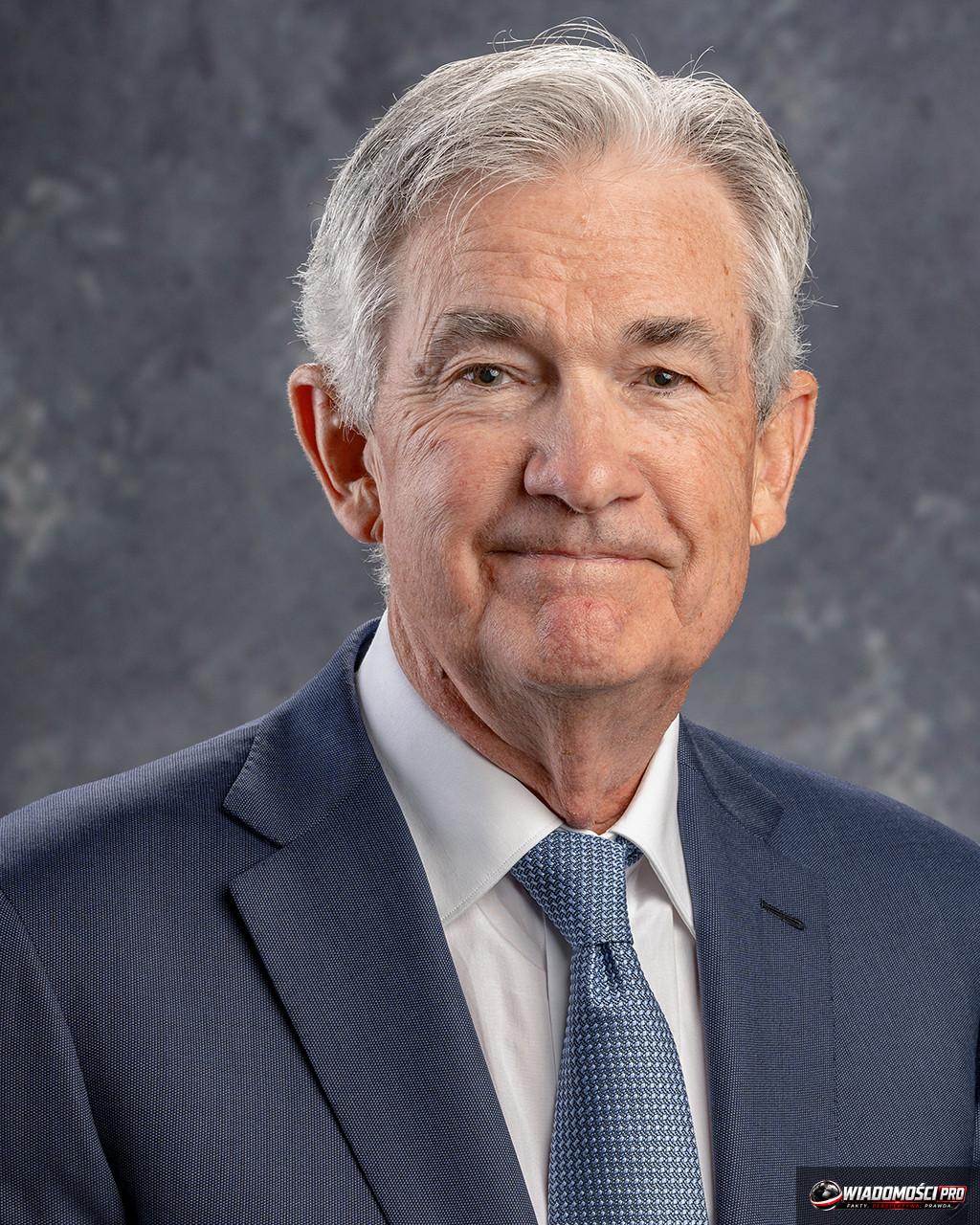
The Federal Reserve has lowered interest rates by 50 basis points to a range of 4.75-5.00%, which directly reduces the cost of money in the US. This decision aims to stimulate investment and the credit market amid an economic slowdown. From a portfolio construction perspective, investors should now increase exposure to medium-term Treasury bonds and technology companies with strong balance sheets, while simultaneously reducing cash holdings in dollars, whose real attractiveness has significantly diminished in the face of falling deposit yields.
Anatomy of the Fed's decision: Why now?
The American central bank has abandoned its conservative strategy of small steps. Choosing a half-percentage-point cut instead of the standard 25 bps move is a clear signal to the market: the macroeconomic situation is no longer under control. Jerome Powell, heading the Federal Open Market Committee, had to face the fact that high interest rates, maintained for too long to suppress inflation, had begun to act destructively on the foundations of the economy. Employment indicators and data from the industrial sector, flowing in since the beginning of 2026, pointed to growing anemia.
For investors, this is a paradigm shift. For a long time, the market lived in hope of a "soft landing," where the Fed would reduce price pressure without triggering a recession. Today's 50 bps move suggests that the optimistic scenario has become unlikely. Institutional investors in the US have been preparing for this moment for months, pricing in the growing probability of an aggressive cut in derivative instruments. However, the scale of the move surprised those who were counting on a slow, almost imperceptible adaptation of monetary policy to new conditions.
The math of the decision is simple, but its consequences for asset valuations are far-reaching. Lowering the cost of money automatically raises the valuation of future cash flows in DCF models, which rewards growth-type stocks. On the other hand, such a sharp cut triggers fear about what the Fed sees in the data that the average individual investor does not yet see. If the central bank is "running forward," it is because it has spotted cracks in the corporate debt structure, which in a high-interest-rate environment had become impossible for many entities to service.
Political pressure: The shadow of Donald Trump over the bank's decisions
It is impossible to analyze the Fed's actions in isolation from the political context. Since July 2025, when the debate over the future of the American currency and interest rates dominated media headlines, the pressure on Jerome Powell has been unprecedented. Donald Trump, having repeatedly expressed his expectations for the central bank, made the cost of money one of the main points of his economic rhetoric. Although the Fed officially maintains full independence, the atmosphere around the institution has become thick with speculation about political control of the economy.
The financial market had been living in a state of anticipation for this specific moment since October 2025. The question was: would the Fed save face, or would it buckle under the weight of political expectations? The choice of 50 basis points is a compromise that allows the Fed to maintain the appearance of fighting economic stagnation while simultaneously delivering what financial markets, fueled by political narratives, expected. However, it is hard not to get the impression that the central bank has become a hostage to its own narrative about fighting inflation and the need to support the economy.
For an investor, it is significant that the decision was made in the shadow of tensions that rarely favor stability. Political pressure often leads to erroneous monetary decisions, made under time pressure rather than based on a cool analysis of economic data. If the current move turns out to be a mistake – for example, by reigniting inflation – the responsibility for it will be blurred between the technocrats at the Fed and the politicians exerting pressure on them. This is a systemic risk that every portfolio must account for in its risk management strategy.
Market reaction: Why didn't the stock market go crazy?
Wall Street reacted to the news of the cut with great reserve. Instead of the euphoria that accompanied historical quantitative easing, caution dominates the trading floors. Investors have learned that in today's realities, "cheaper money" often means "worse economic condition." The technology sector, traditionally sensitive to interest rate levels, reacted with gains, but they were selective and mainly concerned market leaders who have enough cash not to rely on external financing.
It is worth looking at what happened in September 2024. Back then, speculation around Fed decisions also caused volatility, and the final move often disappointed those who were counting on a quick turnaround in policy. Now the situation is different – the capital market is much more mature in its skepticism. Investors remember the failed debate of October 2025, when the market priced in quick cuts that ultimately did not come. Today's 50 bps decision is the realization of a scenario that was already largely priced into assets.
For equity portfolios, this means moving into a selection phase. The time of buying "everything that grows" because money is cheap is over. Now, margins, the ability to pass costs on to the consumer, and low net debt matter. Companies with weak fundamentals that survived only by refinancing debt on favorable terms may now find themselves in a difficult situation if the cost of capital does not fall fast enough in relation to their declining revenues. The market has stopped believing in the magic of cheap credit.
Borrowers and businesses: Relief or a stay of execution?
For American businesses, especially those in the small and medium-sized enterprise (SME) sector, the 50 bps cut decision is like oxygen. Corporate debt service costs, which have eaten up a significant portion of operating profits in recent quarters, should now begin to fall. This translates directly into net financial results. However, entrepreneurs have not rushed to invest. Instead of building new production capacity, companies are using cheaper capital to roll over existing debt.
The US mortgage market will also feel this change. Interest rates on home loans, which in recent months reached prohibitive levels for many Americans, should begin a slow downward correction. Will this revive the real estate market? In the short term, probably not. Housing supply remains low, and buyers are waiting for further rate cuts, which creates a classic situation of "waiting for a better tomorrow."
The most interesting group is startups and innovative companies. For them, the drop in interest rates is a signal to return to the venture capital market. Investors who have kept capital in safe bonds for the last year will begin to look for higher returns in risky assets again. This is an opportunity for innovation, but only for those that have a real chance at profitability. The days of burning cash without a vision for profit have gone out of style along with the era of zero interest rates. Even with cheaper credit, the financial rigor imposed by the market remains very high.
Global capital flows: USA versus the rest of the world
The Fed's decision does not happen in a vacuum. At the moment Washington makes a sharp turn, the rest of the world must revise its strategies. The difference in approach to monetary policy between the US and Europe or emerging markets creates a huge field for currency arbitrage. The dollar, as the global reserve currency, reacts to interest rate changes in a way that affects almost every economy in the world.
Let's look at the Polish backyard. The Monetary Policy Council kept rates unchanged in September 2024, which, in the face of today's Fed move, puts Polish assets in a completely new light. If US rates fall and Polish rates remain high, the difference in yield (spread) becomes a magnet for speculative capital. This may support the zloty, but at the same time, it makes life difficult for Polish exporters, for whom a strong domestic currency is a real competitiveness problem.
Global liquidity is flowing through a new channel. Investors who were counting on the synchronization of central bank moves must come to terms with the fact that the world has become more fragmented. The Fed is acting under the influence of its own internal problems, not global harmony. This leads to increased volatility in currency pairs, where the dollar is losing its previous dominance as the "only safe haven." For a portfolio, this means the necessity of geographic diversification that goes beyond traditional developed markets.
Forecasts for the end of 2026: What's next?
Is this the end of the cutting cycle? Everything indicates that 50 bps is just the beginning of the road. If the American economy is to avoid a recession, the Fed will be forced to continue easing until rates reach a neutral level. However, forecasting the path of interest rates in today's realities is like reading tea leaves. Too many variables – from energy commodity prices to the geopolitical situation – influence the final decision of policymakers.
Economists warn that the market reaction may differ from forecasts, as confirmed by the events of September 2024, when sudden rate cuts surprised analysts and caused volatility unforeseen in the mathematical models of the time. History teaches that the Fed does not always play by the script written by market strategists. Trust in any forecasts, in light of recent years, is a luxury that investors simply cannot afford.
One can expect a "long pause" after a series of quick cuts. The Fed will want to see how the economy reacts to cheaper money before taking further steps. This will be a time of uncertainty, in which macroeconomic data – especially PCE inflation and labor market reports – will be analyzed with watchmaker-like precision. If inflation does not fall to the target, we will witness a "hawkish pause," which could prove to be a painful disappointment for stock market optimists.
What does this mean for your portfolio?
The Fed's decision is a signal that the fight against high rates has become a priority over the fight against inflation. Stock holders and borrowers (lower installments) will gain; holders of cash in dollars will lose (decline in deposit yields). The catch lies in the condition of the American economy – if rates were lowered due to recession risk, markets may react by selling off risky assets.
Investors should focus on defense. Gold, traditionally considered a hedge against monetary uncertainty, should gain value in an environment of falling real interest rates. Dividend stocks, which provide a stable cash flow, are becoming an attractive alternative to corporate bonds, whose credit risk may increase in the face of a slowdown.
The key to surviving the coming quarters will be avoiding excessive financial leverage. In a world where the Fed makes such sharp moves, the biggest losses are suffered by those who tried to play "against the market" using too much leverage. Remember that every rate cut decision is a form of rescue for the economy, not a gift for investors. Treat this move as a warning signal, not as a green light for aggressively increasing risk.
Questions and answers
By how much exactly were interest rates lowered?
The Federal Reserve lowered rates by 50 basis points, setting a new range at 4.75-5.00%.
How will the Fed's decision affect the dollar exchange rate?
Lower interest rates usually weaken a currency because capital seeks higher returns in other assets, but the final rate depends on global sentiment and the condition of other economies.
Was this an expected decision?
The market had been debating the scale of the cut (25 or 50 points) for months, so the decision was largely priced in, although the 50 bps scale itself is considered a signal of the Fed's serious approach to the risk of a slowdown.
Which assets may gain the most in the near future?
In the face of interest rate cuts, Treasury bonds and selected companies from the technology and healthcare sectors, which show high resistance to business cycles, have historically performed best.
Will the Fed's decision affect Polish loans?
There is no direct translation to Polish mortgage loans, but the Fed's decision affects global financing costs, which indirectly impacts the valuation of the zloty and the situation of the Polish debt market.
Sources
- Trump got his way. Fed resumed interest rate cut cycle - Bankier.pl
- Fed holds its breath. Market expects rate stabilization in the US - Money.pl
- What interest rate cut will the FED give us? 25 or 50 points? - FXMAG
- September Fed decision may disappoint stock markets. Debate around possible US interest rate cut - Strefa Inwestorów
- MPC did not change interest rates in September '24 - Miesięcznik Finansowy BANK
- Half the world was waiting for this decision. Fed indicated US interest rates - Money.pl
- Federal Reserve under pressure from Donald Trump. Time for a key decision - Business Insider Polska
- Fed cuts interest rates sharply. Economists, however, were wrong - Bankier.pl
Article prepared by the Wiadomości PRO editorial team with the support of artificial intelligence. Facts come from the sources listed above.



Komentarze (0)
Ładowanie komentarzy...