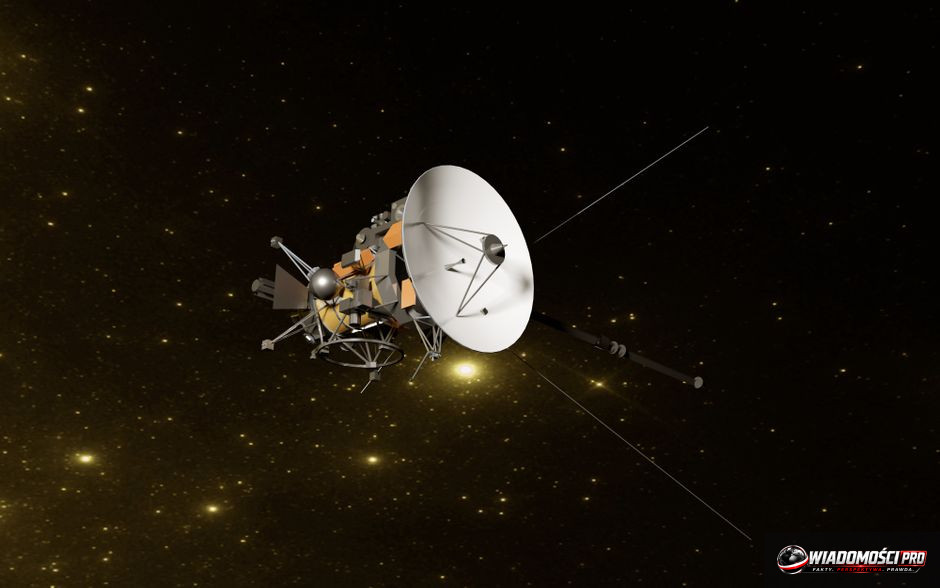
The Europa Clipper mission cost $5 billion and aims to study the ocean beneath the icy crust of Jupiter's moon in search of conditions favorable for life. The probe launched on October 14, 2024, using a Falcon Heavy launch vehicle provided by SpaceX. This endeavor represents NASA's most ambitious research project in the field of astrobiology, aimed at verifying the hypothesis regarding the existence of liquid water inside celestial bodies outside the Earth-Moon system.
Investment in the search for life: Goals and financial realities
The construction of the Europa Clipper probe required a massive capital expenditure, totaling $5 billion. Funding for the project included not only the construction process itself but, above all, the necessity of developing technologies capable of functioning in the extreme radiation conditions present near Jupiter. The gas giant's magnetic field is so strong that traditional electronics would be destroyed in a short time. Engineers had to design special shields to protect measuring instruments from streams of charged particles. Each component of the probe underwent rigorous durability tests, which directly influenced the final budget of the program.
The choice of the Falcon Heavy rocket as the launch vehicle was dictated not only by its payload capacity but also by the timeliness of the operation. Collaboration with the private sector allows NASA to optimize logistics costs, yet the probe itself remains the heart of the project. Its destination is Europa, a moon of Jupiter that has fascinated scientists for years due to its icy surface. Measurements indicate that a global ocean of liquid water exists beneath a thick layer of ice. It is this reservoir that is the primary area of interest for the mission. Experts assume that if water remains in a liquid state there, it could have become an environment conducive to the chemical processes necessary for the emergence of life.
Studying Europa does not involve landing directly on its surface. Instead, the probe will perform a series of flybys in the immediate vicinity of the moon. Each such approach will allow for the collection of data using onboard instruments. The probe will measure the thickness of the icy crust, examine the chemical composition of the surface, and assess the geological activity of the moon's interior. This mode of operation minimizes the risks associated with spending extended time inside Jupiter's strongest radiation belts. As a result, the probe can function for several years, gathering data that will help answer the question of whether there are places in our Solar System other than Earth where conditions could exist to support living organisms.
Technology and research methodology in extreme conditions
The effectiveness of the mission relies on advanced research equipment. The probe is equipped with a suite of instruments that operate across different spectrum ranges. Spectrometers, ice-penetrating radars, and magnetometers allow for remote analysis of Europa's internal structure without the need for physical contact with the surface. The radar equipped on the probe is designed to penetrate the ice and identify potential pockets of liquid water located close to the surface. This is crucial because that is where interactions between the ocean and the surface may be most intense.
The device's designers focused on maximizing measurement flexibility. Instead of a single, predefined scenario, each flyby session can be adjusted based on results obtained in previous stages of the mission. Such an operating model requires immense computing power and a precise navigation system. The probe does not move in a straight line. The journey to Jupiter requires the use of gravity assist maneuvers, meaning Europa Clipper will repeatedly fly past Earth and Mars to gain the speed necessary to reach the outer regions of the system.
The use of advanced radiation shielding is the most expensive component of the project. Onboard electronics must withstand radiation doses that would normally destroy any standard satellite computer. Enclosures made of titanium and aluminum protect sensitive components, creating a so-called "vault" where the most important control modules are housed. Engineers also had to provide redundancy for all critical systems. In space, where the distance from Earth makes any physical repair impossible, the failure of one element could mean the end of the mission. Therefore, every component was designed with longevity and resistance to sudden voltage spikes caused by radiation in mind.
Schedule and logistics of the interplanetary journey
The mission launch, which took place on October 14, 2024, was the culmination of many years of preparation. The choice of the Falcon Heavy rocket allowed for the probe to be placed on an interplanetary trajectory with high precision. The coming years will be a time when the probe performs complex orbital maneuvers. The journey toward Jupiter is a time-consuming process, requiring ground teams to continuously monitor the technical status of the device. Europa Clipper will not send data continuously, but rather in scheduled communication windows when the alignment of the planets relative to Earth allows it.
The actual research phase will begin only after entering Jupiter's orbit, which is another engineering challenge. The probe must be slowed down using chemical thrusters so that it can begin orbiting the planet and regularly visit Europa. Each flyby will last only a few hours, during which the probe will work at maximum efficiency. After taking measurements, the device will fly to a safe distance to avoid the destructive influence of Jupiter's radiation and transmit the collected data to control centers on Earth.
This phase of the mission is the most critical for scientific success. Any error in maneuvering could cause the probe to pass the moon too far away, losing the chance to collect high-quality data. Operational teams are working on contingency scenarios that will allow the probe to automatically correct its course if deviations from the trajectory are detected. Managing such a complex system under conditions of massive radio signal delay is one of the greatest challenges NASA faces. Every decision made on Earth must be thought out days in advance.
Competition for priorities in space research
The presence of the Europa Clipper mission in Jupiter's orbit shifts the center of gravity in solar system research toward the United States. NASA, with its appropriate budget, is executing a project that is currently unrivaled in scale for most national agencies. Although international cooperation in science is standard, the American financial and technological contribution means that NASA retains full control over the mission's progress and holds exclusive priority for the analysis of scientific data.
For European research centers, which also have their own ambitions in exploring the Jovian system, the Europa Clipper mission is a benchmark. The Americans are setting the pace at which humanity approaches the answer to the question of life beyond Earth. Such a concentration of resources on one specific moon raises discussions about whether other targets in the Solar System are being neglected. However, for the astrobiology community, Europa remains target number one. Focusing on this single object allows for research of a depth that would not be achieved by multi-tasking missions spread across too many different objects.
The success of this mission will be proof for the USA that it can effectively manage long-term investments in the high-tech sector. In the space industry, what counts is not only the budget but, above all, the ability to maintain the continuity of research over decades. Europa Clipper is an example of a project that survived administrative and political changes in the USA, which in itself is an achievement. If the data confirms the presence of conditions for life, the prestige of American science will grow in an unprecedented way. It will also be an argument for proponents of further increasing spending on deep space exploration as an investment in knowledge of fundamental importance for the entire civilization.
Scientific context: Why Europa?
The choice of Europa as the main target of the mission is no coincidence. This moon possesses unique features that distinguish it from other natural satellites of Jupiter. First and foremost, tidal activity caused by the gravity of Jupiter and other Galilean moons causes Europa's interior to be heated. This heat is likely sufficient to keep water in a liquid state beneath a thick layer of ice. This mechanism is analogous to Earth's hydrothermal vents on the ocean floor, which are home to ecosystems that function independently of sunlight.
Scientists analyzing data from previous missions, such as Galileo, have pointed to numerous cracks in Europa's icy crust. They suggest that the ice is constantly subjected to tectonic movements. The Europa Clipper probe is tasked with confirming whether these processes lead to the transport of matter from the ocean to the moon's surface. If so, the probe's instruments will be able to detect organic substances without the need to drill through kilometers of ice. This approach is much more pragmatic than attempting to send a lander, which would have to overcome the ice barrier in difficult conditions.
Skeptics note, however, that even the presence of water and chemical energy does not guarantee the emergence of life. Life also requires the right chemical composition, including the availability of elements such as carbon, nitrogen, phosphorus, and sulfur. The mission is tasked with investigating whether these ingredients are present in Europa's ocean. If chemical analysis shows their absence, our understanding of the requirements for biological processes will have to be revised. On the other hand, the detection of complex organic molecules on the surface will be a strong signal that the ocean beneath is an environment where life could have developed and survived for billions of years.
Technical challenges and operational risks
The greatest threat to the mission is not the journey itself, but the Jovian environment. Intense radiation damages not only electronics but also optical detectors. The cameras installed on the probe must have special filters that will degrade over time. Engineers had to design systems that allow for the calibration of instruments during the mission, taking into account the progressive wear and tear of the equipment. This requires additional computing power and energy, which in turn burdens the power systems based on solar panels.
Europa Clipper uses massive solar panels because Jupiter is too far from the Sun to use standard solutions. The surface area of the panels is so large that they could cover a tennis court. Their deployment after launch was one of the riskiest moments of the mission. Any mechanical failure in the panel deployment system would mean a lack of the energy necessary to power the research instruments. Fortunately, these systems were verified in ground tests that simulated the vacuum and extreme temperatures occurring in interplanetary space.
Another challenge is data transmission. From the distance of Jupiter, the transmission speed is limited by the laws of physics. The probe must send data in a compressed manner, which carries the risk of losing some information. Ground teams must decide which data is a priority and which can be sent later. This information flow management is key to scientific success. If the probe fails while transmitting the most important data, the effort of billions of dollars could be partially wasted. Therefore, communication protocols were designed to ensure the highest possible integrity of transmitted files, even with a weak signal.
Questions and answers
Why was Europa chosen, and not another moon?
Europa possesses one of the largest oceans of liquid water in the Solar System, which makes it the most promising place to search for conditions favorable for life.
When will the probe reach its destination?
The probe launched on October 14, 2024, and faces a multi-year journey toward Jupiter before it begins its key research in orbit around that planet.
Is this NASA's most expensive mission?
The $5 billion cost places Europa Clipper among the most expensive and advanced unmanned missions sent by NASA in the history of space exploration.
What is the main risk to the research instruments?
The greatest threat is the intense radiation near Jupiter, which can damage the probe's electronics, despite the use of special titanium shields.
Is the mission intended to land on the surface of Europa?
No, the probe will not land. Instead, it will conduct dozens of close flybys that will allow for remote scanning of the surface and chemical analysis without the risk of landing in an extreme environment.
Sources
- Launch of the Europa Clipper mission to Europa - AstroNET – Polish Astronomical Portal
- Europa Clipper probe will search for life on Europa - Urania - Polish Astronomical Portal
- Europa Clipper mission launch [TRANSMISSION]. Americans will overtake Europeans in the search for life on Europa - Wyborcza.pl
- Beginning of the Europa Clipper mission - Kosmonauta.net
- NASA sends a probe to Europa. Europa Clipper mission has launched - WP Tech
- Europa Clipper probe will search for life on Jupiter's moon, Europa - wszystkoconajwazniejsze.pl
- Flight to Jupiter for $5 billion. Europa Clipper launch aboard Falcon Heavy - Benchmark.pl
- Searching for life in the Solar System beyond Earth. NASA sends a mission - Geekweek Interia
Article prepared by the Wiadomości PRO editorial team with the support of artificial intelligence. Facts are derived from the sources provided above.


Komentarze (0)
Ładowanie komentarzy...