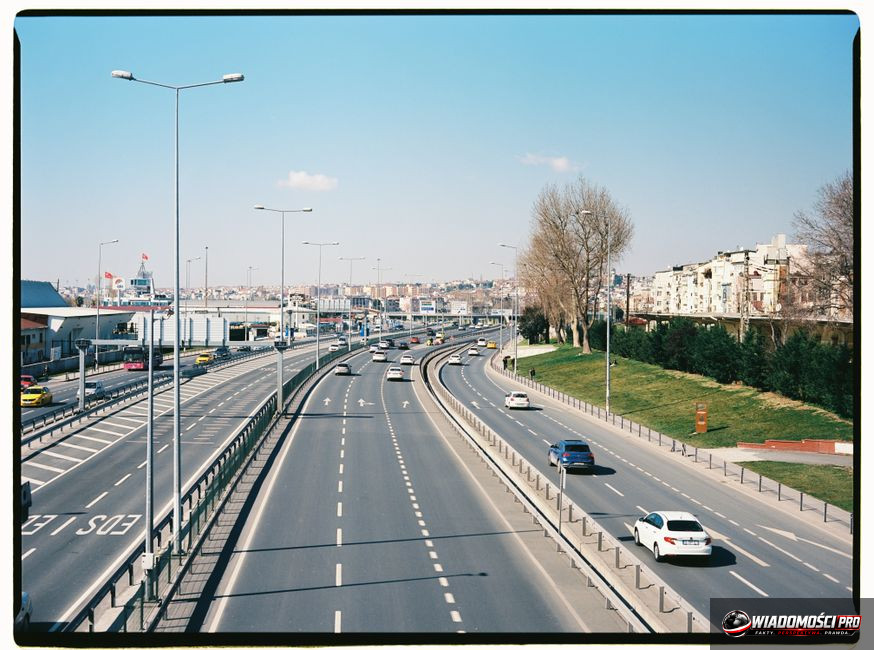
From September 1, 2026, the maximum speeding fine in Slovakia will increase to 1300 euros. The regulations also provide for prison sentences for reckless driving and vehicle confiscation. This is a radical tightening of the law that will directly affect every Polish driver using Slovak transit routes.
New tariff: 1300 euros for speeding
The scale of changes in Slovak traffic law goes beyond cosmetic adjustments. From September 2026, the Slovak police will have tools at their disposal that make previous fine tariffs a mere memory. A maximum financial penalty of 1300 euros is over 4000 PLN, which in the reality of daily travel is an almost prohibitive amount. The Slovak authorities decided on this step after months of debates on safety, as reported by the media as early as August 2026.
For Polish drivers, this means the necessity of a complete revision of how they drive south of the border. Until now, many travelers treated Slovak fines as a cost included in the risk of reaching their destination quickly. The new regulations remove this margin of error. The police in Bratislava are receiving guidelines that leave no room for negotiation. At the current exchange rate, a single offense could consume the equivalent of the fuel budget for the entire trip.
The value of 1300 euros was not set by accident. It represents an upper limit intended to effectively deter drivers moving at excessive speeds in built-up areas and on high-traffic roads. Slovak legislators explicitly point out that previous penalties did not sufficiently influence the improvement of road discipline. The introduction of such high rates is a signal that the state is ceasing to treat traffic offenses as minor misdemeanors and is starting to perceive them as a serious threat to public safety.
Prison and confiscation as the final argument
The financial blow is only the beginning of the problems. The amendment to the law provides for the possibility of a prison sentence for reckless driving. The definition of recklessness remains at the discretion of officers and the court, but the intention is clear. Drivers whose driving style grossly violates regulations will end up behind bars. Such a solution was signaled as early as January 2026 by regional media, which pointed to a lack of any mercy for those creating a real threat.
The most painful novelty in the Slovak system is the possibility of vehicle confiscation. This is a tool that, from the vehicle owner's perspective, means the loss of property. The law allows for the seizure of a car if it is used to commit a drastic offense. In practice, this means the car can be auctioned off or taken over by the state treasury. For people traveling in leased or rented cars, the situation becomes extremely complicated. The driver is not only criminally liable but must also face financial claims from the leasing company or rental agency.
Slovakia is thus joining countries where property rights take a back seat to road safety. The police will not have to prove whether the car is the property of the perpetrator or belongs to a third party. Confiscating the vehicle is intended to be an immediate reaction that physically prevents further dangerous driving. This is a solution that Polish drivers have not known from their own backyard, which means that traveling through Slovakia now requires full concentration on every kilometer.
42 percent increase in infrastructure fees
A double blow to the wallets of Polish drivers is completed by the fiscal policy regarding road infrastructure. The Slovak government has decided to increase fees for using expressways and motorways by 42 percent. This decision, developed and announced in November 2025, becomes a fact in 2026. For carriers and tourists using main communication arteries, this means the necessity of revising the costs of every trip.
This increase does not only apply to vignettes, but to the entire billing system for using roads of a higher standard. Slovakia, as a transit country for many Polish transport companies, will record a significant increase in operating costs. This will directly translate into the prices of goods and transport services. Individual drivers will also feel the change. A travel budget that allowed for comfortable motorway travel just a year ago will now require an adjustment of almost half the cost of the road fees themselves.
Slovak authorities argue this decision is necessary to maintain the road network in good technical condition and to finance new investments. However, in the eyes of drivers, this is another financial barrier. Combined with the risk of high fines, Slovak transit ceases to be a cheap alternative to traveling through other countries in the region. Anyone planning a route through this country must now carefully calculate the costs of fuel, vignettes, and include a financial buffer in case of a road check.
Changes in technical regulations and equipment
The reform is not limited to speed and fees. Slovak legislators have also introduced a number of changes to technical requirements. Drivers must pay attention to mandatory vehicle equipment, which was updated in 2026. Drivemode.pl pointed out these issues as early as May 2026, indicating that many pieces of equipment that were previously ignored are becoming essential during checks.
Ignorance of technical regulations will not constitute a mitigating circumstance. During routine checks, the Slovak police check the technical condition of cars with particular accuracy. The lack of appropriate equipment required by the new regulations may result not only in a fine but, in extreme cases, a ban on further driving. This is another element of pressure on drivers to ensure their vehicle is fully compliant with local requirements before entering Slovak roads.
Speed limits for pedestrians have also been introduced, which is a significant change in traffic organization in residential zones. Although this may seem insignificant from a transit perspective, for drivers moving through Slovak towns, it means the necessity of maintaining special vigilance. Any offense, even the smallest one in a speed-restricted zone, can be the basis for severe consequences provided for in the new tariff.
The region facing changes
Slovakia is not the only country tightening its road policy. The entire Central European region is currently undergoing a process of traffic law reform. Polskie Radio 24 emphasized in June 2026 that our neighbors are striving to unify safety standards by introducing radical penalties. What is happening in Slovakia is part of a broader trend in which states are losing patience with drivers who violate regulations.
The impact of these changes on the Polish driver is clear. A few years ago, traveling through neighboring countries did not require such a detailed analysis of regulations. Today, every trip requires preparation almost like a journey to unknown regions of the world. Information about changes in traffic law in Slovakia has been appearing in the media since the autumn of 2025, which provides enough time for adaptation. Nevertheless, many drivers still downplay these reports, hoping for leniency.
There is no reason to believe that Slovak services will treat foreigners differently than their own citizens. A lack of understanding of the language or ignorance of the new regulations will not exempt one from responsibility. Slovak reforms are coherent and consistent. Since November 2025, when Etransport reported on the planned changes, the Slovak government has been consistently implementing subsequent stages of the reform. Currently, the system is complete and ready for full enforcement.
How not to lose your fortune on a Slovak road
The strategy for avoiding problems on Slovak roads from September 2026 is simple, though it requires great discipline. The basis is adhering to speed limits without any concessions. Cruise control set to the maximum allowed speed is currently the best way to protect your wallet and your own vehicle. Any attempt to make up for lost time by driving faster becomes economically unjustified.
The second step is checking the technical condition of the car and the completeness of the equipment. It is worth spending a moment before the trip to familiarize yourself with the current technical requirements in force in Slovakia. The list of items that must be in the car is available in official announcements from the Slovak police. Ignoring this aspect is an unnecessary risk that, in the event of a check, could end in a loss of time and money.
The third issue is financial awareness. When planning a trip budget, you must include higher vignette costs. Attempting to drive on motorways without a purchased vignette or with the wrong category is treated with the same severity as speeding. Electronic control systems on Slovak roads work precisely and automatically impose penalties, which are sent to vehicle owners. In the case of cars registered in Poland, Slovak services easily reach driver data thanks to EU information exchange systems.
The final element of protection is behavior during a check. Slovak police officers are professional and act in accordance with new guidelines. Attempts to explain yourself by being in a hurry or not knowing the regulations are pointless. Slovakia has opted for zero tolerance. Every driver entering Slovak territory must accept these rules as a condition for using the infrastructure.
European context: is this the beginning of changes?
Changes in Slovakia can be treated as a testing ground for other countries in the region. If accident statistics after September 2026 show a significant improvement, similar steps can be expected in neighboring countries. Poland, the Czech Republic, and Hungary are carefully observing Slovak experiences. The introduction of car confiscation for gross violations of regulations is a solution that has long stirred emotions across Europe.
From the perspective of a driver who covers thousands of kilometers a year, such a tightening of the law is a signal to change habits. The era of "fast driving" on European motorways is slowly coming to an end. Automatic surveillance systems, increasingly severe financial penalties, and the real threat of losing one's car create an environment where recklessness simply becomes unprofitable. Slovakia is the leader of this process, and its experiences will shape road policy in the coming decade.
For Polish drivers, this also means a legal challenge. In the case of car confiscation, the matter becomes the subject of international legal procedures. Recovering the vehicle or fighting for your rights before a Slovak court are long-term and costly processes. It is better to avoid a situation where this becomes necessary than to look for help from lawyers in a foreign country later.
What this means for you in practice
Understanding the new regulations is half the success. The other half is the awareness that Slovak roads have ceased to be friendly to road pirates. From September 2026, every kilometer of the route must be covered with the utmost caution. Polish drivers, often accustomed to higher speeds on motorways, must now switch to a mode of safe and compliant driving.
This is not just a change in the tariff. It is a change in the philosophy of moving on the road. Slovakia clearly communicates that the safety of other road users is more important than the speed of reaching the destination. For people who cannot or will not adapt to these norms, the only reasonable solution is to give up traveling by car through this country.
In summary, the new regulations in Slovakia put drivers in a situation where every mistake can have catastrophic financial and legal consequences. From September 2026, a Slovak road is a place for the disciplined. Any other driving style carries a risk that can no longer be valued as a "fine for coffee."
Questions and answers
Does the 1300 euro fine apply to every speeding offense?
No. The amount of 1300 euros is the maximum penalty applied in the case of the most serious traffic offenses, including drastic speeding in built-up areas.
Can you really lose your car for reckless driving in Slovakia?
Yes. The new regulations introduce the possibility of vehicle confiscation in situations where the driver grossly violates traffic regulations, creating a direct threat to others.
How much will motorway fees in Slovakia increase?
The Slovak government has introduced a 42 percent increase in fees for using expressways and motorways, which fully comes into effect in 2026.
Do the regulations also apply to cars registered in Poland?
Yes. Slovak traffic law applies to every driver moving on Slovak roads, regardless of the country of vehicle registration.
What happens if I refuse to accept a fine?
In the case of refusing to accept a fine, the case will be referred to court, which may involve higher costs, and in extreme cases, the detention of the vehicle until the matter is clarified.
Do the new regulations also include changes to mandatory car equipment?
Yes, the reform also includes updating technical requirements and mandatory equipment, to which every driver must adapt before crossing the border.
Is 1300 euros the highest possible penalty?
It is the maximum fine amount for speeding-related offenses, however, in the case of criminal cases (e.g., causing an accident), the penalties imposed can be significantly higher and include imprisonment.
Does the Slovak police apply any leniency for foreigners?
Slovak services are consistently implementing a zero-tolerance policy, which means that foreigners are treated on an equal footing with Slovak citizens in terms of enforcing regulations.
Does confiscation also apply to leased cars?
Yes, the regulations provide for vehicle confiscation regardless of its form of ownership, which in the case of leased cars imposes additional civil-legal consequences on the driver toward the financing company.
From when exactly do the new penalties apply?
Tightened financial penalties of up to 1300 euros and regulations regarding confiscation and prison come into effect on September 1, 2026.
Do the increased road fees also apply to passenger cars?
The 42 percent increase covers the entire motorway toll system, which translates into higher costs for all users of toll roads in Slovakia.
Are these changes being discussed in the Slovak media?
Yes, Slovak media have been highlighting the need to tighten regulations for months, pointing to the need to improve road safety, which was the main reason for the reform.
Where can I check current technical requirements before traveling?
Current guidelines regarding safety and technical requirements are published by the Slovak Ministry of Transport and police services.
Will the Slovak police check drivers more often after September 1, 2026?
Services have received guidelines regarding stricter law enforcement, which in practice means increased patrol activity on main transit routes.
Is a prison sentence imposed automatically?
No, a prison sentence is a measure imposed by a court in cases of reckless driving and gross offenses, at the request of law enforcement agencies.
Has the 42 percent fee increase already been introduced?
The decision was made in November 2025, and its full financial effects are felt by drivers in 2026.
Can one appeal against a confiscation decision?
Yes, there is a right to appeal, but this procedure takes place before a Slovak court and does not stop the immediate securing of the vehicle by the police.
Do speed limits for pedestrians affect drivers?
Yes, they introduce strict rules in residential zones, which forces drivers to exercise increased caution and reduce speed to minimum values.
In case of a breakdown on the motorway, do the new fees cover roadside assistance?
No, the increase in motorway fees applies only to infrastructure access, not to roadside assistance services, which are billed separately.
Is Slovakia planning further changes to traffic law?
The current reform constitutes a coherent system that is intended to be in force for the coming years, however, Slovak authorities regularly monitor accident statistics for the purpose of possible regulation adjustments.
Sources
- From September to 1300 euros for speeding. Slovaks increase fines - Interia Motoryzacja
- Over 4,000 PLN fine for speeding. Poland's neighbor tightens traffic regulations - Polskie Radio 24
- New traffic regulations in Slovakia. Polish drivers must be careful - Interia Motoryzacja
- Changes in mandatory car equipment in 2026 - drivemode.pl
- New law for drivers. Prison for recklessness, car confiscation and zero mercy - Gazeta Wrocławska
- Government wants to increase expressway and motorway tolls by 42 percent - Rzeczpospolita
- NEWS - Slovakia reforms traffic law – higher penalties and new rules for drivers - Etransport
- This has never happened before. Our neighbor limits pedestrian traffic speed - businessinsider.com.pl
Article prepared by the Wiadomości PRO editorial team with the support of artificial intelligence. Facts come from the sources provided above.

Komentarze (0)
Ładowanie komentarzy...