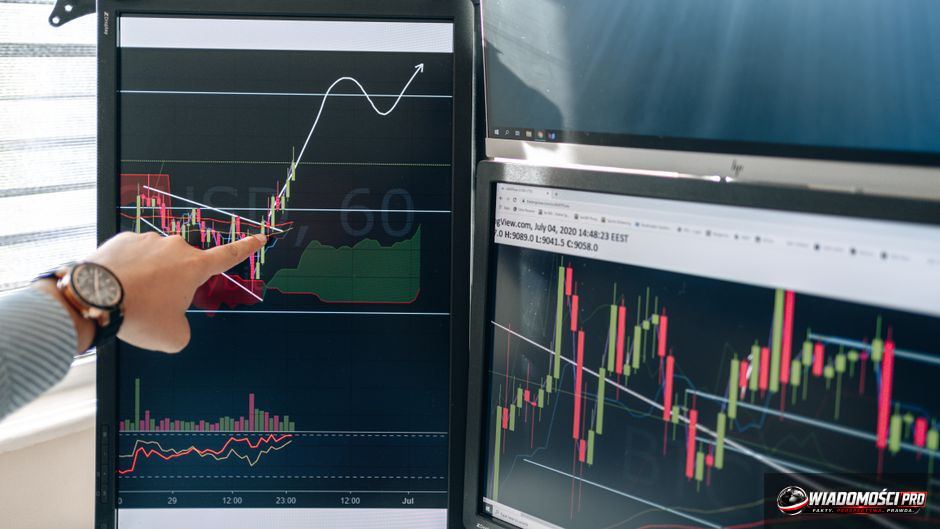
The Federal Reserve has lowered interest rates by 50 basis points to a range of 4.75-5.00%, which directly reduces the cost of capital in the US and stimulates financial markets. Immediately sell cash, which in an environment of a weakening dollar is losing purchasing power at a faster rate than in previous years, and increase your exposure to long-term bonds. Such a portfolio reorientation allows for generating capital gains resulting from the rise in bond prices, which are a direct consequence of the monetary policy easing by the FOMC.
The decision mechanism: why 50 basis points?
The Federal Open Market Committee's decision to cut by half a percentage point is a signal that the Fed has shifted from inflation-fighting mode to actively supporting the economy. A standard 25 bps adjustment would have been considered cosmetic, while 50 bps is a clear message: policymakers fear a slowdown in the labor market more than short-term price spikes. US companies, which have struggled with record debt service costs in recent years, now gain room to breathe. Cheaper rolled-over debt directly improves their free cash flow.
Valuations of technology companies, especially those based on high financial leverage, are reacting to this move most enthusiastically. A lower cost of capital means a higher present value of future earnings in DCF models. However, investors must distinguish between momentary optimism and hard fundamentals. If the Fed's move is not followed by GDP growth data, the stock market could quickly shift from euphoria to nervousness regarding the specter of recession.
Portfolio strategy in the face of a cheap dollar
Cash is currently the weakest link in a portfolio. Holding liquidity in savings accounts at the current interest rate path is a costly strategy. Investors who have previously profited from safe havens must seek returns in other instruments. Long-term bonds are becoming a natural choice. When market rates fall, the prices of fixed-coupon bonds rise, which allows for achieving a profit that no deposit would provide.
Diversifying a portfolio with commodities is becoming a necessity. Gold, which traditionally reacts with appreciation to a falling dollar, acts as a safety fuse in this scenario. If the Fed cuts rates and inflation remains sticky, precious metals protect against the loss of purchasing power. The commodity sector gains because a lower cost of financing encourages investment in new mining projects that were unprofitable in a high-interest-rate environment.
Poland in the shadow of American policy
For Polish borrowers, the Fed's decision carries specific consequences. Mortgage installments in PLN will not fall directly, as they are determined by NBP interest rates, not the American central bank. However, the global inflow of capital to emerging markets, resulting from the search for higher returns outside the US, may lead to a strengthening of the zloty. A stronger Polish currency lowers import costs, which in the medium term gives the Monetary Policy Council more freedom in planning interest rate cuts at home.
Polish investors with exposure to foreign assets, however, must prepare for exchange rate volatility. If the USD loses value against the PLN, profits from American companies may be offset by an unfavorable exchange rate. Currency hedging is becoming an essential tool for anyone who wants to maintain profits in relation to the zloty.
Political context and institutional independence
The Fed's actions never take place in a vacuum. Financial media, including Business Insider Polska, have repeatedly pointed to the political pressure exerted on policymakers by the Donald Trump administration. Although the central bank officially remains independent, history shows that market psychology is shaped by political expectations. September 2025, when the Fed resumed its rate-cutting cycle, became a turning point in the debate about the "expensive dollar" and its impact on American exports.
The market cannot afford to ignore the fact that interest rate decisions are a tool for fighting for the economy in an election year. When economists were wrong about the scale of moves in September 2024, the market painfully felt the effects of overly optimistic forecasts. Today's 50 bps decision is proof that the market is sometimes a hostage to its own expectations, and the central bank must react to real indicators, even if they contradict the previous consensus.
Analysis of monetary policy transmission
Global financial markets react to every FOMC decision almost immediately. The drop in dollar interest rates reduces the attractiveness of US Treasury debt, which forces hedge funds to reallocate funds. Money leaving American bonds does not disappear from the system. It seeks new markets, which usually leads to gains on emerging stock markets and an increase in the valuations of risky assets.
I recommend particular caution in sectors dependent on imports from the US. Companies financing themselves in dollars may breathe a sigh of relief, but those that depend on US consumer demand must prepare for a slowdown. If purchasing power in the US falls as a result of a recession, the market for European and Polish exporters will shrink significantly. An investment portfolio must therefore be resilient to both scenarios: both a potential stock market rebound and a deep correction caused by the weakness of the real economy.
What does this mean for borrowers?
For the American borrower, debt repayment has become slightly less burdensome, but commercial banks do not always pass the rate cut on to customers on a 1:1 scale. Bank margins are currently a key factor that dampens consumer optimism. Globally, the transmission effect of Fed policy is felt through the interbank market. When rates in the US fall, global liquidity increases, which theoretically facilitates access to credit outside the US as well.
Borrowers with debt in foreign currencies should closely monitor exchange rate volatility. In the coming months, dollar fluctuations will be high. If you have a variable-rate loan, it is worth considering switching to a fixed rate once market base rates stabilize at a lower level. Financial institutions will need at least a quarter to renegotiate contracts and adjust deposit offers, which means that the real benefits of current decisions will be felt with a delay.
Forecasts for the end of 2026
Looking toward the end of 2026, investors must take into account not only the current decision but also the trajectory of subsequent Fed moves. The market will now live by labor market data. If unemployment exceeds expectations, the Fed will have no choice but to continue the cutting cycle. Conversely, persistent inflation in the service sector may force the committee into a longer pause, which would be a cold shower for optimists expecting a return to the era of zero rates.
The stability that investment funds long for is currently unattainable. Volatility in Treasury bonds will dominate until the market prices in the final level at which the Fed intends to stop the easing cycle. Prepare for a "long braking" scenario, in which the US economy balances between a slowdown and an attempt at stimulation.
Key factors that will determine the final outcome:
- Wage growth dynamics: If wages grow faster than productivity, the Fed will be forced to keep rates higher for longer than the market assumes.
- Level of public debt: The cost of servicing US debt is rising. The faster the Fed lowers rates, the easier it will be for the federal budget, which exerts significant, unofficial pressure on policymakers.
- Money supply (M2): Let's observe whether the current cut actually fuels the real economy or merely fuels bubbles in financial asset markets.
What this means for you
The decision to cut rates to 4.75-5.00% is a signal that the era of expensive money in the US is fading, but not disappearing. For an individual portfolio, this primarily means the need to move out of defense. Holders of deposits must look for alternatives – high-rated corporate bonds or dividend funds, which gain attractiveness relative to deposits in a lower-rate environment.
If the Fed reacted too late, a recession is inevitable, and then even cheap money will not save stock markets from a deep correction. However, if the 50 bps cut was a preemptive move, we are at a turning point in the bull market. I recommend gradually increasing exposure to real assets and long-term maturity bonds, while limiting cash, which is losing purchasing power in current conditions. Do not wait for the media to confirm the trend. The market discounts the future, not press releases.
Questions and answers
Will the US rate cut affect loans in Poland?
The impact is indirect. Lower rates in the US weaken the dollar, which may strengthen the zloty. This in turn gives the Monetary Policy Council more room for maneuver in the context of decisions on its own interest rates, however, domestic inflation remains the priority for the NBP.
Why is 50 basis points an important change?
Standard adjustments are usually 25 bps. A 50 bps move is considered an expression of the central bank's deep concern about the state of the economy. It is a signal that the Fed has moved from monitoring mode to active economic rescue mode.
When will we know the next Fed decisions?
The FOMC meeting schedule is public and covers cycles every 6-8 weeks. Investors should primarily follow the "dot plots" published after meetings, which are point charts showing committee members' forecasts for future rate levels.
Does this mean the end of inflation in the US?
Absolutely not. By lowering rates, the Fed accepts some inflation risk in exchange for supporting economic growth. If service inflation remains persistent, the central bank may be forced to tighten policy again in 2027.
Which stock market sectors will gain the most?
Traditionally, in such an environment, technology companies, the construction sector due to cheaper mortgages, and growth stocks, whose valuations depend most on future cash flows discounted by a lower interest rate, perform well.
Investment risk analysis in the current environment requires rejecting schematic thinking. Many investors make the mistake of sticking to a "buy and hold" strategy without considering the interest rate cycle. In an environment where the Fed begins aggressive easing, the dynamics of company earnings become secondary compared to the dynamics of the cost of capital. Changing risk parameters means that assets that have been under pressure for the last two years may now become leaders of growth.
It is worth noting that high-rated corporate bonds are becoming an interesting alternative to Treasury bonds. In conditions of rate cuts, the credit spread often compresses, which increases the attractiveness of private debt. Investors should, however, avoid junk bonds if they fear a hard landing for the US economy. In the face of a recession, the risk of default by low-rated issuers increases drastically, regardless of the interest rate level.
Gold remains an asset that acts as insurance in a portfolio. If the dollar loses strength, gold priced in dollars automatically becomes cheaper for holders of other currencies, which increases demand for it. This is a classic market mechanism that is gaining strength in the current situation. However, gold should not be treated as the main engine of portfolio growth. It is rather a stabilization tool that allows one to survive periods of high volatility on the stock markets.
The final issue remains liquidity. At moments of such significant changes in monetary policy, the market often overreacts. The first days after the decision are a period of high volatility, in which trading algorithms can cause sharp price movements that do not necessarily reflect long-term fundamentals. For a long-term investor, this is an excellent opportunity to supplement a portfolio with high-quality assets at prices that are the result of momentary panic or irrational enthusiasm.
In summary, the Fed's decision to cut by 50 bps opens a new chapter in capital management. The era of cheap money, which seemed to be fading away, is getting a second life. Investors who can quickly adapt to the new reality – by selling cash and increasing exposure to bonds and real assets – have a chance to achieve above-average returns in the coming quarters. The key is discipline and avoiding emotional reactions to daily press headlines, which often miss the actual strategy of central banks.
Let us also remember that every Fed decision has a hidden meaning. Rate cuts are not just stimulation; they are also an admission that the economy requires support. This balancing act on the edge is the riskiest element of today's puzzle. That is why it is so important not to put all your eggs in one basket. A diversified portfolio, resistant to currency fluctuations and focused on assets generating real value, remains the best answer to the uncertainty that the Fed has provided us with its recent actions.
Do not let investment bank model forecasts replace your own thinking about capital. Models assuming stable inflation and linear GDP growth often fail at turning points. Today, we are at such a point. All indicators point to the fact that the market will have to reprice risk, and this process always involves losses for those who react too late. Your task is to be one step ahead of this wave, using instruments that naturally react to changes in the cost of money.
The golden rule of investing in times of changing monetary policy is: be where capital flows, not where it gets trapped. Currently, capital is flowing from cash toward assets that gain from a lower cost of debt. If you put this rule into practice, the Fed's decision to cut rates will become an opportunity for you, not a threat. Use this time to audit your portfolio and eliminate positions that have no chance of growth in a lower-rate environment. This is the most important step you can take in the coming days.
Sources
- Trump got his way. The Fed has resumed its interest rate cutting cycle - Bankier.pl
- Fed holds its breath. The market expects interest rate stabilization in the US - Money.pl
- September Fed decision may disappoint stock markets. Debate over a possible US interest rate cut - Strefa Inwestorów
- RPP did not change interest rates in September '24 - Miesięcznik Finansowy BANK
- Half the world was waiting for this decision. The Fed indicated US interest rates - Money.pl
- Federal Reserve under pressure from Donald Trump. Time for a key decision - Business Insider Polska
- Fed cuts interest rates sharply. Economists were wrong, however - Bankier.pl
- FED will decide on interest rates today. What decision will the FOMC make? - Strefa Inwestorów
Article prepared by the Wiadomości PRO editorial team with the support of artificial intelligence. Facts are derived from the sources listed above.



Komentarze (0)
Ładowanie komentarzy...