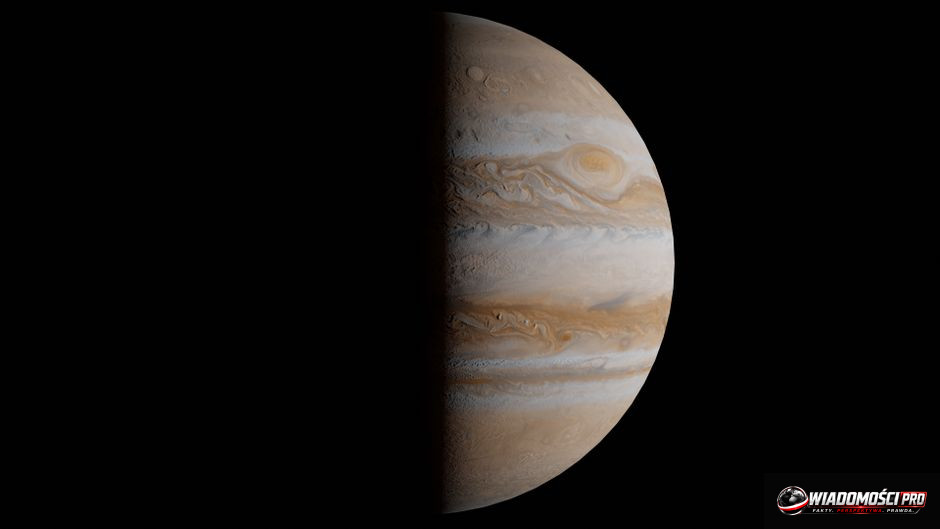
The Europa Clipper mission has cost 5 billion dollars, and its goal is to determine whether conditions for life exist beneath the icy shell of Jupiter's moon. This is one of the most expensive planetary operations in the history of the American space agency. For comparison, NASA's entire budget for the 2024 fiscal year was approximately 24.9 billion dollars, meaning the single Clipper project accounts for nearly 20 percent of the annual funds allocated for space research and exploration.
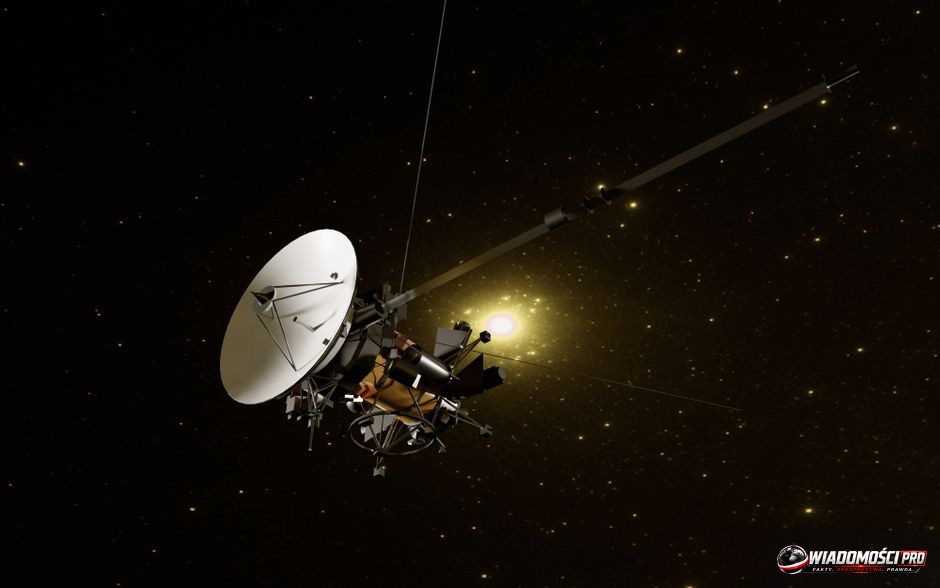
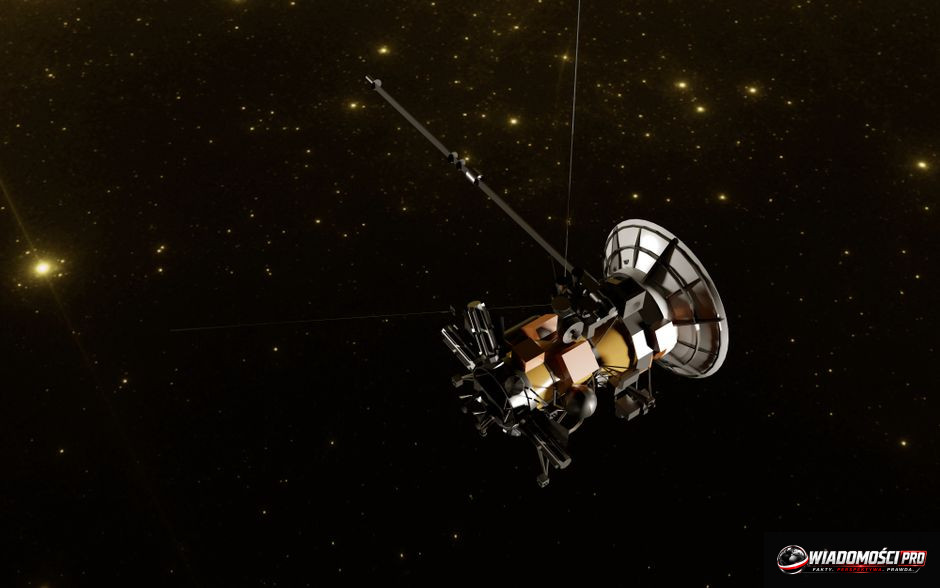
The Europa Clipper probe is an engineering colossus with a mass of about 6 tons, more than half of which is fuel necessary for maneuvering in the complex gravitational environment of the Jovian system. Once the solar panels are fully deployed, the device reaches a span of over 30 meters, making it the largest probe ever built to study other celestial bodies. Nine main research instruments have been installed on board, including ice-penetrating radars, imaging spectrometers, and magnetometers. Each of them has been designed to survive in the extreme radiation field, which in the vicinity of Jupiter can instantly destroy the most advanced electronics.
Technical challenges of exploring an icy world
The probe's construction was forced from the beginning by the specific conditions prevailing around Europa. The probe will not land on the surface but will conduct a series of close flybys – about 50 are planned. During these maneuvers, Clipper will approach the moon's surface to a distance of as little as 25 kilometers. Such a strategy allows it to avoid the strongest radiation, which is lethal to integrated circuits in the immediate vicinity of Jupiter. Engineers had to create a special radiation shield for the onboard computer, using titanium and aluminum nearly a centimeter thick.
The scientific instruments are tasked with creating a map of the surface's chemical composition and investigating the thickness of the icy shell. Scientists estimate that the ice is 15 to 25 kilometers thick, and beneath it lies an ocean of liquid water with a depth reaching up to 100 kilometers. If these data are confirmed, Europa will become the most promising place to search for biological traces in the Solar System. The probe will also check whether water from the depths penetrates through cracks to the upper layers, which would be key evidence of the exchange of matter between the ocean and the surface.
Launch logistics and flight trajectory
The choice of the Falcon Heavy rocket from SpaceX was not a matter of chance, but of pure necessity. NASA needed a launch vehicle capable of delivering a massive payload onto an interplanetary trajectory with the appropriate initial velocity. The Falcon Heavy, with its three main boosters, provided the required thrust, allowing the probe to be sent directly toward Jupiter. The launch, which took place on October 14, 2024, was a meticulously planned time window.
The journey to the destination is a complex gravitational dance. The probe does not fly in a straight line. To gain sufficient speed, it must perform gravity assist maneuvers. First, it will pass Mars in 2025, and then return near Earth in 2026 to perform another assisting "jump." Only after these maneuvers will Clipper head toward the Jovian system, which it will reach in 2030. This multi-year journey shows that modern astronomy is not just about software or sensor development, but above all, tedious orbital mechanics, where every calculation error costs billions of dollars.
Financial and operational realities of the mission
Costs on the order of 5 billion dollars raise discussions about the efficiency of public spending. Critics point out that for such an amount, several smaller Discovery-class missions could have been carried out, which would have allowed for the study of several different objects at the same time. NASA management, however, argues that Europa Clipper is unique. No other project is capable of analyzing the habitable conditions on a distant moon in such detail.
The expenditures on Clipper include not only the construction of the probe itself but also the costs of maintaining the scientific team, ground support, and the development of radiation-resistant technologies that will find application in future crewed missions. It is an investment in knowledge about how to build machines capable of working in extreme conditions. Every dollar spent on this project is, in fact, paying for the engineering education of an entire generation of specialists who will design infrastructure for permanent space bases in the future.
Skeptics note, however, that the rush to announce the mission's success, even before the probe has approached its target, is risky. If, after seven years of travel and billions spent, it turns out that the ocean on Europa is barren or chemically dead, NASA will have to face the question of the sense of such gigantic investments in single targets. On the other hand, the lack of discovery of life would be an equally important scientific result, proving that conditions favoring biology are not a common phenomenon in space.
What does "studying habitability" mean in practice?
Most of the general public associates the search for life with the search for microorganisms. In the case of Europa, the matter is more complex. Clipper is not looking for life directly, as it does not possess a lander or a drill. The device will deal with the analysis of surface chemistry. Instruments such as a mass spectrometer will study gas and dust particles ejected into space as a result of geological processes or meteorite impacts. If organic compounds, amino acids, or salts are found in the samples, scientists will receive hard evidence that reactions we consider the foundations of life on Earth are occurring in the ocean beneath the ice.
This approach is much more conservative than searching for "aliens." Scientists are focusing on three pillars: the presence of water, the availability of energy, and chemical ingredients. If Clipper confirms that all three elements coexist in one place, Europa's status as an object capable of supporting life will be recognized as a fact, not a hypothesis. Then, the path opens for subsequent missions, perhaps those that will attempt to break through the ice.
Risks and hopes
Every space mission carries the risk of failure. In the case of Europa Clipper, it is increased by the long duration of the mission and the destructive influence of Jupiter's magnetosphere. Electronic components, despite safeguards, may degrade in a way that ground tests did not foresee. The history of missions such as Galileo, which also studied the Jovian system, shows that space hardware can work much longer than assumed, but it can also be very temperamental.
From the taxpayer's perspective, the Clipper mission is an example of how great narratives are built in science. Understanding whether life is a phenomenon unique to Earth or common in space defines our position in the world. If Clipper finds nothing, our perception of the universe as a place full of possibilities will be significantly limited. Then, subsequent missions will have to focus on questions about why such promising places as Europa did not develop biology.
One cannot ignore the fact that 5 billion dollars is a sum that, in other sectors of the economy, could have financed the construction of advanced energy systems or research centers on Earth. However, in the context of NASA, where budgets are planned decades in advance, Clipper is treated as a priority project. The agency has bet everything on one card, believing that the answer to the question about life beyond Earth is worth any price.
Perspective after 2030
When the probe enters Europa's orbit, the most intensive phase of data collection will begin. Each flyby will provide gigantic amounts of information transmitted to Earth via the Deep Space Network. Analyzing this data will take years. It will likely be another decade before the world hears the final conclusions regarding the habitability of this moon.
Will this data bring the answer we have been waiting for for decades? Perhaps it will turn out that life on Europa exists but is limited to microorganisms living around hydrothermal vents on the ocean floor. Clipper will not see these vents directly. It will only see the chemical traces of their activity. This will be deductive science, based on the interpretation of signals. For many, this will be disappointing – we would prefer a photo or a recording. However, on a scientific scale, proving the existence of biology beyond Earth using remote sensors will be the greatest achievement in human history.
We have to wait. Currently, Clipper is in the long flyby phase. Each day brings us closer to the moment when the probe will become our eye in one of the most mysterious places in the Solar System. Regardless of the result, this project is already changing the way we think about exploration – we are moving from fast "fly-by" missions to long-term planetary research that requires patience, huge financial outlays, and unwavering faith in science.
Questions and answers
How much did the construction and launch of the probe cost exactly?
The cost of the Europa Clipper mission has been estimated at 5 billion dollars, which constitutes a significant part of NASA's annual budget allocated for science.
Why was Europa chosen for research?
Europa is considered one of the most promising places in the Solar System due to strong indications of the existence of an ocean of liquid water beneath its icy shell, which constitutes a potential environment for life.
Has the probe already reached its destination?
No, the probe launched in October 2024 and is currently in the long-term flyby phase, using gravity assist maneuvers to reach the Jovian system in 2030.
What research instruments does Clipper have?
The probe is equipped with nine main instruments, including ice-penetrating radars, imaging spectrometers, and magnetometers, which will allow for the study of the surface's chemical composition and the thickness of the icy shell.
Is the mission tasked with the direct detection of life?
No, the mission aims to study conditions favoring life, i.e., habitability. The probe will look for organic compounds and evidence of the exchange of matter between the ocean and the surface, not the organisms themselves.
Why was the Falcon Heavy rocket chosen?
SpaceX's Falcon Heavy was the only available and proven launch vehicle with the appropriate payload capacity that was able to send such a massive probe onto an interplanetary trajectory within the designated launch window.
What will happen if the probe does not find evidence of habitability?
This will be an important scientific result that will force astrobiologists to revise current hypotheses regarding the occurrence of life in the Solar System and to search for other, perhaps less obvious locations.
The importance of the mission for future generations
The exploration of Europa is not just about searching for life; it is about testing the limits of our technology. Building a probe resistant to the extreme radiation of Jupiter sets new standards for space engineering. Solutions developed during this project will likely be used for decades in missions heading toward the further corners of the Solar System. Knowledge about how life originates and how it can survive in conditions other than Earth's is the foundation upon which future space colonization rests.
If humanity ever wants to become an interplanetary species, it must first understand how other ecosystems function. Clipper provides us with the tools for this lesson. Although skepticism toward such large expenditures is a healthy control mechanism, it should be remembered that basic science is what distinguishes us from other species. We are not looking for life just to answer the question "are we alone." We are looking for it to better understand what life is at all and what its limits are.
The Clipper probe, despite its six tons of mass and billion-dollar costs, is in essence a small point in the vast space that carries the hopes of millions of people. Regardless of whether the mission ends in a sensational discovery or merely deepens our knowledge of the geology of Jupiter's moons, it will be a lasting record in the history of exploration. This is a moment in which science crosses another barrier – not only technological but also cognitive. We are waiting for the data from 2030, knowing that what is discovered then will forever change biology and astronomy textbooks.
Sources
- Start of the Europa Clipper mission to Europa - AstroNET – Polish Astronomical Portal
- Europa Clipper probe to search for life on Europa - Urania - Polish Astronomical Portal
- Start of the Europa Clipper mission [TRANSMISSION]. Americans to outpace Europeans in the search for life on Europa - Wyborcza.pl
- NASA sends probe to Europa. Europa Clipper mission has launched - WP Tech
- Beginning of the Europa Clipper mission - Kosmonauta.net
- Europa Clipper probe to search for life on Jupiter's moon, Europa - wszystkoconajwazniejsze.pl
- Flight to Jupiter for 5 billion dollars. Launch of Europa Clipper on board Falcon Heavy - Benchmark.pl
- Searching for life in the Solar System beyond Earth. NASA sends mission - Geekweek Interia
Article prepared by the Wiadomości PRO editorial team with the support of artificial intelligence. Facts come from the sources provided above.

Komentarze (0)
Ładowanie komentarzy...