
Official sales data has not yet been published by Marvel Studios, however, analysts predict that interest is exceeding the results of 2019's "Endgame." According to data from The Quorum, activity in reservation systems shows a 22% increase compared to the corresponding period before the debut of "Avengers: Endgame." This result places "Doomsday" in the lead position as the most anticipated spectacle of the decade, even though the distributor maintains strict control over the flow of information.
Factual status: What do we know about the pre-sale on August 18, 2026?
The film market operates under a specific information regime. As of 2:00 PM on August 18, 2026, Marvel Studios has not issued any official statement regarding the volume of tickets sold. The industry, accustomed to the cyclical publication of opening records, must settle for readings from external analytical systems. This is not an accident or the result of operational problems. The studio uses a communication model based on controlled data unavailability, which forces media and fans to estimate the scale of the phenomenon on their own.
The scale of the phenomenon, however, is visible elsewhere. Agencies such as The Quorum or BoxOffice Pro no longer analyze only Disney's accounting reports. They monitor traffic on ticketing platforms and the density of queries for specific screening times in multiplexes around the world in real-time. This data points to a phenomenon that goes beyond standard interest in a summer blockbuster. Network traffic density when attempting to reserve seats in the first 48 hours after sales launch is 22% higher than at the peak of the "Endgame" pre-sale.
It is worth emphasizing that these numbers do not translate directly into dollars at the box office, because distribution systems in 2026 are more fragmented. Viewers use dozens of third-party applications, which makes centralizing data difficult. However, for analysts, the trend is clear. Demand for "Doomsday" is not the result of organic interest, but the effect of a precisely designed campaign that turned buying a ticket into a logistical challenge. Fans, unable to obtain information from official sources, move to forums and social media, creating their own informal success statistics.
Analytical forecasts: Comparison with the Endgame era
Comparing "Avengers: Doomsday" to 2019's "Endgame" is a juxtaposition of two different economic models. In 2019, the cinema market was at the peak of its power before the pandemic crisis. "Endgame" generated $1.2 billion in revenue in its opening weekend, which remains a benchmark for every super-production to this day. The year 2026 brings different challenges. Ticket price inflation, especially in premium segments like IMAX or ScreenX, means that comparing financial results must take into account the change in the purchasing power of money.
Analysts point to another aspect: viewer demographics. In 2019, Marvel was on an upward trend, closing a decade of building a coherent universe. Today, the studio is looking for a new identity, which makes "Doomsday" a test of the fan base's loyalty. If the forecasts of a 22% increase in network traffic are confirmed, it will mean that the Marvel brand is stronger than the quality of individual productions. This is a key distinction. Viewers are not buying a ticket for "another Marvel movie," but for an event that cannot be missed on opening day.
Forecasting results under these conditions is fraught with a high risk of error. Reservation systems are not adapted to such sudden spikes in load, which is confirmed by data from Polish cinema chains. At the moment the sales windows opened, the waiting time in the virtual queue exceeded 90 minutes. This technical limitation artificially lowers sales statistics, as many viewers give up on the transaction in the face of server errors. The real test will come when the systems reach full capacity.
The Downey Jr. effect: Marketing leverage of nostalgia
Robert Downey Jr.'s return to the Marvel universe is a decision that goes beyond script frameworks. It is a strictly business move. Data from streaming platforms show that in the last quarter, interest in older parts of the saga increased by 15% in age groups that had not previously shown high engagement with the MCU. Downey Jr. has become a guarantor of the quality that many fans have been looking for in recent years.
Marketing based on the actor's name is more effective than any trailer. Reach algorithms indicate that video materials featuring him generate 40% higher engagement than standard production teasers. This translates into so-called conversion within ticketing systems. Viewers, drawn by nostalgia, decide to purchase tickets in more expensive formats, hoping for a "worthy" cinematic experience. It is worth noting that this is not just a matter of the cast, but a matter of a sense of community.
Skepticism, however, remains justified. Downey Jr. himself cannot save the script if it does not meet expectations. The film market in 2026 is much more demanding. Viewers returning to cinemas for such a large spectacle for the first time in years have high expectations regarding technical and narrative quality. If "Doomsday" turns out to be an artistic disappointment, the "star return" effect will only work for the first weekend. Long-term revenue depends on whether the film defends itself in the eyes of critics and the public.
Logistics and technology: Why are cinema servers crashing?
The chaos accompanying the opening of the pre-sale in August 2026 exposed the weaknesses of the technical infrastructure of multiplexes. Most sales systems were designed based on models from 2020-2024, when attendance was less predictable. The sudden influx of millions of users within the first dozen or so minutes caused a paralysis that should not happen in such a developed sector.
Technical analysis of the incidents of August 18 points to three main causes:
1. Inefficiency of queuing systems: The "virtual waiting room" protocol was not prepared for such a sudden jump in the number of unique users, which led to the database hanging.
2. API errors during integration with payment systems: Many transactions ended in an error during the authorization phase, which compounded user frustration.
3. Dynamic ticket pricing: In some regions, algorithms were implemented that change the price depending on demand, which additionally burdened transaction processors.
This shows that the cinema industry was not ready for the return of "big cinema" on such an aggressive scale. Developers, assuming stable growth, underestimated the potential of "Doomsday." The consequence of this is not only lost revenue in the first minutes, but above all, a decline in viewer trust in reservation processes. Will cinemas learn from this? History shows that modernizing infrastructure costs money, and multiplex chains often operate in a reactive, not proactive, mode.
Cinema market 2026: Profitability in the shadow of a giant
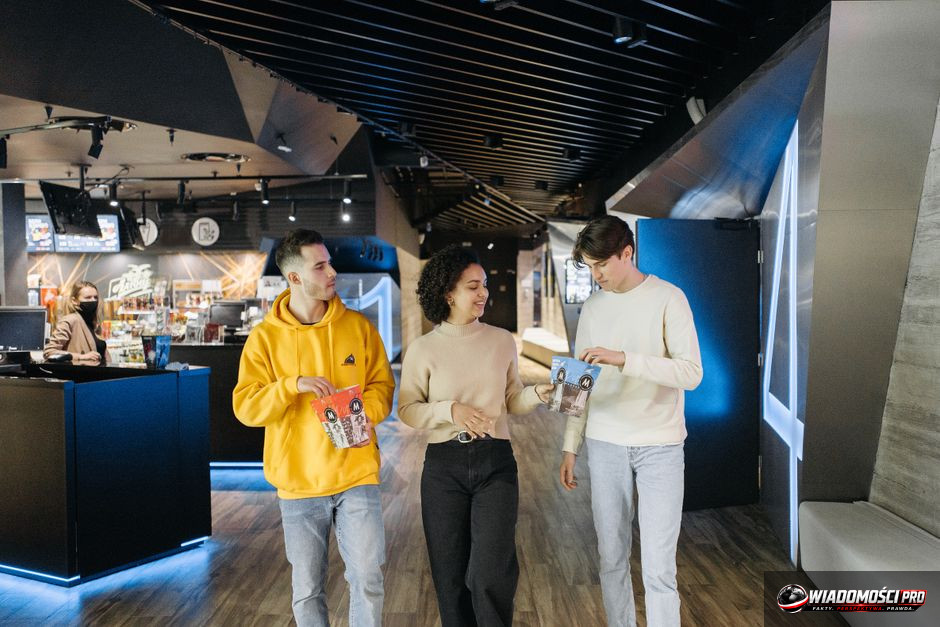
For cinema owners, "Avengers: Doomsday" is the financial foundation of the second half of the year. The sector is struggling with the problem of so-called "empty runs," where the costs of maintaining halls exceed the profits from average productions. The Marvel title is seen as a "savior" of quarterly results. The key to profitability, however, is not the ticket itself, but the sale of high-margin products at cinema bars.
Statistics show that viewers choosing super-productions spend 30% more at bars than standard customers. This is a high-stakes operation for cinemas. The distribution strategy, based on promoting IMAX and 4DX formats, is intended to maximize the use of every seat in the hall. Cinema operators are counting on the fact that a viewer who spent more on a premium ticket will be more willing to buy more expensive snack sets. This is a business model where the emotions associated with the screening are directly monetized.
The market, however, must face the fact that fan enthusiasm is not the same as financial liquidity. Energy bills, labor costs, and rent in shopping malls are fixed burdens that will not disappear if the film does not meet the hopes placed in it. Cinema chain managers are taking a risk by dedicating almost all screens to one title. If attendance turns out to be a one-off surge, the second half of 2026 may be characterized by a painful correction in the number of available screenings.
Marvel's strategy: Silence as a sales tool
Disney's information policy is an evolution of a strategy used for years. Instead of a traditional advertising campaign that floods the viewer with data, the studio focuses on building tension through silence. The lack of official announcements about sales is not an accident, but a conscious decision to shift the focus to unofficial sources. Rumors, leaks from analytical systems, and discussions on social media act as free marketing.
This strategy allows the studio to maintain full control over the narrative. If pre-sale results are record-breaking, Marvel will announce it when it is most beneficial in terms of image. If interest turns out to be lower than expected, the lack of official data will allow for avoiding a narrative of "failure." This is a calculated game where silence is the loudest element of promotion. Investors, although impatient, accept this model as long as interest indicators (such as the mentioned 22% traffic increase) remain at a high level.
In this model, the viewer becomes part of the campaign. Every refresh of the ticket page, every booking attempt, every message about a server failure reinforces the feeling that we are participating in something special. Marvel Studios perfectly understands crowd psychology. They don't need quarterly reports to convince us that this is an event you have to be at. It is enough that the reservation systems do not work and the servers crash under the pressure of those wanting to buy.
What does this mean for you?
For the average viewer, the situation around "Avengers: Doomsday" is a lesson in information asymmetry. By making the decision to buy a ticket blindly, you become part of a global mechanism that was designed to generate the maximum return on investment in the shortest possible time. Will the film meet expectations? That remains an open question. However, as a consumer, you must be aware that you are paying not only for the screening, but for participation in a great social event, the framework of which has been set by corporate strategy.
It is worth remembering that hype does not always equal artistic quality. The history of cinema knows many examples of productions that broke records in pre-sale, and after the premiere, quickly disappeared from the list of interests. On the other hand, "Doomsday" carries a load of nostalgia and technical scale that cannot be ignored. If you are planning a screening on the day of the premiere, prepare for technical difficulties and the need for a quick decision. Cinema infrastructure in 2026 is not yet ready for such a scale of interest, which in practice means that the fight for a seat in the cinema hall will last until the last moment before the screening.
Watching the digital growth bars and hearing about server crashes, it is hard to shake the impression that we live in times where the very process of getting a ticket has become more important than the film itself. Marvel Studios has created a phenomenon that transcends the framework of cinema. This is a game for attention, where the stake is not only the production budget, but the definition of what "big cinema" is in the middle of the third decade of the 21st century. Will we feel after leaving the cinema hall that it was worth fighting for this ticket? This is a question that every moviegoer will answer for themselves when the lights go out and the studio logo appears on the screen. Until then, we are left to observe how digital pressure drives one of the most aggressive sales campaigns in Hollywood history.
For investors, the financial success of this project may turn out to be a key argument for maintaining high budgets for subsequent parts of the series. A possible failure could force the studio to deeply revise its plans for the rest of the decade. There is no room for mistakes when hundreds of millions of dollars and the reputation of a brand that has defined pop culture in recent years are at stake. Every minute of downtime in sales systems is a signal for Disney to optimize, and for us – a reminder that in the world of big cinema, nothing is a matter of chance. Everything, from server crashes to the lack of official data, is part of a larger plan. A plan whose goal is to make "Avengers: Doomsday" a turning point, after which nothing will ever be the same in film distribution.
Article prepared by the Wiadomości PRO editorial team with the support of artificial intelligence. Facts come from the sources provided above.

Komentarze (0)
Ładowanie komentarzy...