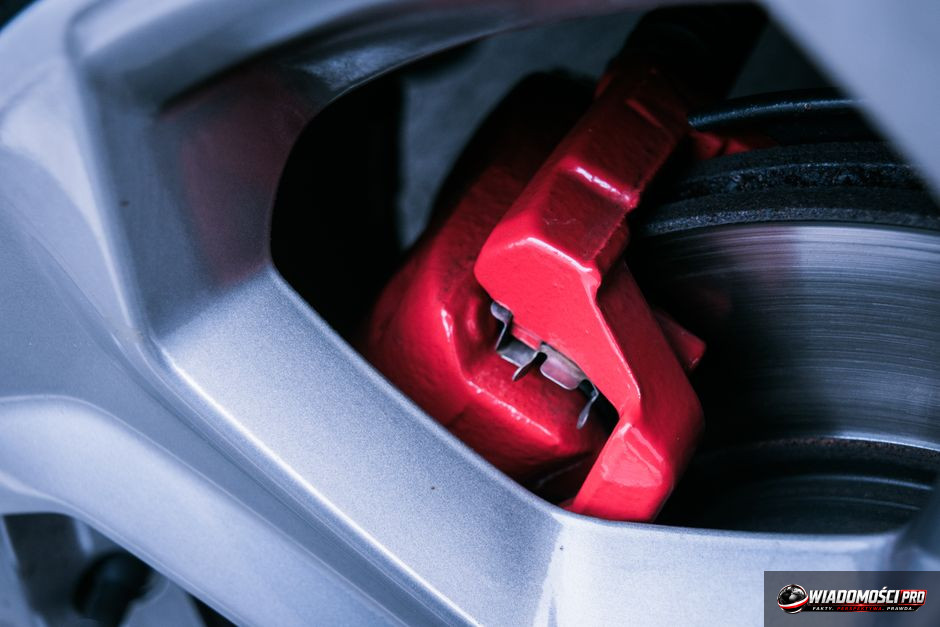
Drum brakes are making a comeback because their closed design effectively limits brake dust emissions, which is crucial for meeting the Euro 7 standard coming into effect in November 2026. This engineering shift is not the result of nostalgia, but a reaction forced by EU regulators to the particulate matter generated during the contact between the brake pad and the disc. Brussels has stopped looking solely at exhaust pipes, recognizing that brake dust accounts for an increasing percentage of pollution in urban agglomerations.
Car manufacturers are facing the necessity of reducing particulate emissions from braking systems by 27 percent for passenger cars and vans by 2035, in accordance with Euro 7 guidelines. New limits for light vehicles assume an allowable emission level of 7 mg/km for internal combustion cars and 3 mg/km for electric vehicles. Achieving such stringent parameters in classic disc brakes, which are inherently open, would require the use of extremely expensive filtration systems or advanced metal alloys. Drums, thanks to their sealed housing, trap dust inside, which in the eyes of the legislator makes them an eco-friendly solution, ready for implementation without the need for costly air purification system designs.
The physics of dust and drum construction
The closed construction of a drum brake provides a natural barrier to dust, which in a standard disc system is blown by centrifugal force directly onto the rims and into the atmosphere. During every braking action, friction material from the pads is worn away, creating fine particulate matter. In a disc system, there is no element that could stop these particles. In a drum, this process takes place inside a steel housing that acts as a settling chamber.
Engineers point out that the drum brake shows a lower tendency to spread pollutants, which allows manufacturers to pass homologation tests more easily under the new WLTP procedure, which includes non-exhaust emission measurements. Introducing these solutions to city and compact cars is the cheapest way for corporations to avoid financial penalties for exceeding emission limits. Every gram of dust above the Euro 7 standard will cost the manufacturer a specific amount in euros, which forces radical emission cuts wherever technically possible.
The key challenge, however, remains heat dissipation. Drums, due to their construction, dissipate thermal energy less effectively than ventilated discs. Modern designs require the use of special friction materials that maintain efficiency at higher operating temperatures. Manufacturers must also use more advanced air cooling systems to avoid fading, i.e., a drop in braking efficiency during frequent use of the system in urban conditions. This is a technological compromise that allows for safety while meeting environmental requirements.
The electric revolution and brakes
Electric cars, despite using energy recuperation, cannot completely eliminate mechanical brakes. Energy recovery systems are inefficient at low battery charge levels or in emergency situations where maximum braking force is required in a fraction of a second. This is precisely why electric cars must have a functional mechanical system.
Volkswagen was one of the first corporations to implement drum brakes in its electric models. The VW ID.3 and VW ID.4, based on the MEB platform, were equipped with rear drum brakes precisely because of the operating characteristics of electric cars. Recuperation takes over most of the work during daily driving, which often caused traditional discs in such cars to corrode due to lack of frequent use. Drums, thanks to their airtightness, are much more resistant to external factors, which extends their lifespan in vehicles that use mechanical speed reduction less often.
Volkswagen's decision is a signal to the entire market. Other manufacturers, such as Audi with the Q4 e-tron model, have followed the exact same path. This approach combines two benefits: protection against corrosion resulting from less frequent use and a reduction in dust emissions, which fits perfectly into the upcoming Euro 7 restrictions. Choosing drums in the electric car segment is becoming the standard, not an exception, which confirms that automotive engineering is returning to proven solutions in a modern edition.
Service costs and the spare parts market
Car owners must prepare for an increase in braking system maintenance costs after November 2026. Industry estimates indicate that replacing drum brake components in newer designs may be about 200 to 500 PLN more expensive compared to classic disc brake service in B and C segment cars. Higher costs result from the need to use components with specific homologation that must meet the dust emission standards set by Euro 7.
The spare parts market on the side of aftermarket manufacturers faces a difficult period of adaptation. Every replacement brake pad or shoe will have to undergo rigorous certification tests so as not to violate the emission limits assigned to a given vehicle model. This means that the cheapest replacements of unknown origin may disappear from the market, and their place will be taken by more expensive, certified components. Mechanics point out that replacing shoes in modern drums is more labor-intensive than replacing pads in disc calipers, which will further increase the final price of the service for the customer.
Experts warn that the lack of availability of cheap, proven replacements will lead to a situation where workshops will be forced to use only original parts or homologated premium replacements. This phenomenon will affect the maintenance costs of used cars, which in the repair process will have to meet the same standards as new cars. The consumer, wanting to keep the car in full working order, will have to accept higher invoices for every visit to the workshop, which for many households will become a noticeable financial burden.
Technological challenges for manufacturers
November 2026 is not just a date on the calendar, it is a real deadline by which all newly homologated vehicles must meet strict requirements. The research and development departments of manufacturers are currently focusing on optimizing friction materials. In drums, where heat dissipation is more difficult, the chemical composition of the linings is of key importance. Manufacturers are experimenting with composites that are intended to minimize dusting without losing braking properties.
The problem also concerns control systems. Modern drum brakes must be fully integrated with ABS and ESC systems, which was a challenge in older designs. Systems currently used in cars like the VW ID.3 use precise sensors that monitor the temperature and wear of the linings inside the drum. Thanks to this, the onboard computer can appropriately dose the braking force, avoiding unnecessary overheating of the system.
Investments in such solutions are enormous. Manufacturers, instead of developing ceramic discs or complicated air filters for calipers, prefer to optimize drums, which are simpler to produce and cheaper to maintain for the first few years of vehicle operation. This is the pragmatism that dominates the current strategy of most automotive corporations. The environment gains from cleaner air, but drivers pay for it in the purchase price of the vehicle, in which the costs of meeting Euro 7 standards are hidden.
User and mechanic perspective
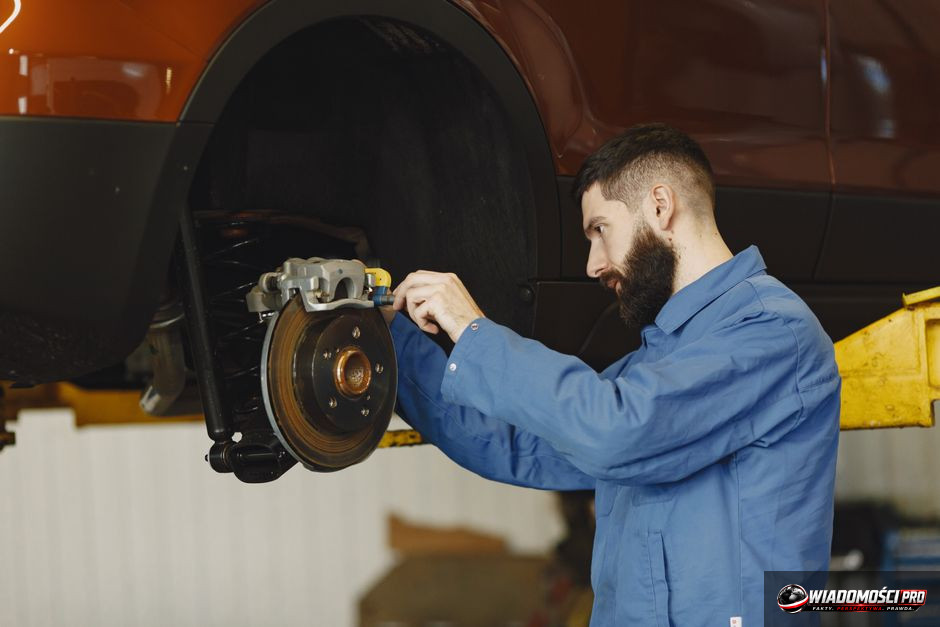
For the average driver, this change means the need to change service habits. Mechanics are already sounding the alarm that diagnostics of closed drum systems require specialized equipment that smaller workshops may not have. Verifying the condition of the linings without dismantling the drum is difficult, which means that every thorough inspection requires removing the entire brake assembly. This is an additional man-hour that the customer will pay for.
Owners of older cars do not need to worry, because Euro 7 standards apply only to new models introduced for sale after November 2026. However, as the years go by, when the secondary market begins to fill up with cars meeting these standards, the problem will affect everyone. Keeping such a vehicle in working order will require greater service discipline. Workshop owners who invest in training and appropriate diagnostic equipment will gain a market advantage, while smaller points may have difficulty servicing such complex systems.
It is worth noting that spare parts manufacturers are already beginning to promote product lines dedicated to Euro 7. They are marked as low-dust emission components. The price of such products is inherently higher, which is an element of a marketing strategy combining ecology with quality. For the driver, this means the need to verify whether the purchased part has the appropriate certificates, which was previously the domain mainly of engine parts, not the braking system.
The future of brakes in the era of ecology
Are drums the only way to meet Euro 7? No, but it is currently the most cost-effective solution. Other manufacturers may decide on advanced discs with ceramic or carbon coatings, which also reduce dusting, but their cost to the end customer is many times higher than in the case of proven drums. The market will strive for a balance between the price of the car and the costs of meeting the standards, which will likely lead to a division: cheap cars will have drums, and premium cars – advanced discs with cleaning systems.
Braking technology is undergoing an evolution that no one thought about a decade ago. Instead of focusing solely on shortening the braking distance, engineers must now ensure that every disc or drum does not pollute the urban air. This is a challenge that is changing the face of the automotive industry. We will all become "drummers" – whether we like it or not – if we want to drive new cars in accordance with EU regulations.
The catch is that the fight for clean air shifts the burden of responsibility onto the end user. Manufacturers are optimizing production processes, mechanics are gaining new competencies, and the spare parts market is undergoing a fundamental transformation. A driver who has so far replaced discs and pads in the comfort of their own garage may be forced to visit an authorized service center, where specialized equipment will confirm the homologation of the installed parts. This is a change not only technological, but above all systemic.
Questions and answers
Are drum brakes safer than disc brakes?
Modern drum designs are efficient enough for city and compact cars, but their return is mainly due to Euro 7 emission requirements, not technical superiority over discs. In extreme conditions, at very high speeds and prolonged load, discs still offer better thermal efficiency.
Will I have to replace the brakes in my current car from November 2026?
No, the new Euro 7 standards apply to cars introduced for sale after the regulations come into force, not to cars already registered and used by drivers. Your current car remains fully legal.
What will be the real costs of replacing brakes after the introduction of the standard?
Experts predict an increase in the prices of parts and service by about 200 to 500 PLN per axle, because new components must meet strict emission standards, which increases production costs, certification tests, and the labor intensity of the service itself.
Do drum brakes in electric cars work differently?
Yes, they are closely integrated with the recuperation system, which makes them work less often than in internal combustion cars. As a result, they are less prone to wear, but require regular inspection of the housing tightness to maintain their emission properties.
Will the replacement market change completely?
Yes, it is predicted that the cheapest, non-homologated replacements that do not meet dust emission limits will be withdrawn from the offer. Drivers will have to choose from certified products, which will affect the price increase in the entire aftermarket sector.
Why are drums preferred?
Due to the closed design, which naturally limits the release of dust into the environment, which allows manufacturers to meet Euro 7 limits without having to design expensive mechanical filtration systems for traditional discs.
Will every car after 2026 have drums?
No, premium car manufacturers will likely maintain discs, using expensive technologies for coating friction surfaces or cleaning systems to meet emission standards without sacrificing disc performance.
Will this change affect the vehicle's weight?
Drum brakes can be heavier than disc brakes, which may affect a slight increase in the vehicle's curb weight, but in the face of strict emission standards, this is a compromise that manufacturers are willing to accept, avoiding higher financial penalties.
Who will lose the most from this change?
Owners of used cars and customers looking for cheap service solutions will feel it the most, as the certification of spare parts will drastically limit the availability of cheap replacements, forcing higher expenses in the workshop.
Is this the end of innovation in brakes?
On the contrary, this is the beginning of a new era of innovation, in which friction materials will be designed with the goal of minimizing emissions, not just braking efficiency. This may lead to the creation of completely new types of braking systems in the future.
Sources
- A surprising turn backwards in brakes. All because of new EU regulations - Interia Motoryzacja
- Euro 7 will change brakes in new cars. Drums may return - Autocentrum.pl
- Brakes and tires pollute more than the exhaust pipe. The EU is introducing limits, drivers may lose out on this - Bezprawnik
- Euro 7 standard and brake pads. Will replacements have to meet new requirements? - MotoFocus.pl
- Will we all become drummers? New EU regulations favor drum brakes - autoGALERIA
- New emission standards in cars from November 2026. Hold on, because they will hit even electrics - natemat.pl
- Euro 7 changes the rules of the game for brakes - warsztat.pl
- Euro 7 will hit tires and brakes. Their prices may rise - MotoGuru.pl
Article prepared by the Wiadomości PRO editorial team with the support of artificial intelligence. Facts come from the sources listed above.

Komentarze (0)
Ładowanie komentarzy...