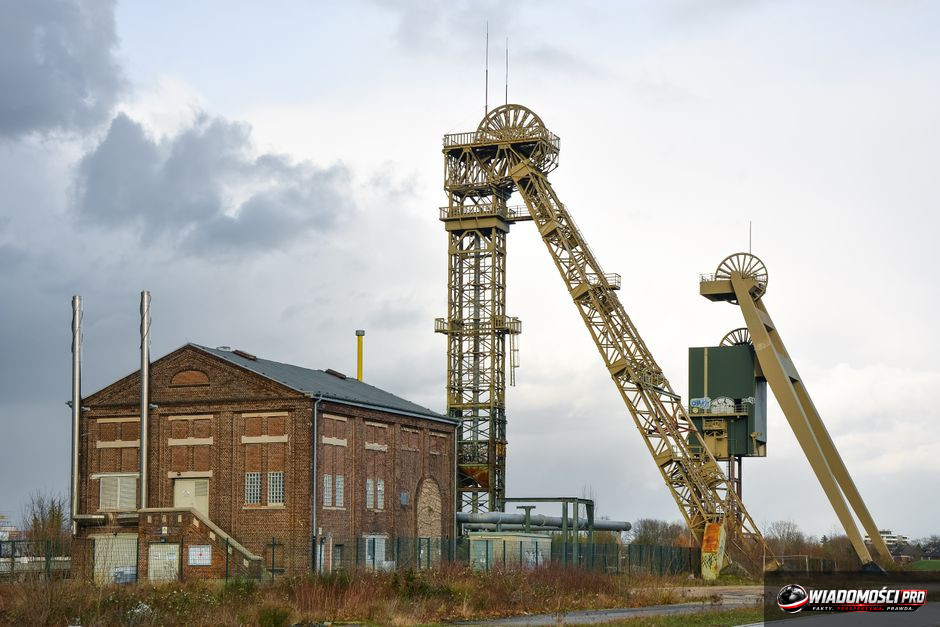
Jastrzębska Spółka Węglowa is seeking a loan of over one billion zlotys from the Industrial Development Agency (ARP), which is intended to maintain financial liquidity without the need to sell off strategic assets. The application, submitted in August 2026, opens a new chapter in the company's history, as it has opted for debt financing instead of seeking capital through market-based asset sales. This decision ends a period of uncertainty regarding restructuring directions, although it raises questions about the mining giant's real ability to service such a large debt in the face of unstable coking coal prices.
New application: Operation Liquidity
In mid-August 2026, Jastrzębska Spółka Węglowa formalized its efforts to obtain external support. The application submitted to the Industrial Development Agency amounts to over one billion zlotys. This information, provided to the public on August 17, 2026, by the editorial teams of Energetyka24, Dziennik Zachodni, and the xyz.pl website, confirms a shift in priorities for the management board in Jastrzębie-Zdrój. Facing the challenge of maintaining current liquidity, the company's board has rejected previous divestment plans.
The market, while analyzing JSW's financial situation, views further debt with reservation. Stock market investors tracking the company's performance point out that one billion zlotys represents only a temporary cash injection. Analysts note that without a lasting improvement in extraction efficiency, these funds could be consumed by current operating costs much faster than the board's forecasts assume. The application to the ARP is the result of an analysis that indicated a lack of alternatives in the banking sector, where the appetite for risk associated with financing coal companies remains at an extremely low level.
The decision to apply for public aid is a direct signal to contractors and staff that the company does not intend to dispose of its key facilities. In the past, various scenarios were considered, including the sale of individual subsidiary assets, but this path has now been completely excluded from the official financial strategy. Instead of splitting the enterprise into smaller entities, JSW is choosing the path of debt consolidation. This approach aims to avoid drastic cuts in the group's structure, but the price for this is the company's dependence on a state lender. The Industrial Development Agency, by becoming the main creditor, thus gains real influence over management decisions made in Jastrzębie-Zdrój.
Strategy without sell-offs: Opportunity cost
The abandonment of asset sales, as reported by Business Insider Polska on August 17, 2026, signifies a change in the management's operating philosophy. Just a few months earlier, the sale of assets was presented as a realistic way to raise capital. The current strategy assumes that JSW's operational potential is too valuable to be depleted, even in the face of a liquidity crisis. The choice of debt financing instead of divestment is a strategic decision intended to protect the company from a permanent decline in production capacity.
From a market perspective, this decision has a hidden meaning. Selling assets during a downturn in the coal industry could be seen as acting under pressure, which would result in obtaining undervalued prices for the assets sold. JSW's management has therefore bet on time – the loan is intended to allow the company to wait out the most difficult period while maintaining its full holdings. However, the issue of debt servicing remains. The loan from the ARP is an obligation that will burden the company's future financial results with interest costs. In a reality where margins on coking coal fluctuate, any additional financial burden increases the risk of missing repayment deadlines.
Skeptics point out that the lack of sell-offs means a lack of incentives for deep restructuring. In theory, selling less profitable parts of the business forces the company to optimize costs. Debt financing from the ARP, while providing operational peace of mind, does not oblige the board to take equally radical corrective actions. There is, therefore, a fear that JSW will enter a cycle of "taking on debt to pay off debt," which in the long run may prove to be a dead end. The market is reacting to these plans with caution, waiting for specific provisions in the loan agreement that would define the terms of restructuring. Without them, one billion zlotys becomes merely an extension of the current business model, which – as the financial results of recent quarters show – is not self-sufficient.
Legislative mechanism: From parliamentary approval to financing
The legal basis for JSW's application was not created in isolation from political realities. The legislative process that enabled the provision of support was characterized by a pace rarely seen in the Polish parliament. In April 2026, the Sejm reached an unusual consensus on the issue of saving key industrial companies. Media, including the Money.pl website in reports from April 17, 2026, emphasized that the decision to open the way for loans from the ARP was the result of fears of a liquidity collapse in sectors of strategic importance for the state's energy and raw material security.
This procedure was crowned by the president's signature on the legislative amendment in May 2026, as reported by the Bankier.pl portal in a dispatch from May 11, 2026. This amendment did not concern only JSW, but also the Azoty Group, which created a precedent for broad support of industrial giants by the Industrial Development Agency. Legislators designed a tool that allows for the rapid release of funds in critical situations, bypassing market barriers that currently effectively block access to commercial capital for the mining sector.
The legal path for the loan is ready, but its practical application remains under supervision. The act defines the framework, but it is the JSW board that must convince the ARP that it has a recovery plan capable of restoring profitability. This is a test of the company's effectiveness. In practice, this means that every zloty from the billion-zlot support will be analyzed for spending efficiency. If these expenditures do not translate into improved operating results, the responsibility for failure will fall not only on the company's board but also on the political decision-makers who created this mechanism. This is therefore not just a technical issue, but a political-economic one, where the line between public aid and the company's permanent dependence on the state is becoming increasingly blurred.
Systemic risk: ARP as a lender of last resort
The involvement of the Industrial Development Agency in financing JSW changes the role of this institution. The ARP, from an entity supporting development, is effectively becoming a guarantor of survival for entities that have lost access to market financing. Such a concentration of risk in the hands of a state agency is a high-risk operation for the entire public finance system. As commercial banks withdraw from financing coal, the state takes on the role of lender of last resort, which is a defensive strategy, not a developmental one.
An analysis by wnp.pl from May 12, 2026, pointed to the scale of the challenge facing the ARP. The agency must balance the need to save JSW with the requirements of its own asset security. If the loan becomes uncollectible, the costs will be borne directly by the state budget. This raises the question of the opportunity costs of this support. One billion zlotys committed to JSW cannot be invested in innovative sectors of the economy that could generate growth in the future. This is a classic example of interventionism that solves the liquidity problem in the short term but may hinder the modernization of Polish industry in the long term.
The JSW situation shows that coking coal mining – despite its strategic role for the steel industry – has fallen into a cost trap. The lack of a commercial financing path is a warning signal that cannot be ignored. The market is watching closely to see if JSW will manage to restructure using the borrowed funds, or if the loan from the ARP will become the beginning of a long-term process of phasing out operations using a public drip-feed. The precedent of Azoty and JSW may open the door for further aid applications, which will consequently force the state to become even more deeply involved in saving unprofitable links in the industry. This is a scenario in which the state becomes a hostage to the financial condition of companies that it cannot afford to let fail for social and strategic reasons.
Impact on the mining sector: Is this a precedent?
Jastrzębska Spółka Węglowa, by reaching for over a billion zlotys from the ARP, is setting new standards in relations between the state and heavy industry. This mechanism, developed in an atmosphere of political consensus, creates a strong point of reference for other entities in the mining sector. If the largest producer of coking coal in the European Union needs state support, smaller players may feel exempt from the obligation to fight for profitability on the free market. This is a dangerous precedent that promotes an attitude of waiting for public aid instead of seeking market solutions.
Analysts point out that the loan from the ARP is a signal to the market that JSW is not treated like an ordinary listed company. Investors who in the past counted on market signals of improved results must now include the political variable in their valuation models. If the state is willing to finance deficits, the company's share price becomes largely a derivative of political decisions, not operating results. This significantly complicates the valuation of the company's worth and discourages long-term investors who are looking for predictability, not political patronage.
For the mining sector, this also means the consolidation of the current operating model. Instead of looking for new sales markets or optimizing extraction costs, companies may focus on lobbying for subsequent tranches of support. This leads to technological stagnation. Innovation requires capital, and this is currently being directed entirely to covering current liquidity. If JSW does not use the loan from the ARP to modernize its machinery or digitize extraction processes, the billion zlotys will be wasted. The market is anxiously awaiting a detailed justification for the loan application, in which the board should indicate what part of the funds will go to investments and what part to covering fixed costs. Without a clear separation of these streams, the loan will remain merely a form of subsidy that does not solve the structural problems of the industry.
What this means for you
The decision to take a loan from the ARP means that the state is taking on the burden of maintaining JSW, avoiding the sale of shares in the company. Employees and shareholders who feared the sale of assets gain, while taxpayers lose, because ARP support burdens public resources that could have been invested in other areas of the economy. For the reader, this means that the fate of one of the largest companies in the country remains in the hands of officials, not market mechanisms, which increases the risk of long-term stagnation in the coal sector.
Questions and answers
What amount does JSW want to borrow?
The company is seeking over a billion zlotys in support from the Industrial Development Agency.
Why is JSW not selling assets?
The board decided that obtaining a loan is a more favorable alternative to selling off company assets under current market conditions, which allows for maintaining the group's full operational potential.
Does the law allow for such loans?
Yes, in May 2026, the president signed an amendment to the act that enables the granting of loans from the ARP to JSW and the Azoty Group, which constitutes the legal basis for current actions.
Does this mean JSW is now safe?
The loan provides the company with liquidity in the short term, but its long-term situation depends on the efficiency of managing these funds and the improvement of operating results, which the company still faces.
Who bears the financial risk of this operation?
The risk is borne by public finances, because the loan comes from the Industrial Development Agency, and in the event of problems with debt repayment, this burden may be transferred to the state budget.
What was the market's reaction to JSW's plans?
The market observed these moves with reservation, emphasizing that one billion zlotys is a large amount that, given current extraction costs, may not be enough to permanently heal the company's financial situation.
What do investors expect from the JSW board?
Investors expect concrete restructuring plans that will explain how the borrowed capital will be used to improve profitability, and not just to patch budget holes.
Can other companies count on similar support?
Yes, the amendment from May 2026 created a mechanism available to entities of strategic importance, which opens the way for other industrial giants to apply for financing from the ARP in crisis situations.
Why didn't commercial banks provide support?
The banking sector is currently limiting its exposure to the coal industry due to operational risk and ESG policy, which forced JSW to turn to a state lender.
What happens if the loan is not enough?
In such a scenario, the board will be forced to seek further forms of financing or make difficult decisions about restructuring, which may involve the need to revise the current strategy of not selling assets.
Can employees feel safe?
In the short term, support from the ARP protects jobs from the effects of asset sales, but employment stability in the longer term will depend on improving the profitability of mines and the company's ability to compete on the global coking coal market.
What is the role of the Industrial Development Agency in this process?
The ARP acts as a financing institution that, after receiving the application and analyzing the company's situation, makes a decision to release funds, thus becoming a key partner for JSW in the process of emerging from the liquidity crisis.
Will the loan decision affect the prices of JSW products?
The loan does not directly change product prices, but its impact on the company's condition may translate into pricing strategy in the long term, depending on whether the company manages to improve its operational foundations.
Can other industries demand the same support?
There is a risk that other industrial sectors, seeing JSW's success in obtaining funds from the ARP, will begin to exert pressure on the government, demanding similar support mechanisms for their enterprises, which may excessively burden state funds.
What are the biggest threats to this operation?
The biggest threat is the lack of a lasting improvement in JSW's profitability, which will lead to the accumulation of debt to the ARP and the need for future involvement of public funds.
Is the loan a form of subsidy?
Formally, it is a repayable loan, but from the market's point of view, the lack of a commercial financing path makes it perceived as interventionist state support, which in the event of repayment problems may take the form of a subsidy.
What data confirms JSW's situation?
The data is based on official information about the submission of the application in August 2026 and on statutory provisions that enabled this financing, confirmed by industry and economic media.
Did the JSW board provide a loan repayment date?
Official announcements did not provide a detailed repayment schedule, which is the subject of further negotiations with the Industrial Development Agency.
Why is this called a "high-risk operation"?
Because it involves public capital in a coal industry company that shows financial instability and operates under conditions of strong market pressure and energy transition.
Does this mean JSW has a guarantee of survival?
No form of financing gives a guarantee of survival; the loan only gives time to carry out the necessary changes that must be implemented so that the company can function independently in the future.
Sources
- Mining giant seeks over a billion zlotys. There will be an application for a large loan - Dziennik Zachodni
- Billion-zloty loan instead of selling companies. JSW's new plan for a cash injection - Energetyka24
- JSW wants to borrow over a billion zlotys from the Industrial Development Agency - xyz.pl
- JSW abandons asset sales in favor of a large loan. There is a new plan - Business Insider Polska
- President signed amendment enabling ARP loans for JSW and Azoty - Bankier.pl
- JSW wants to take out a huge loan from the ARP - wnp.pl
- Sejm decided on ARP loans for JSW and Azoty Group. Unusual consensus - Money.pl
- To the rescue of JSW and Azoty? Industrial Development Agency may give them loans - Energetyka24
Article prepared by the Wiadomości PRO editorial team with the support of artificial intelligence. Facts come from the sources provided above.


Komentarze (0)
Ładowanie komentarzy...