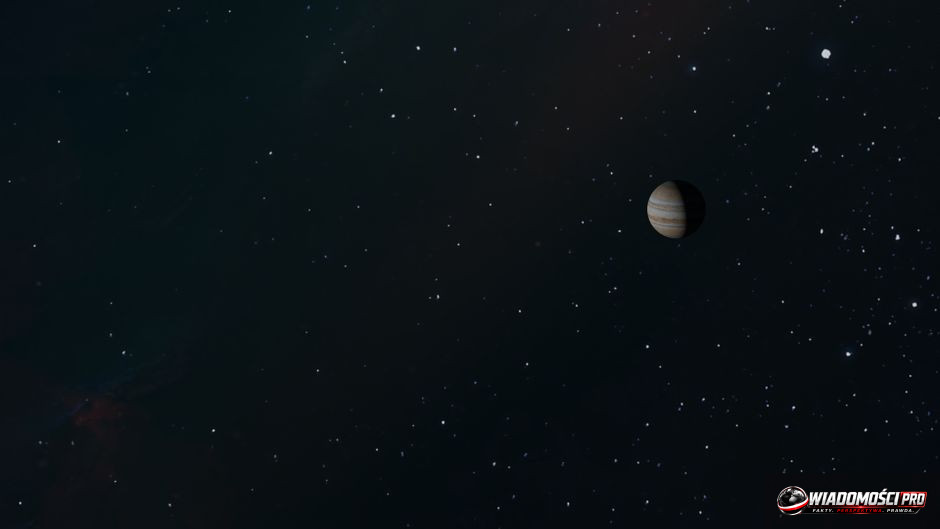
The Europa Clipper mission cost $5 billion, and the probe, which launched on October 14, 2024, is scheduled to reach the vicinity of Jupiter's moon in 2030. The craft left Earth atop a Falcon Heavy rocket, beginning one of the most complex research operations in NASA's history. The goal of the venture is not to land on the surface, but to conduct a series of close flybys that will determine whether an environment capable of supporting life is hidden beneath the thick layer of ice.
Architecture and scientific instrumentation
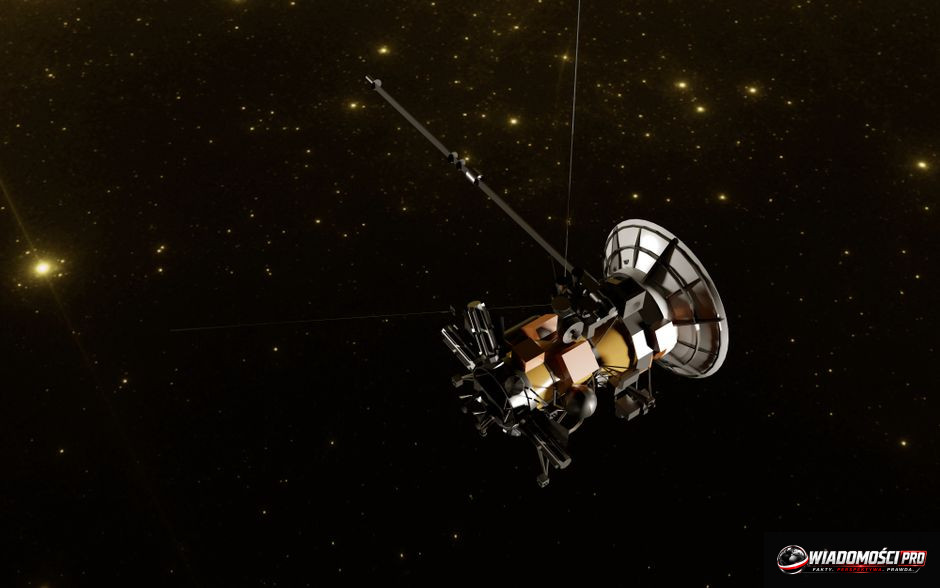
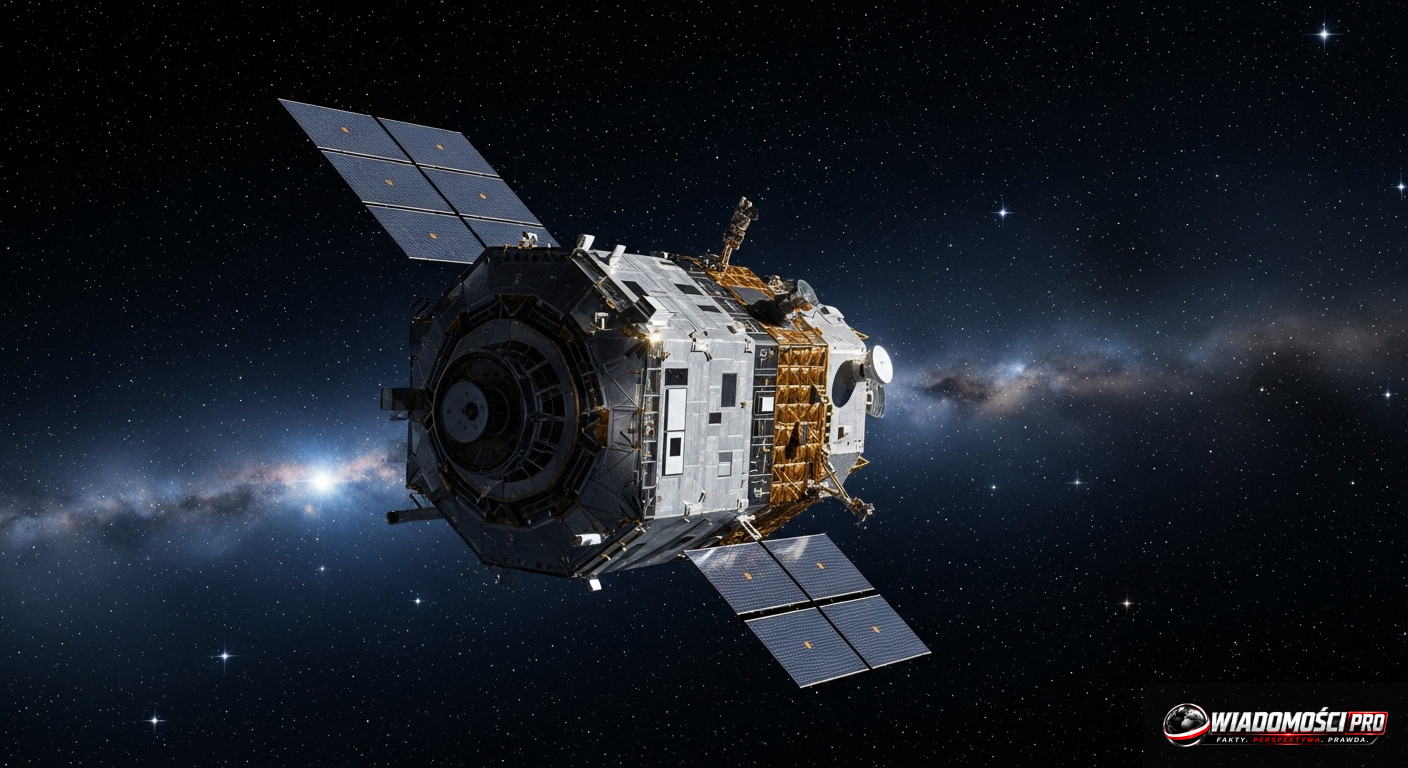
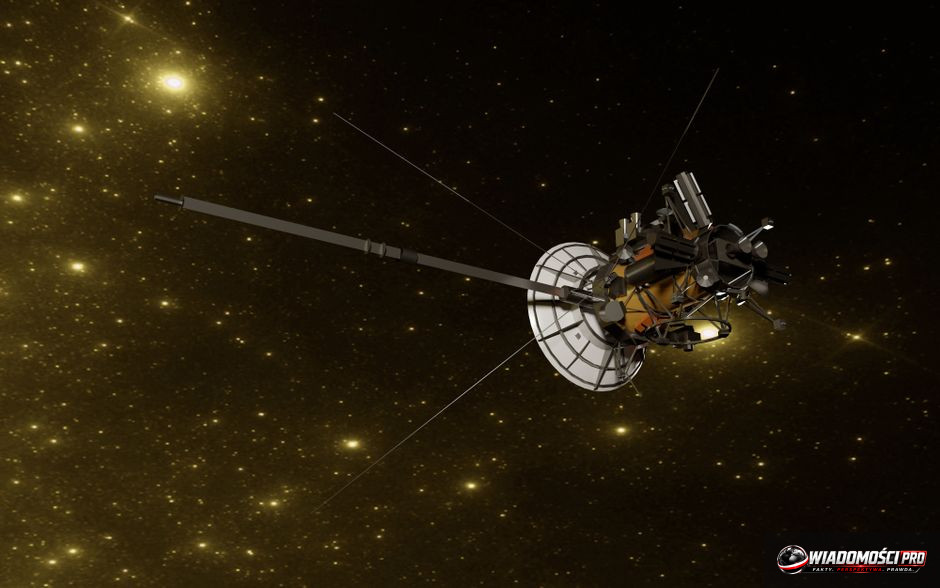
Europa Clipper is the largest planetary probe ever built by the American agency. Its size, once the solar panels are deployed, is comparable to a basketball court. The design had to account for the extreme conditions around Jupiter, where the radiation field is so intense that it could destroy standard electronics in a short time. The heart of the equipment's protection is the so-called "vault" – a titanium-aluminum container with wall thicknesses of up to 9 millimeters. It is inside this that the key control systems and onboard computers are enclosed.
On board is a suite of nine scientific instruments, coordinated by the mission's project scientist, Robert Pappalardo of the Jet Propulsion Laboratory (JPL). The research team is focusing on data from three main fields: imaging, spectroscopy, and magnetic field analysis. The EIS (Europa Imaging System) uses wide-angle and narrow-angle cameras to create high-resolution surface maps. This will allow for the identification of geological structures, cracks in the icy crust, and areas where water vapor plumes potentially occur.
The REASON (Radar for Europa Assessment and Sounding: Ocean to Near-surface) radar is the most important tool for studying the moon's interior. The device emits radio waves that penetrate the icy crust. Analyzing the echo of these waves will allow scientists to determine the thickness of the ice and confirm the existence of a subsurface ocean. The MISE (Mapping Imaging Spectrometer for Europa) is responsible for analyzing the chemical composition of the surface. It searches for ice, salts, organic compounds, and potential energy sources that could be utilized by hypothetical life forms.
The probe is also equipped with the SUDA surface dust analyzer. This instrument records tiny particles ejected from Europa as a result of micrometeoroid impacts. Thanks to this, researchers will receive samples of material from various parts of the moon without the need for a physical landing. The ECM magnetometer, working in conjunction with the PIMS plasma suite, will determine the strength and direction of the magnetic field induction, which is crucial for determining the depth of the ocean and the salinity of the water.
Flight dynamics and orbital physics
The choice of SpaceX's Falcon Heavy rocket was dictated by the mass of the probe and the requirements regarding the trajectory. The craft weighs approximately 6,000 kilograms, more than half of which is fuel necessary for braking in the Jovian system. Instead of a direct flight toward the gas giant, engineers planned a complicated route utilizing so-called gravity assists.
The journey includes flybys of Mars in February 2025 and Earth in December 2026. These maneuvers allow the craft to gain sufficient speed without excessive fuel consumption. The entire route covers approximately 2.9 billion kilometers. Each course correction must be calculated with a precision that leaves no margin for error. A delay of a few seconds during engine ignition could result in missing the target by thousands of kilometers.
While approaching the Jovian system, the probe will undergo a series of braking maneuvers. Entering Jupiter's orbit is a critical moment that requires perfect orientation of the probe. Upon arrival in 2030, Europa Clipper will perform nearly 50 close flybys of Europa. The closest distance between the craft and the surface will be just 25 kilometers. During this time, the instruments will operate at full capacity, gathering data that will then be transmitted to Earth via a high-gain antenna system.
Jupiter's environment: A challenge for engineers
Europa is not a dead block of ice. Its surface is subject to constant changes under the influence of Jupiter's tidal forces. The moon's core is heated by friction, which generates heat that keeps the ocean in a liquid state. However, what fascinates biologists is a nuisance to engineers. Jupiter's magnetosphere is extremely strong, and its radiation belts are a deadly environment for silicon and metal.
The probe's design had to undergo tests in chambers simulating ionizing radiation. Each of the nine instruments was shielded to survive a cumulative radiation dose equivalent to millions of X-rays. If the shields fail during the flybys, the data sent to NASA stations will become unreadable. Temperature is also a problem. In open space, far from the Sun, materials become brittle, and mechanisms lubricated with traditional oils may stop working. Therefore, special metal alloys and solid lubricants were used, which maintain their properties at temperatures near absolute zero.
Communication with the probe occurs with a significant delay. Depending on the relative positions of the planets, a radio signal travels from 30 to over 50 minutes one way. This means that any remote control in real-time is impossible. The probe has an advanced onboard computer with autonomous algorithms that independently react to system anomalies. Decisions about changing instrument operating parameters must be made by the team at JPL based on data received well in advance.
Searching for life in the subsurface ocean
The hypothesis of life on Europa is based on three pillars: water, chemistry, and energy. All these elements are present on this moon. The ocean, located under an ice crust estimated to be between 15 and 25 kilometers thick, contains more water than all of Earth's oceans combined. The contact of the ocean with the rocky seabed allows for hydrothermal processes, which on Earth support life in the deep oceans, regardless of sunlight.
The probe's instruments are tasked with finding traces of organic compounds. If complex molecules are detected in the dust samples recorded by SUDA or in the MISE spectroscopic data, it will be strong evidence of biological activity. However, it should be noted that the mission does not have instruments capable of directly detecting microorganisms. The task of the Clipper is to create a "habitability" map. The results of the research will determine whether this location qualifies for sending a lander in the future that could collect samples from deeper layers of ice.
Scientists point out that Europa is more promising in terms of life than Mars. Although the Red Planet is visited more often, it is Jupiter's icy moons that offer environmental stability lasting billions of years. This stability allowed for the evolution of chemistry toward biology. Each of the Clipper's flybys will provide data on the composition of the tenuous atmosphere, which may contain gases escaping from the ocean through cracks in the ice.
Geopolitical and technological context
The race to Jupiter's moons does not take place in a political vacuum. NASA, through the implementation of this project, maintains its position as a leader in deep space exploration. Although the European Space Agency (ESA) is carrying out its own JUICE mission, focusing on Ganymede, Callisto, and Europa, the American project is much more specialized in studying the moon Europa itself. Cooperation between the agencies exists, but at the level of scientific data, not the sharing of hardware resources.
The scale of the $5 billion investment poses a branding challenge for the agency. In an era of budget cuts, every dollar spent on research must be justified. Experts from the space technology sector note that Europa Clipper is a testing ground for future technologies. Autonomous navigation systems, advanced radiation shields, and data transmission technologies from vast distances will be the foundation for crewed missions to Mars and further exploration of the asteroid belt.
Schedule and key milestones
The implementation of such a long-term venture requires operational discipline. After the launch, which took place on October 14, 2024, the probe is currently in the early phase of its interplanetary flight. Onboard systems are being successively activated and tested. In the coming months, engineers will monitor the condition of the solar panels, which are intended to provide power until the end of the mission, even though the light intensity in the vicinity of Jupiter is 25 times lower than at Earth.
The mission schedule is rigid:
- October 2024: Successful launch using a Falcon Heavy rocket.
- February 2025: Gravity assist at Mars.
- December 2026: Return gravity assist at Earth.
- 2030: Arrival at the Jovian system and start of the main research phase.
Each of these stages represents a critical point. Failure to perform the gravity assists would mean the inability to reach the speed needed to be captured by Jupiter's gravity. In 2030, the most intensive stage of the mission will begin. For several years, the probe will perform maneuvers within the Jovian system, which exposes it to constant radiation damage. Each subsequent flyby will bring us closer to the final answer to the question about Europa's biological potential.
What does this mean for science?
For the scientific community, the Europa Clipper mission is primarily a paradigm shift in the search for life. Instead of looking for Earth-like conditions on rocky planets, we are focusing on subsurface oceans, which may be common throughout the universe. If it turns out that Europa possesses the necessary ingredients for life, the number of potentially inhabited worlds in our Galaxy will increase rapidly.
The probe will provide data that will allow us to understand the geological processes occurring on celestial bodies outside the so-called habitable zone. Understanding how Jupiter interacts with Europa will give us insight into the mechanisms of planetary system formation. For the casual observer, it is a chance to get an answer to a fundamental question we have asked ourselves since the dawn of time. Even if the mission does not detect direct biological traces, the characterization of the ocean itself will be the greatest achievement in the history of planetary science.
Questions and answers
How much exactly did the Europa Clipper mission cost?
The total cost of the project, including the construction of the probe, instruments, and launch logistics, is $5 billion.
When will the probe reach the moon Europa?
After launching in October 2024 and a six-year journey, the probe is scheduled to reach the vicinity of Jupiter's moon in 2030.
Why was the moon Europa chosen?
Europa has a subsurface ocean which, according to scientists, contains liquid water, organic compounds, and energy sources, making it one of the most promising places to search for life beyond Earth.
What instruments are on board the probe?
The probe has nine instruments, including the EIS imaging system, the REASON penetrating radar, the MISE spectrometer, the SUDA dust analyzer, and the ECM magnetometer, used to study the structure, composition, and magnetic environment of the moon.
Who manages the scientific mission?
The mission's Project Scientist is Robert Pappalardo of the Jet Propulsion Laboratory (JPL) in Pasadena.
Will the probe land on the surface of Europa?
No, the Europa Clipper mission is planned as a set of close flybys. The probe does not have a lander and will not settle on the moon's surface.
How will the probe survive Jupiter's radiation?
Key electronic systems have been placed in a special, heavy titanium-aluminum protective container, called a "vault," which protects the equipment from the destructive influence of Jupiter's radiation belts.
Why was the Falcon Heavy rocket chosen?
This choice was necessary due to the large mass of the probe and the flight trajectory requirements, which allow the craft to be directed toward Jupiter with the appropriate initial velocity.
Sources
- Start of the Europa Clipper mission to Europa - AstroNET – Polish Astronomical Portal
- Europa Clipper launches. A key task ahead - Geekweek Interia
- Europa Clipper probe to search for life on Europa - Urania - Polish Astronomical Portal
- Beginning of the Europa Clipper mission - Kosmonauta.net
- Start of the Europa Clipper mission [TRANSMISSION]. Americans to outpace Europeans in the search for life on Europa - Wyborcza.pl
- NASA sends probe to Europa. Europa Clipper mission has launched - WP Tech
- Europa Clipper probe to search for life on Jupiter's moon, Europa - wszystkoconajwazniejsze.pl
- Flight to Jupiter for 5 billion dollars. Europa Clipper launch aboard Falcon Heavy - Benchmark.pl
Article prepared by the Wiadomości PRO editorial team with the support of artificial intelligence. Facts come from the sources listed above.
Komentarze (0)
Ładowanie komentarzy...