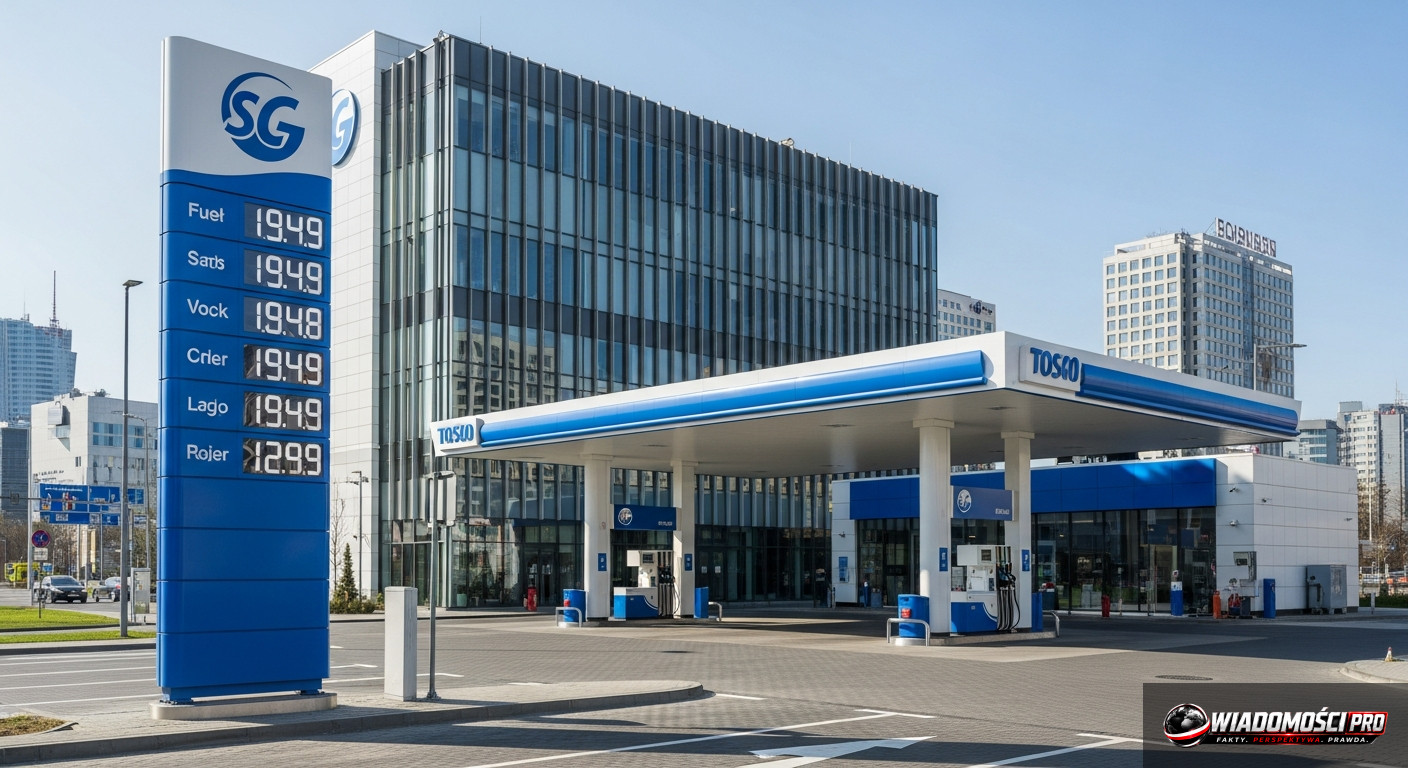
The CPN program, in effect until mid-June 2026, led to short-term price cuts but triggered a sharp increase in wholesale diesel prices by 2,500 PLN in March and a decline in Orlen's stock prices, which is contributing to higher inflationary pressure in the fourth quarter of 2026. This decision was a textbook example of an attempt to administratively smooth out the business cycle, which, instead of long-term stabilization, brought deep deregulation of the supply chain. The effects of this intervention did not fade with the official end of the program but smoothly transferred to the margins of other sectors of the economy, creating a new, unexpected benchmark for consumer product prices.
Chronology of the intervention: From enthusiasm to the end of the CPN program
The CPN program, pushed as a shield for Polish drivers, sparked extreme emotions in economic circles from the very beginning, and its rigid time frame became the main flashpoint of political debate. In May 2026, MP Motyka publicly postulated that the regulations should remain in force at least until mid-June, arguing that it was necessary to ensure price predictability at gas stations. However, the political desire to maintain the appearance of calm collided with the brutal mathematics of the market, which does not accept manual control of margins without costly compensation.
Reality proved to be much more demanding than the assumptions contained in government announcements. Instead of the expected smoothing of fluctuations, March 2026 brought a fuel shock that exposed the fragility of the entire mechanism. Stock market investors immediately withdrew from positions in fuel companies, which was a direct response to regulatory uncertainty. This was the moment when the enthusiasm of politicians collided with the wall of raw economic logic. The stock market valuations of the Płock-based giant dove when it became clear that shifting the burden of political decisions onto the shoulders of a state-owned company would not remain without impact on its market valuation.
The short-term price cuts that drivers felt at the end of March turned out to be only a temporary relief, paid for by long-term disruptions in the supply chain. The mechanism that was supposed to protect the market from volatility, in practice, only strengthened it. The final end of this experiment came on June 29, 2026, when regulated fuel prices became history, and the market had to return to playing by purely free-market rules. From the perspective of mid-August, it is clear that the CPN program was not a safety valve, but a catalyst for problems that are currently hitting the economy with full force in the third and fourth quarters. Artificial price braking in the first half of the year only accumulated pressure, which today finds its outlet in higher transport and logistics costs. Inflation, instead of slowing down, gained fuel for further growth, and citizens are paying the bill for March's attempts to cheat market mechanisms.
Wholesale shock: Why did diesel prices jump by 2,500 PLN?
Within just one month, wholesale diesel prices at Orlen rose by 2,500 PLN. This sudden price movement was a direct reaction to the turmoil surrounding the "CPN" program, which was supposed to protect drivers' wallets but in practice became the source of systemic instability. The mechanism, which theoretically guaranteed cheaper refueling, turned out to be a trap for wholesalers, forcing drastic price list corrections to balance margins. The government's decision to stiffen prices hit Orlen's ratings directly, which triggered a chain reaction throughout the energy sector.
The result was obvious: the company lost value, and the fuel market, instead of stabilization, received a violent price carousel. Although "CPN" was in effect until mid-June, its presence did not smooth out the charts but created an artificial threshold, the crossing of which by the market was only a matter of time. The situation in March confirmed that political interference in commodity margins brings only an illusion of savings at the pump, which is quickly offset by sharp increases in wholesale prices.
Today, in August 2026, the consequences of those actions are undeniable. The short-term price cuts that economic ministries boasted about were merely a deferral of payment. Now, producers and distributors are issuing the bill, passing the costs on to the final consumer in a way that can no longer be hidden in statistics. It is precisely that March jump in wholesale prices that is one of the most significant drivers of the inflationary pressure we are facing in the fourth quarter. The mechanism that was supposed to be a shield turned out to be a boomerang for the economy. Consumers paid for it twice: first at the checkout in March, and now in the prices of goods and services that have belatedly absorbed the fuel shock. Every zloty by which wholesale prices increased had to be compensated for in the final prices of products, which meant that inflation stopped being just a problem for gas stations and became a challenge for every household.

Stock market retaliation: Investors' reaction to government decisions
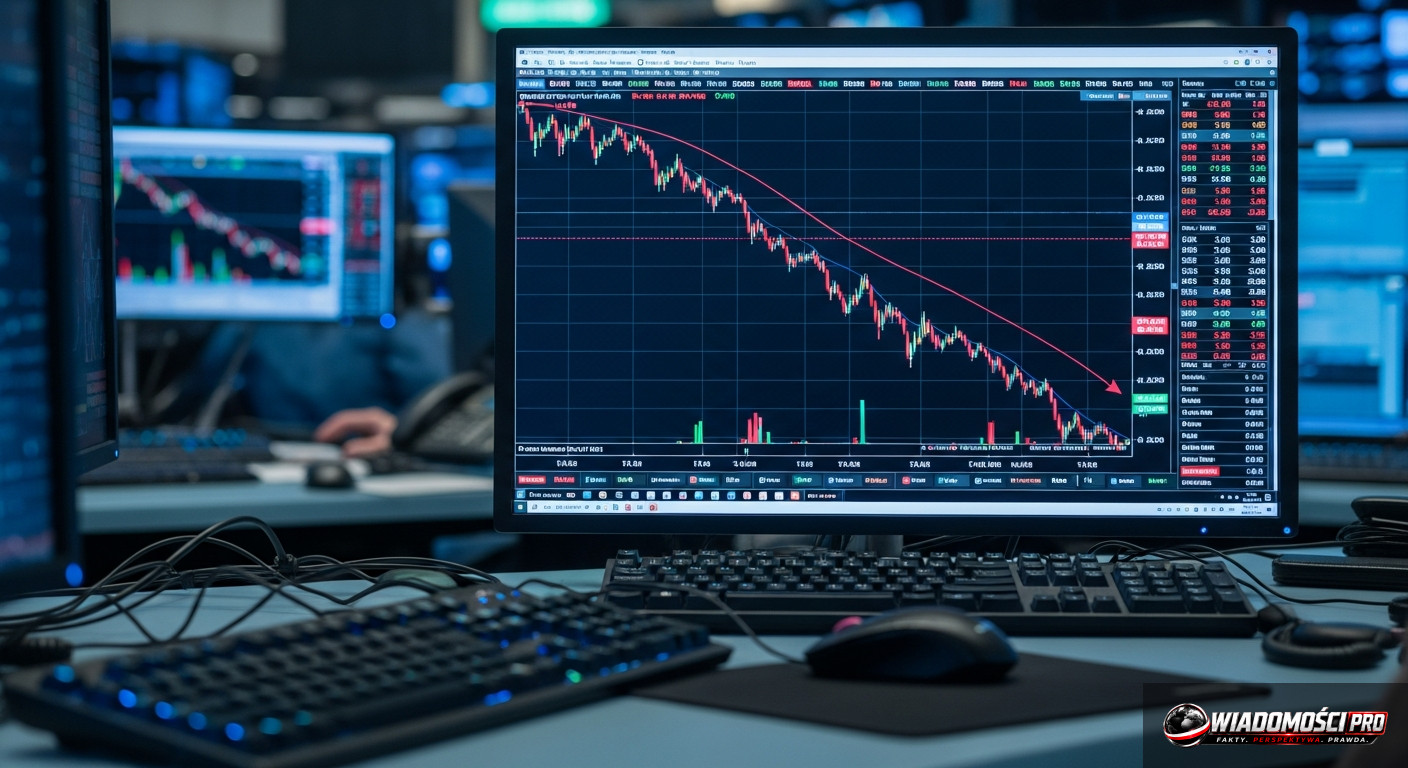
The CPN program, which was intended to bring relief to drivers, became a clear signal for the Warsaw Stock Exchange to sell off shares of fuel companies. Investors, extremely distrustful of administrative interference in the fuel market, reacted immediately after the March government announcements. Orlen lost on the stock market, and sentiment toward energy companies collapsed the moment the market calculated the costs of the new tax and pricing policy. Capital investors, with access to macroeconomic analysis, instantly priced in the risk of regulatory uncertainty, which led to an outflow of foreign capital from the WSE.
The effects of the decision of March 26, 2026, hit the finances of the Płock giant faster than government analysts predicted. In March alone, wholesale diesel prices rose by 2,500 PLN, which cast a major shadow over the company's long-term financial stability. Short-term price cuts at stations, while effective in the media, turned out to be just a facade for deeper perturbations in the supply chain and refining margins. The market quickly priced in the risk, and Orlen's stock prices became a reflection of the costs that the entire fuel sector had to bear in the final reckoning.
This mechanism, operating until mid-June 2026, left a lasting mark on the national economy. Although the protection package expired, its legacy is still visible in Q4 through high corporate operating costs. The wholesale costs passed on to the market, which skyrocketed in the spring, are now materializing with a delay in the form of higher inflationary pressure. Investors who sold off shares in March were right: state interventionism did not eliminate high prices, but merely spread them out over time, ultimately burdening consumers' wallets in the second half of the year. The profitability of fuel companies suffered, but the real bill for those decisions is currently being issued to the entire economy, which must face the secondary effects of the March regulations. The lack of investor confidence in state-owned companies has become an additional factor that hinders market stabilization, as capital withdrawn from Orlen did not quickly return to the Warsaw trading floor, weakening the condition of the entire WSE index.
Geopolitics and the pump: The impact of tensions in the Middle East
Geopolitical turbulence in the Middle East in the first half of 2026 became a convenient smokescreen for domestic fuel policy. When news of the cooling of tensions between Israel and Iran broke on June 9, 2026, markets breathed a sigh of relief, which immediately translated into valuations of a barrel of oil and gasoline prices at the pump. However, this global stabilization came far too late to erase the traces of internal regulatory experiments that completely distorted the local fuel market.
Drivers, confused by price volatility, missed the moment when the foundations for inflation for the fourth quarter of 2026 were laid in March. That was when, in the shadow of the announcement of the "CPN" package, wholesale diesel prices shot up by 2,500 PLN in just one month, as reported by Bankier.pl on March 22. The government program, pushed by politicians as a protective shield, was supposed to be in effect at least until mid-June, according to demands formulated by, among others, Marek Motyka in May. In practice, however, it turned out to be a fuel rollercoaster that was completely detached from global trends in the commodity market.
The effect was textbook for economic interventions: short-term, almost immediate price cuts at stations, reported by Parkiet on March 31, stood in stark contrast to the stock market reality. Investors had no illusions about the durability of these actions. The decision on a new tax and rigid regulatory frameworks hit Orlen's valuation, which was confirmed by WSE listings on March 26. The giant was losing on the stock market, and the market was nervously looking for direction, while government representatives announced further price cuts, without taking into account the long-term inflationary effects.
Today we see clearly that the ad-hoc help at the time was not free. Limiting margins and forcing the sector to absorb costs in March created a gap that is now, in August and September, returning in the form of higher inflationary pressure. The stabilization of oil prices after the June agreement in the Middle East is only cosmetic in the face of structural problems. The fundamental problem, i.e., the costly consequences of the CPN program, was merely postponed, overlapping with natural fluctuations in commodity prices. The economy could not absorb such a sharp price shock without an impact on the final price of consumer goods, which confirms that local regulations have a much greater impact on inflation than the temporary calming of moods in the Middle East.
Margin balance sheet: Who lost on the CPN program?
The CPN program, which expired in mid-June 2026, left the market in a state of deep deregulation, the effects of which will be felt for many months to come. Although the original assumptions were supposed to bring relief to drivers, the reality turned out to be much more expensive for the entire economic system. Just look at the data from March, when wholesale diesel prices rose by 2,500 PLN in just one month. This was not a market correction; it was a supply shock forced by regulations, which in effect shifted the financial burden onto final consumers, building the foundations for higher inflationary pressure in the fourth quarter.
Stock market investors reacted immediately, pricing political risk higher than the potential profits of companies. Orlen, being the main executor of government guidelines, became a hostage to the political decision to introduce a new tax. The company's stock price dove when the market priced in the risk associated with the depletion of refining margins. The uncertainty was so great that on April 7, 2026, experts openly discussed scenarios that a month earlier seemed impossible in a stable economy. The fuel market does not like manual steering, and every attempt to artificially lower prices at the pump ends in this case with a sharp correction on wholesale invoices, which ultimately hits entrepreneurs and logistics.
Below is a summary of the key changes and indicators that defined this period:
- Increase in wholesale diesel prices at Orlen — 2,500 PLN in March (according to Bankier.pl reports)
- Duration of the "CPN" package — until mid-June 2026 (according to pb.pl information)
- Date of expert discussion on surprising price scenarios — April 7, 2026 (Money.pl)
- Stock market reaction of Orlen to the tax — clear declines in listings (CrypS.pl)
- Announcements of fuel price cuts by the Prime Minister — March 26, 2026 (xyz.pl)
Today, from the perspective of mid-August, it is clear that the short-term price cuts were just a smokescreen for broader financial problems. The economy is now paying the price for March, when politicians tried to force numbers to obey. Inflation did not come from nowhere. It is the bill for artificial margin control, which we must settle at the checkout in every store, because fuel costs are ubiquitous in the supply chain.
Outlook for Q4 2026: Inflation without a shield
After June 29, 2026, the fuel market in Poland ceased to be subject to price regulations, which definitively closed the chapter on the CPN program. The mechanism maintained by the government, which, according to suggestions from, among others, Michał Motyka, was supposed to be in effect at least until mid-June, was intended to protect drivers' wallets. However, the reality turned out to be much more expensive than the March political promises suggested.
The side effects of the CPN program hit the economy with a delay, but with great force, creating pressure that cannot be eliminated by a single administrative decision. In March 2026, in the middle of the regulations, the market experienced a shock: wholesale diesel prices rose by 2,500 PLN in just one month. This sharp correction was a direct signal that artificially squeezing margins is not free. Investors on the stock market reacted immediately, selling off Orlen shares, which confirmed the market's fears about the consequences of political price control.
The end of the program at the end of June means for consumers living in market conditions, not regulated ones. The lack of a protective shield in Q4 2026 is becoming one of the most significant pro-inflationary factors. Transport and logistics companies, which operated based on frozen rates throughout the spring, must now fully include real fuel costs in their price lists. The pressure on inflation indicators for the autumn is obvious and results directly from the need to make up for losses from the spring period. The fuel market, deprived of a protective umbrella, must now work out a new balance without political interference, which for households means one thing: higher bills at gas stations are the price we pay for March's attempts to freeze reality. This is not a return to normality; it is a painful collision with costs that were effectively hidden from consumers' eyes for months. The market must now absorb these differences, which in practice means that inflation will remain at a higher level than would result from oil prices on world markets alone.
What this means for you
Editorial angle: The government's CPN program was an attempt at ad-hoc protection for drivers, which in practice shifted costs to fuel companies (Orlen's declines) and wholesalers (the diesel price jump). The catch is that after the program was phased out in June 2026, the market had to correct prices to market levels, which generates inflationary pressure in the last quarter of the year. This means that every zloty saved at the pump in March was spent with interest in the shopping basket a few months later.
Questions and answers
How long did the price protection under the CPN program last?
The CPN program was in effect until the end of June 2026, officially ending on June 29.
Why was Orlen losing on the stock market in March 2026?
Investors were selling off the company's shares in response to the introduction of a new tax and government interference in fuel pricing mechanisms, which drastically reduced the sector's profitability.
What was the impact of tensions in the Middle East on fuel prices in Poland?
The cooling of moods between Israel and Iran in June 2026 was a factor stabilizing oil and gasoline prices on global markets, which allowed for some relief after earlier domestic turmoil.
Was the increase in wholesale diesel prices in March directly related to the CPN program?
Yes, the wholesale price increase of 2,500 PLN was a market response to the attempt at administrative margin stiffening, which forced fuel entities to seek balance in other operational areas.
What does the expiration of the CPN program mean for the average consumer in Q4 2026?
For the consumer, it means a return to full market prices, which are additionally burdened by inflationary effects resulting from the need for the fuel and transport sector to "make up" for losses after the period of artificial regulations.
Sources
- No more cheaper and regulated fuel prices. It will be more expensive from Wednesday - Money.pl
- Large fuel price cuts in Poland. Drivers will feel them immediately - Parkiet
- Motyka: "CPN" package should be in effect at least until mid-June - pb.pl
- Fuel shock at Orlen: Wholesale diesel prices rose by 2,500 PLN in a month - Bankier.pl
- Orlen loses on the stock market after government decision. Investors react to new tax - CrypS.pl
- Market looks for direction, Prime Minister announces fuel price cuts. WSE listings March 26, 2026 - xyz.pl
- Israel and Iran cool tensions. This is how it affects oil and gasoline prices - Strefa Biznesu
- Surprising scenario regarding fuel prices. Experts speak directly - Money.pl
Article prepared by the Wiadomości PRO editorial team with the support of artificial intelligence. Facts come from the sources provided above.
Komentarze (0)
Ładowanie komentarzy...