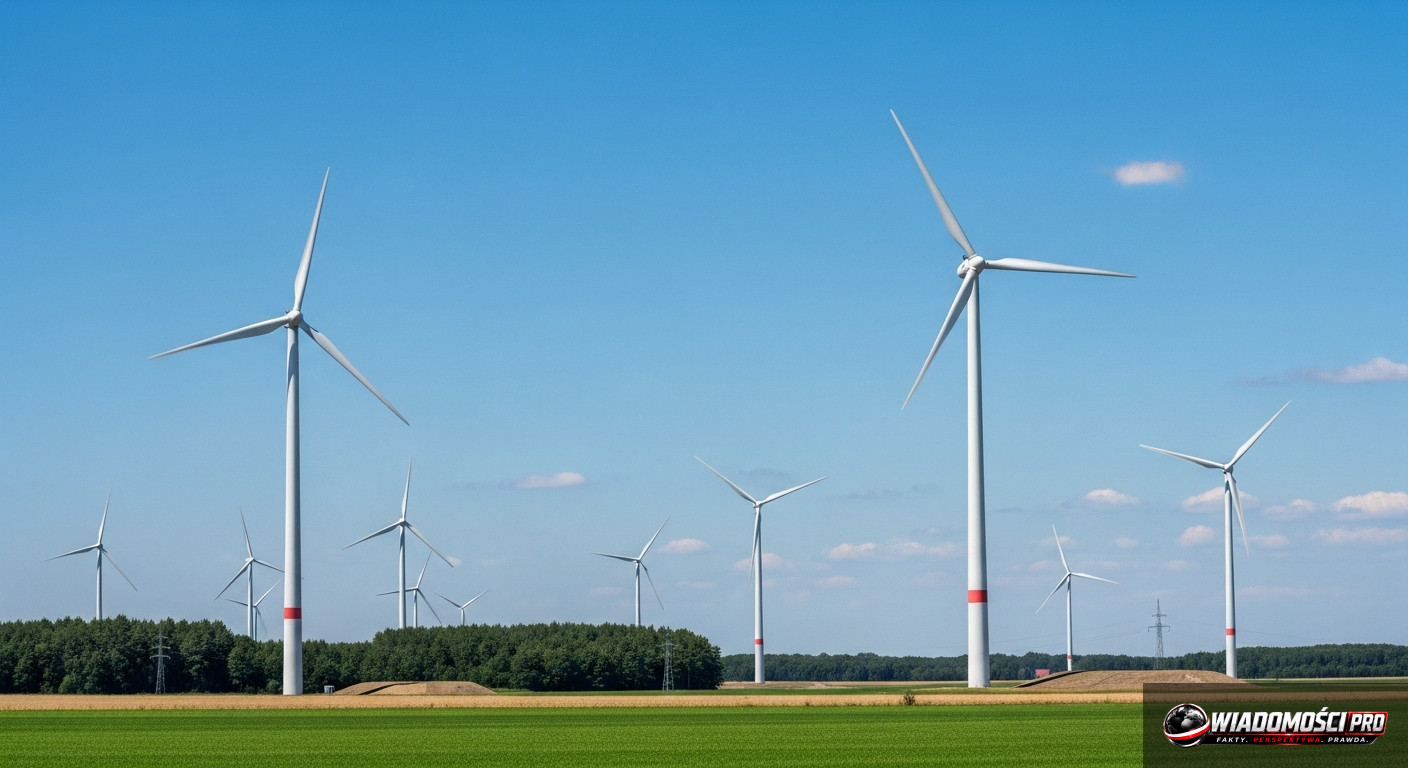
On the weekend of August 15-16, 2026, the system operator was forced to perform balancing redispatch, compelling the shutdown of wind farms and photovoltaic installations to maintain the stability of the national power system. This decision was made in the face of a drastic drop in demand, which during midday hours was 18% lower than the average for August weekends. The restrictions covered a total of 1200 MW of installed capacity, concentrating mainly in the northern regions of Poland and in areas with a high density of wind farms in the Greater Poland and West Pomeranian voivodeships, where the transmission grid reached its physical capacity limits.
System situation: The weekend of August 15-16, 2026
The long weekend in mid-August, coinciding with a national holiday, has for years remained a testing period for the Polish energy sector. Industry shuts down production lines, office buildings are disconnected from air conditioning systems, and national demand drops to a level that becomes a threat to a system based on rigid coal-fired units and an increasing share of RES. In 2026, this phenomenon intensified, forcing Polskie Sieci Elektroenergetyczne (PSE) to take radical actions. The operator faced a choice: either forced limitation of RES generation or the risk of a physical failure of the transmission infrastructure, which was not designed for such violent energy flows in the north-south direction.
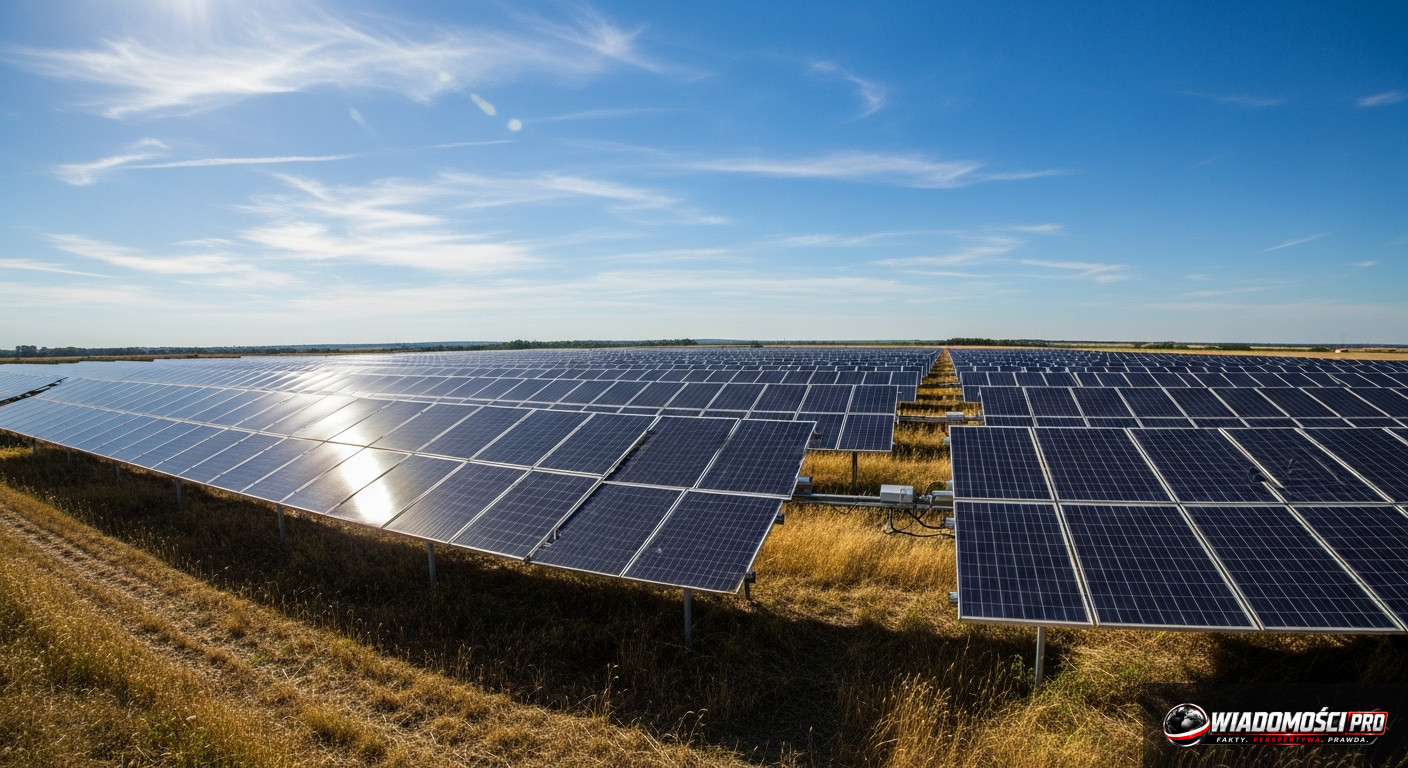
Analysis of market data indicates that photovoltaic installations, reaching peak efficiency between 11:00 AM and 2:00 PM, encountered a transmission barrier. When wind farms operating at high efficiency in coastal areas were added to this, the transmission system found itself in a state of permanent "overflow." The redispatch mechanism, embedded in PSE's operational procedures, ceased to be a backup tool. It became a routine element of energy management during periods of oversupply, rather than an exception to the rule.
Investors owning assets in the renewable energy sector were presented with a fait accompli: their units were remotely disconnected from the grid. For investment funds and farm owners, this means a direct loss of revenue. Estimates regarding the shut-down megawatts over the entire weekend indicate a limitation of around 1200 MW of capacity at peak moments. This problem is no longer limited only to the south of the country – it primarily concerns the north, where the wind generates energy that the grid is unable to receive and transmit to consumption centers in the agglomerations of central Poland.
Why were wind turbines and photovoltaics switched off?
The transmission system operator works based on rigorous flow physics principles. When the sum of energy injected into the grid exceeds the reception capacity and the possibilities for export to neighboring countries, the risk of exceeding permissible voltage and frequency parameters increases. On August 15-16, 2026, this limit was exceeded. The shutdowns, technically defined as redispatch, constitute a form of saving the system from a failure that, in the worst-case scenario, could lead to a regional blackout.
The reasons for this state of affairs are multidimensional. Firstly, there is a deep asymmetry between the rate of RES capacity growth and the pace of transmission grid modernization. The Polish grid, built over decades in a centralized model, is not adapted to receive energy from thousands of distributed sources. The current model requires a bidirectional, intelligent, and flexible architecture. Meanwhile, the grid still relies on 400 kV and 220 kV lines, which do not have sufficient capacity at the points of contact with the largest wind farms in Pomerania.
The second aspect is the chronic lack of energy storage. Energy from RES is variable, and the system lacks the tools to "store" it until demand increases. During the August weekend, the system had nowhere to redirect the excess kilowatt-hours. Instead of storing, the operator had to switch off generation sources. This action stands in contradiction to the idea of energy transition, which assumes the maximum use of clean electricity. The lack of gigawatt-hour scale storage makes every generation surplus a burden rather than a resource.

The mechanism of balancing redispatch
Balancing redispatch is a procedure in which the operator issues an instruction to change the power output of a selected generation unit. In the case of RES, this means an order to limit production. It is a technical process, not a market one. The operator is not guided by the price of energy on the Polish Power Exchange, but solely by the physical safety of the grid.
In practice, it looks like this: power dispatchers at PSE analyze weather forecasts and projected demand. When they see that the supply of energy from the sun and wind will exceed the possibilities for safe transmission, they send signals to the automation controlling the installations. These installations are physically disconnected from the grid or their power is reduced to a level that the system can accept.
For an investor who has invested in a wind or photovoltaic farm, this is a critical moment. The cost of producing energy in such installations is very low because the fuel – wind and sun – is free. However, the loss of revenue due to forced downtime is real and very painful. The average compensation rate for each unproduced MWh is approximately 450 PLN. On the scale of the entire weekend for large project portfolios, these losses reach hundreds of thousands of zlotys, and in extreme cases millions, which directly hits the profitability of energy projects.
From the perspective of end-users, the situation is complicated. The costs of redispatch, i.e., compensation paid to producers for forced shutdowns, are ultimately included in transmission tariffs. This means that all consumers pay for the lack of system flexibility and the lack of storage in their electricity bills. This is a hidden cost of the transition, which is talked about much less than CO2 emission allowance prices.
Impact of restrictions on the energy market in Poland
Generation restrictions hit the business foundations of the RES sector. Investors who planned their investments based on models assuming continuous production must revise their assumptions. In 2026, the risk of shutdowns became one of the main investment risk factors, alongside regulatory or price risks.
Banks financing the construction of wind and photovoltaic farms are starting to look at credit risk differently. If an investment is to "stand idle" periodically, the ability to repay the loan decreases. This, in turn, discourages the construction of new capacity, which is paradoxical in the context of EU climate goals. Poland needs more energy from RES, but at the same time, it limits its production for technical reasons.
An example of actions that contrast with the brutal system reality is the initiative of the Tarnów MPEC. The company decided to distribute 3,700 fairy tales about renewable energy among primary school students. Although educating the youngest is important, when compared with the physical impossibility of the transmission grid receiving electricity, this initiative exposes a deep divide between theory and practice. Children learn about the benefits of green energy, while operators struggle with the necessity of wasting it. It is a divide that will be increasingly difficult to hide in the coming years.
The energy market in Poland is in a transition phase where old rules are ceasing to work and new ones have not yet solidified. Investors who counted on a quick return on capital must arm themselves with patience and prepare for a scenario in which their assets will operate in an intermittent mode. This is not a situation that will change within a month or a year. Grid modernization is a process spread over decades.
Flexibility of the power system: Main barriers
Flexibility is a key challenge for the future of the Polish energy sector. A system is flexible when it can react quickly to changes in supply and demand. In the case of Poland, flexibility is limited by the dominance of sources that cannot quickly change their load. Coal-fired power plants need hours to increase or decrease production, which is insufficient given rapid weather changes.
A barrier remains the lack of cross-border connections. When Poland has an excess of energy, we should be able to export it to neighbors. However, our connections with European systems are burdened and not always sufficient to transmit the huge power surpluses generated by RES. On the weekend of August 15-16, 2026, even exports were not enough to balance the system.
Another issue is demand management, the so-called demand side response. This involves encouraging consumers to use electricity when there is plenty of it in the system – for example, through cheaper tariffs during midday hours. In Poland, this mechanism is still in its infancy. Most individual consumers do not have smart meters or systems that would automatically start washing machines or heat pumps during moments of power oversupply.
The lack of these tools means that the only solution the operator reaches for is switching off production sources. This is a primitive solution, but at the same time the most effective in the short term. If we do not start investing en masse in demand management technologies, we will be doomed to increasingly frequent shutdowns of wind and photovoltaic farms. Every such shutdown is a waste of resources that could power Polish homes and factories.
Prospects for the future: How to avoid redispatch?
Avoiding redispatch in the future requires coordinated actions in many fields. Modernization of transmission grids must become a national priority. New extra-high voltage lines must be built to allow energy to be transmitted from the windy north to the industrialized south. Without this, we will be dealing with so-called "energy islands," where there is too much energy in one place and a shortage in another.
Energy storage must become profitable for every RES investor. Currently, the support system for storage is insufficient relative to the scale of needs. We need mechanisms that would encourage the installation of batteries at every wind or photovoltaic farm. Then, the excess energy would be stored instead of wasted.
The energy market must become more dynamic. Energy prices for end consumers should reflect its actual availability in real time. Only then, when the price of electricity on a sunny afternoon is close to zero or even negative, will consumers have a real incentive to use energy-intensive appliances. This will force a natural balance between supply and demand.
The situation of August 15-16, 2026, is a warning. The power system is operating at the limit of its capabilities. If we do not take radical steps toward making the energy economy more flexible, we will witness increasingly frequent interruptions in the operation of RES sources. Investors, discouraged by uncertainty, will begin to turn away from the Polish market, looking for more predictable locations. And that will mean even greater problems for Poland with energy prices and security of supply in the long term.

What this means for you
Balancing redispatch in practice translates into higher energy costs for all of us. The system operator pays RES owners not to produce electricity, and these costs are then included in our bills. In addition, we waste the potential of cheap, clean energy, which directly delays decarbonization processes and increases our dependence on fossil fuels.
For the average consumer, this situation means that despite the increase in the number of photovoltaic panels on roofs and wind turbines in fields, we do not feel a drop in electricity prices as we could. The system is still rigid, and we pay for its inefficiency. Looking into dynamic tariff offers, which allow using energy when it is cheapest, is the only way to consciously react to the market situation.
Questions and answers
Why were wind turbines switched off if it was windy?
The wind turbines were switched off because the power system on August 15-16, 2026, could not accept the excess energy while demand was low, which forced balancing redispatch to avoid a failure.
Will such shutdowns happen again?
Yes, as long as the system does not increase its flexibility through investments in energy storage and grid modernization, redispatch will remain a necessary operational tool for PSE.
Who bears the costs of switching off RES installations?
The costs associated with compensation for balancing redispatch are included in energy transmission tariffs, which ultimately affects the system costs borne by all end consumers.
Is there a way to avoid disconnecting RES?
Yes, through the construction of large-scale energy storage, expansion of transmission grids, and the introduction of demand management mechanisms that will allow excess electricity to be consumed in real time.
Why does grid modernization take so long?
Modernization of transmission grids is a technically and legally complex process, requiring multi-year investments and social acceptance for the construction of new high-voltage lines, which in Polish conditions can be hindered by local protests and convoluted administrative procedures.
Does the problem only affect large farms?
The problem of redispatch primarily concerns large sources connected to the transmission grid, however, in the case of very large power surpluses, it can also affect production limitations in smaller distribution units, which over time becomes increasingly noticeable for the entire RES industry.
What are the estimated costs for investors?
The exact amounts of losses depend on the scale of the installation and contractual conditions, but in the case of large wind and photovoltaic farms, we are talking about thousands of zlotys for every hour of downtime, which on the scale of a long weekend generates significant burdens on project profitability.
Are investments in RES in Poland still profitable?
Despite the risk of shutdowns, RES projects remain a key element of the transition, but investors must now include in their business models the operational risk associated with the lack of grid flexibility, which extends the investment payback period.
What is the role of PSE in this process?
Polskie Sieci Elektroenergetyczne acts as the transmission system operator, which means they are responsible for maintaining grid parameters. Their main task in crisis situations is to ensure the security of supply, even at the cost of limiting production from renewable sources.
What do weekends like August 15-16 teach us?
Such situations are a signal that the energy transition requires not only the construction of new generation capacity but, above all, the parallel development of transmission infrastructure and system solutions allowing for effective energy management.
Renewable energy requires stable ground, and that ground is cables and transformers. Without them, every sunbeam and every gust of wind becomes a problem for the operator, not an opportunity for savings. The Polish energy sector needs a circulatory system transplant because the current vessels are too narrow for the power we want to pump through them. Investors must understand that in the current system architecture, shutdowns are not a bug, but a safety feature. It is a bitter lesson, but necessary to understand the state of Polish infrastructure in 2026. The energy market does not forgive a lack of planning, and August 15-16 was the most striking proof of this. Every megawatt that did not reach the grid is lost potential, but also a necessary cost of maintaining stability, without which the rest of the system would cease to exist. Further investments must therefore be strictly linked to the development of storage technologies. Otherwise, we will build more and more sources whose only destination will be to be periodically disconnected from the system. This is a road to nowhere that must be corrected by appropriate market regulations and an acceleration of the pace of grid modernization by PSE. Only in this way can the potential of RES in Poland be realistically utilized and losses prevented, which in August 2026 became a daily occurrence for many energy producers. Every hour of downtime is a clear signal to decision-makers that the time for half-measures has long passed. Infrastructure must catch up with ambitions, otherwise, the energy transition will stall, limited not by a lack of wind or sun, but by the inefficiency of its own cables. This is a challenge for engineers, economists, and politicians, from which there is no escape. Poland's energy future will be decided in fields and design offices, where new transmission lines and large-scale energy storage facilities are being planned. Only they can change the current paradigm of shutdowns to a paradigm of full utilization of green energy. Until then, unfortunately, we must get used to reports of oversupply and forced redispatch, which will remind us of the limits of our system capabilities. This is a lesson in humility for an industry that has grown in recent years at a pace that infrastructure could not keep up with. It is time to draw conclusions and take action that will allow avoiding a repeat of August 2026. Every subsequent hour of shutdown is a cost that ultimately burdens us all. Let us not allow this potential to be wasted in silence while the transmission system struggles to cope with the excess of clean energy. This is a task for the entire state, because energy security has no party or industry colors; it is a common good that we must take care of together. Investments in the grid are investments in the peace of our homes and the stability of our economy, which without cheap energy will not maintain its competitiveness in Europe. This is a foundation without which all other transition plans will collapse under the weight of their own technical limitations. We must act now, before another summer brings us even greater challenges related to the excess of sun and wind, which instead of powering the country, must be reduced to zero. This is the only right way to use the opportunity that modern energy gives us. We must stop switching off the future and start building it on solid technical and system foundations that will bear the weight of the transition. Otherwise, we will stand still, looking at wind turbines that are not working and panels that are not generating profit, all at a price that we will ultimately pay in electricity bills. This is not a vision of the future; it is a reality we must face right now. Every day of delay is a wasted opportunity for a cheaper and more energy-independent Poland, which we all care about so much. It is time to act in a thoughtful and decisive manner so that future weekends are a time of work, not forced downtime for Polish green energy. This is our challenge, our duty, and our opportunity for a better tomorrow, provided we understand where the real barrier to development lies. And that barrier is not nature, but our own transmission grids, unprepared for change, which require immediate investment and modernization on a scale Poland has never seen before. Only in this way will we break the impasse and move forward toward energy sovereignty.
Sources
- Another difficult weekend for photovoltaics in Poland. This time wind turbines also suffered - wnp.pl
- Tarnów MPEC wants to introduce children to the world of RES. 3,700 fairy tales will reach primary school students - Tarnow.net.pl
Article prepared by the Wiadomości PRO editorial team with the support of artificial intelligence. Facts come from the sources listed above.
Komentarze (0)
Ładowanie komentarzy...